The practical answer to how to order private label mahjong sets is to release one clearly defined product before asking for a unit price. A private label order combines a playable set with a brand, packaging, sales channel, and repeat-order expectation. Define the rules version, components, artwork, quantity, destination, and approval path first. Then suppliers can quote the same scope, make a comparable sample, and document what will be repeated.

Start with the product you intend to sell
A private label project should begin with a sellable product brief, not a logo file. State who will buy the set, where it will be sold, which Mahjong rules it supports, and what the customer should notice first. A boutique gift set, an online starter set, and a club-oriented durable set can use different tile sizes, accessories, case structures, and instructions even when they share a brand.
Write down the commercial boundaries. Include an expected order range, target launch window, destination market, price position, sales channel, and whether the first order is a pilot or a planned replenishment. If the range is uncertain, give a low and high scenario instead of asking for a vague “best price.”
| Brief item | Decision to record | Why it changes the order |
|---|---|---|
| Play system | Rules version, tile count, language, and included accessories | Controls the face schedule, component count, and instruction file |
| Brand position | Gift, club, retail, promotional, or online-first offer | Sets finish, packaging, durability, and presentation expectations |
| Order plan | Pilot quantity, first production quantity, and reorder range | Influences MOQ, tooling recovery, carton planning, and inventory risk |
| Destination | Country, port or warehouse, labels, and delivery window | Changes packaging data, freight assumptions, and landed cost |
How to Order Private Label Mahjong Sets when the catalogue is only a starting point
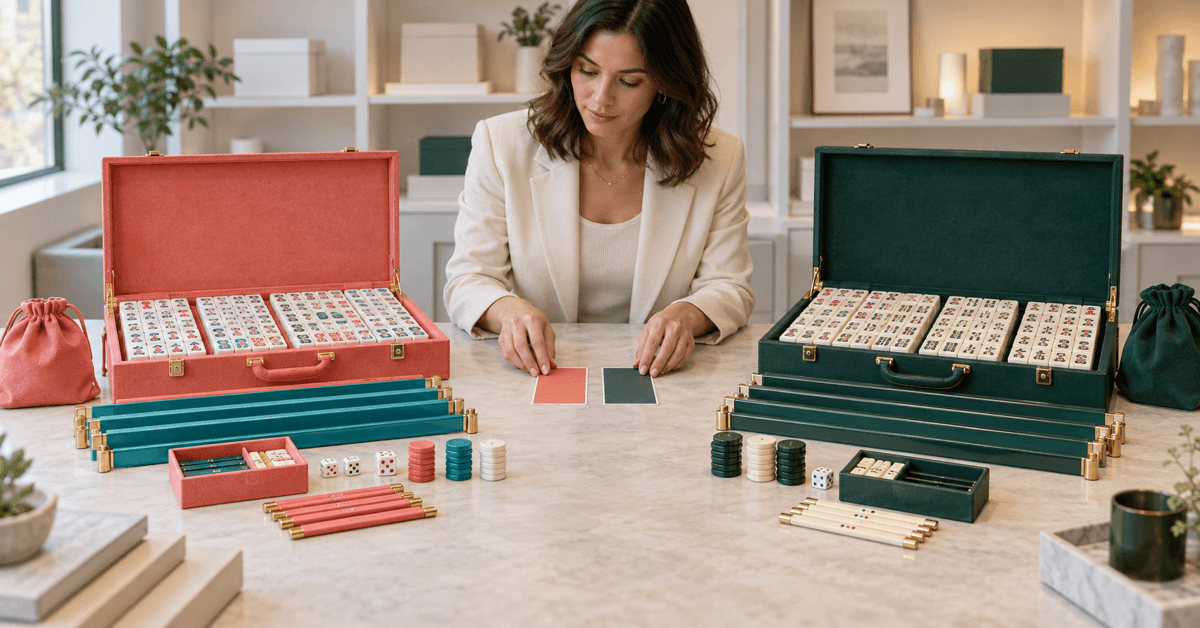
Many private label projects can reuse a stable tile blank, rack, pusher, case, or dice format. Reusing a proven component can reduce development time and lower the risk of an interface problem. Customization is most useful where it creates recognition or commercial value: tile artwork, back design, colors, logo treatment, packaging, inserts, rulebook language, and coordinated accessories.
Separate the order into three layers. The play layer defines the pieces required to play. The brand layer defines the visual and verbal identity. The delivery layer defines the box, carton, labels, inspection, and documents that allow the product to reach the customer. This separation makes it easier to protect the core play experience when a packaging or color decision needs to change.
The custom Mahjong set development guide provides a useful model for moving from a brief to a saleable sample. A private label order should reach the same level of clarity even when most components are standard.
| Order layer | Typical private label choices | Approval evidence |
|---|---|---|
| Play | Tile format, face schedule, racks, pushers, dice, markers, and rules | Complete component list and play test |
| Brand | Tile back, color palette, logo placement, name, and instruction tone | Artwork proof, physical color reference, and copy approval |
| Delivery | Case, insert, box, barcode, carton, inspection, and shipment data | Pack-out sample, label file, and release checklist |
Prepare artwork and brand files suppliers can release
Send one controlled artwork package instead of a collection of chat attachments. Include the logo in usable formats, the tile face schedule, back design, color references, packaging copy, barcode or SKU data, instruction files, and the current revision number. Identify which text is fixed by the rules and which wording can be edited for the destination market.
Review artwork at the physical size. Check safe areas, line weight, contrast, logo orientation, language, and how the mark will be printed or engraved. A screen proof can hide a thin line, a crowded border, or an unreadable instruction panel. When color matters, retain a physical reference and record the lighting used for approval.
The Mahjong tile manufacturing design guide explains why artwork, geometry, and inspection must agree. Your order file should make it impossible to confuse an approved logo revision with an older file.
Request a quote with identical scope
Ask each supplier to quote the same product definition. Separate one-time charges from recurring charges and ask what is included in the unit price. A low unit price may exclude tooling, sample rounds, packaging, inspection, artwork support, or delivery to the actual destination.
Request a line-by-line quotation covering the blank, decoration, accessories, case, packaging, tooling, samples, quality checks, carton, payment terms, lead time, and freight basis. Ask which assumptions would trigger a change order. It is also useful to request the production location, subcontracted processes, and the person who owns technical approval.
| Quote line | Question for the buyer | Evidence to retain |
|---|---|---|
| Product and decoration | Does the price cover the exact tile geometry, faces, back, finish, and color? | Quote linked to the artwork and specification revision |
| Development | Which tooling, proof, color, and sample charges are one-time? | Sample plan and tooling terms |
| Packaging | Are insert, labels, carton, and pack-out included? | Packaging drawing and carton assumptions |
| Delivery | What quantity, destination, and shipping basis does the lead time assume? | Incoterm, freight estimate, and dated schedule |
Check the supplier before approving a private label sample
A supplier review should focus on evidence connected to your product. Ask how the factory handles artwork revisions, material or color references, tooling changes, incoming checks, in-process inspection, final pack-out, and replacement requests. A showroom can demonstrate presentation, but it does not prove that the same specification will be repeated in a production lot.
Ask for a sample workflow and the names of the decision owners. Confirm who can approve an artwork change, who can release a substitute material, and how a nonconforming lot is handled. If a trading company coordinates the order, request visibility into the production and inspection responsibilities rather than assuming the roles.
The factory audit checklist can help organize a call or visit around process evidence rather than broad capability claims.
Use sample gates before committing to bulk production
Do not treat the first complete set as the only approval opportunity. Start with an artwork proof, then review material and color, geometry and interfaces, and the complete saleable pack. Each gate should have a named approver, an evidence file, and a written result.
The complete sample should contain the same component types and packaging logic the customer will receive. Load the racks, mix the tiles, open the case, read the instructions, check the labels, and inspect the pack-out. If the sample is approved with an exception, record the exact exception and how it will be checked in production.
| Sample gate | What to confirm | Release decision |
|---|---|---|
| Artwork proof | Faces, logo, back, colors, copy, languages, and revision | Approve or return a marked proof |
| Physical component | Tile feel, dimensions, finish, color, edge, and accessory fit | Approve reference or revise the component |
| Complete set | Playability, instructions, case, insert, label, and customer presentation | Assign a golden sample revision |
| Pre-production | Production file, approved sample, inspection plan, and open issues | Release bulk production or hold |
Build packaging and inspection into the order
Packaging is part of the private label product. Confirm the case dimensions, inner supports, accessory positions, closure, retail label, barcode placement, carton quantity, and protection against movement or impact. The package should be checked both as a shipping unit and as the customer's first brand experience.
Translate the approved sample into an inspection plan. Check tile count, face identity, dimensions, weight, color, surface, print or engraving position, accessories, case, instructions, labels, and carton data. Define what counts as critical, major, or minor and what action follows each finding.
The Mahjong packaging checklist and four-gate quality model can be used together to protect both presentation and product conformity.
Calculate landed cost and order risk
Compare more than the factory unit price. Add development and tooling, sample freight, production freight, insurance, duties or taxes where applicable, payment fees, inspection, storage, fulfillment, expected replacements, and a practical allowance for damage or returns. Use the same quantity and destination assumptions for each quote.
Also separate the cash commitment from the per-set cost. A lower unit price may require a larger MOQ or a larger carton commitment. A pilot order may cost more per set but give the brand a chance to test listing images, customer feedback, packaging durability, and replacement demand before a full launch.
For general export planning, the U.S. Commercial Service Export Solutions resource is a useful starting point. Confirm the final documentation, freight, and import assumptions with the supplier and your logistics partner for the actual destination.
Lock the reorder record before the first shipment
A private label order becomes easier to repeat when the release file is assembled before the shipment leaves. Store the final specification, artwork revision, approved color references, component list, packaging files, inspection plan, golden sample photographs, supplier quote, deviation approvals, and shipment details together.
Before a reorder, compare the new quote and production plan against the file. Ask whether the material, pigment, tool, decoration process, accessory source, packaging insert, carton, or subcontractor has changed. A written review protects the brand from a silent substitution that still looks acceptable in a single product photograph.
ABC Mahjong's custom Mahjong page outlines the coordinated product and packaging decisions buyers can review before sending a request. The contact page is the appropriate next step when the quantity, market, customization, and delivery requirements are ready.
FAQ
What should I send when requesting a private label quote?
Send the rules version, component list, tile preference, artwork status, brand files, packaging direction, quantity scenarios, destination, target delivery window, and approval contact.
Can a private label order use standard Mahjong components?
Yes. Reusing a proven tile blank, rack, pusher, case, or dice format can reduce development risk. Customize the components that create clear brand or customer value.
How many units should I order first?
Set the pilot quantity from your channel, cash position, MOQ, storage, expected launch demand, and replacement needs. Ask for pricing at pilot, first production, and reorder quantities.
Do I need custom tooling for private label tiles?
Not always. New artwork, colors, finish, packaging, or selected accessories may use an existing geometry. New tooling is justified when a different form creates a meaningful product benefit.
How do I compare private label supplier quotes?
Normalize the component list, decoration, packaging, samples, tooling, inspection, delivery basis, payment terms, and quote validity. A unit price without the same scope is not comparable.
What sample should I approve before bulk production?
Approve a complete saleable sample with production-equivalent tiles, accessories, case, instructions, labels, packaging, and pack-out. Keep a physical or traceable golden sample.
Who should approve artwork and cost changes?
Name one person for artwork, one for technical function, and one for commercial release, or define how one owner resolves conflicts. Record approvals against the revision.
How can I protect private label packaging quality?
Approve the insert, closure, label, barcode, carton, and protection with the complete set. Inspect pack-out as well as the loose components and retain photographs of the approved arrangement.
What should be included in a reorder file?
Include the specification, artwork, color reference, component list, packaging files, inspection plan, golden sample, supplier quote, approved deviations, and previous shipment notes.
How do I reduce risk on a first private label order?
Start with a stable product scope, compare equivalent quotes, use sample gates, calculate landed cost, inspect against a written plan, and keep the first order small enough to learn from the channel.
Release one private label set with confidence
Ordering a private label Mahjong set is a product release, not only a sourcing transaction. Define what the customer will play, see, open, and reorder. Give every supplier the same scope, approve evidence at clear gates, calculate the full landed cost, and retain a file that can control the next production run. That is how to order private label mahjong sets without letting a logo substitute for product control.
Send the target market, rules version, component list, artwork status, packaging direction, quantity range, and delivery window through the ABC Mahjong contact page to begin a private label review.