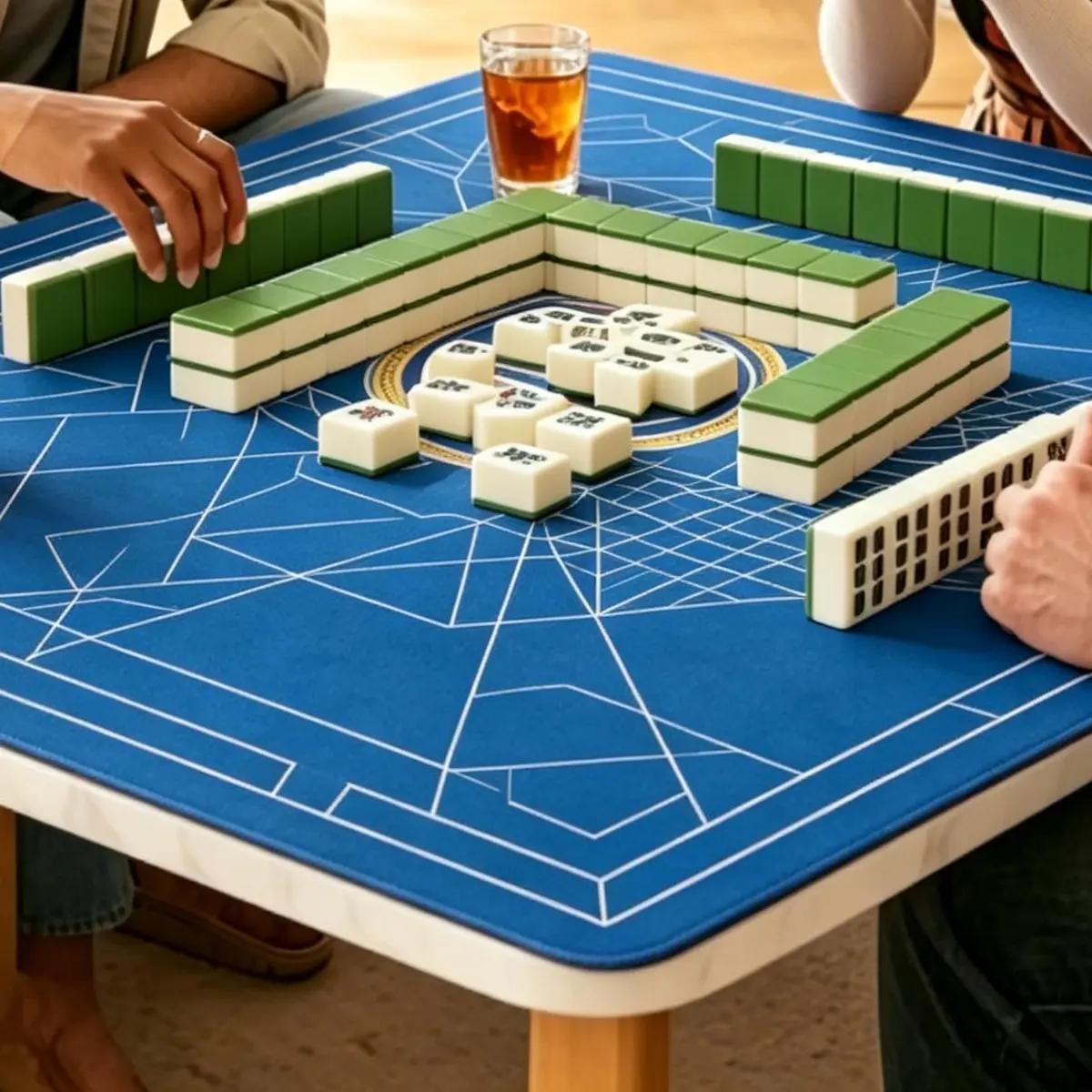

The practical answer to how to create a custom mahjong set is to control the project as a sequence of approved product decisions. Start with the player, rules version, sales channel, and price position. Then define the tile system, accessories, case, branding, and packaging before artwork is released. The goal is not to make every component unique. It is to create one coherent set that can be sampled, inspected, reordered, and explained to the customer.
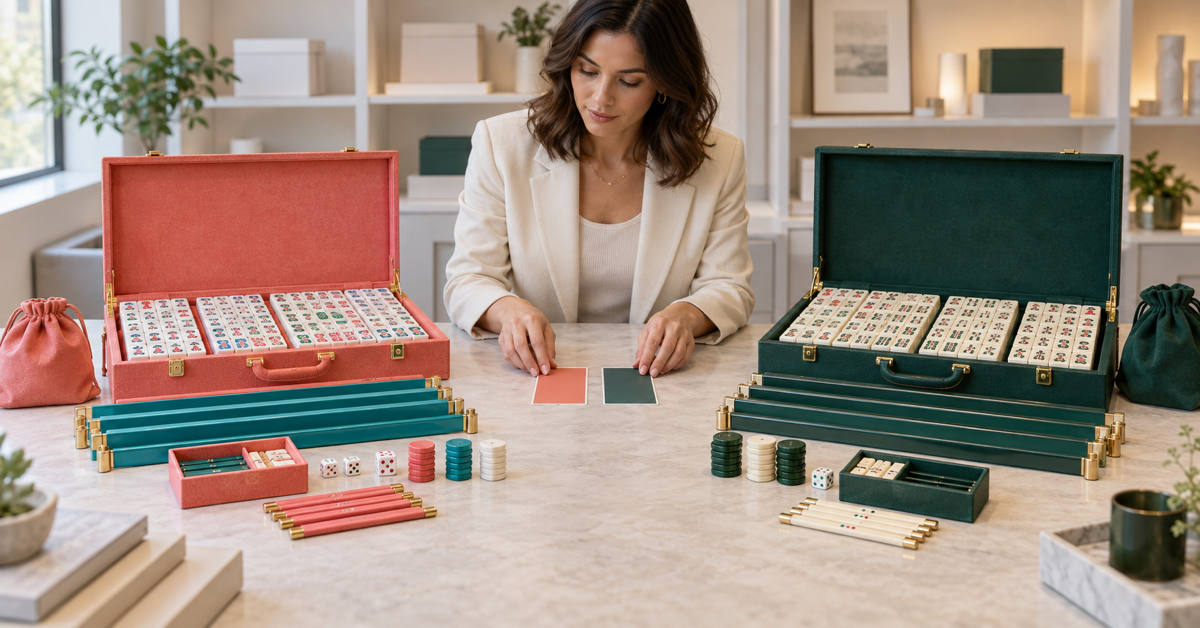
Model the complete play system before choosing a design
A Mahjong set is more than a group of decorated tiles. Players interact with the face, back, edge, rack, pusher, dice, case, and rulebook as one system. A change in tile thickness can affect how the pieces stand in a rack. A larger case can change carton quantity and freight. A new color can influence the artwork contrast and the packaging palette.
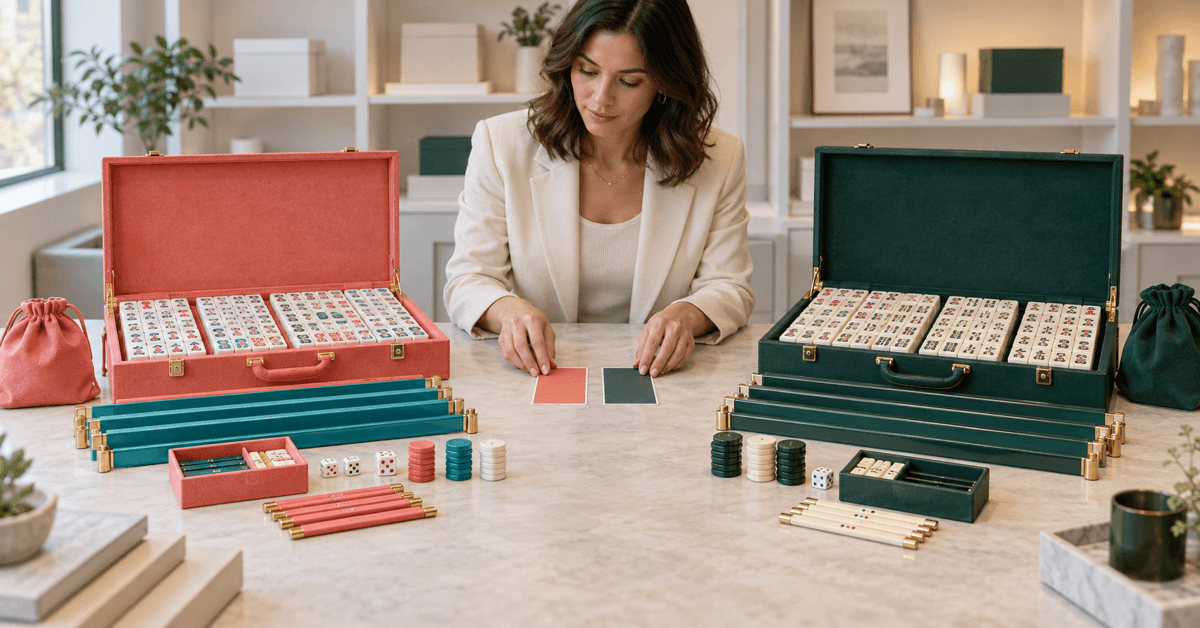
Write the intended use in one sentence. For example: "This will be a gift-ready American Mahjong set for boutique retailers, using a coral tile back, compact case, coordinated racks, and a short beginner guide." That sentence gives the supplier a play system and a commercial context. It is much more useful than asking for a custom set without stating who will buy it or how it will be used.
| Project context | What must be decided | Proof before development continues |
|---|---|---|
| Retail collection | Price position, shelf presentation, pack size, visual identity | Retail mock-up and channel-specific sample |
| Gift or corporate program | Personalization, presentation, delivery window, recipient experience | Branded sample, insert layout, and pack-out |
| Club or tournament use | Rules version, component count, durability, replacement access | Complete play test and component audit |
| Online-first product | Listing data, fulfillment protection, return risk, replacement parts | Landed cost model and customer-ready sample |
How to Create a Custom Mahjong Set when a catalogue configuration is not enough
A catalogue configuration may already solve part of the project. Existing tile sizes, rack shapes, case formats, and accessory groups can reduce development risk when they fit the product promise. Custom development should begin where the current option cannot deliver the required identity, function, or channel experience.
Separate the project into three customization layers. The appearance layer includes tile face artwork, back color, logo treatment, and surface finish. The play layer covers tile geometry, quantity, racks, pushers, dice, markers, and rules. The retail layer includes the case, box, insert, labels, instructions, barcode, and carton. A strong custom program connects all three layers instead of changing decoration while leaving the rest mismatched.
| Component | Catalogue change | Custom development | What it affects |
|---|---|---|---|
| Tile face | New color, logo, or rule-specific artwork | New face system, engraving plan, or print process | Recognition, legibility, tooling, inspection |
| Tile geometry | Existing size with a new finish | New length, width, thickness, edge, or stacking profile | Rack fit, feel, case space, carton cube |
| Accessories | Standard dice, racks, or pushers in selected colors | New geometry, coordinated colors, or branded details | Playability, component count, package layout |
| Case and packaging | Logo, label, color, or insert changes | New structure, opening method, or gift presentation | Protection, unboxing, freight, shelf fit |
| Rulebook | Cover and language changes | New hand examples, diagrams, or original content | Player onboarding, print size, approval scope |
Write a one-page development brief
The brief should be short enough for every stakeholder to read but specific enough to price. Include the target buyer, destination market, rules version, desired tile count, product dimensions or size preference, material direction, artwork status, accessory list, packaging direction, quantity, target delivery date, and retail price position.
State the decision status of each item. Mark the rules version, tile count, and primary color as fixed or open. Identify which components may change to protect cost or lead time. Name the person who can approve artwork and the person who can approve commercial changes. If approvals are shared, define who breaks a tie.
The Mahjong set specification guide can help turn these commercial choices into a controlled release file. A useful brief is not a mood board alone. It also records the reasons behind each decision so a later revision does not reopen settled work.
Prepare artwork that manufacturing can use
Tile artwork must work at the final size and on the intended surface. A detailed illustration that looks clear on a monitor may lose small lines after engraving or printing. Test line weight, contrast, symmetry, edge clearance, and orientation before approving a visual concept.
Build a master face list. Name every tile, mark the quantity, identify the artwork file, and note whether the design is fixed by the rules or open to interpretation. Create a separate back design and color reference. Define how the logo or pattern aligns when the tile is rotated and how the surface should look under normal indoor light.
Version control matters as much as visual quality. Use one active artwork set and archive superseded files. Record which changes affect only the design, which require a new sample, and which alter a tool, print plate, color mix, or packaging cut. The Mahjong color matching service explains why a physical reference is more reliable than a screen color.
Use sample gates instead of one broad approval
A single sample meeting can hide unresolved decisions. Split development into gates, and make each gate answer one question. Approve or reject the evidence before moving to the next stage. This keeps a small correction from being discovered after the complete set, packaging, and carton have already been produced.
| Development gate | Question to answer | Required evidence | Possible outcome |
|---|---|---|---|
| Artwork proof | Are all faces, backs, colors, and logo positions correct? | Numbered proof, file revision, and markup sheet | Release, revise, or request a physical proof |
| Material and color sample | Does the surface and color match the approved reference? | Physical swatch, finish note, and lighting photos | Approve, adjust color, or change material |
| Geometry sample | Do the tile, rack, pusher, and case interfaces work together? | Measurements, play test, and fit notes | Refine geometry before full sampling |
| Complete play sample | Can the set be used and sold as one finished product? | Full component set, rulebook, case, and retail pack | Approve the saleable configuration |
| Pre-production confirmation | Does the final file set match the approved sample? | Golden sample, specification, and open-issue log | Release production or hold the order |
The sample approval workflow provides a practical structure for assigning decisions and keeping samples traceable. The complete set should be approved last because it reflects what the buyer will actually receive.
Test the set the way the customer will use it
Set the sample up in the intended environment. Load each rack, place the pushers, open and close the case, read the rulebook, and inspect the retail package. Play enough to expose handling problems that a table inspection may miss. Check tile stability, face legibility, color consistency, edge condition, and the amount of movement between components.
If the product is a gift, have someone unfamiliar with the project open it without instructions. If it is sold online, photograph the exact approved sample and compare the images with the planned listing. If it is a club set, ask several players to test it and record comments by component rather than as a general opinion.
Keep the approved sample with its revision number, measurements, color references, artwork files, and open notes. A photograph is not a replacement for the physical golden sample. The four-gate quality control model shows how that reference can support incoming, in-process, final, and packaging checks.
Build quality and packaging controls into the design
Define what a conforming set contains before production begins. The inspection plan should cover tile count, face identity, dimensions, color, surface condition, engraving or print position, rack fit, accessory function, rulebook version, case condition, labels, and carton data. Each check needs a method and an acceptance rule.
Packaging is part of the product specification, not a final shipping detail. Confirm the inner supports, insert clearances, accessory positions, closure method, retail label placement, and carton protection. The packaging quality checklist can help a buyer review both presentation and protection.
Record the sample size, lot, result, defects, photos, and disposition in one inspection record. If a defect appears, identify whether it affects one tile, one component, one packaging position, or the complete lot. The response should match the cause rather than triggering an unnecessary remake of the whole project.
Understand cost and lead time through the decisions
Ask how each requested change affects the project. New artwork and an existing tile format usually create a different cost profile from a new geometry, custom mold, special color, or structural case. The product, tooling, samples, packaging, inspection, freight, and payment terms should appear as separate lines so the total can be compared honestly.
Development time also follows the approval chain. Time is consumed by artwork revisions, physical color approval, tooling, sample production, shipping, complete-set review, and packaging confirmation. A compressed schedule is more realistic when the brief is stable and the buyer can approve each gate quickly.
The U.S. Commercial Service Export Solutions resource offers general guidance on export planning and documentation. Use it alongside supplier-specific lead times and a landed-cost model that includes duties, freight, insurance, payment fees, and a practical allowance for returns or replacement parts.
Create a release record for repeat orders
The approved sample is the beginning of production control, not the end of product development. Store the final specification, artwork revision, color reference, measurements, component list, packaging drawing, inspection plan, and approved sample together. Record the supplier, production date, quantity, and any approved deviations.
When a repeat order is planned, compare the new quotation and production plan against the release record before approving it. Ask whether any material, component, print process, packaging, or subcontractor has changed. A quick review can prevent a visually similar set from losing the recognition, feel, or function of the first release.
ABC Mahjong's custom Mahjong development page outlines how tile, accessory, case, and packaging choices can be coordinated. Buyers can also review the Mahjong product range to identify which established components can reduce risk. The about page explains the manufacturing context behind the product program.
Questions to resolve before the first sample
- Is the rules version, tile count, and component list fixed?
- Which market and sales channel will define the packaging and price position?
- Which tile faces, backs, colors, and logos require new development?
- Which catalogue components can be reused without weakening the product?
- Who owns final approval for artwork, function, cost, and schedule?
- What will be measured at each sample gate?
- How will the complete set be packed, inspected, and reordered?
FAQ
What should I prepare before contacting a supplier?
Prepare the target market, rules version, buyer type, intended sales channel, quantity range, artwork status, accessory needs, packaging direction, destination, and required delivery window.
Can I customize an existing Mahjong set instead of starting from zero?
Yes. Reusing an established tile envelope, rack, case, or accessory group can reduce risk. Customize the components that create real product value and keep the rest stable.
Does a custom set always require a new mold?
No. New artwork, colors, packaging, and selected accessories may work with an existing tile geometry. A new mold is justified when a different size, edge, or interface creates enough product value.
How many tile faces should I include in the first proof?
Review the complete face list. Even when only a few designs are new, verify every tile for naming, artwork status, quantity, orientation, and rules compatibility.
What is the most important sample to approve?
The complete saleable set is the most important approval. It should include production-equivalent tiles, accessories, case, rulebook, packaging, labels, and the intended pack-out.
How should I evaluate tile colors and surface finish?
Use a physical reference and inspect it under more than one lighting condition. Compare color, gloss, texture, edge appearance, and how the surface holds the artwork.
When should packaging design begin?
Begin with the product brief. Packaging dimensions, insert clearance, accessory positions, and protection requirements can change the case, carton, freight, and retail presentation.
How do I control quality during bulk production?
Use the approved sample, released specification, and written inspection plan. Record measurements, defects, photos, sample size, and disposition for each production lot.
What should I compare in supplier quotations?
Compare identical specifications, component lists, tooling terms, sample stages, packaging, inspection, delivery assumptions, and payment terms. A unit price without scope is not comparable.
How can I keep later production runs consistent?
Maintain one release record and a physical golden sample. Review material, artwork, component, packaging, and subcontractor changes before approving a repeat order.
Turn one approved idea into a repeatable product
An effective answer to how to create a custom mahjong set is to reduce uncertainty one decision at a time. Define the player and play system, write a controlled brief, prepare manufacturable artwork, approve material and geometry through physical gates, and release production only against a complete golden sample. That discipline protects the design while giving the factory the information it needs to quote, sample, inspect, and repeat the product.
Send the target market, rules version, component list, artwork status, packaging direction, quantity, and delivery date through the ABC Mahjong contact page to begin a project review.