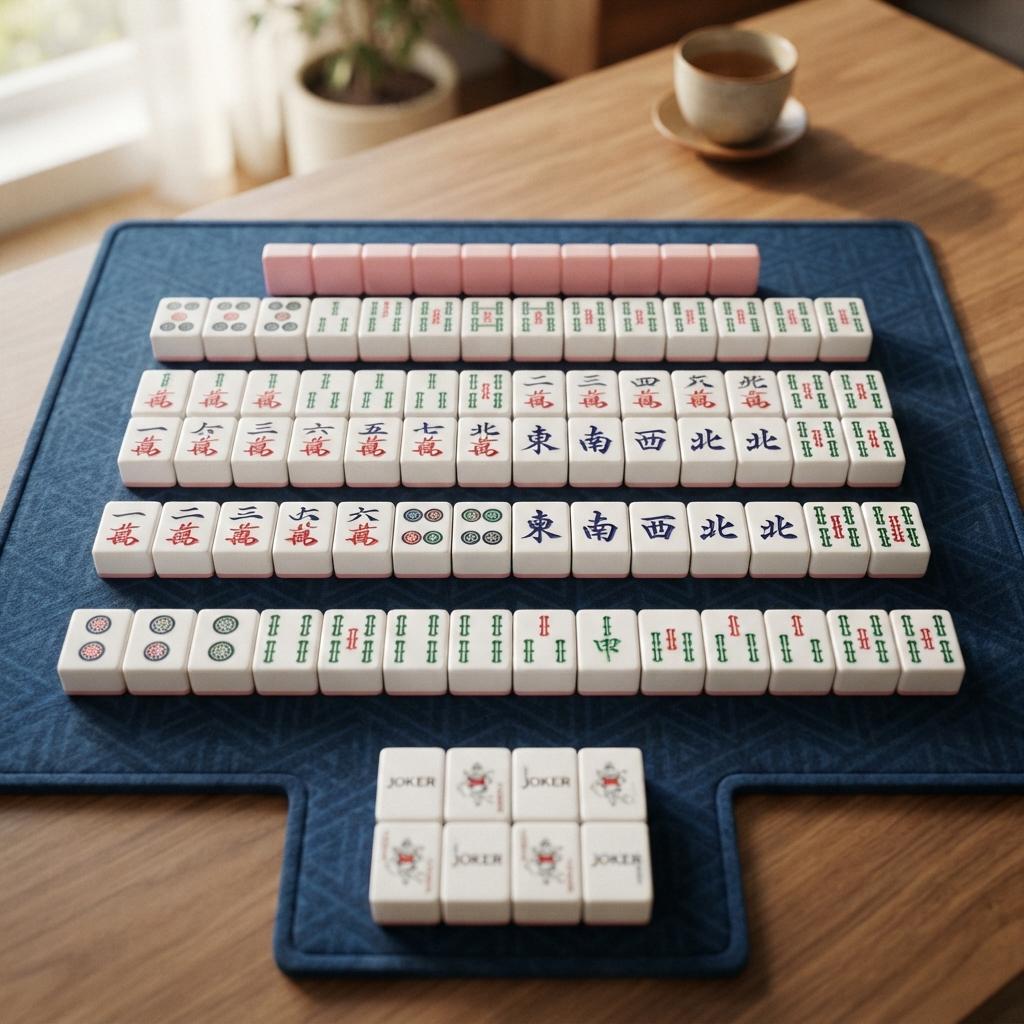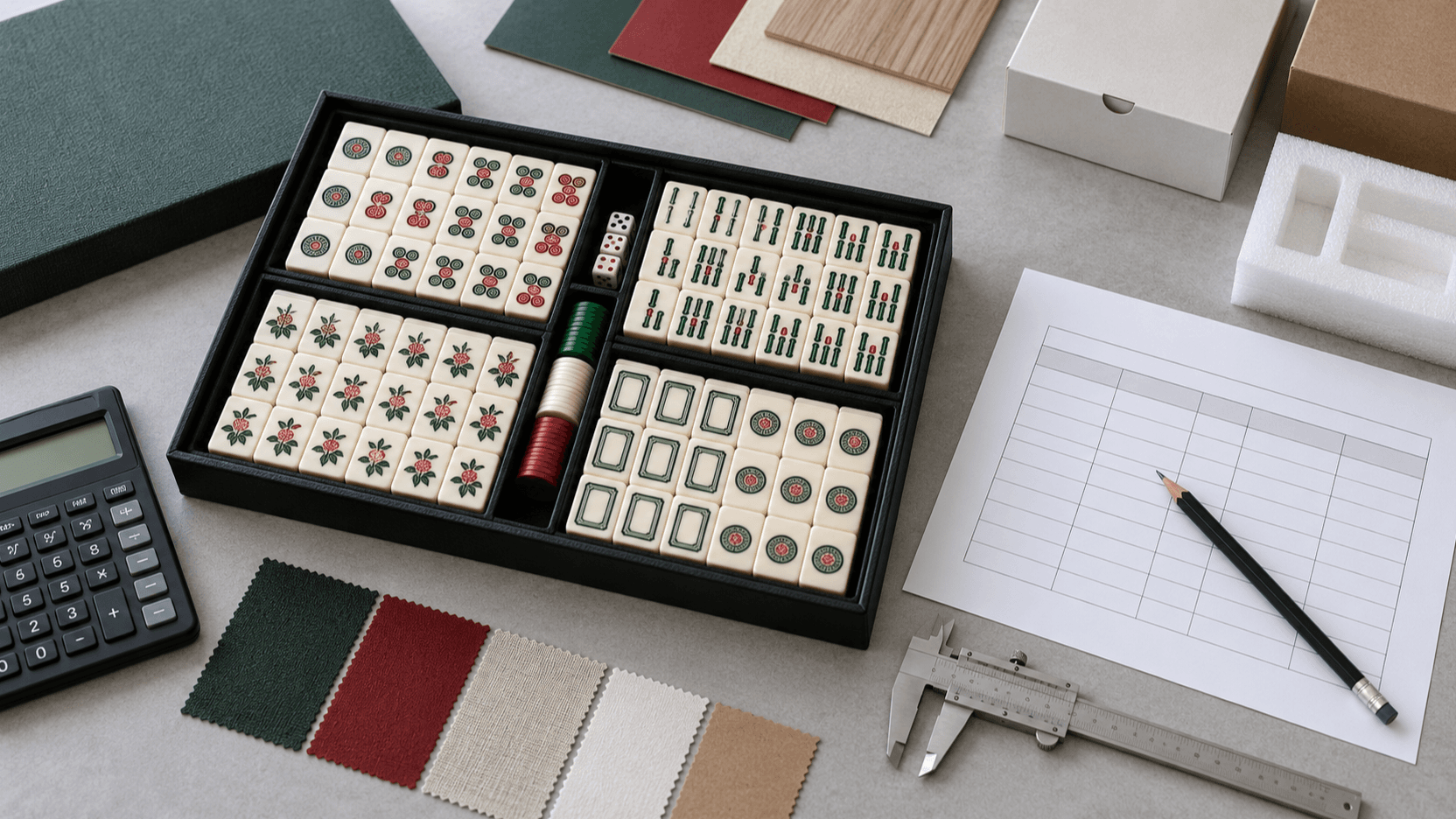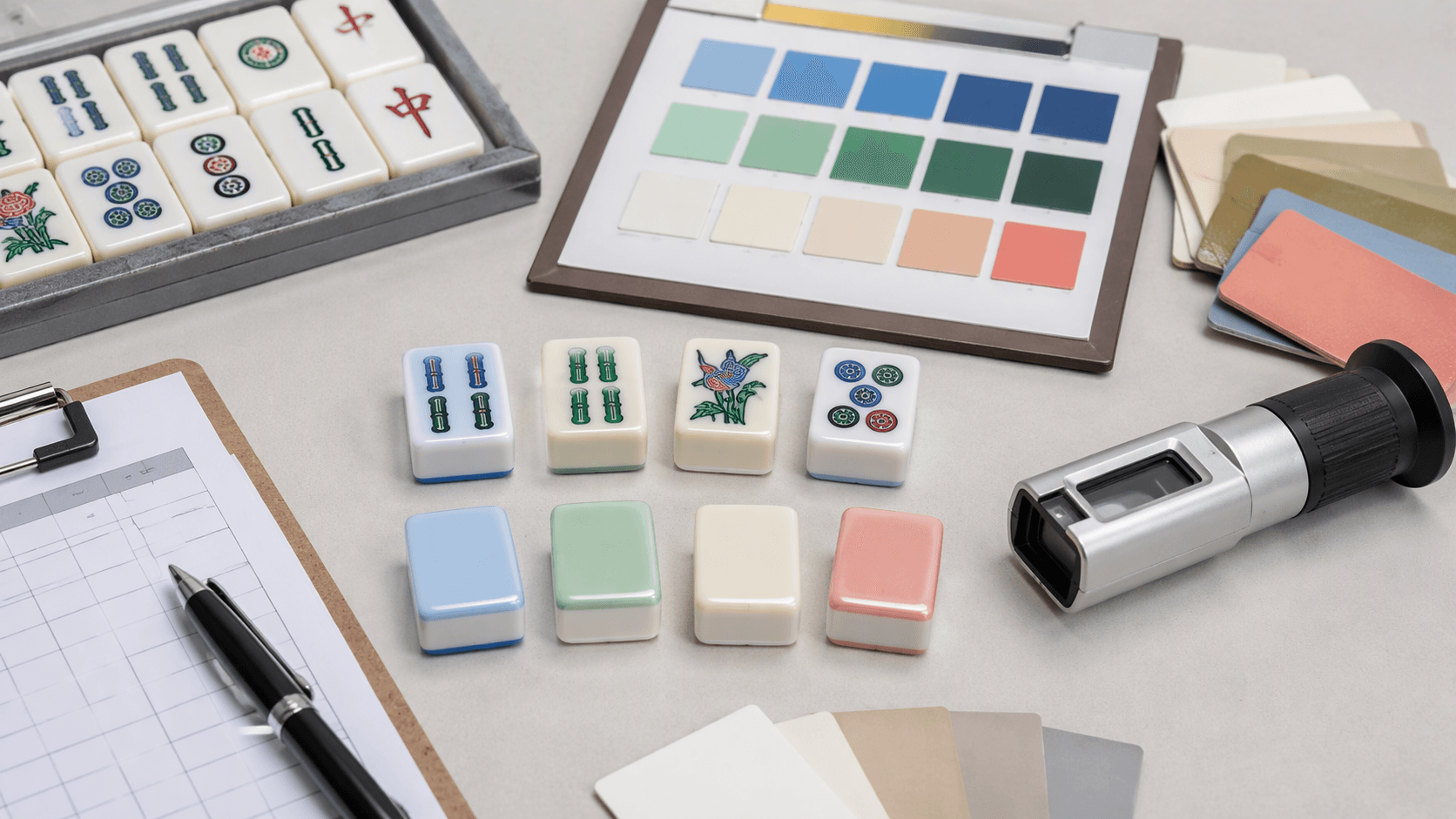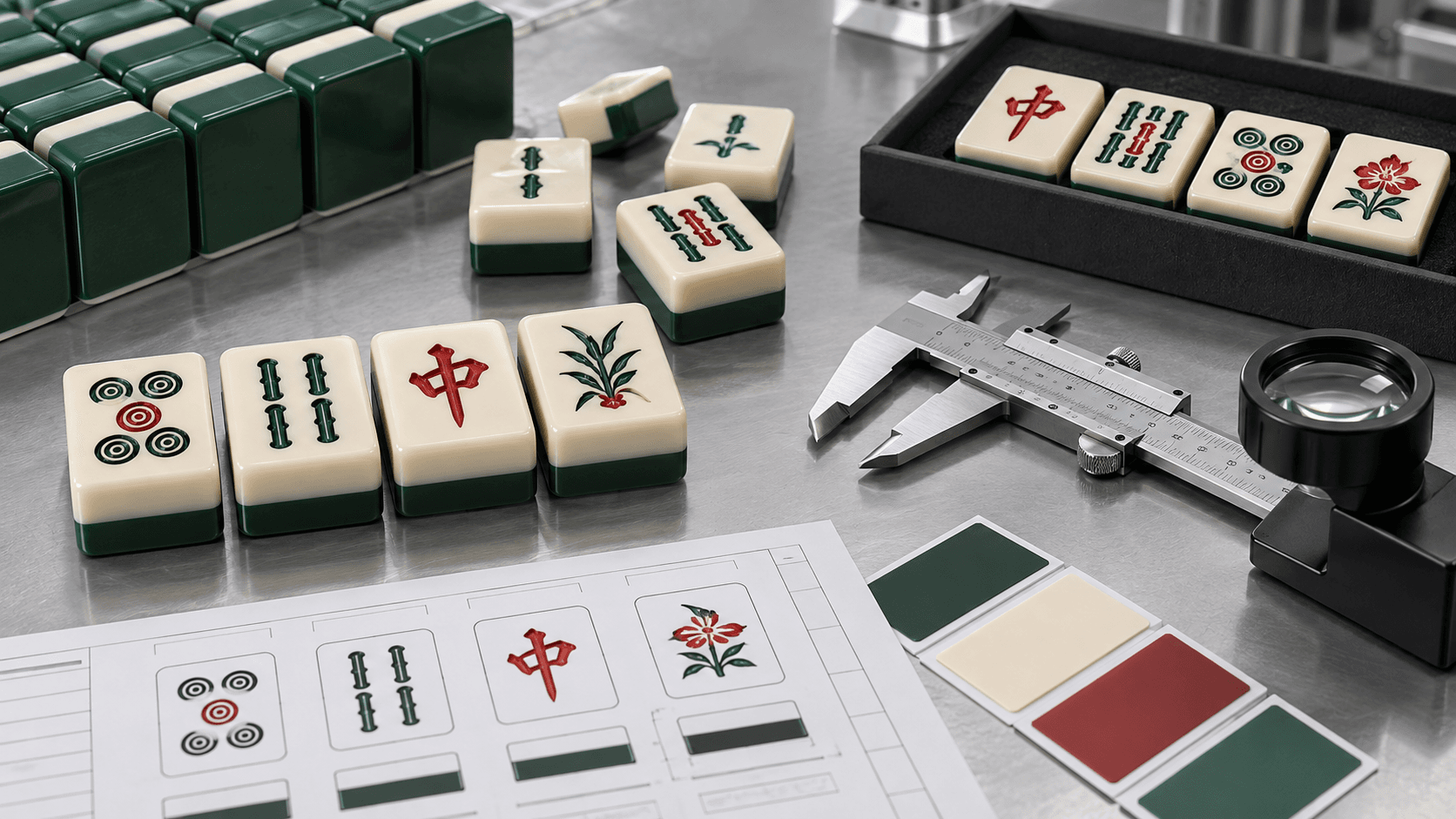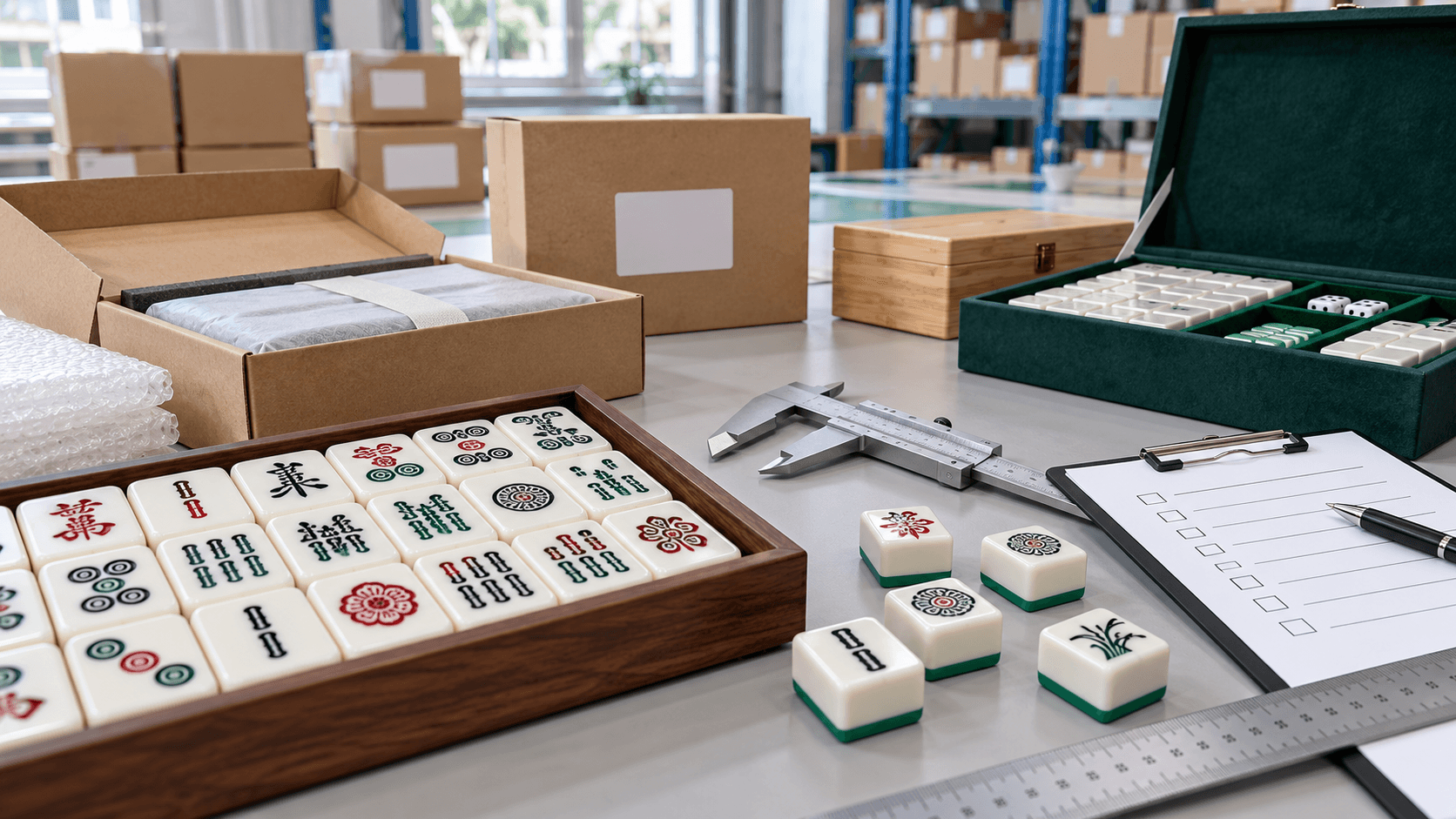

Two suppliers can send perfectly honest sample quotations and still be pricing different jobs. One may plan to make a few decorated tiles from an existing blank. The other may include a complete set, fitted insert, printed box, inspection record, and courier delivery. The totals are not comparable until the buyer knows what question each parcel is meant to answer.
That is why a mahjong sample cost works better as a small project budget than as a price for one object. It may cover file repair, color trials, machine setup, tiles, accessories, packaging prototypes, checks, protective packing, freight, import charges, and another round if something changes. Ask for those parts separately. A useful quotation says what will be made, what can be approved from it, which charges repeat, and where delivery responsibility ends.
Decide what must be true after the parcel arrives
Start at the approval decision, not at the shipping date. If the open question is body color, a dated chip made from the intended material may be enough. If it is artwork legibility, several decorated tiles can be more informative than a complete but unfinished set. Count, playability, accessory fit, instructions, and final pack-out require a production-representative set.
Consider a buyer reviewing a new retail collection. The first parcel confirms the tile body and face treatment. The box is still provisional, so paying to build the finished insert at that stage would create rework if tile dimensions change. Once the tiles are released, the packaging prototype can answer a different question: does every component fit, stay protected, and present correctly? Splitting the decisions keeps one failure from invalidating everything.
| Sample stage | Decision it can support | Work commonly charged | Still unresolved |
|---|---|---|---|
| Digital proof | Spelling, face schedule, layout, orientation | File cleanup and proof rounds | Material, actual color, depth, feel |
| Material or color trial | Body material, layer, pigment, finish direction | Small-batch mixing and sample blanks | Decoration and set consistency |
| Decorated tile group | Engraving or print, registration, fill, legibility | Machine setup, fixtures, plates, color work | Completeness, accessories, pack-out |
| Packaging prototype | Structure, graphics position, insert fit, opening | Dieline, print proof, materials, hand assembly | Full-lot consistency and transit performance |
| Pre-production set | Released components, function, appearance, packing | All approved processes, counting, inspection | Consistency across mass production |
Put the mahjong sample cost into comparable lines
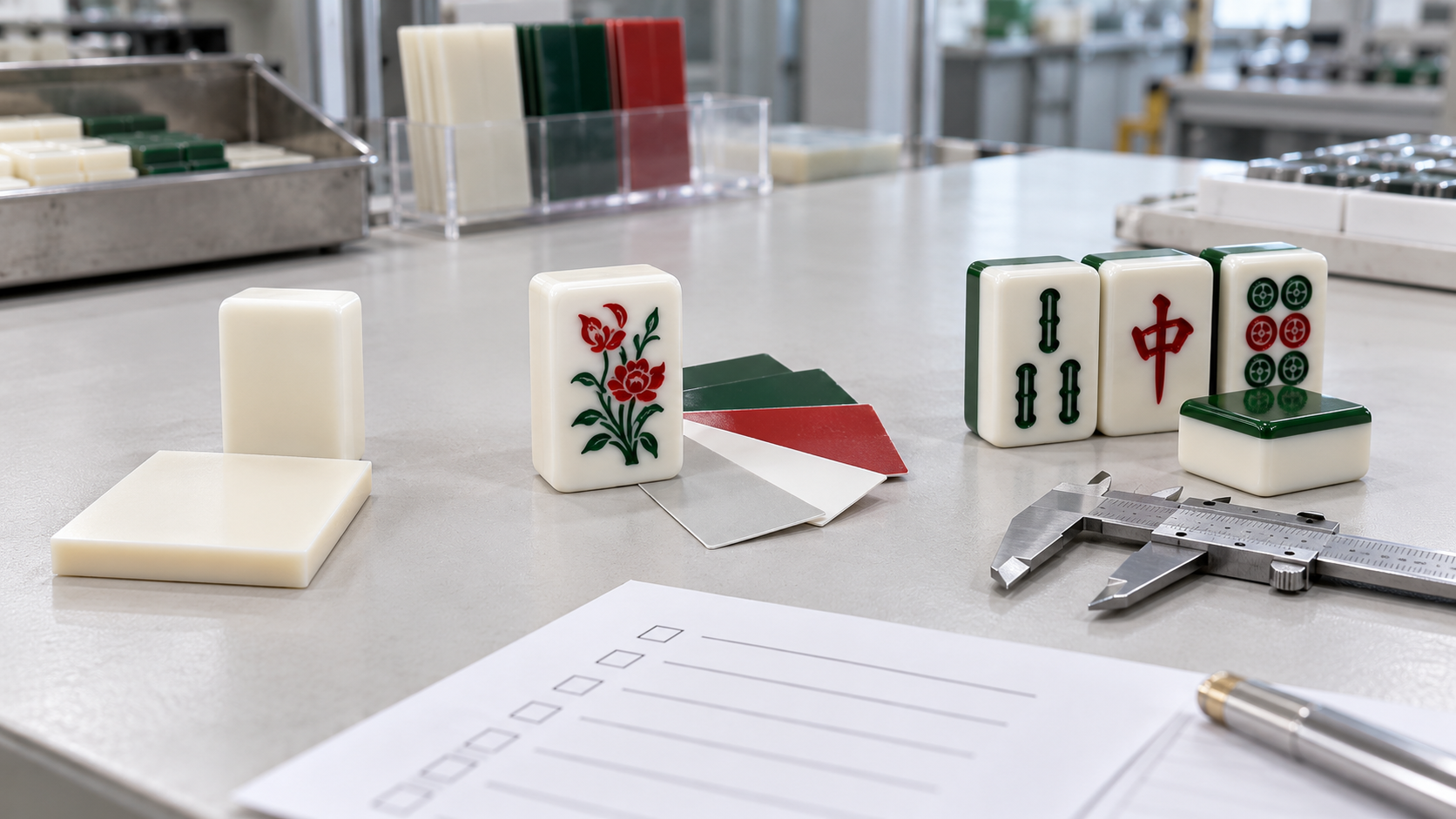
A single line called "sample fee" hides too much. Ask the supplier to separate preparation, physical output, packaging, checks, and logistics. This is not bookkeeping for its own sake. It reveals whether a second round will reuse the first setup, whether tooling belongs to the buyer, and whether the courier charge is based on an actual packed parcel.
Preparation may include engineering review, production-file repair, a custom color formula, plate or fixture setup, mold work, or a packaging dieline. Physical output should name the number of tiles, sets, accessories, booklets, inserts, and boxes. Logistics begins with protective packing and may continue through pickup, express service, brokerage, duty, tax, and local delivery. Some of those charges may never appear on the factory invoice.
| Quotation line | What to clarify | Record to keep |
|---|---|---|
| Artwork and engineering | Deliverables, source files, included revisions, ownership | File index and revision log |
| Material and color | Production material, reference, process, acceptable range | Dated chip and material note |
| Decoration setup | Faces, colors, depths, plates, screens, or fixtures | Face schedule and process record |
| Tooling | Prototype aid or production tool, custody, changes, reuse | Drawing and tooling terms |
| Set and accessories | Every component and quantity included in the parcel | Bill of materials and pack-out photo |
| Packaging | White mockup, printed proof, or production process | Dieline and material callout |
| Inspection | Checks performed and the limits for acceptance | Measurement or inspection report |
| Courier and import | Packed size, weight, service, term, named destination | Quote, tracking, and entry receipt |
Distinguish first-time development from a repeat sample
The first attempt often carries work that will not appear again: geometry review, color formulation, production-file cleanup, a new fixture, or a box dieline. A later approval set may reuse all of that and still need another machine setup, inspection, and shipment. Label each charge as one-time, repeatable, refundable against an order, or creditable only under stated conditions.
This distinction is especially important when comparing private label work with a new product platform. An established blank with original faces avoids tile engineering; a new thickness, layer construction, edge profile, or rack interface does not. The custom Mahjong set development guide shows where those technical decisions belong in the approval sequence.
Write the resampling rule before anyone needs it
Suppose the buyer replaces two faces after approving the proof. That is a buyer change. Suppose the factory engraves an older file. That is a supplier correction. A third case is a planned development trial, such as choosing between two fill methods that were intentionally left open. They should not automatically carry the same charge.
The quotation should state how many revision rounds are included, the cost of another setup, who pays courier freight after a supplier error, and what closes an approval stage. Collect comments on one marked file rather than sending separate instructions through email and chat. The Mahjong artwork preparation guide explains how a face schedule, color references, and revision status can travel together.
Quote freight from the packed sample, not the bare set
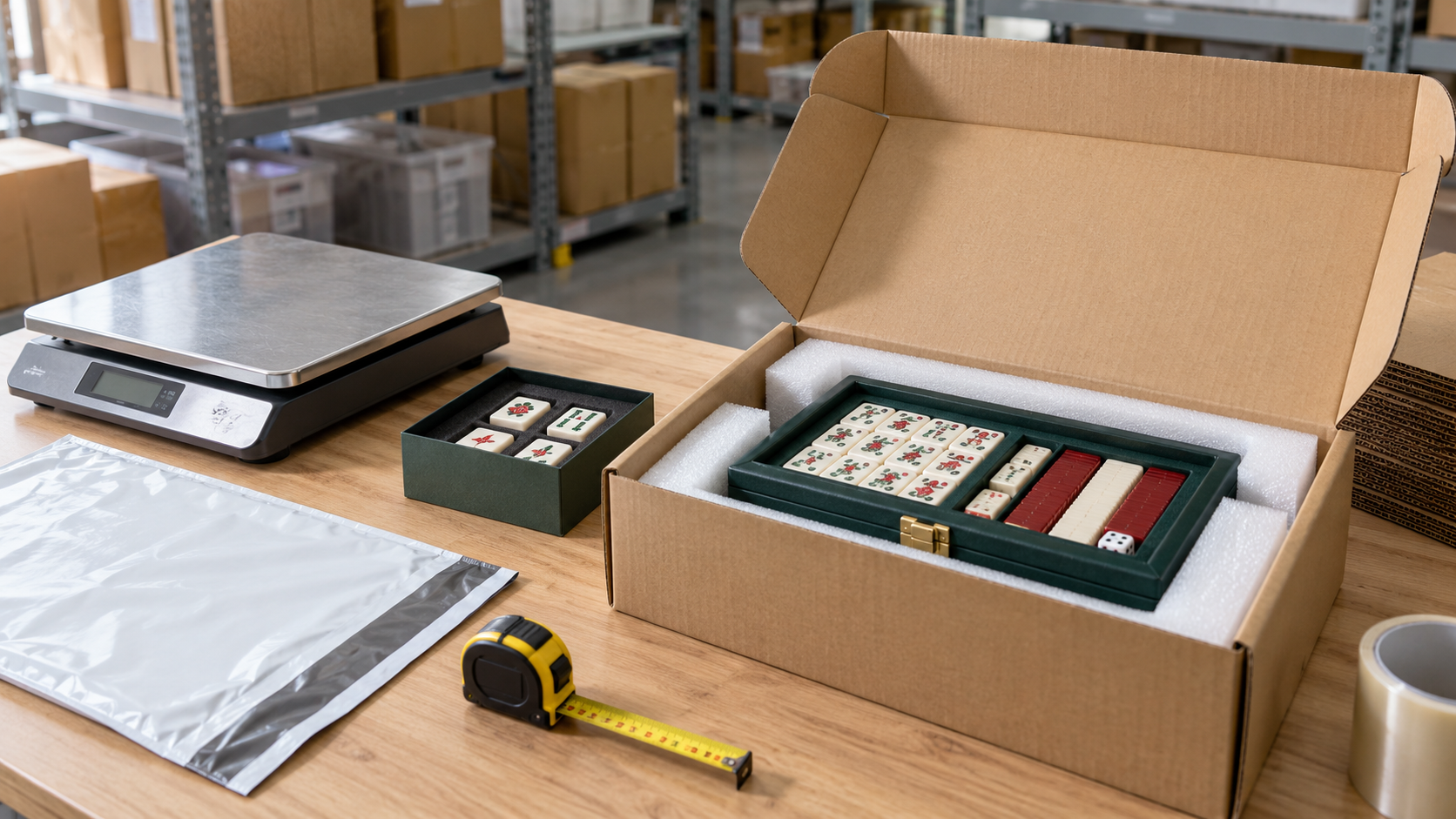
A Mahjong set is dense, while a presentation box can add unexpected volume. Before accepting a freight amount, obtain the outer length, width, height, actual weight, parcel count, pickup postcode, destination postcode, service level, and quote validity. A photo of the set on a scale does not establish the courier charge if the protective carton has not been built.
"UPS uses dimensional weight to calculate shipping costs when a package is large relative to its weight."
UPS explains dimensional weight by comparing occupied space with actual weight. The applicable divisor and billable result depend on the service and rate type. Use a current carrier quotation rather than an old spreadsheet formula. Combining several samples can help, but only if the larger parcel remains well protected and its billable weight is actually lower.
Name the delivery term and the place
"Freight included" is not a complete delivery promise. Included to the factory gate, the courier depot, an airport, or the buyer's door? The quotation should identify the Incoterms rule and version when one is used, its named place, the party arranging carriage, the party handling import clearance, and any destination charges left for the buyer.
"The Incoterms rules define important responsibilities of buyers and sellers for the delivery of goods under sales contracts."
Incoterms do not determine the sample price and do not replace the sales contract. They allocate defined delivery responsibilities, costs, and risks. The commercial documents still need a clear sample description, value, and destination. Where duty, tax, brokerage, or other import treatment could change the budget, obtain current advice from a qualified broker.
Treat the evidence as part of the deliverable
When the parcel arrives, the team should be able to identify exactly what was made. Keep the dated quotation, released artwork, component list, color or material reference, measurement results, pack-out images, tracking record, and written approval. If a deviation is accepted, record it. A loose sample without a matching revision history is difficult to use months later.
For a complete set, count the playable tiles, specials, blanks, spares, dice, racks, pushers, indicators, rules, inserts, labels, and cartons against the bill of materials. Then check the interfaces: tile to rack, tile to insert, insert to box, closure pressure, and surface protection. The Mahjong tile quality inspection checklist provides a fuller method for dimensions, decoration, completeness, and packaging evidence.
Protect the budget with a decision calendar
Sampling often becomes expensive because information arrives in the wrong order. Give artwork release, color choice, physical production, courier booking, receipt review, consolidated feedback, correction, and final approval their own owner and due date. For an international parcel, customs and last-mile delivery also belong on the calendar.
A packaging mockup built around unapproved tile dimensions may have to be rebuilt. A decorated set started before the face schedule is frozen can be beautiful and obsolete at the same time. Record any deliberate overlap and its risk. The Mahjong manufacturing timeline connects these dependencies to the wider launch schedule.
Review this checklist before paying the sample invoice
- The sample type and approval question are written in plain language.
- Every component, quantity, material, color, and revision is listed.
- Setup, tooling, output, packaging, checks, and courier are separate lines.
- The rules for buyer changes and supplier corrections are different.
- Production-representative materials and processes are identified.
- The packed dimensions, weight, destination, service, and trade term are stated.
- Any production-order credit has a value, trigger, and expiry condition.
- The required evidence and named approver are clear.
Finally, compare this sample path with the likely production quantity. A lengthy engineering program may make sense for a repeat collection and make little sense for a short event order. The custom Mahjong MOQ guide helps connect development effort with the first commercial commitment.
FAQ
Can a supplier quote before receiving the artwork?
It can offer a provisional scope. A firm quotation needs enough detail to judge file preparation, unique faces, colors, processes, components, and revision risk. Put every assumption beside the price so it can be corrected without confusion.
Why can one sample cost more than one production set?
One or a few samples may carry artwork work, color mixing, machine setup, hand assembly, inspection, and express freight. A production run spreads repeatable setup across many sellable sets.
Is the sample fee normally refundable?
There is no universal rule. Ask what amount can be credited, which production order triggers it, when the offer expires, and whether tooling, outside tests, or courier freight are excluded.
Can a digital proof replace a physical tile?
No. It can release spelling, sequence, orientation, and layout. It cannot prove material, actual color, engraving depth, print registration, surface feel, weight, or fit with accessories.
Are several loose tiles enough?
They may be the right evidence for color and decoration. A complete set is needed when the decision involves count, consistency, playability, instructions, accessories, packaging, or final pack-out.
Who pays when the factory used the wrong approved file?
The written resampling rule should treat this as a supplier correction rather than a buyer change. It should cover replacement work, repeated setup, and freight responsibility before the first sample is ordered.
Can samples share a courier shipment?
Sometimes. Compare the delay, protective packing, customs paperwork, and billable weight against the saving. Consolidation is poor value if it postpones an important approval or damages a fragile prototype.
What should the supplier photograph before dispatch?
Request all components, readable face groups, front and back treatments, key measurements, open pack-out, closed packaging, outer protection, the parcel on a scale, and measured outer dimensions.
When is a pre-production sample ready to approve?
It should match the released specification closely enough to support the named decision, include the agreed components and packaging, carry a traceable revision, and include the required inspection results.
How can a buyer spend less without skipping control?
Freeze files before setup, reuse proven components, answer one risk at a time, consolidate comments, and ship only the evidence needed for the next decision. Do not remove a gate that protects a customer-facing promise.
Make the quotation usable after the sample is gone
A dependable mahjong sample cost leaves an audit trail. Months later, another buyer should be able to see what was prepared, what arrived, which decision was made, what would repeat after a change, and who carried the delivery charges. That record is what turns a courier parcel into a production control.
This guide is published by Shenzhen Wenwei Technology Co., Ltd. for ABC Mahjong. Review About ABC Mahjong for company context, or contact ABC Mahjong with the target market, tile format, component list, artwork status, sample questions, packaging direction, destination, and required approval date to request a line-item sample plan.