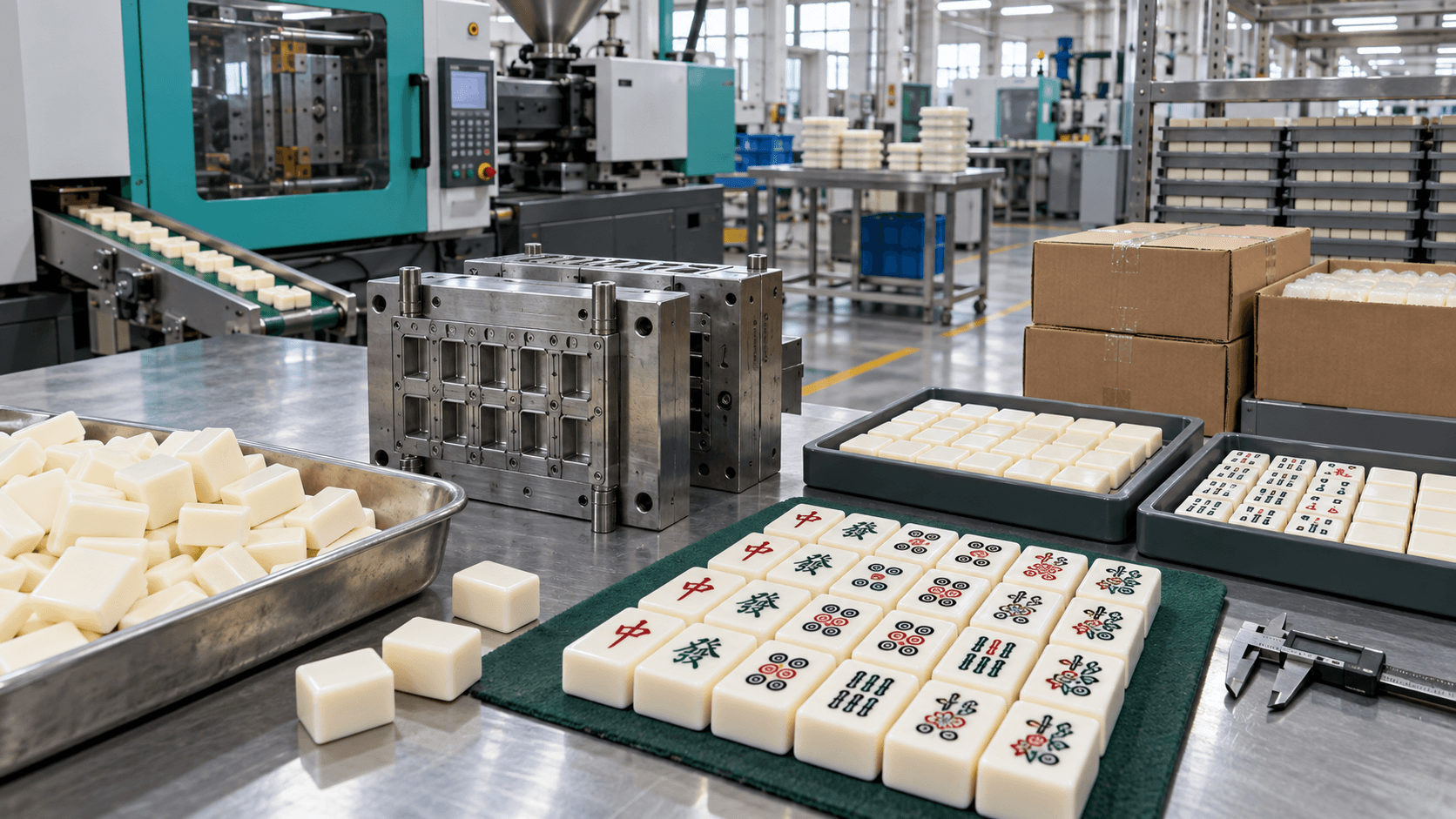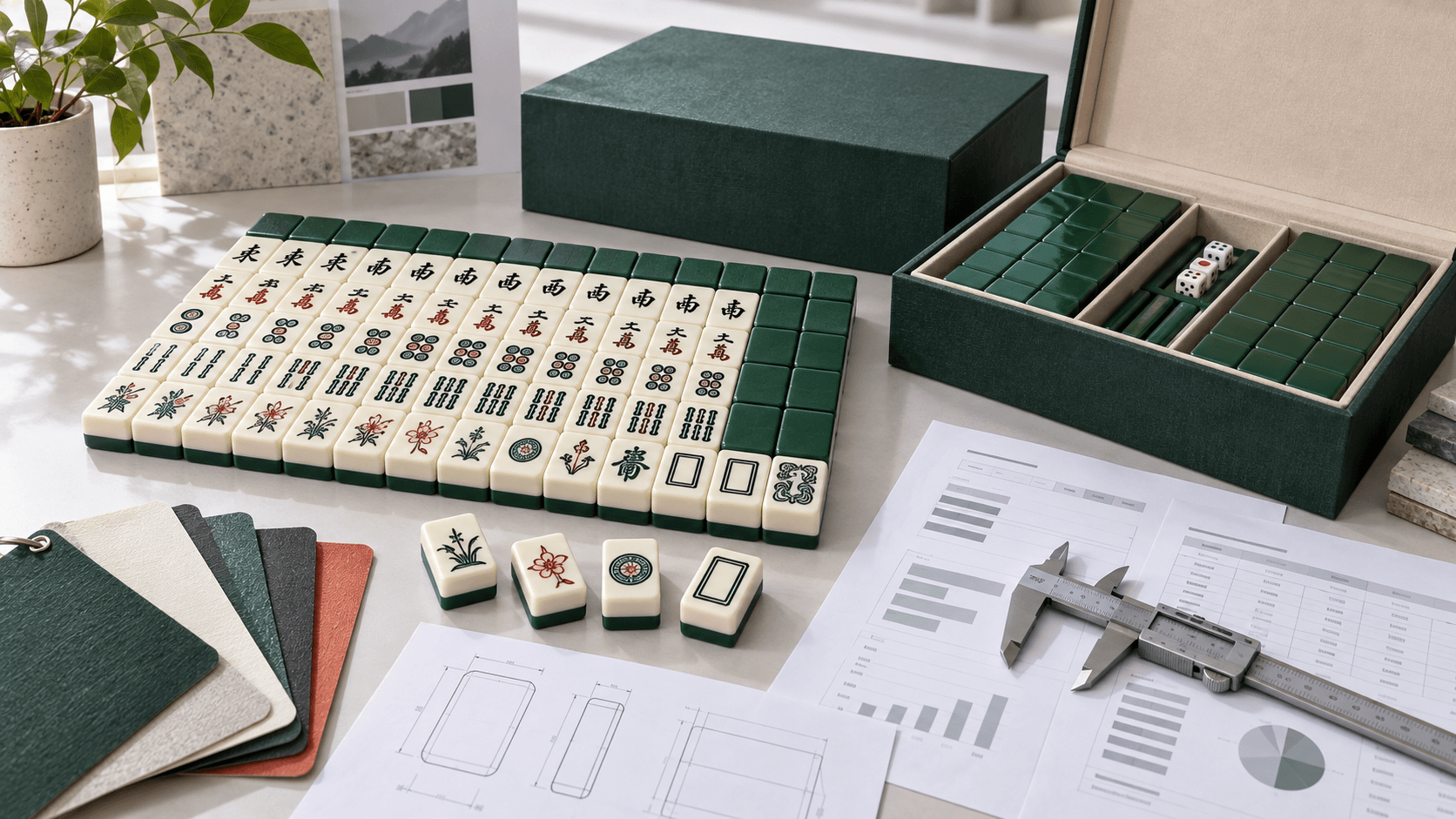

“How long does Mahjong manufacturing take?” is a planning question, not a single factory number. The clock starts at different points depending on whether artwork is ready, tooling exists, samples are approved, packaging is frozen, and the destination is known. A buyer who schedules only the production run can still miss a launch by weeks because approvals, rework, inspection, or freight were left outside the plan.
A dependable schedule has named gates. It shows the work that can run in parallel, the approvals that can stop the project, the information the factory needs, and the handoff from production to shipment. This stage-by-stage timeline is designed for custom and private-label sets, while still helping buyers of standard products ask the right questions.
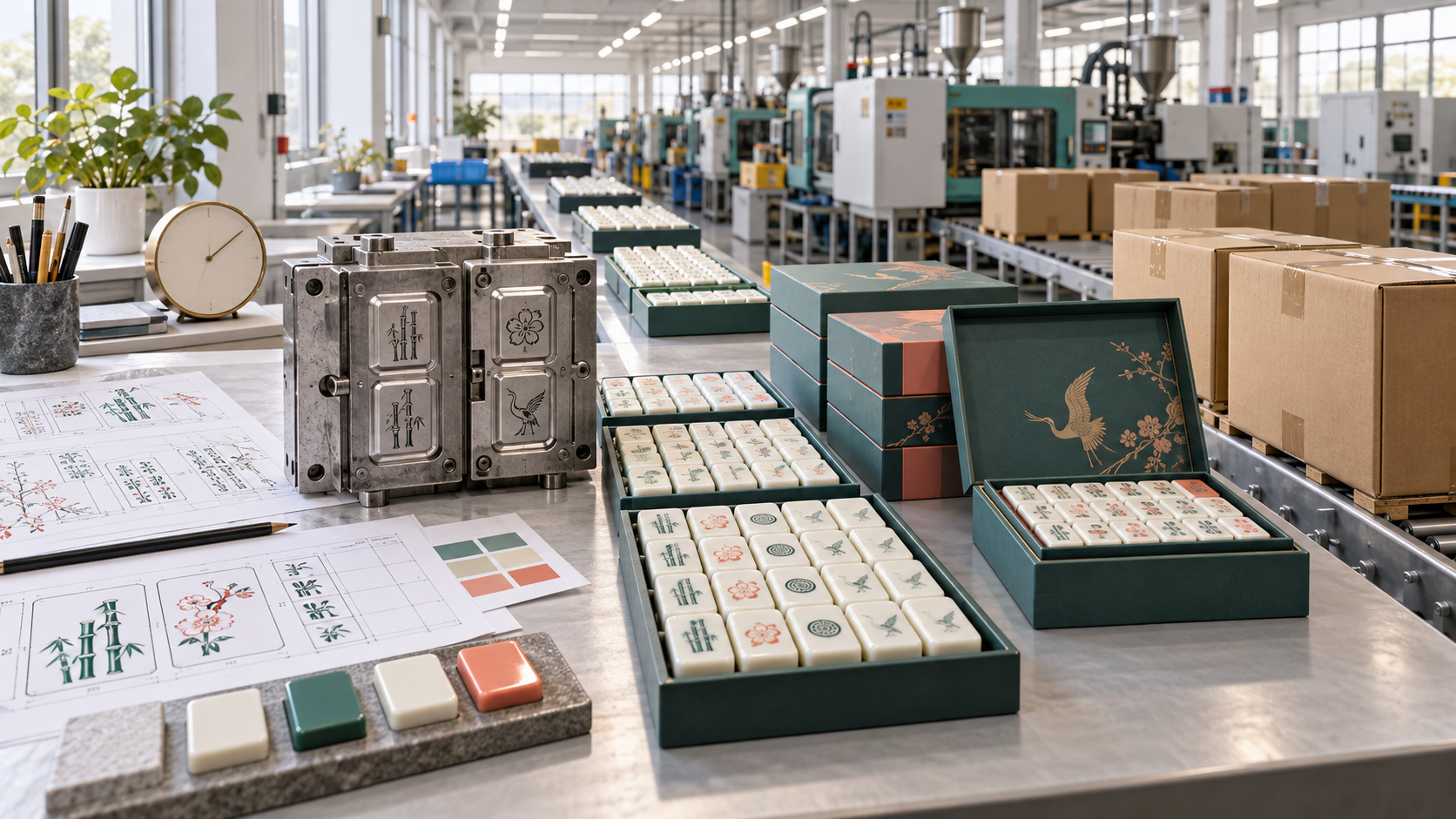
Use a clock that starts at the right milestone
Ask the supplier to quote lead time from a specific event: deposit received, artwork released, tooling approved, complete sample approved, or purchase order confirmed. “After order” is too vague when the order depends on files, colors, packaging, or a sample.
Separate three clocks:
- Development clock: brief, engineering, artwork, tooling, and samples.
- Factory clock: material preparation, production, assembly, inspection, and packing.
- Delivery clock: export handling, freight, customs, destination delivery, and receiving.
The clocks may overlap, but they should not be hidden inside one optimistic date. Build the plan around the longest approval or supply path, not the shortest task.
A practical custom-set timeline
| Stage | What happens | Buyer input | Schedule risk |
|---|---|---|---|
| 1. Brief and quotation | Scope, components, quantity, packaging, and delivery assumptions are aligned | Product brief and target date | Missing specifications create quote revisions |
| 2. Engineering review | Geometry, material, process, tooling, and accessory fit are checked | Artwork direction and required features | New geometry or incompatible components |
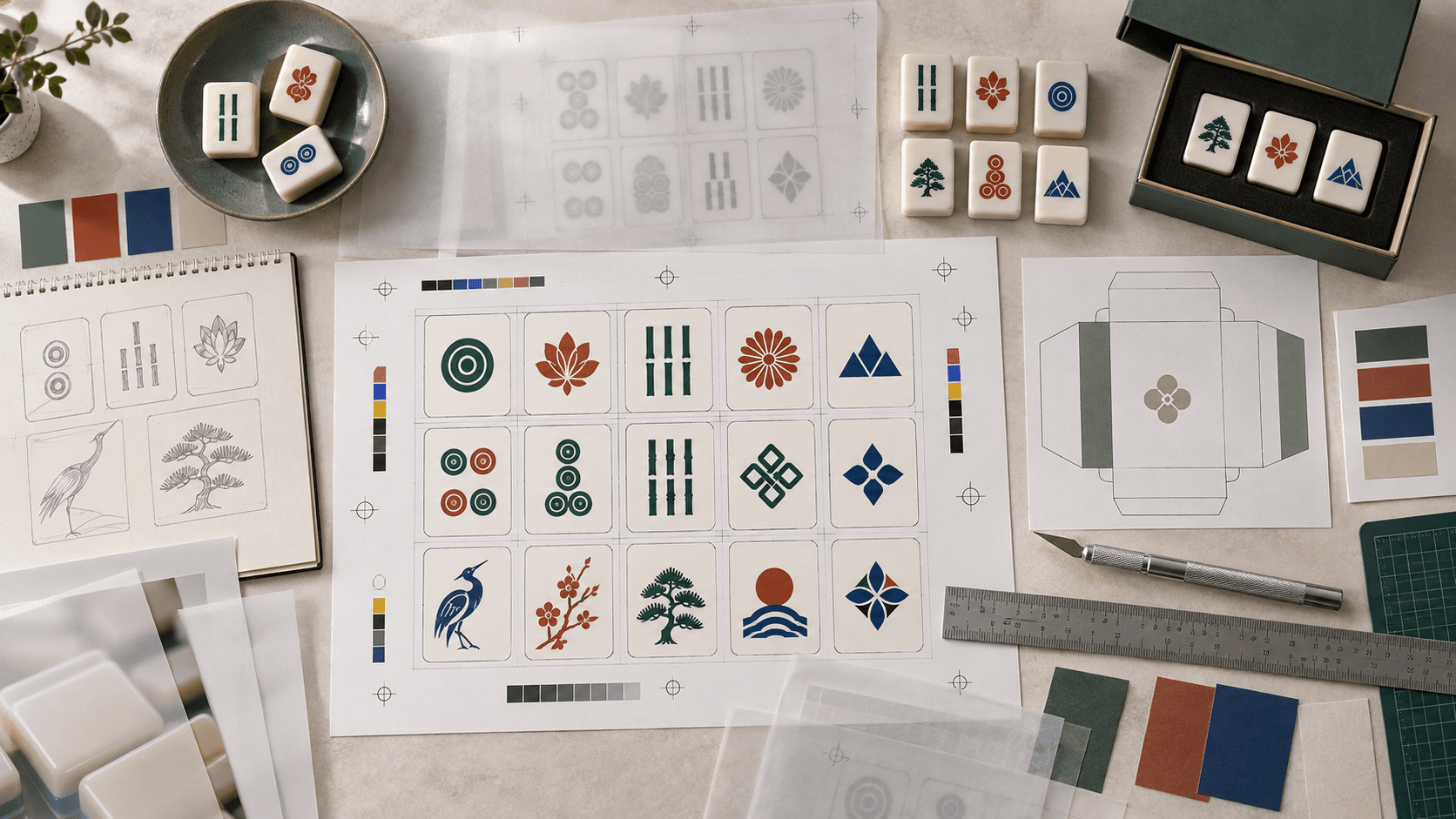
| 3. Artwork and packaging proof | Faces, colors, labels, inserts, and box structure are prepared | Controlled files and approvals | Late changes multiply sample work |
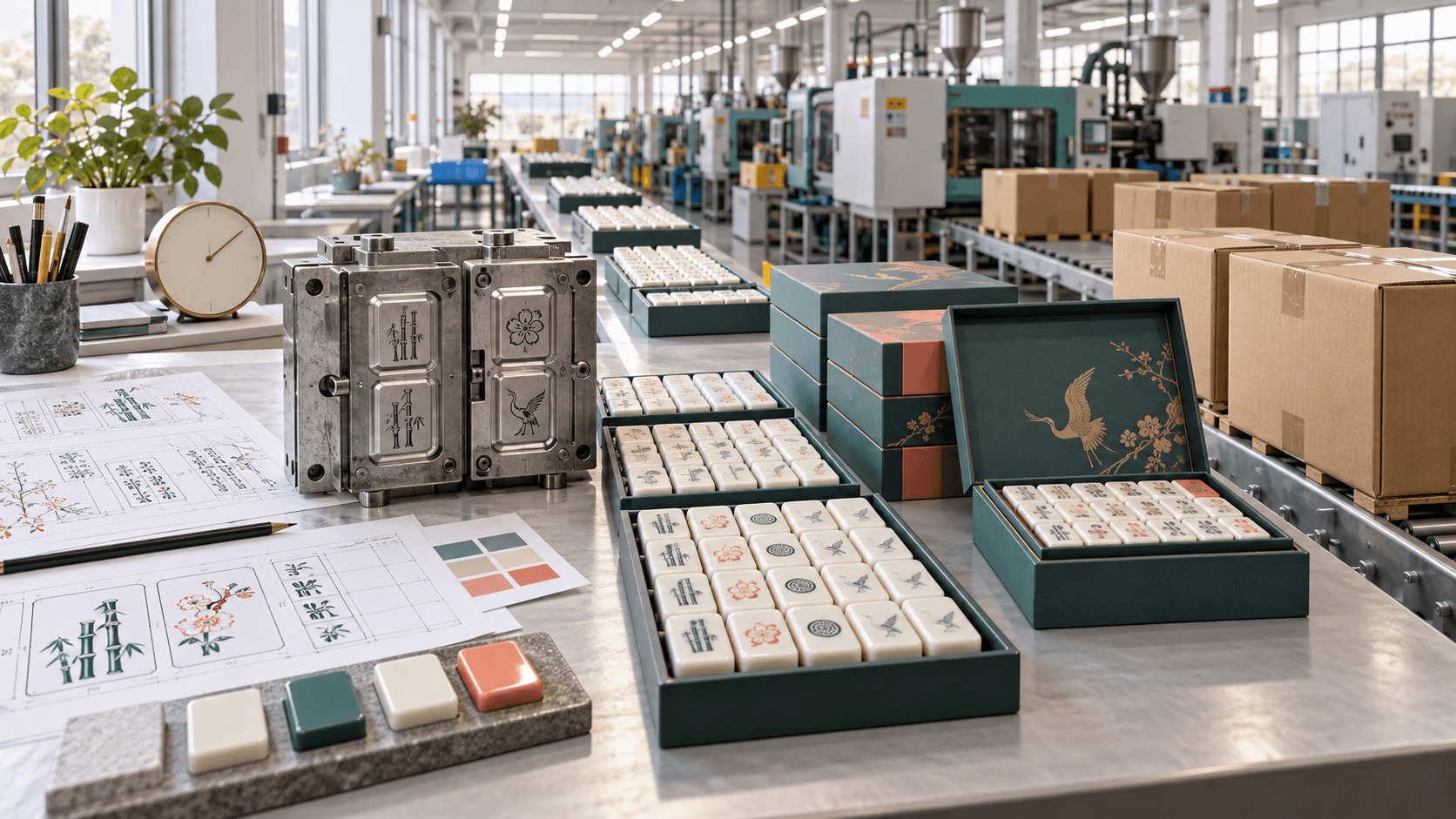
| 4. Tooling or setup | Molds, fixtures, plates, screens, or process setup are prepared | Tool approval and ownership terms | New tools and corrections add iterations |
| 5. Physical samples | Tile, color, complete set, and packaging samples are checked | Fast, consolidated feedback | Split comments cause repeat rounds |
| 6. Mass production | Material, molding, decoration, assembly, and packing are completed | Release and change control | Capacity, material, or rework constraints |
| 7. Inspection and shipment | Final checks, cartons, export file, freight, and receiving are coordinated | Inspection plan and destination details | Failed lot, booking, customs, or port delays |
Standard, private-label, and engineered projects move differently
A standard catalogue set may begin at product selection and quantity confirmation. The main variables are availability, packaging, inspection, and freight. A private-label order adds artwork proof, packaging setup, and a sample that proves decoration. An engineered set adds drawing review, tooling, test pieces, and more approval points.
Do not compare the lead time of a stock set with the lead time of a custom set and call the difference a factory problem. Compare like with like: same component list, same decoration, same quantity, same packaging, same quality gate, and same delivery basis.
The OEM versus ODM decision guide explains why a proven base design can reduce development work while a new geometry adds engineering and sample dependencies.
Identify the critical path before promising a launch date
The critical path is the chain of tasks that determines the earliest possible shipment. In one project it may be a new mold. In another it is artwork approval, packaging printing, a special accessory, a pigment batch, or a destination booking. Ask the factory to name the critical path and the tasks that can run in parallel.
Use a simple dependency map:
- Artwork cannot be released until the physical face area and process are confirmed.
- Tooling cannot be finalized until the geometry drawing is approved.
- A complete sample cannot be approved until the tiles and accessories are available.
- Packaging production cannot be frozen until the real tile and accessory dimensions are known.
- Final freight planning cannot be reliable until carton count, dimensions, weight, and destination are known.
This map usually reveals which “small” decision is actually holding the project.
Protect the schedule with approval gates
Fast feedback is one of the buyer’s strongest schedule tools. Consolidate comments into one marked file, name the revision, and state whether the supplier should proceed or wait. Avoid approving artwork in a chat while packaging is approved in a separate thread. The project manager should maintain one open-issue list.
Recommended gates are:
- Commercial scope and quotation confirmed.
- Engineering drawing and component list released.
- Artwork and color proof approved.
- Tooling or process setup approved.
- Complete physical sample approved.
- Packaging and carton proof approved.
- Final inspection passed and shipment documents checked.
The sample approval process gives each physical gate a clear owner and evidence instead of treating approval as an informal message.
What usually causes a Mahjong production delay?
| Delay source | Early warning | Practical prevention |
|---|---|---|
| Unclear artwork | Several files are called final | Use a face schedule and controlled revision |
| New geometry | Tool quote has no drawing or tolerance | Approve engineering assumptions before tooling |
| Late buyer changes | Comments arrive from multiple people | Nominate one approver and consolidate feedback |
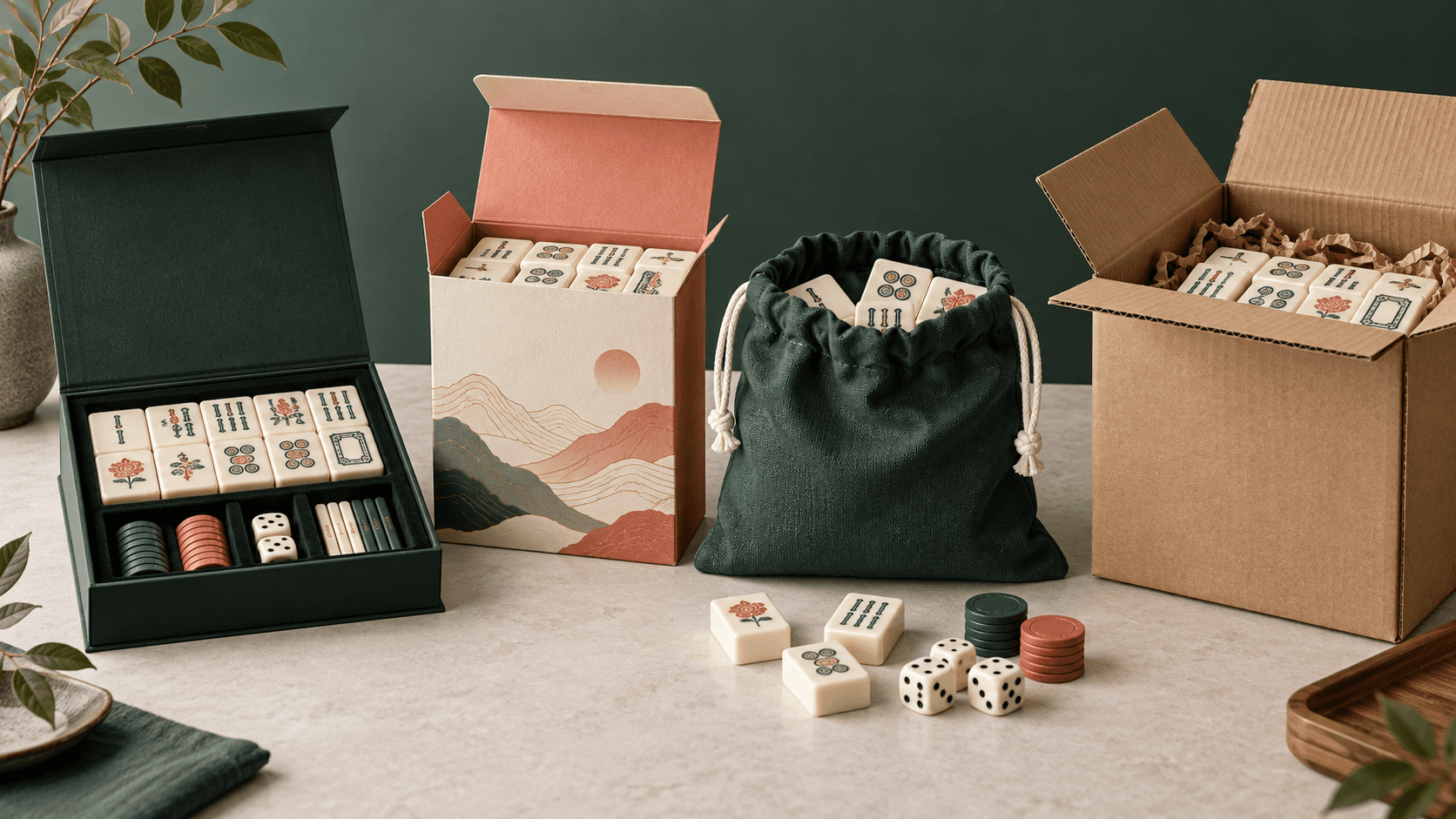
| Packaging mismatch | Box is ordered before complete sample | Freeze pack-out after physical dimensions are confirmed |
| Material or accessory shortage | Supplier says “waiting for parts” without a date | List every component owner and backup plan |
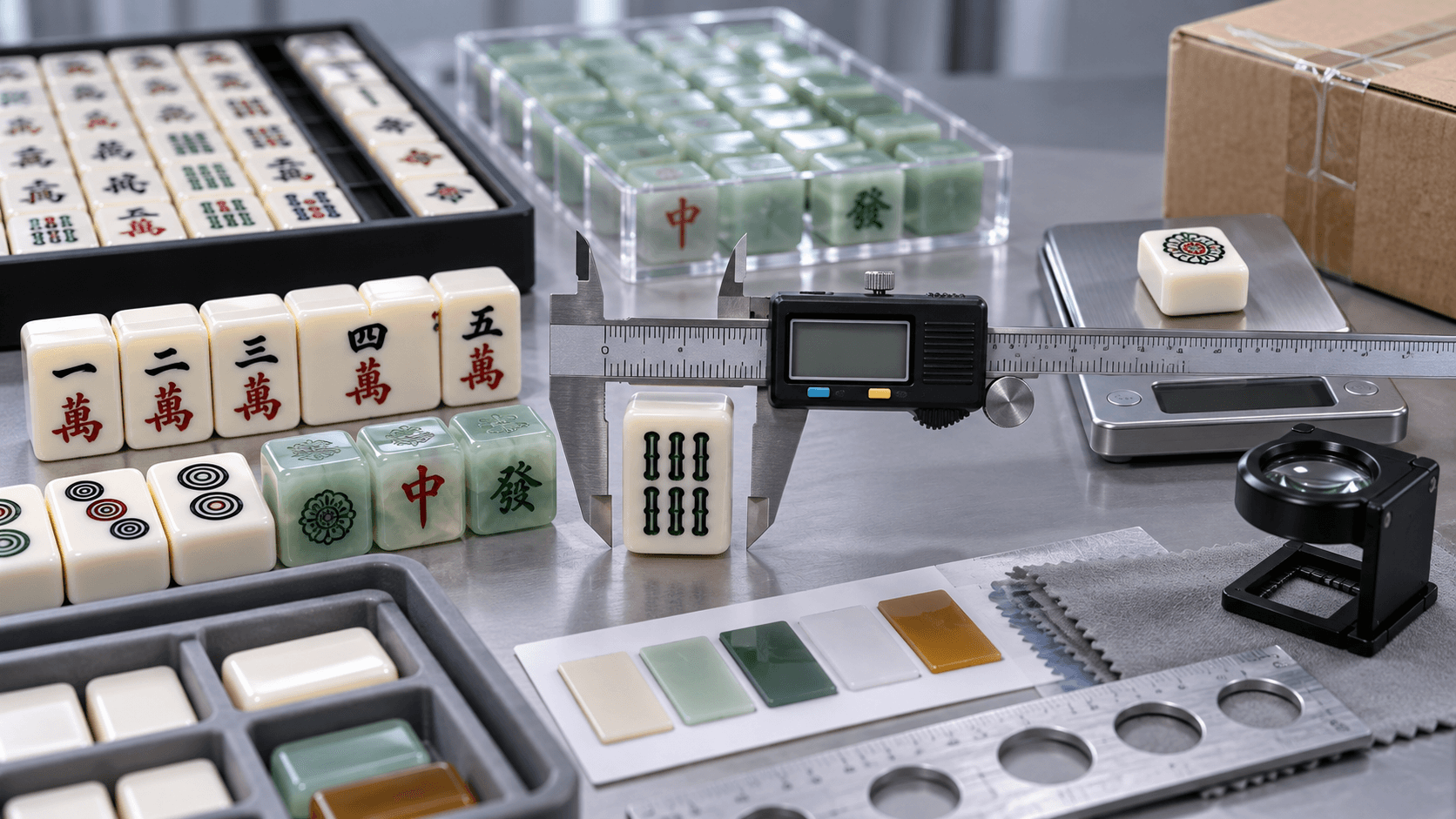
| Failed inspection | Defect limits were never agreed | Define defect classes, sampling, and corrective action early |
| Freight or customs | Carton data and destination are still unknown | Share shipment assumptions with the forwarder before packing |
Choose where speed is worth the tradeoff
A fast-track project can use a standard tile blank, proven accessories, existing packaging dimensions, limited color changes, and one consolidated sample round. That can be appropriate for a small launch or an event date. It should not mean skipping the complete sample, inspection, or release file.
A development-led project takes longer but can create a distinct tile feel, interface, artwork system, or packaging structure. The tradeoff is not simply “slow versus fast.” It is development time versus differentiation and future control. State which product decisions are worth the extra cycle before the quotation is accepted.
Plan delivery after the factory is finished
Production complete does not equal inventory received. Add final inspection, sorting or rework if needed, packing, carton labeling, booking, export clearance, transit, customs, inland delivery, and receiving. Use a named trade term and destination. The International Chamber of Commerce’s Incoterms 2020 overview explains why the delivery point, risk transfer, transport responsibility, and import formalities must be named rather than implied.
For customs planning, keep the commercial invoice, packing list, product description, quantities, weights, dimensions, and classification information aligned. A forwarder can help turn those inputs into a realistic arrival window, but the buyer should retain the assumptions used in the launch plan.
The World Customs Organization’s Harmonized System overview is a useful reference when product description and classification work affect the delivery plan.
For a private-label project, the private-label release plan helps connect artwork, packaging, inspection, and shipment milestones.
Build a schedule with three dates for every milestone
For each gate, record a planned date, an owner, and a latest acceptable date. Add a status such as not started, waiting for buyer, in progress, approved, or blocked. This makes a delay visible while there is still time to act. It also protects the relationship because the supplier and buyer can discuss a specific dependency instead of arguing over a vague promise.
Keep a short weekly update: completed work, next gate, open decisions, material risks, and revised arrival estimate. The format can fit on one page. Consistency matters more than a complicated project-management system.
FAQ
How long does Mahjong manufacturing take?
It depends on whether the set is standard, private label, or engineered, and on the readiness of artwork, tools, samples, packaging, quantity, inspection, and shipping. Ask for a stage-by-stage schedule with named approval gates.
What starts the production lead time?
Define the trigger in writing. It may be deposit received, approved artwork, approved tooling, complete sample approval, or purchase order confirmation. “After order” is not precise enough for a custom project.
Is a standard Mahjong set always faster?
Often, but availability, packaging, decoration, inspection, and freight still affect the timeline. A standard set with custom packaging may take longer than a stock set with a simple carton.
How much time should I allow for samples?
Allow enough time for the sample type and feedback cycle. Digital proof, color, physical tile, complete set, and packaging may each be separate gates when the project has higher risk.
What is the biggest cause of buyer-side delay?
Unconsolidated feedback and changing files are common causes. Nominate one approver, use a revision number, and return one marked decision package.
Can tooling and packaging happen at the same time?
Some work can run in parallel, but packaging should not be frozen until tile and accessory dimensions are confirmed. Ask the factory to identify safe parallel tasks and dependencies.
Does MOQ affect lead time?
Yes. A higher quantity may require more production slots, material, decoration, assembly, or carton planning. Ask for quantity tiers with capacity assumptions.
How should I handle a failed final inspection?
Hold shipment, identify the affected lot or cartons, agree sorting or rework, document the cause, and set a re-inspection gate before revising the arrival date.
When should a freight forwarder be involved?
Involve the forwarder before cartons are finalized. Route, mode, dimensions, labels, trade term, and destination requirements can influence both cost and timing.
What schedule documents should I retain?
Keep the quotation assumptions, milestone plan, approvals, sample records, change log, inspection report, packing data, shipping documents, and final receiving record.
Plan the approval path, not just the factory days
The practical answer to how long does mahjong manufacturing take is a schedule that exposes dependencies. When artwork, engineering, samples, production, inspection, packaging, and delivery each have an owner and a gate, the buyer can make an informed tradeoff between speed and product control.
Send your product brief, artwork status, quantity, packaging plan, destination, and required arrival date through the ABC Mahjong contact page to map a realistic manufacturing timeline.