
If you are asking how many tiles in a Mahjong set you need for a real game, the answer is 144 for Chinese rules and 152 for American Mah Jongg. Sets sold as 160 or 166 tiles add spare jokers, blanks and extra flowers rather than changing the game.
That difference causes a lot of confusion, because a 166 tile Mahjong set and a 144 tile Mahjong set can look identical once the tiles are face down. The mahjong tile breakdown below explains where every tile comes from, why the extra pieces exist, and how to check a set before you buy it.
How many tiles in a Mahjong set? The short answer by rule set
| Rule set | Tiles used in play | What the count includes |
|---|---|---|
| Chinese, Hong Kong and most Asian rule sets | 144 | 108 suit tiles, 16 winds, 12 dragons, 4 flowers, 4 seasons |
| American Mah Jongg (NMJL) | 152 | 108 suit tiles, 16 winds, 12 dragons, 8 flowers, 8 jokers |
| Retail sets labeled 160 or 166 | Usually 152 in play | Adds spare jokers, blank tiles and extra bonus tiles for loss or house rules |
The exact answer to how many tiles in a Mahjong set are used depends on the rule book at your table. A standard mahjong set has 144 tiles; American play adds eight jokers and treats the bonus tiles as eight flowers. The higher numbers printed on retail packaging describe what is in the box, not what goes on the table.
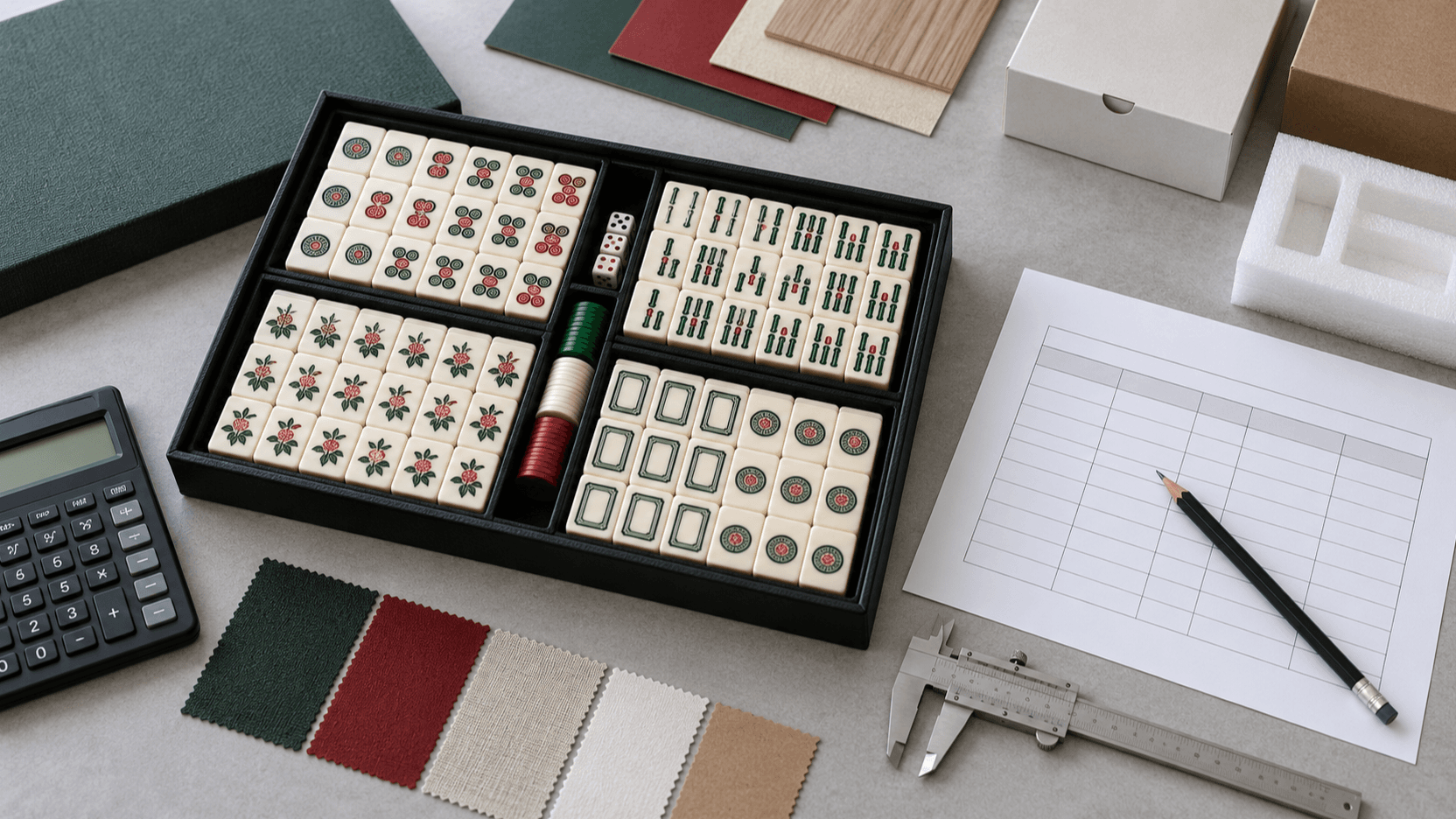
The 144 tile Mahjong set, category by category
A traditional set is built from three numbered suits, two groups of honor tiles and one group of bonus tiles. Every category is balanced so that no symbol appears more often than another within its group.
| Category | Tiles | How the count is built |
|---|---|---|
| Dots (circles) | 36 | Numbers 1 to 9, four copies of each |
| Bamboos (bams) | 36 | Numbers 1 to 9, four copies of each |
| Characters (craks) | 36 | Numbers 1 to 9, four copies of each |
| Winds | 16 | East, South, West and North, four copies of each |
| Dragons | 12 | Red, green and white, four copies of each |
| Flowers | 4 | One of each flower design |
| Seasons | 4 | One of each season design |
| Total | 144 | 108 + 16 + 12 + 8 |
Mahjong flowers and seasons are bonus tiles. They are not used to form sets in the same way as suit tiles; drawing one usually triggers a replacement draw, and in many rule sets they score a fixed bonus. That is why they are counted separately from the 136 tiles that form the main playing stock.
Why a 152 tile American Mahjong set uses eight jokers
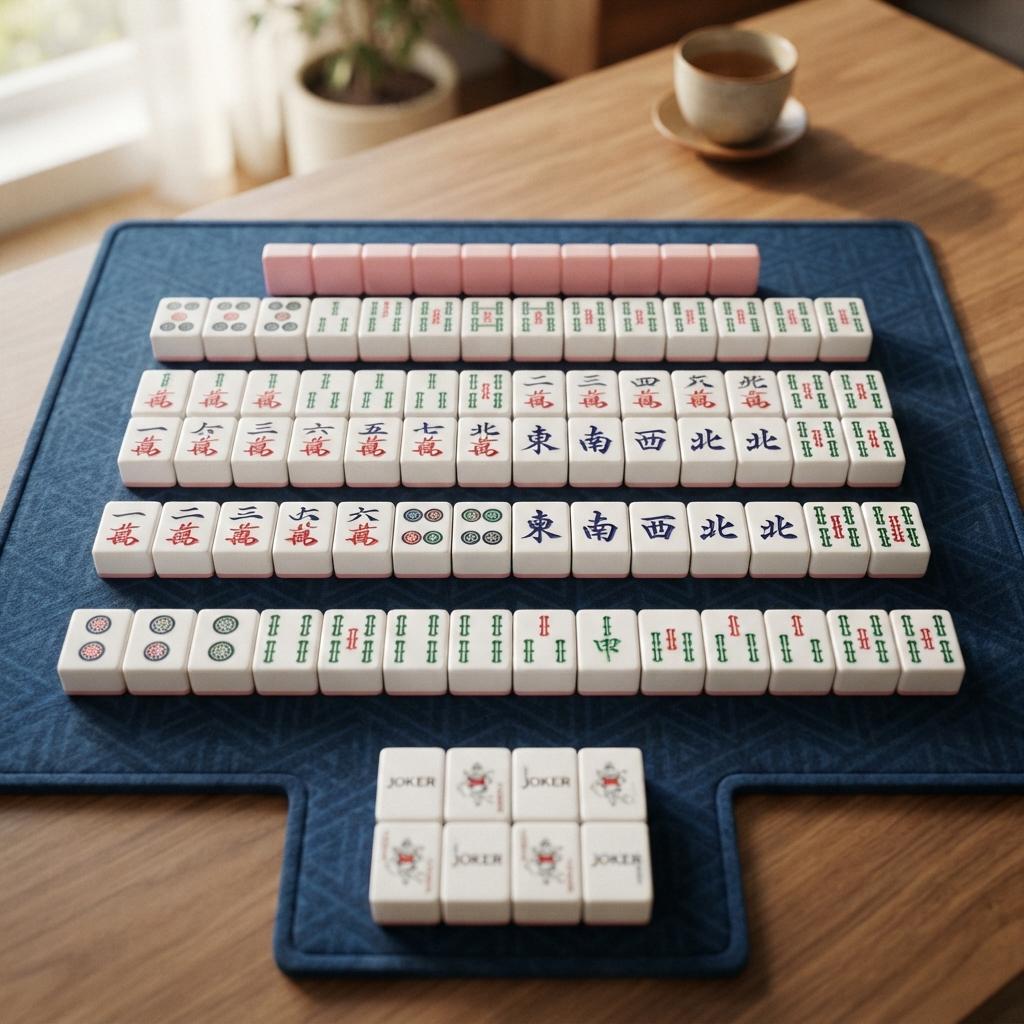
American Mah Jongg keeps the same 108 suit tiles, 16 winds and 12 dragons, then uses eight flower tiles and adds eight jokers. The National Mah Jongg League, the body that publishes the annual American rule card, calls for eight jokers in play. That gives 108 + 16 + 12 + 8 + 8 = 152 tiles.
Mahjong jokers are wild tiles. They can substitute for tiles in a hand, which is why American play feels different from Chinese play even though most of the tile set is identical. The jokers are also the single most common reason an American set ends up short: they get separated into a bag, left in a case pocket or mixed into a second set.
Why some sets contain 160 or 166 tiles
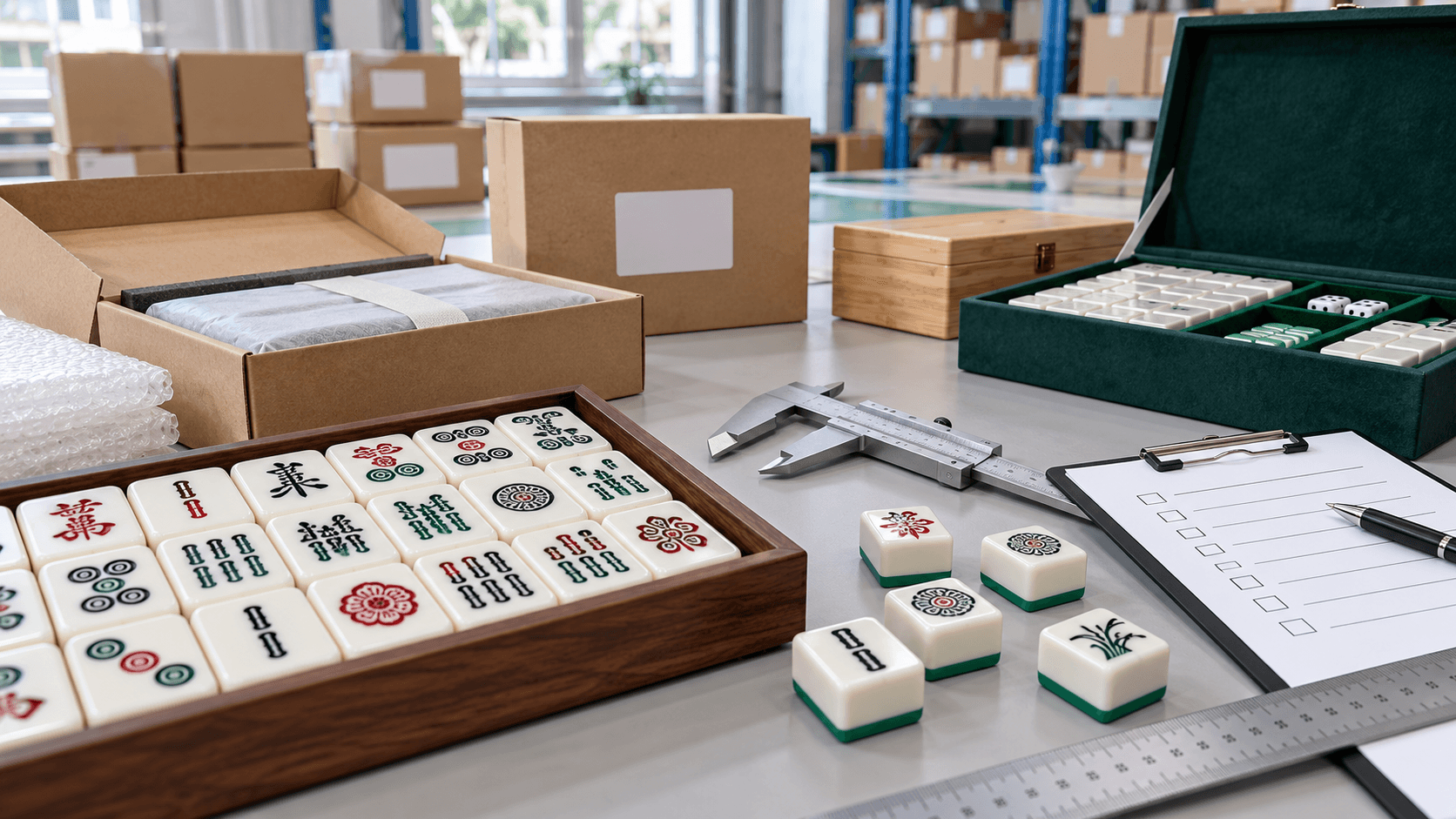
Extra tiles are a retail and service decision, not a rule change. Manufacturers add spares because tiles get lost, chipped or kept aside for house rules. One common 166 tile Mahjong set is made up like this:
| Component | Tiles |
|---|---|
| Standard 144 tile set | 144 |
| Extra jokers (ten in total) | +10 |
| Extra flowers and seasons | +8 |
| Blank tiles | +4 |
| Box total | 166 |
Other combinations exist. Some sets ship with 160 tiles, some with ten jokers and six blanks, and some with two full sets of flowers. None of these extras are required for a legal game. They are there so that a club can replace a damaged tile without ordering a new set, or so a retailer can offer a more generous box.
If you are buying for American play, check whether the advertised mahjong set tile count is the play count or the box count. A 166-tile set that contains 152 playable tiles plus spares is a normal American set. A 144-tile set is not, because it has no jokers at all.
Do you use every tile in the box?
No. Buyers often ask how many tiles in a Mahjong set are actually shuffled, and the answer is fewer than the box suggests. Blanks stay out of play under standard rules. Extra jokers beyond the eight required are usually set aside as replacements. Extra flowers and seasons may be used as substitutes if a tile is lost, but they should not be shuffled into the wall.
A simple habit solves most count problems: before the first game with a new set, count the playable tiles into the case in the order listed above, put the spares in a separate small bag, and label that bag. Then a missing tile is obvious at the end of the night instead of three months later.
How the tile count changes setup
The count determines how the wall is built. With 144 tiles, each of the four sides holds 36 tiles, or 18 stacked pairs. With 152 tiles, each side holds 38 tiles, or 19 stacked pairs. The dealer takes 14 tiles and the other three players take 13, which is why the dealer's first discard starts the hand.
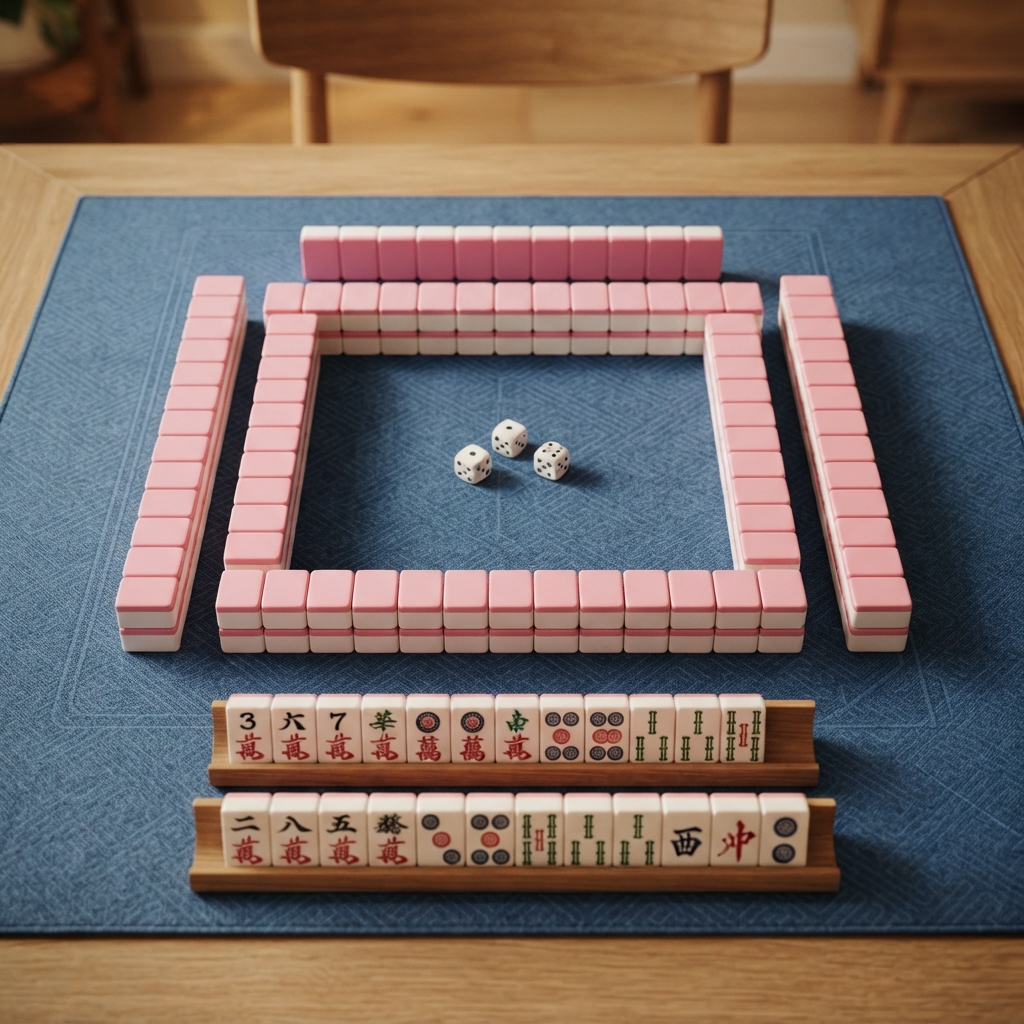
Those numbers are worth knowing when you buy a mat or a table. A wall of 19 pairs per side is slightly wider than a wall of 18, and a mat with a printed border can make a long wall look crowded if the playing area is small. If you are matching a mat to a set, measure the wall footprint rather than the tile count alone.
How to check the tile count before you buy
- Count one suit first. A complete suit has 36 tiles: numbers 1 to 9, four copies each. If a suit is short, the set is short regardless of the total.
- Check the honors separately. You need four of each wind and four of each dragon, for 28 honor tiles in total.
- Confirm the jokers. American play needs eight. A set advertised as American with fewer than eight jokers is incomplete for NMJL rules.
- Ask what the blanks are for. Blanks are spares, not playing tiles. A seller who cannot explain them is probably not tracking the difference either.
- Ask about replacement tiles. A set is only as useful as its ability to stay complete. Clubs and retailers should confirm that single tiles or small replacement packs can be ordered later.
Common mistakes when counting or buying tiles
Assuming more tiles means a better set. A 166-tile box and a 152-tile box can play identically. What matters is whether the playable count matches your rule set and whether the tiles are consistent in size, color and print.
Mixing two sets. Tiles from different production runs can differ slightly in thickness, back color or face shade. Once mixed, the difference is visible on the table and difficult to undo.
Buying Chinese rules for an American group. The missing jokers cannot be improvised. If your group plays NMJL rules, buy a set that states the joker count explicitly.
Never counting the spares. Most "missing tile" panics are a spare bag that was never separated. Count once, label the bag, and the problem disappears.
Mahjong sets and accessories from our workshop
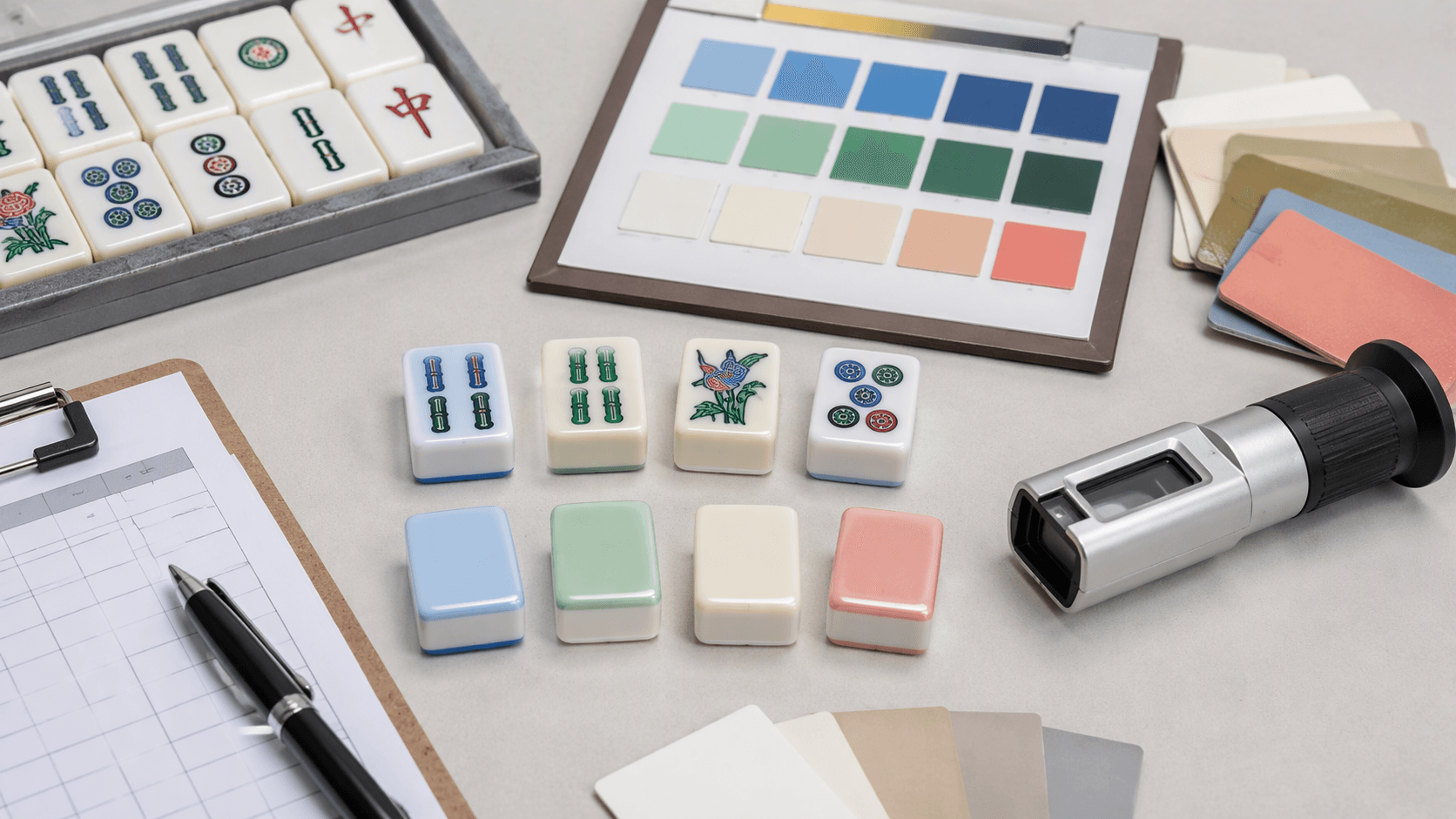
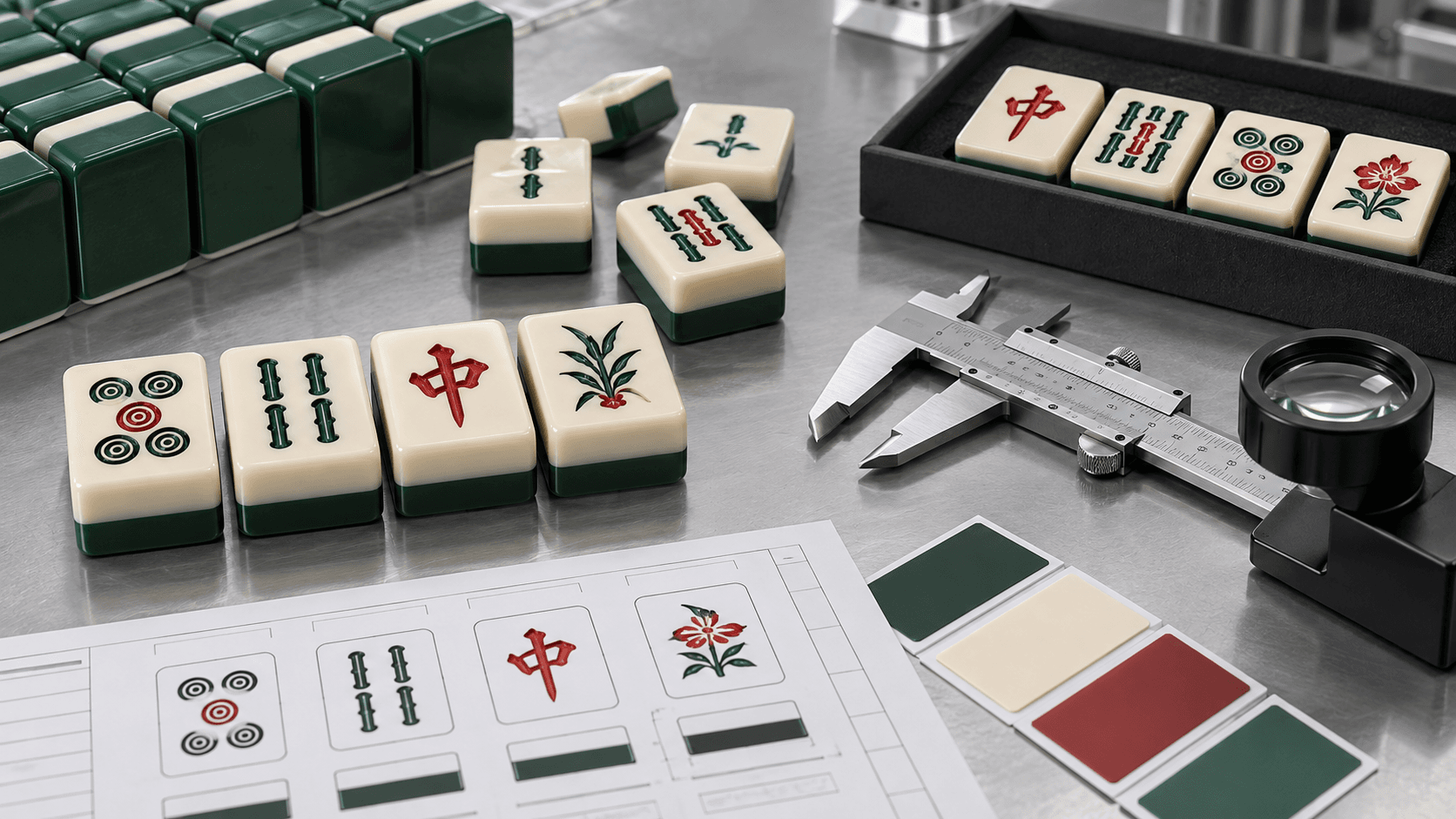
We manufacture acrylic Mahjong sets and the accessories that go with them, including racks, pushers, mats, cases and packaging. Our pink-back American Mahjong tile set uses a smooth white playing face, a glossy pink back, rounded corners and printed multicolor artwork, with Characters, Bamboos, Dots, Winds, Dragons, Flowers, Seasons and Joker tiles included. Selected tiles carry Arabic numbers and English wind indicators for quicker recognition. Tile quantity, dimensions, accessories and packaging are configured per order rather than fixed by the box.
For buyers planning a private-label or OEM range, our custom Mahjong program covers tile artwork, back colors, joker designs, logo printing, molds, inserts and coordinated accessories. We have more than 20 years of Mahjong manufacturing experience and supply brands, wholesalers, retailers and e-commerce sellers.
Frequently asked questions
How many tiles in a Mahjong set do you need to play?
You need 144 tiles for Chinese, Hong Kong and most Asian rule sets, or 152 tiles for American Mah Jongg. The American count is the standard set plus eight jokers, with the bonus tiles counted as eight flowers.
Is a 166-tile Mahjong set better than a 144-tile set?
Not automatically. A 166-tile set usually contains a 152-tile American play set plus spare jokers, blanks and bonus tiles. It is better only if you play American rules and value the spares. For Chinese rules, a 144 tile Mahjong set is complete.
Do you use all 166 tiles when playing?
No. Standard play uses 152 tiles in American Mah Jongg. Blanks stay out of the wall, and extra jokers or flowers are kept as replacements. Using all 166 would change the wall and the draw odds.
How many jokers are in an American Mahjong set?
Eight jokers are used in play under National Mah Jongg League rules. Many retail sets include ten, with the extra two treated as spares. If your group follows house rules that use more, agree on the number before the first hand.
How many tiles does each player start with?
The dealer starts with 14 tiles and the other three players start with 13. The dealer's extra tile is discarded first, which is what opens the hand.
Why does my set include blank tiles?
Blanks are replacements. They let a club or retailer swap out a lost or damaged tile without buying a new set. They are not shuffled into play under standard rules.
Can I mix tiles from two Mahjong sets?
It is possible but not recommended. Different production runs can vary in thickness, back color and print shade, and those differences are visible once the tiles are face down on the same table.
How many tiles are in a Chinese Mahjong set?
A standard Chinese set has 144 tiles: 108 suit tiles, 16 winds, 12 dragons, four flowers and four seasons. Some regional sets add extra flowers or jokers, so confirm the count with the seller if your group plays a local variant.
Conclusion
Once you know how many tiles in a Mahjong set your table needs, the buying decision gets much simpler: 144 for Chinese play, 152 for American Mah Jongg, and 160 or 166 only when you want spares in the box. From there, the questions that matter are tile consistency, replacement availability and how the set will be stored between games.
If you are sourcing sets for a club, a retail range or a private-label launch, send us your tile count, format and packaging requirements and we will review the specification with you. You can also read our comparison of American and Chinese Mahjong sets for retailers before choosing a SKU, and our guide to cleaning Mahjong tiles without damaging the faces if you want the new set to stay legible.