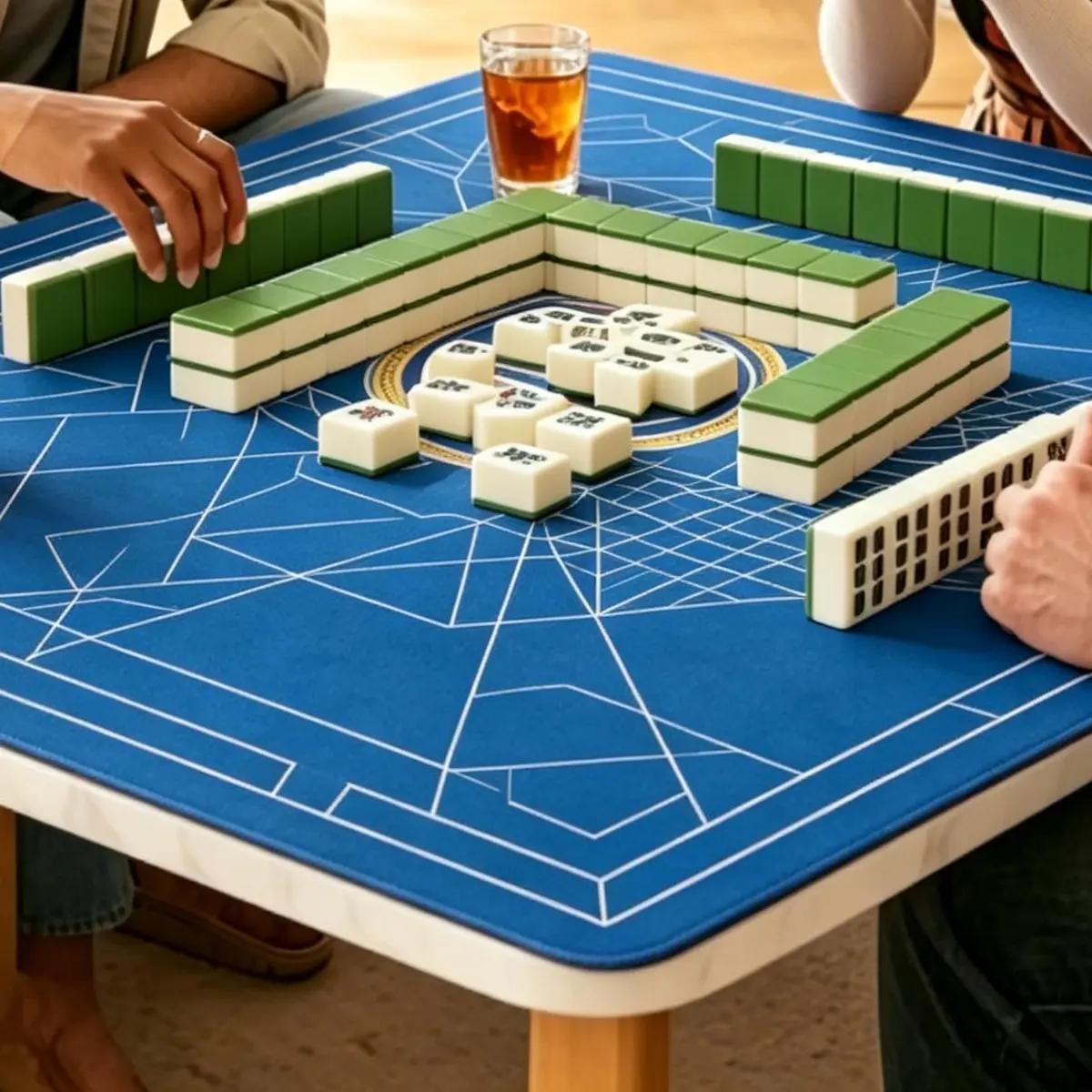
Imagine a buyer has a retailer waiting for a new Mahjong collection, but the first quotation uses a standard case, a second supplier offers a new tile shape, and neither quote says who owns the artwork. That is the real reason to compare OEM vs ODM mahjong manufacturing. The useful distinction is who makes the product decisions and who turns them into a repeatable set. OEM usually begins with a buyer-defined product, artwork, or specification. ODM usually begins with a supplier's existing design or platform. The label is only a starting point; the scope, file ownership, tooling terms, sample gates, and production responsibility are what protect the order.
Define the two models by control, not by sales language
In an OEM project, the buyer usually arrives with a fairly specific idea: tile geometry, face artwork, colors, accessories, packaging, instructions, or even a release file. The factory contributes the hard-to-see work of making that idea stable: process choices, tooling, sampling, inspection, and scale. A good meeting ends with a list of changes the factory may make quietly and changes that require the buyer's written approval.
In an ODM project, the manufacturer brings an existing design, component family, or product architecture. The buyer may pick a configuration, add a logo, change colors, adapt the package, or request one limited feature change. That can shorten the route to a sample when the base product already suits the market. It also creates a different set of questions: who else buys the same base design, whether any exclusivity exists, and whether the same parts will still be available when the first reorder arrives.
| Decision area | OEM tendency | ODM tendency | Buyer must verify |
|---|---|---|---|
| Product definition | Buyer defines more of the geometry, artwork, and pack | Supplier starts from an existing product or platform | Which elements are fixed, configurable, or newly developed |
| Development work | Engineering translates the buyer brief into production | Supplier adapts an established design to the brief | Who pays for tooling, artwork support, and sample revisions |
| Ownership | Buyer may own supplied artwork and commissioned outputs | Supplier may retain the base design and common tooling | Files, molds, artwork, and exclusivity terms in writing |
| Speed | Can be slower when geometry or process is new | Can be faster when the base configuration is proven | Actual sample and production lead time, not the label |
When an OEM project is the better fit
OEM is a strong fit when the product has to feel unmistakably yours or when a catalogue option misses a real use case. A new tile envelope, an original back design, a coordinated case, a rules-specific component list, or packaging that must sit beside an existing retail collection can all justify the extra development work. The test is not novelty for its own sake; it is whether the custom decision changes what the customer can play, see, or buy.
OEM also makes sense when the buyer already has a mature design team and wants the manufacturer to execute a controlled specification. The buyer should still use the factory's engineering feedback. A drawing that looks complete may omit draft, shrinkage, registration tolerance, assembly clearance, cleaning behavior, or carton limitations.
The Mahjong tile manufacturing design guide shows why artwork, geometry, materials, and inspection need to be reviewed as one system.
When an ODM project is the better fit
ODM is useful when speed, lower development risk, or a proven component set matters more than complete originality. A buyer can begin with a supplier's tile size, racks, case, or accessory family and spend the creative effort where shoppers notice it: color, logo, tile back, insert, rulebook, or retail pack. For a small launch team, that narrower decision set can be a feature rather than a compromise.
Before choosing ODM, ask whether the same base design is sold to other brands, whether the buyer receives any market or channel exclusivity, and whether a future buyer can obtain compatible replacement parts. A private label may look distinctive on the shelf while sharing geometry, packaging inserts, or artwork conventions with several other products.
ODM is not a shortcut around approval. The buyer still needs a complete sample, a measured specification, a packaging review, and a written change-control path for future orders.
| Buyer situation | Likely fit | Reason | Risk to control |
|---|---|---|---|
| Unique tile shape or accessory interface | OEM | Product value depends on new physical decisions | Tooling, tolerance, and sample scope |
| Fast launch with proven components | ODM | Existing geometry can shorten development | Shared design and limited differentiation |
| Strong in-house artwork and packaging | OEM or hybrid | Buyer controls brand while factory controls production | File handoff and approval responsibility |
| Uncertain demand or small first order | ODM or hybrid | Lower development commitment may protect cash | MOQ, customization limits, and reorder continuity |
Use an OEM vs ODM mahjong manufacturing decision matrix
For a first review, score the project on product control, speed, development cash, differentiation, file ownership, MOQ, and reorder risk. A high need for original geometry or exclusive packaging points toward OEM. A high need for a fast pilot with stable components points toward ODM. When the scores split across categories, document a hybrid scope instead of forcing a label.
Compare design ownership and intellectual property
Do not assume that paying for a sample automatically transfers ownership. List each asset: buyer-supplied logo, buyer-supplied artwork, supplier base design, custom artwork, mold, fixture, packaging die, photographs, and written content. State who can use each asset, in which territory, for which channel, and for how long.
For OEM, ask how the supplier will protect the buyer's files and whether a subcontractor can use them for another customer. For ODM, ask what portion of the design is standard, what is exclusive, and what happens if the supplier changes the base product. A short schedule attached to the quotation is better than a general promise in a chat message.
Normalize tooling, sampling, and quotation terms
Quotations for the two models are easy to compare incorrectly. An OEM quote may include engineering, mold development, artwork support, and several sample rounds that an ODM quote assumes are already finished. The ODM quote may look cheaper while limiting the colors, accessories, packaging, or languages that make the product yours. Put both scopes in the same spreadsheet before deciding; otherwise the comparison is mostly a comparison of omissions.
Ask both models to separate one-time and recurring charges. Include the blank, decoration, tooling, proof, physical sample, complete set, packaging, inspection, carton, freight basis, payment terms, and quote validity. Ask which event changes the price: a new thickness, a second color, a revised insert, a new language, or a lower quantity.
| Cost line | OEM question | ODM question |
|---|---|---|
| Tooling | What geometry, cavities, ownership, and maintenance are included? | Is existing tooling shared, dedicated, or unavailable for changes? |
| Artwork | Who prepares production files and controls revisions? | Which artwork areas can be changed without a new setup? |
| Samples | How many proof, color, geometry, and complete-set gates are planned? | What is the sample's relationship to the standard product? |
| Reorder | What keeps a custom result consistent across production runs? | Can the supplier guarantee the same base parts and finish later? |
Use the same sample gates for either model
Whichever model you choose, the product still has to earn its release. Start with the artwork or configuration proof. Then check the physical material and color, geometry and interfaces, complete play set, and final pack-out. A useful gate record says which revision was reviewed, who approved it, what remains open, and what will happen next. Four short records are easier to trust than one enthusiastic “looks good” message.
For OEM, the sample should prove that the supplier translated the brief correctly. For ODM, it should prove that the selected base product and requested changes match the listing, packaging, and customer promise. In both cases, inspect the set at normal table distance and test racks, pushers, case clearances, instructions, labels, and carton protection.
The sample approval workflow provides a practical structure for keeping these decisions traceable.
Match the model to MOQ, lead time, and cash risk
ODM can be attractive for a pilot because the base design may already exist, yet the supplier may still require a color, packaging, or component MOQ. OEM can create more differentiation, but the buyer may fund development before knowing whether the channel will reorder. Put the deposit, sample fees, tooling, first shipment, storage, and likely replacement stock beside the unit price. The cash commitment is the risk the launch team actually feels.
Lead time should be measured from the actual approval point. Include artwork review, tooling, color sample, production sample, packaging, inspection, freight, and any document preparation. A supplier's “standard lead time” is not a reliable answer until the scope and approval gates are attached.
For general export planning, the U.S. Commercial Service Export Solutions resource is a useful reference. Confirm the actual shipment, duties, labeling, and import assumptions for the destination with the supplier and logistics partner.
Choose a hybrid path when the boundary is clearer than the label
Many successful projects are hybrids. The buyer may use an established tile blank and accessory set while commissioning a new back design, packaging structure, color system, and rulebook. Or the buyer may own the artwork and customer promise while the supplier owns a standard manufacturing platform.
A simple decision exercise helps. Put the first product brief beside the supplier's catalogue sample and circle every difference the customer will notice. If most circles are on the box, colors, and logo, an adapted platform may be enough. If they are on the tile feel, face system, rack fit, or case layout, plan for more engineering work. The circles turn an abstract sourcing debate into a list the team can price and approve.
Describe the hybrid in deliverables. State which parts are catalogue, which are modified, which are exclusive, which are buyer-owned, and which may be substituted. This is more useful than forcing the project into an OEM or ODM category that hides the actual responsibilities.
Build a reorder file that reflects the chosen model
The final file should include the product specification, face schedule, artwork revision, color reference, component list, packaging files, inspection plan, golden sample, supplier quotation, tooling terms, ownership schedule, and approved deviations. For ODM, add the base product code and the exact change list. For OEM, add the released geometry, tool reference, and engineering assumptions.
Before reordering, check whether the base material, pigment, tooling, decoration process, accessory source, subcontractor, or packaging insert has changed. A change in a shared ODM component can affect multiple brands. A change in an OEM tool or artwork file can affect the identity that the buyer paid to create.
When the project is intended for a branded retail launch, the private label ordering guide can be used alongside this model comparison to organize the quote, sample, packaging, and reorder decisions.
FAQ
What is the main difference between OEM and ODM Mahjong manufacturing?
OEM generally starts from a buyer-defined product or specification, while ODM starts from a supplier's existing design or platform. The actual agreement should define the deliverables, ownership, and approval responsibility.
Is OEM always more expensive than ODM?
Not necessarily. OEM may add development and tooling cost, while ODM may carry customization limits, shared tooling, or a higher MOQ. Compare the full project and landed cost.
Is ODM suitable for a private label brand?
Yes, when the base product supports the brand promise and the buyer clearly controls the allowed changes, packaging, artwork, and market or channel terms.
Who owns an OEM mold?
Ownership depends on the written tooling terms and who paid for the tool. Confirm custody, maintenance, use restrictions, transfer rights, and what happens if the supplier relationship ends.
Can I customize an ODM Mahjong set?
Usually, but the available changes vary. Ask which tile faces, backs, colors, accessories, packaging, language, and quantities can change without creating a new tool or setup.
Which model is faster?
ODM can be faster when the base product is already approved and available. OEM can be fast when the brief and artwork are mature, but new geometry, tooling, and sample gates add time.
How should I compare OEM and ODM quotes?
Give both suppliers the same scope and separate product, decoration, tooling, samples, packaging, inspection, freight, MOQ, payment, and lead-time assumptions. Avoid comparing unit price alone.
Do OEM and ODM projects need a golden sample?
Yes. A golden sample gives production and inspection a physical reference. Keep it linked to the specification, artwork revision, color reference, and approved deviations.
Can a hybrid project use standard components?
Yes. A hybrid can combine standard tiles or accessories with new artwork, color, packaging, or instructions. Record exactly which elements are standard, modified, exclusive, or substitutable.
What should I ask before choosing a manufacturing model?
Ask who defines the product, who owns each file and tool, which changes are possible, what the sample gates are, what the MOQ and cash commitment will be, and how a reorder will be controlled.
Choose the responsibility model that protects the product
There is no prize for choosing the more impressive acronym. The useful question is whether the responsibility model gives the buyer enough control over product decisions, files, samples, quality, cost, and future reorders. Put the boundaries in the quote and release file, then test the complete set before production. That makes an OEM vs ODM mahjong manufacturing decision practical and keeps the customer's experience consistent long after the launch photos are taken.
Send the target market, product concept, artwork status, component list, quantity, packaging direction, and delivery window through the ABC Mahjong contact page to review an OEM, ODM, or hybrid project.