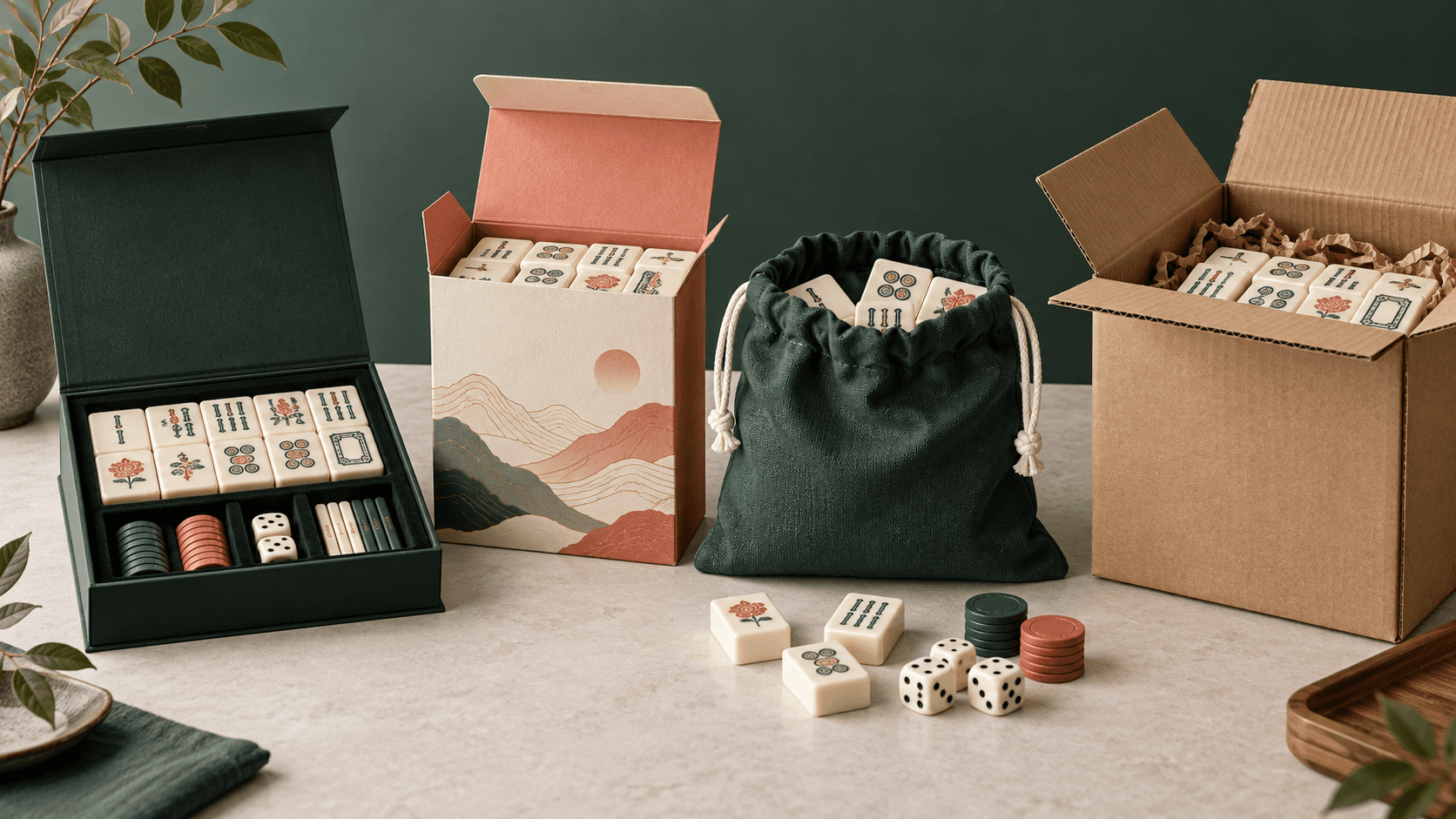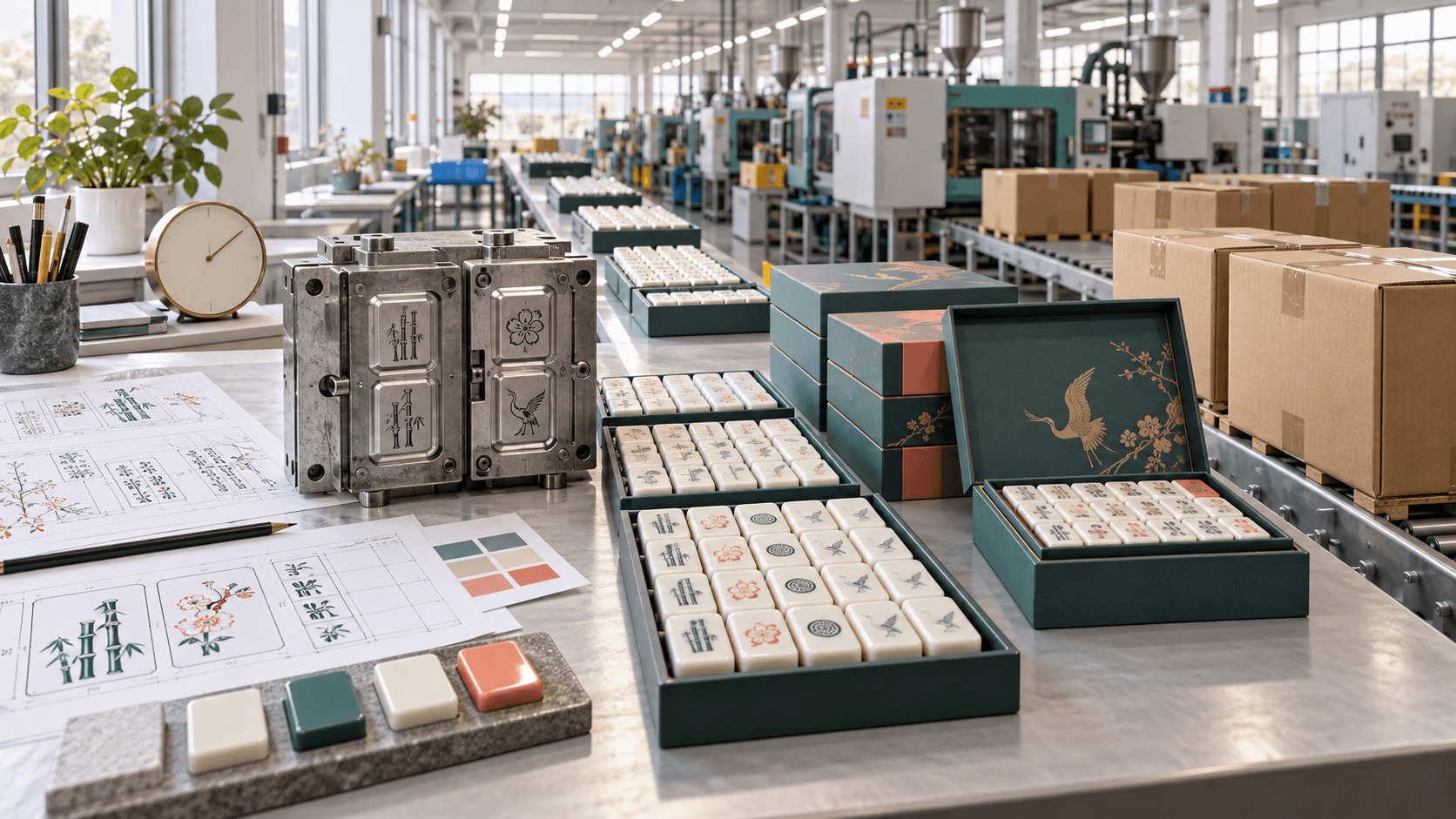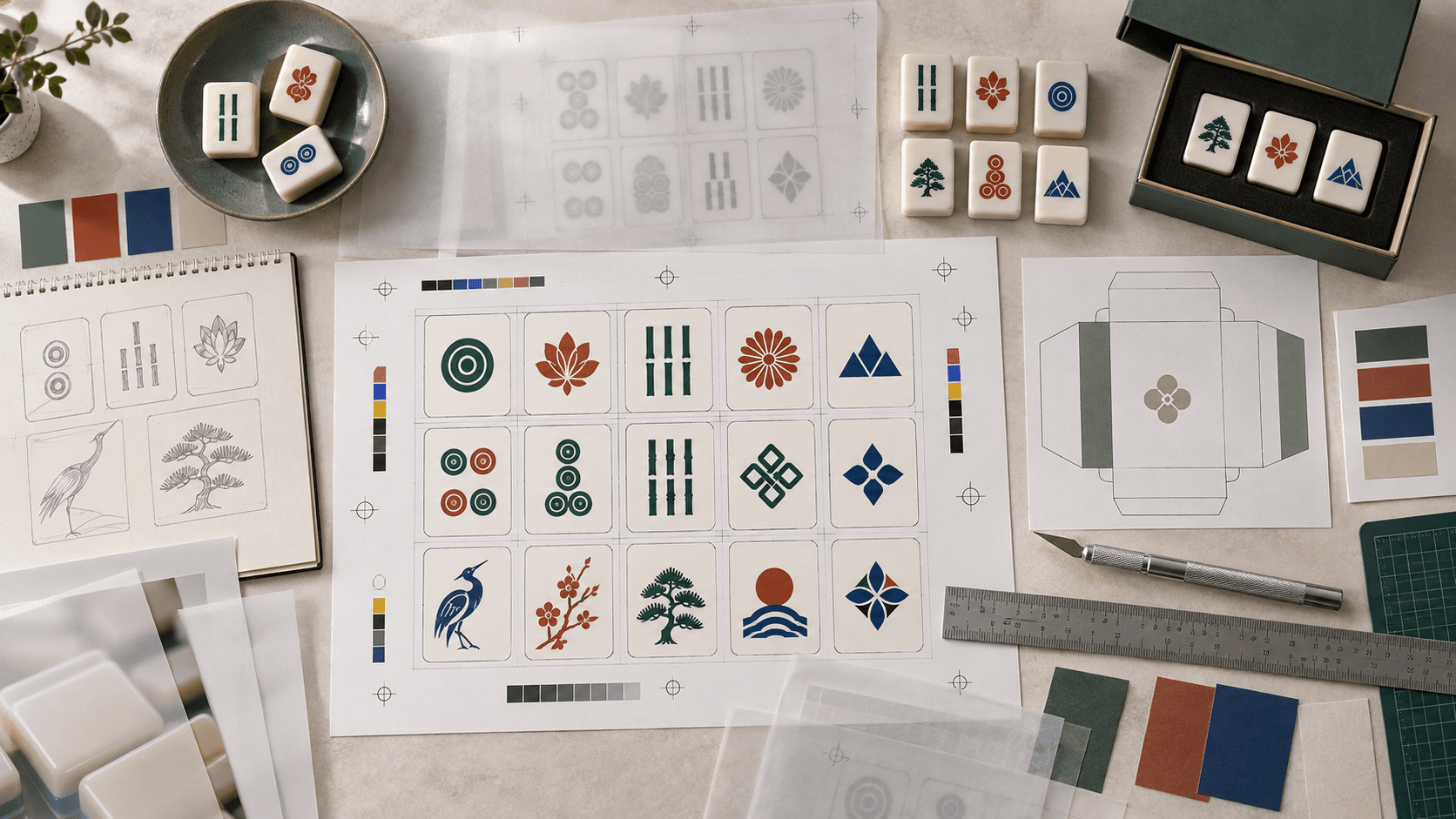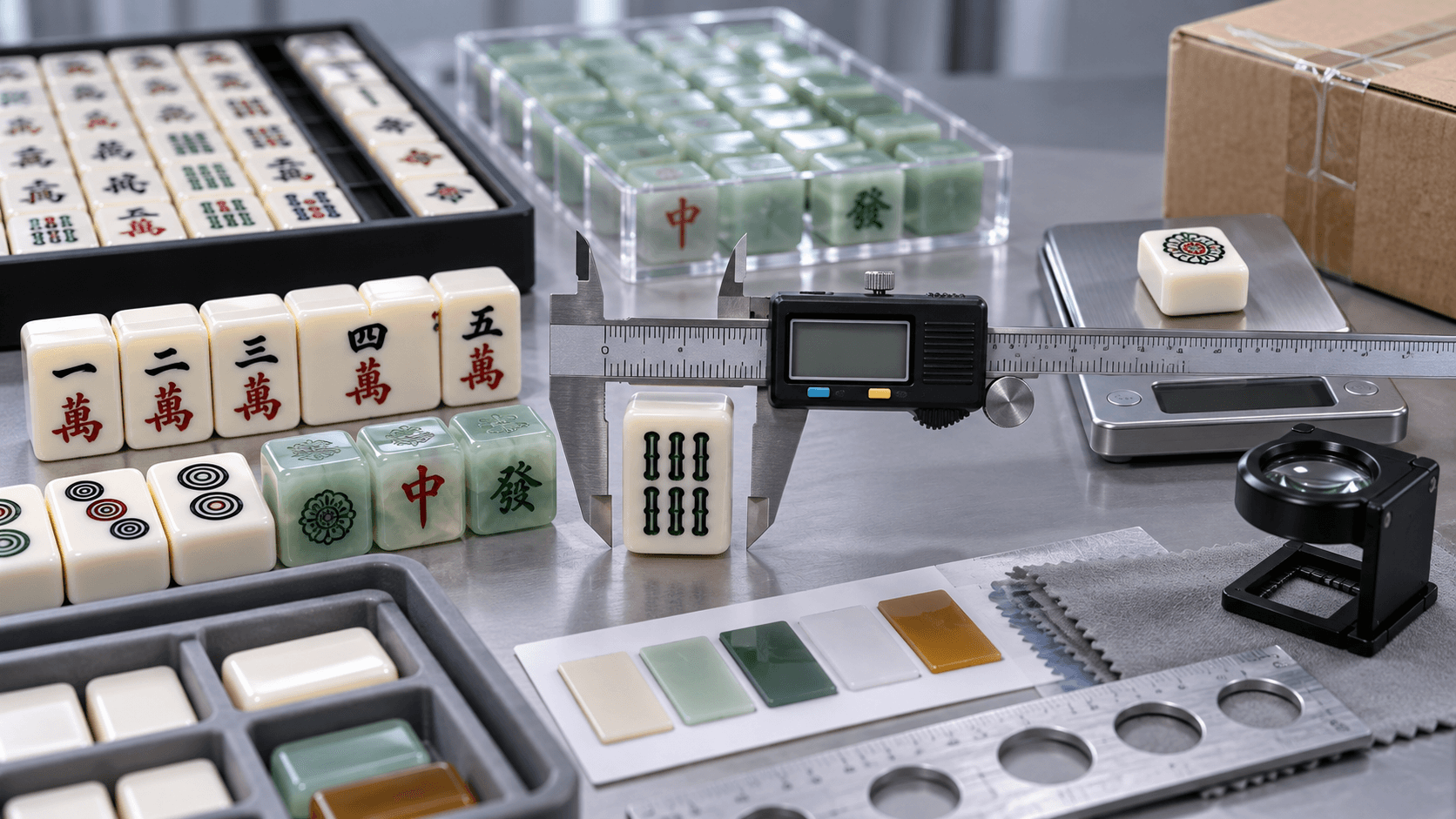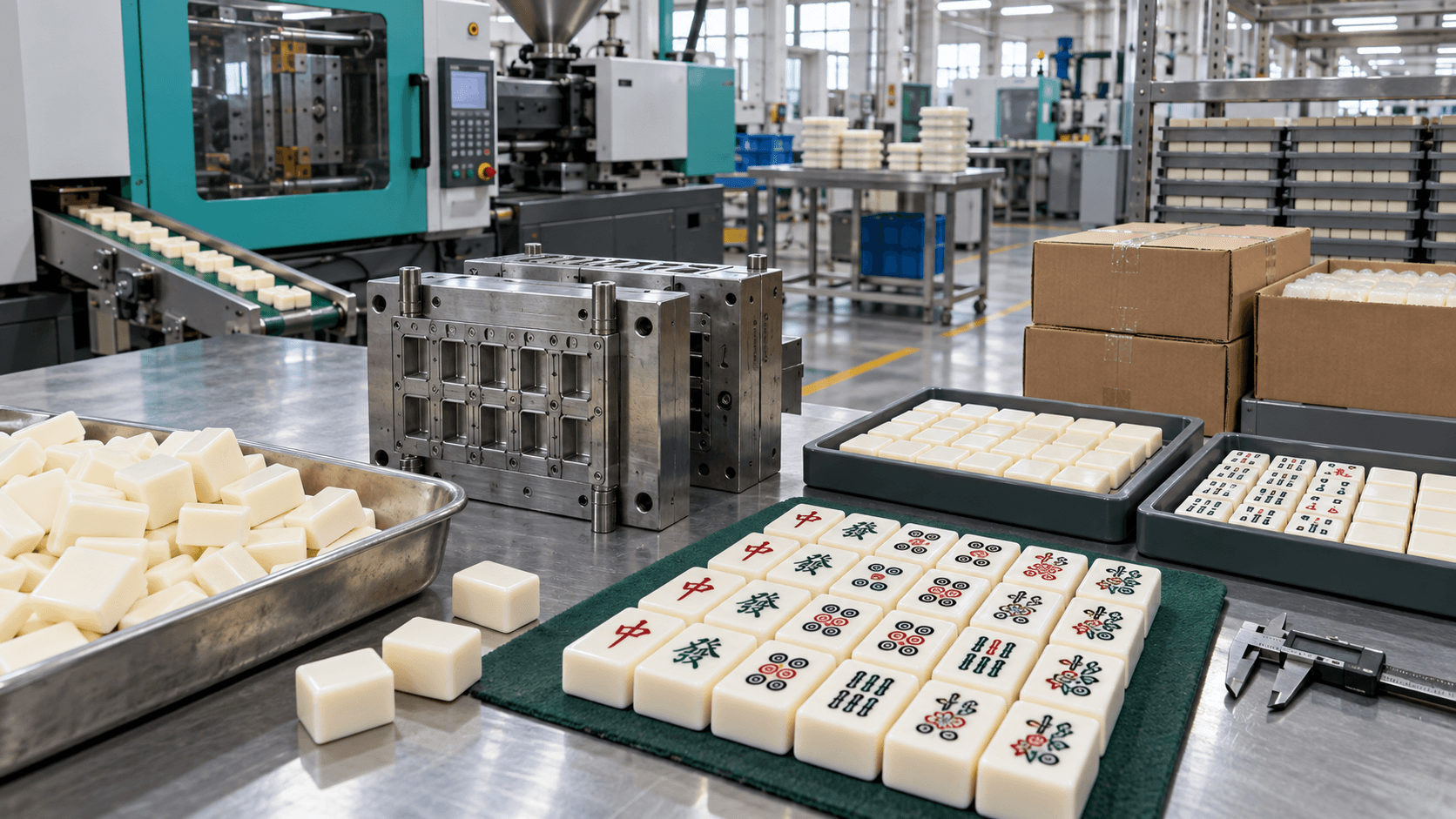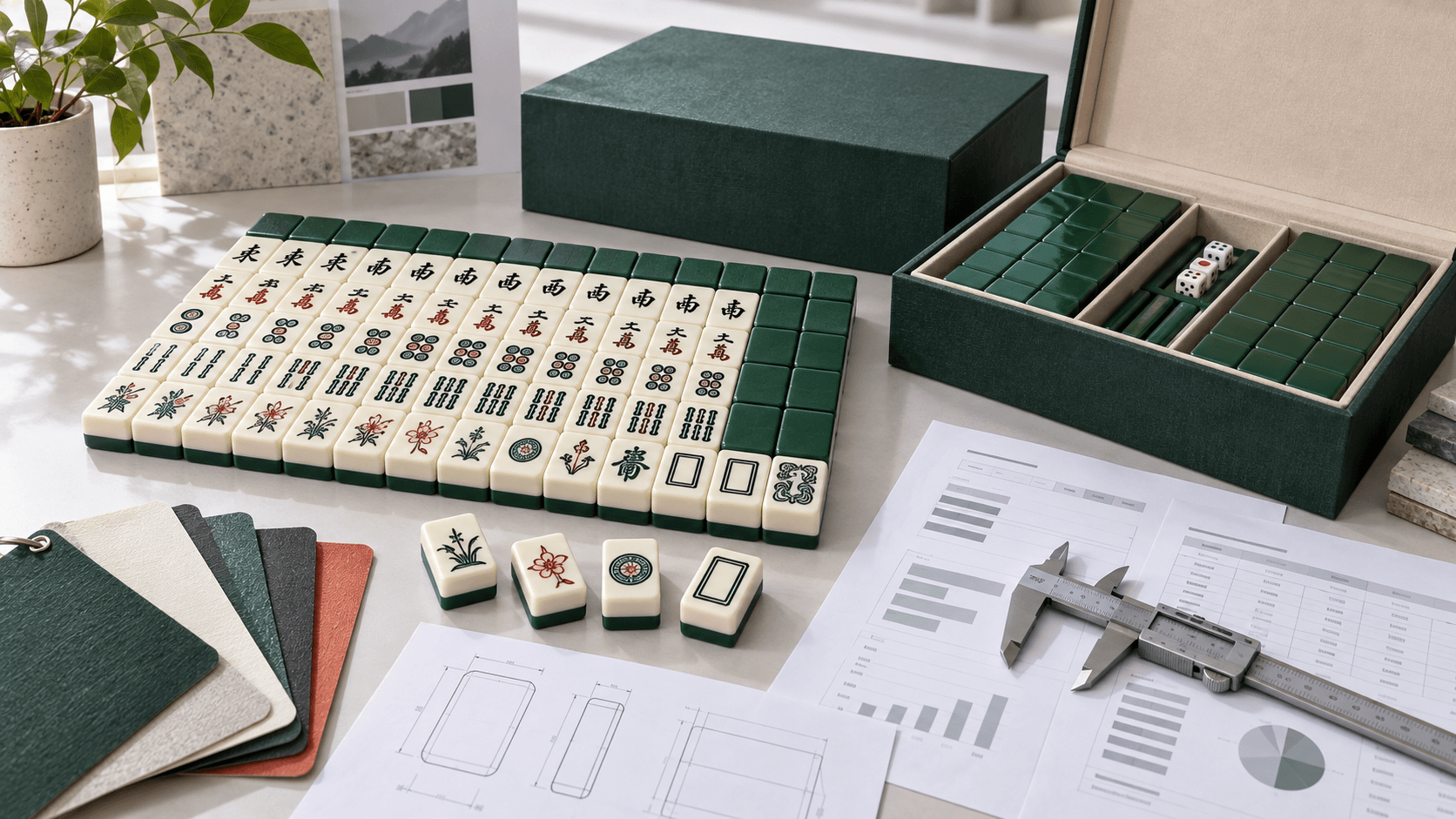

The best custom Mahjong packaging options depend on where the set will be sold, how it will be shipped, how often it will be reordered, and what the buyer wants the customer to notice first. A rigid box can create a premium opening moment. A folding carton can reduce volume and cost. A fabric bag can support gifting or club use. A transport carton protects all of them, but it is not a retail package.
Packaging should therefore be selected as part of the product system. It must fit the real tiles and accessories, protect decoration, communicate the correct product, support barcode and language needs, and move through the intended channel without avoidable damage. This guide compares the main formats and gives a practical way to choose one before artwork and tooling are frozen.
Choose the channel before choosing the box
A direct-to-consumer set, a specialty game-store product, a corporate gift, a club replacement set, and a marketplace shipment do not have the same packaging job. Retail packaging has to explain and present the product. E-commerce packaging has to tolerate parcel handling and dimensional-weight pressure. A gift package may prioritize touch and opening sequence. A club or replacement program may prioritize compact storage and fast replenishment.
Write the channel, customer, sales environment, shipping mode, storage condition, and expected reorder before selecting a structure. This prevents a beautiful box designed for a shelf from becoming an oversized and fragile parcel.
| Channel need | Packaging priority | Likely direction | Risk to solve |
|---|---|---|---|
| Premium retail or gifting | Opening experience, touch, visual identity | Rigid box with fitted insert | Weight, volume, scuffing, higher setup |
| Online parcel sales | Protection, compact dimensions, easy fulfillment | Folding carton plus protective shipper | Corner crush and dimensional weight |
| Clubs and events | Durability, carrying, simple replacement | Fabric bag, case, or reusable carton | Accessory organization and abrasion |
| Wholesale retail | Stacking, labels, carton efficiency | Retail pack inside standardized master carton | Barcode, case pack, and pallet fit |
| Private-label launch test | Low commitment and quick revision | Standard structure with custom sleeve or insert | Limited differentiation and MOQ |
Compare the four main retail formats
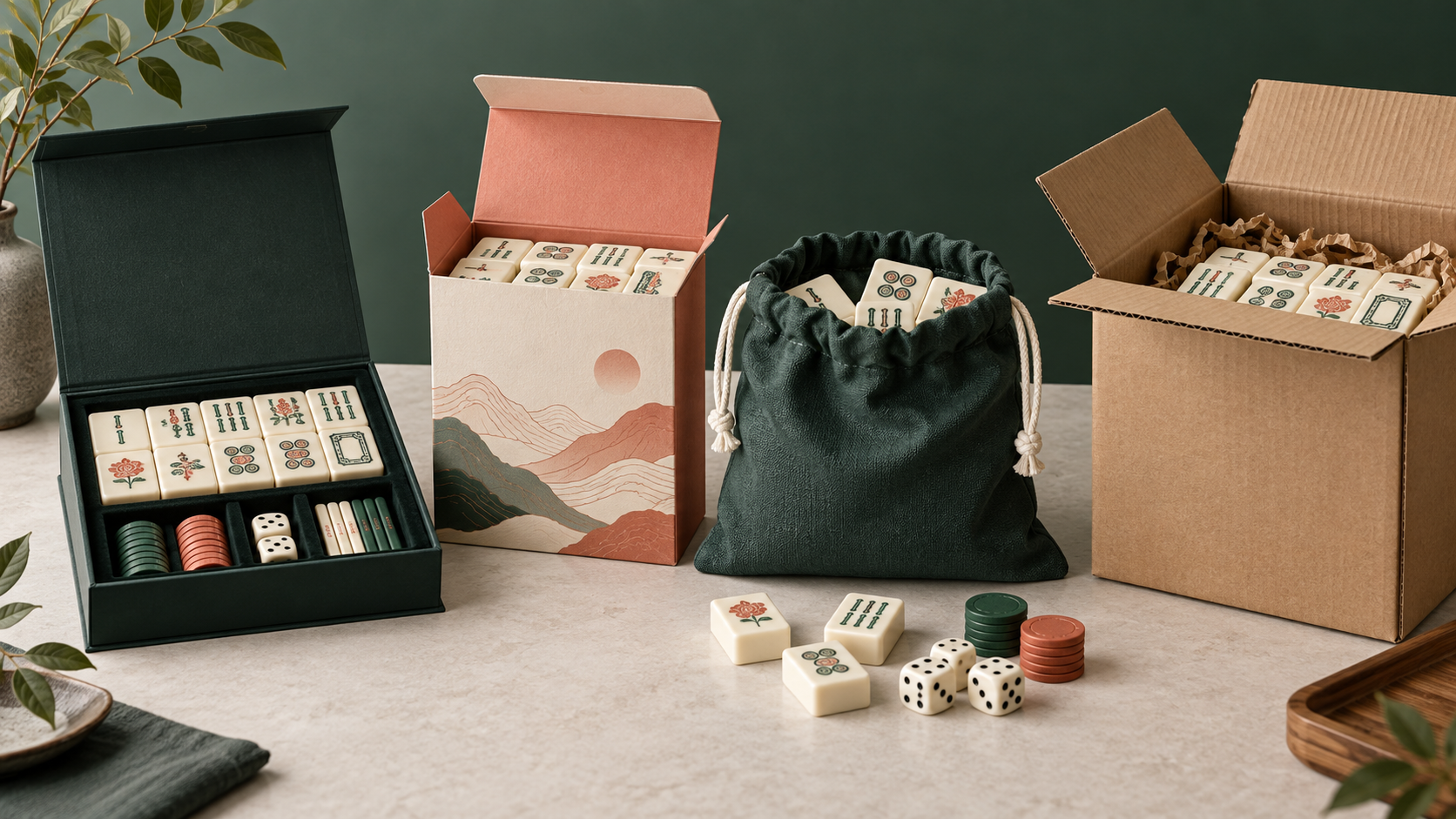
Rigid boxes provide structure, protection, and a premium feel. They can hold fitted trays, accessory compartments, magnetic or lift-off closures, and layered opening experiences. They also consume more board, labor, storage space, and freight volume. The artwork needs careful attention to scuffing, edge wrap, and panel alignment.
Folding cartons are lighter and efficient for many retail or online products. They can use inserts, sleeves, windows, or internal partitions. The design must manage board caliper, crease behavior, glue areas, and compression. A separate protective shipper may be needed for parcel delivery.
Fabric bags and pouches support portability, gifting, and club use. They are flexible around different tile counts but need an internal method to prevent pieces from rubbing together. Drawstring, zipper, or snap closures have different durability and packing implications.
Cases and trays are functional rather than purely decorative. They can organize tiles and accessories well, but the insert must be measured against the real product. A tray that fits the sample loosely can become a problem after material or decoration changes.
| Format | Presentation | Protection | Volume and freight | Best question to ask |
|---|---|---|---|---|
| Rigid box | High and tactile | High when fitted well | Higher cube and weight | How will corners, wrap, and scuffs be controlled? |
| Folding carton | Graphic-led and flexible | Medium; insert and shipper matter | Efficient when flat-packed | What board, crease, glue, and inner protection are included? |
| Fabric pouch | Soft and giftable | Medium; needs internal organization | Low empty volume | How are tile faces protected from rubbing? |
| Plastic or molded case | Functional and reusable | High if the fit is exact | Can be bulky | What happens if tile thickness or accessory count changes? |
Design the insert around the complete set
Do not design the box around a loose pile of tiles. Load every component: tiles, racks, dice, chips, wind indicators, rules, bags, and any promotional card. Decide whether each piece has a fixed pocket, a flexible cavity, or a separate accessory compartment. Check removal with dry hands and normal table lighting.
Protect decorated surfaces from direct abrasion. A soft paper wrap, molded pulp, foam, textile, or coated tray may be appropriate depending on the finish. Avoid an insert that transfers dye, sheds fibers, traps moisture, or puts pressure on a delicate printed face. Ask for a filled pack-out sample, not only a flat dieline.
The packaging quality checklist covers closure, fit, labels, carton marks, scuff protection, and transport checks that are easy to miss during a visual design review.
Use the product specification release file to keep tile dimensions, accessory quantities, and packaging fit under the same revision.
Balance artwork, labels, and retail data
Separate the expressive artwork from the information that must remain accurate: product name, tile system, quantity, materials, care notes, warnings, country of origin, barcode, importer details, and language versions. Keep a clear revision for every panel and insert. A late product change can make a beautiful box commercially incorrect.
For retail identification, review the relevant GS1 barcode standards and confirm the final symbol, quiet zone, contrast, placement, and verification process with the retailer or barcode owner. A barcode area should be designed into the panel rather than squeezed into an attractive illustration at the end.
Use the same product code and quantity on the retail pack, inner carton, and master carton where required by the channel. A mismatch creates receiving and replenishment problems even when the product itself is correct.
Think about the transport pack separately
The retail package is not automatically a shipping package. A parcel route may need a protective shipper, corner clearance, void fill, edge protection, or a stronger master carton. A palletized wholesale route has different compression and stacking demands. Test the packed product in the actual carton configuration and document the carton count, dimensions, gross weight, and marks.
Packaging test expectations depend on the route and risk. The International Safe Transit Association explains its role in transport packaging testing through its official overview. Use an appropriate test plan or carrier requirement rather than claiming a package is “drop proof” without evidence.
Price the structure beyond the unit box
Ask the supplier to separate board or fabric, printing, coating, foil or special finish, die, mold, insert, assembly, labels, barcode application, inner protection, master carton, and sampling. A rigid box may appear affordable until labor and freight volume are included. A folding carton may appear cheap until a protective shipper and manual assembly are added.
Request quantity tiers and identify the binding minimum: board run, print setup, fabric color, insert tooling, or final assembly. Keep one-time die and sample charges visible. A lower packaging unit price at a much higher MOQ may increase the real cash risk for a launch.
Make sustainability claims measurable
Ask what material is used, how components are separated, whether coatings affect recycling, and how much empty space the design adds. Avoid broad claims such as “eco-friendly” unless the material, market, and claim language have been checked. A smaller package can reduce freight volume while a durable reusable case can reduce replacement demand; the better choice depends on the channel and use cycle.
Design for disassembly when practical. A glued mixed-material structure can be difficult to recover. A paper insert, separate fabric bag, and recyclable carton may be easier to explain than a composite pack with an impressive finish but no clear end-of-life path.
For a launch that combines private labeling and new packaging, the private-label ordering guide can help sequence artwork, sample, pack-out, and reorder decisions.
Use a packaging decision scorecard
| Criterion | Question | Evidence |
|---|---|---|
| Product fit | Does every component sit securely without pressure or rattle? | Filled pack-out sample |
| Channel fit | Can the pack be shelved, picked, gifted, or replenished as required? | Channel mock-up and dimensions |
| Protection | What happens at corners, closures, drops, compression, and moisture exposure? | Transport test or agreed test plan |
| Data accuracy | Are product codes, quantity, language, labels, and barcode zones correct? | Released artwork and scan verification |
| Cost control | Are one-time charges, MOQ, assembly, and freight volume visible? | Comparable quotation |
| Reorder control | Can the factory repeat structure, color, insert, and carton pack? | Die, color, sample, and packaging revision record |
FAQ
What are the main custom Mahjong packaging options?
The common options are rigid boxes, folding cartons, fabric bags or pouches, molded or plastic cases, sleeves, fitted trays, and transport cartons. Many projects combine two or more formats.
Which packaging is best for a premium Mahjong set?
A rigid box with a fitted insert can create a strong premium experience, but confirm its weight, volume, scuff resistance, MOQ, and shipping protection before choosing it.
Is a folding carton suitable for e-commerce?
It can be, when paired with an appropriate protective shipper or insert. Test the packed product through the intended parcel route and compare dimensional weight.
How should a fabric Mahjong bag be designed?
Specify fabric, lining, closure, seam strength, internal organization, and protection against tile rubbing. Confirm that the full set and accessories fit without overloading the opening.
Do packaging options affect Mahjong MOQ?
Yes. Printing setup, board or fabric runs, die or insert tooling, color, assembly, and carton minimums can each influence the binding MOQ.
When should packaging be sampled?
Sample packaging after the tile, accessory, and component dimensions are stable. Review a filled pack-out, not just a flat artwork proof or empty box.
What information belongs on Mahjong packaging?
Use the requirements of the target market and channel, which may include product identity, quantity, materials, care or safety information, language, origin, importer details, and retail identification.
How do I protect tiles from packaging abrasion?
Use a suitable insert or wrap, remove loose movement, check coatings and dyes, and inspect the filled package after handling and transport simulation.
Should retail and shipping cartons be the same?
Not necessarily. Retail packs present and organize the product; shipping cartons protect it through handling and should be optimized for stacking, labels, and route risk.
How can I make packaging easier to reorder?
Retain the dieline, material, color, finish, insert, labels, barcode file, carton pack, approved sample, and revision history with the product specification.
Choose the package that supports the whole channel
The right custom Mahjong packaging options are the ones that match product fit, customer expectations, transport risk, retail data, MOQ, and reorder reality at the same time. A box is not finished when the artwork looks attractive; it is finished when the complete set can be packed, shipped, opened, identified, and repeated consistently.
Send your channel, tile and accessory list, target dimensions, artwork direction, quantity, destination, and desired customer experience through the ABC Mahjong contact page to compare a practical packaging route.