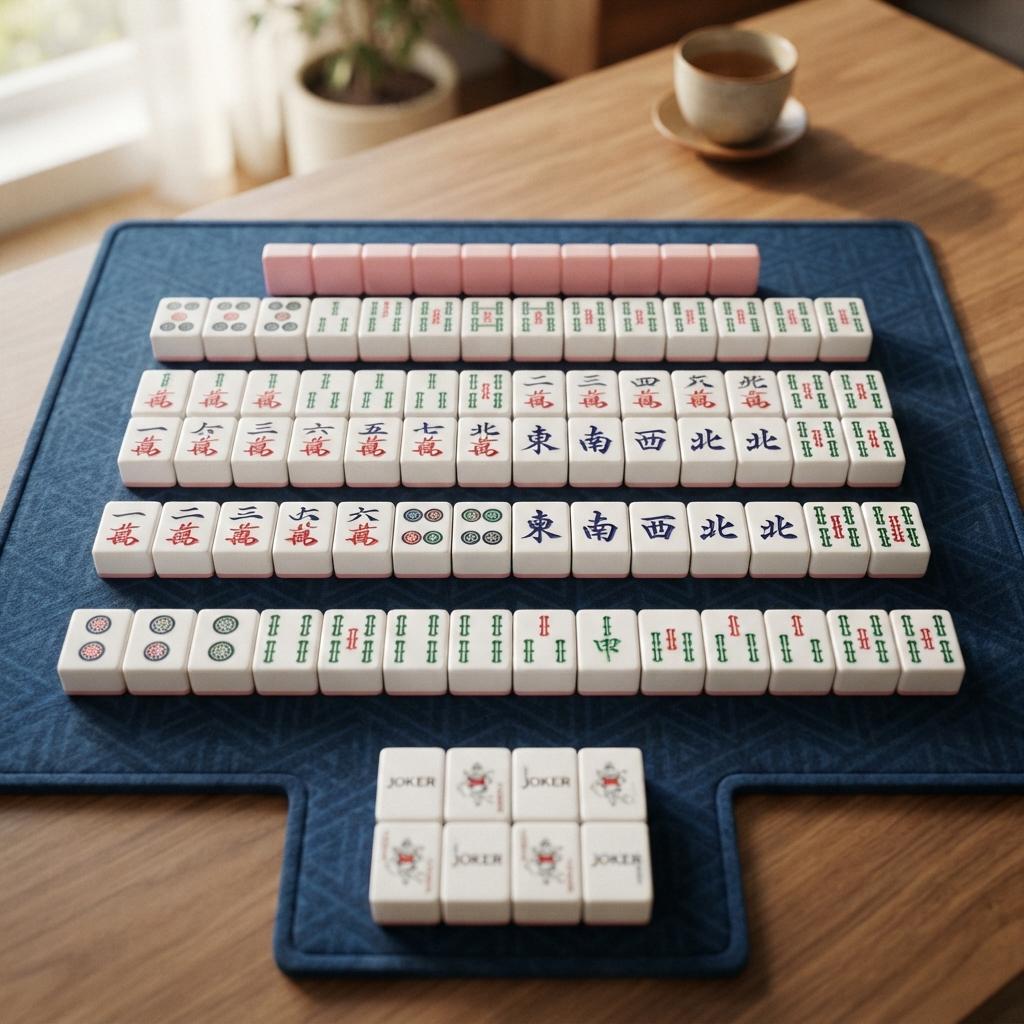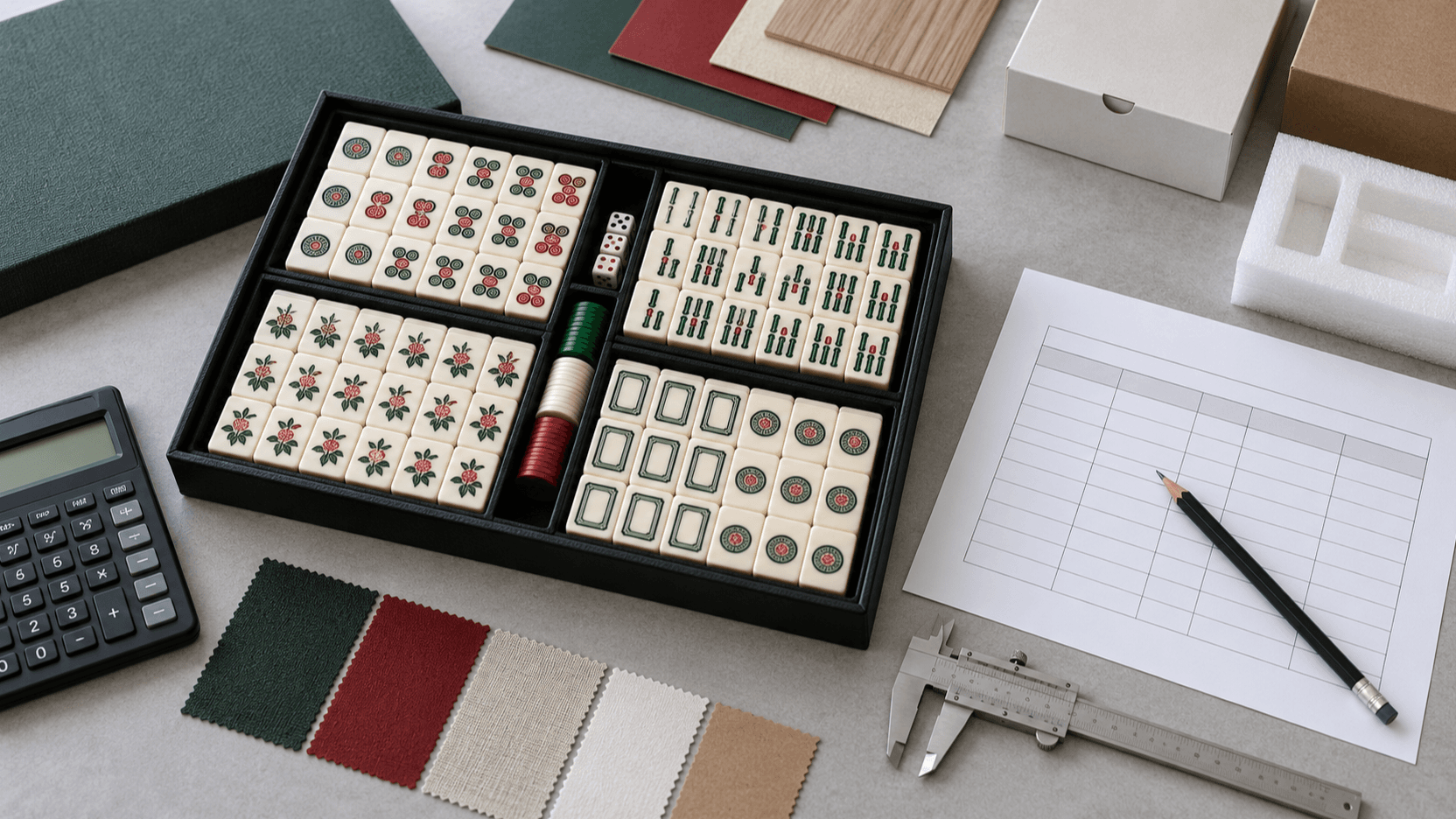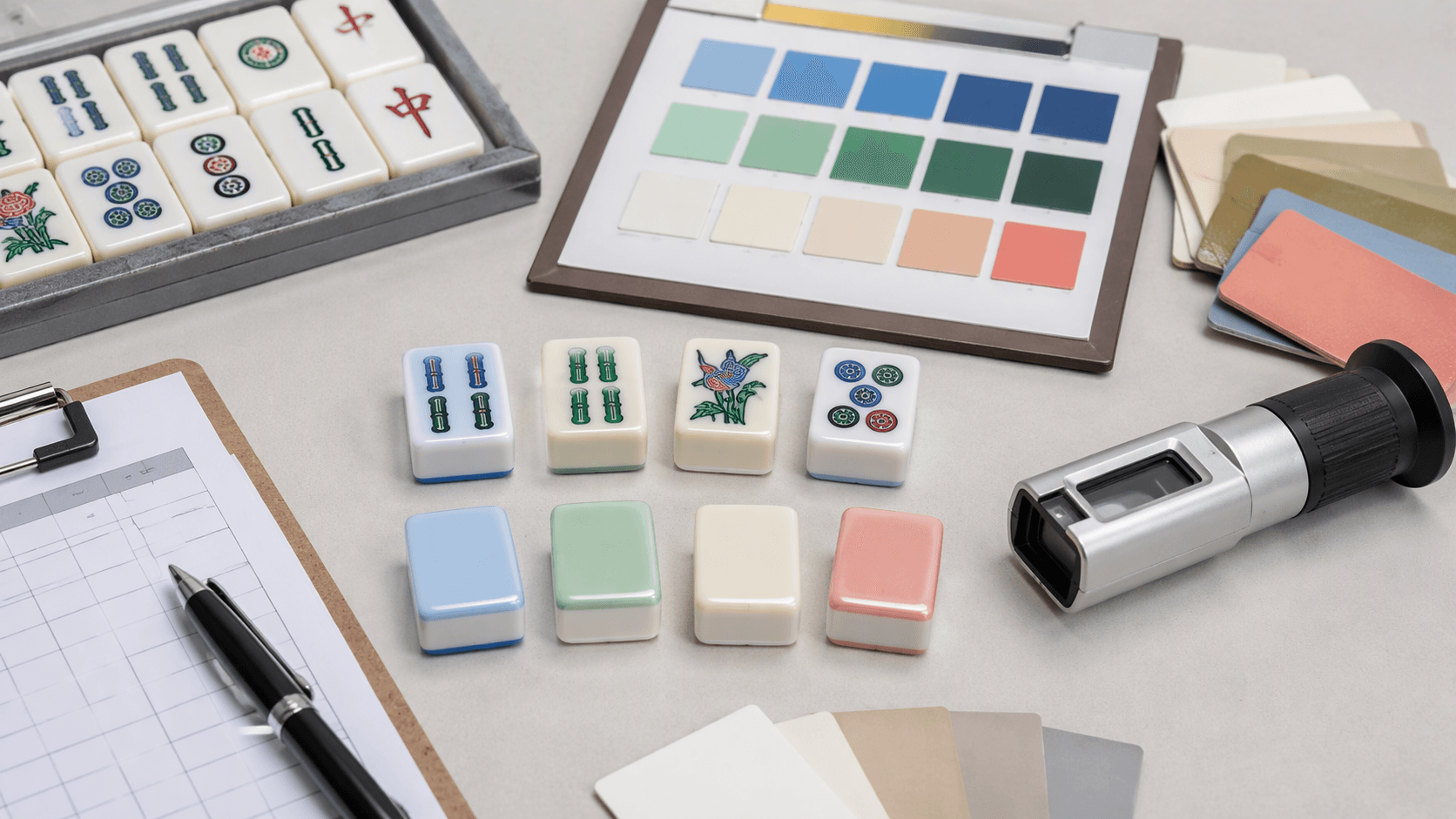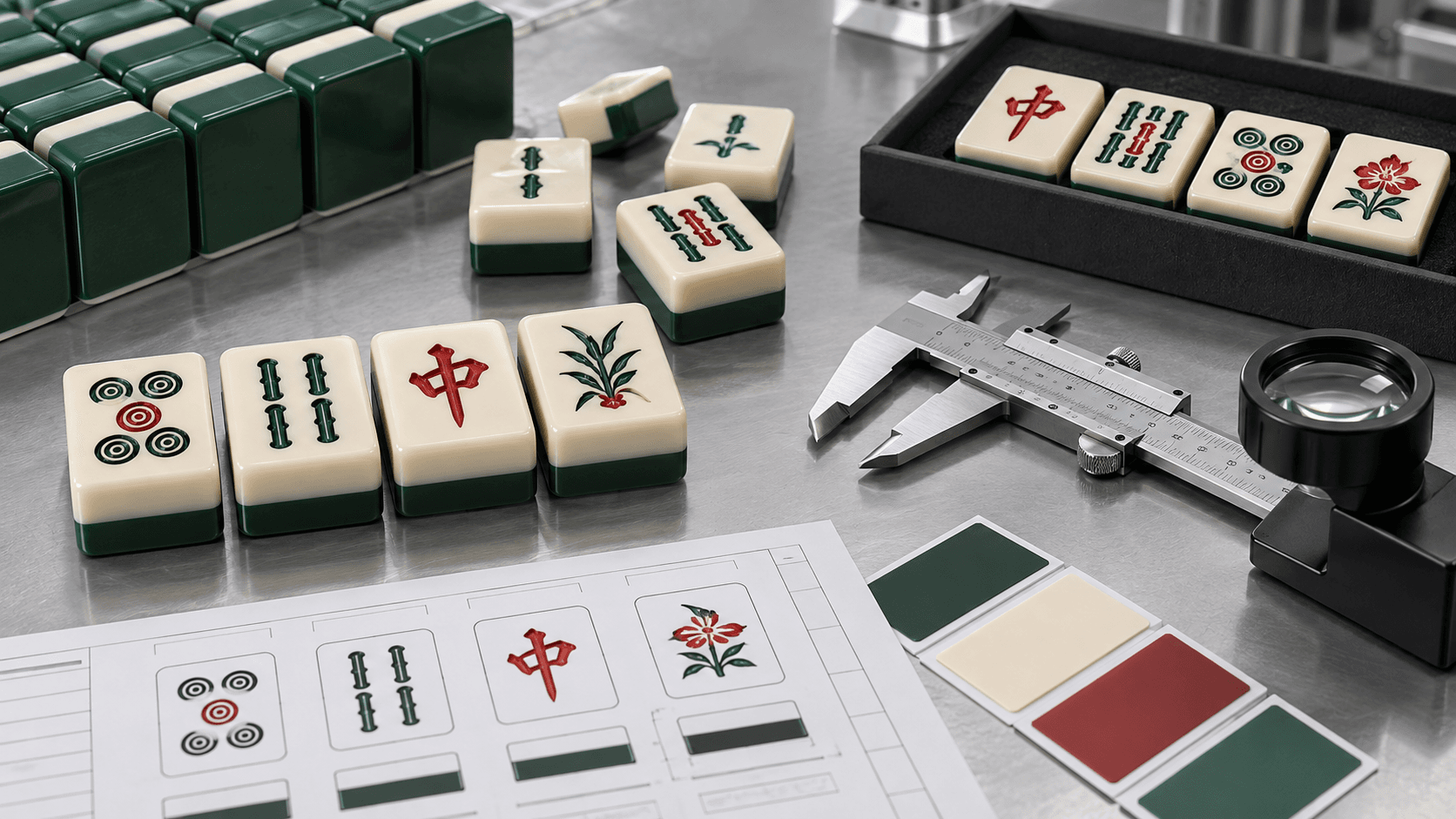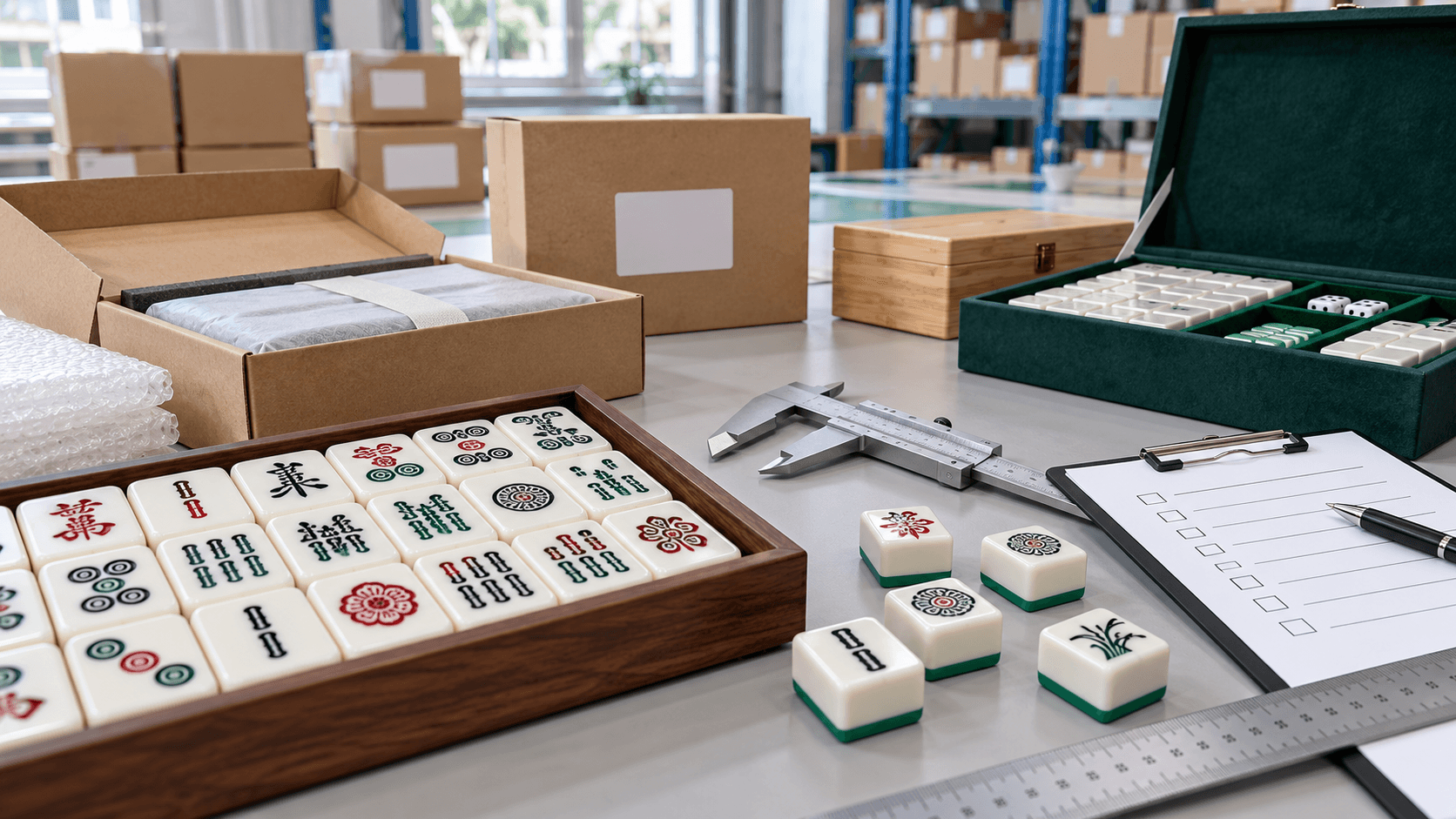
A mahjong pre-shipment inspection is the final evidence check before a buyer releases the balance payment and authorizes dispatch. It should answer a practical question: does the finished lot match the approved specification, approved sample, packaging plan, and purchase order well enough to ship?
That answer is broader than counting tiles. A useful inspection covers the product, decoration, dimensions, accessories, packaging, labels, carton protection, and the records that make the result traceable. Sampling can reduce effort, but it does not remove requirements that the buyer has agreed to verify on every set or every carton.
Define the release decision before the inspector arrives
Write the release rule in plain language before production is packed. Identify the SKU, artwork revision, material, colorway, destination market, lot quantity, packaging version, inspection date, and person who can accept or reject the lot. This prevents a report from becoming a collection of observations without an owner.
Separate three outcomes: release, hold for correction, and reject or escalate. A conditional release should name the open issue, the owner, the deadline, and the evidence required to close it. Do not allow a supplier to treat an unsigned inspection report as approval if the buyer still has a documented question.
| Release control | Question to answer | Evidence to retain |
|---|---|---|
| Product identity | Is this the correct SKU, market version, material, and artwork revision? | Approved specification, artwork file, and revision record |
| Lot identity | What quantity, production window, work order, and carton range are covered? | Production record, packing list, and lot number |
| Inspection rule | Which characteristics are sampled and which require 100% verification? | Inspection plan and signed buyer instructions |
| Decision authority | Who can release, quarantine, accept a deviation, or request rework? | Named approver and dated decision |
Use AQL as one part of the inspection plan
ASQ describes ANSI/ASQ Z1.4 as an acceptance sampling system for a continuing stream of lots, with normal, tightened, and reduced plans for inspection by attributes. The official overview is available in the ASQ sampling plan standards guide. The applicable standard, edition, inspection level, lot structure, and switching history must be stated in the purchase or inspection agreement.
"It provides tightened, normal, and reduced plans."
ISO 2859-1:2026 is the current ISO standard page for sampling schemes indexed by AQL for lot-by-lot inspection. It defines acceptance sampling by attributes and replaces the previous 1999 edition. A buyer should confirm which edition and contractual rule applies rather than combining tables from different documents.
"Sampling schemes indexed by acceptance quality limit (AQL) for lot-by-lot inspection."
AQL is not a promise that every shipped unit is defect-free, and it is not a substitute for a product specification. Critical safety or legal characteristics, set completeness, required labels, and other buyer-defined controls may need zero acceptance or 100% checking. Do not publish a fixed sample number without the lot size and the named standard.
Check the finished set against the released specification
Start with a controlled comparison between the finished product, the approved physical sample, the bill of materials, and the released artwork. Record the reference used for each check. A supplier photograph can show general appearance, but it cannot prove a tolerance, surface feel, color match, or the presence of every accessory.
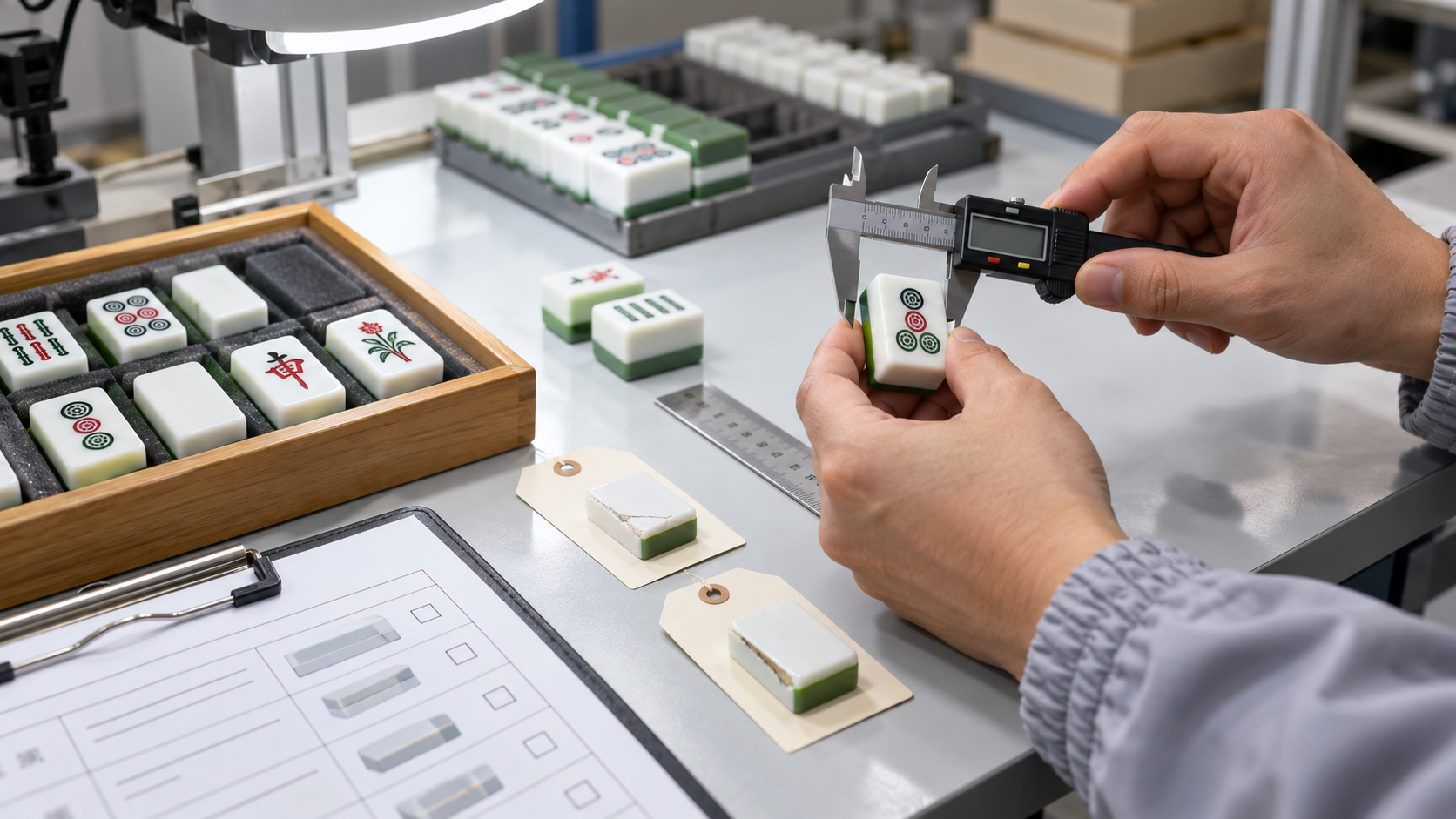
Inspect the tile body for material, dimensions, flatness, weight where specified, edge finish, cracks, chips, stains, voids, sharp edges, and surface variation. Use a defined measuring method, tool identification, tolerance, and sample identity. A caliper reading without a specified measuring point or tolerance is weak evidence.
Inspect faces and backs for the correct character schedule, orientation, color, registration, engraving or print depth, fill, readability, and repeat consistency. Compare against released artwork and an approved physical reference. Look for mixed revisions inside one carton or a face that was corrected in one production position but not another.
| Inspection area | What to verify | Common evidence |
|---|---|---|
| Completeness | Tile count, special pieces, blanks, spares, dice, racks, pushers, indicators, and rules | Bill of materials, fixed counting sequence, open-set photos |
| Dimensions and fit | Tile size, flatness, rack interface, insert fit, and approved tolerances | Measurement sheet, tool ID, and sample IDs |
| Decoration | Correct faces, back, color, depth, registration, fill, and legibility | Released artwork, golden sample, close-up photos |
| Surface and body | Cracks, chips, sharp edges, stains, contamination, and gloss variation | Defect photos, classification, and disposition |
| Accessories | Correct quantity, material, function, and compatibility with the set | Accessory checklist and functional check |
| Labels and documents | Barcode, warnings, language, country requirements, and instruction revision | Approved label artwork and document checklist |
Inspect packaging as a protection system
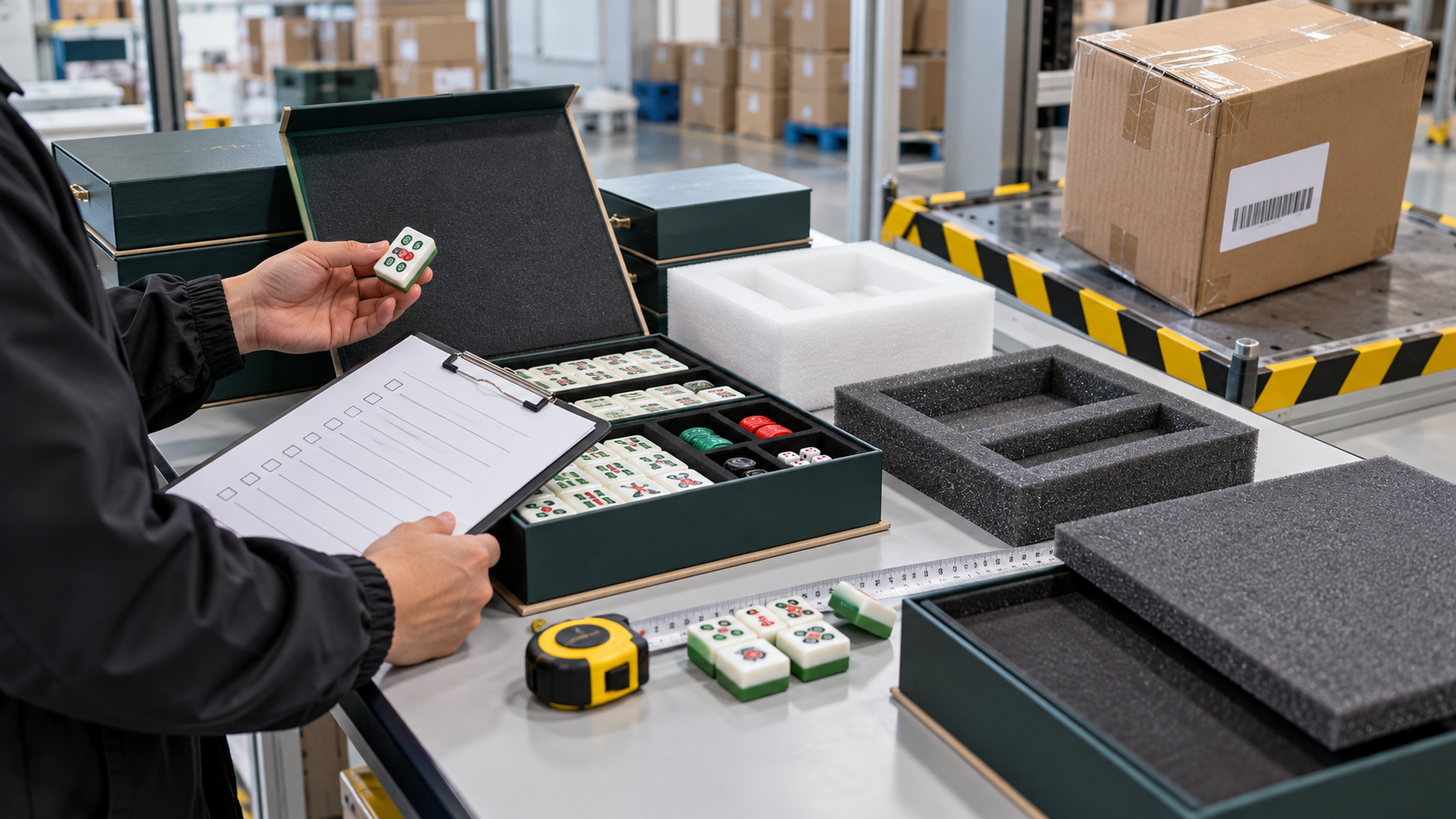
Packaging is part of the shipped product, not a separate cosmetic step. Open several finished sets and verify the insert, lid clearance, closure pressure, abrasion protection, accessory compartments, and carton configuration. Check that tiles cannot move into a position where edges or printed faces rub during transport.
Inspect the retail box, master carton, dividers, cushioning, tape, labels, pallet pattern, and carton count against the approved pack-out. If the package uses a printed dieline, check the artwork revision and readable information. If it uses an insert, test that the actual production components fit instead of relying on an empty mock-up.
Photograph the set open, the set closed, the inner protection, the master carton, and the shipping marks. Record packed dimensions and actual weight for the agreed number of cartons. A carton that was not measured cannot support a reliable freight or loading decision.
Sample the lot without hiding variation
Draw samples across the lot according to the agreed plan. Avoid taking every unit from the easiest carton, the top layer, or one production position. Record carton numbers, pallet positions, or other selection references so a finding can be traced back to the finished lot.
Keep the unit of decision clear. One tile may contain more than one nonconformity, while one incomplete retail set may be a single failed unit under the agreed rule. State how defects are counted before the inspection begins. If several colorways or revisions were combined into one shipment, check whether they should be treated as separate lots.
Use 100% verification when the characteristic is too important, too rare, or too easy to miss in a sample. Typical examples include a required safety label, a fixed count for a small retail set, a customer-specific face, or a component that must be present in every carton. Sampling and full checks can coexist in one release plan.
Make the inspection report audit-ready
A report should allow a buyer who was not present to understand what was inspected and why the lot was released. Include the purchase order, SKU, revision, lot quantity, sample quantity, inspection level, standard and edition, AQL values by defect class, acceptance and rejection numbers, actual findings, photographs, measurements, packaging observations, and final disposition.
Also record the inspector, date, location, equipment identifiers, calibration status where relevant, supplier response, and buyer approval. List each defect with its sample or carton reference, severity, quantity, photo, and disposition. "Passed inspection" by itself does not show whether the count, artwork, packaging, or labels were checked.
Link the release report to the broader Mahjong tile quality inspection checklist. The two controls serve different purposes: the pre-shipment decision confirms the finished lot and pack-out, while the broader checklist helps define the quality characteristics and evidence that should be reviewed.
Set a clear response for defects and reinspection
When a lot fails, quarantine the affected quantity and preserve the original evidence. Ask for containment and root-cause analysis rather than an informal promise to sort. The response should identify whether the cause was an outdated artwork file, material change, machine setup, handling, decoration, counting, or packing.
Agree whether the next step is 100% sorting, rework, replacement, resampling, or a documented deviation. A second inspection should state whether it covers the original lot, a reworked lot, or a replacement lot. It should not silently use a more convenient acceptance rule.
If the buyer accepts a deviation, write the exact scope and expiry. A one-time approval for a cosmetic variation must not become an unrecorded production standard. Keep the approval with the lot record and link it to the affected carton or revision.
Release payment only after the evidence closes
Balance payment should follow the agreed release decision, not simply the completion of packing. Confirm that the inspection report is complete, open issues have an owner, accepted deviations are written, and the shipment documents match the inspected lot. Where the contract requires a buyer sign-off, keep the signed approval with the purchase order.
During a mahjong pre-shipment inspection, the buyer should also confirm that the report describes the same lot that will be loaded. A clean sample from an earlier production run is not evidence for a different carton range.
Also confirm the commercial details that can block dispatch: carton count, gross and net weight, dimensions, shipping marks, destination, carrier booking, invoice description, packing list, and any required certificate or label. The Mahjong manufacturing timeline can help align inspection, correction, packing, and shipment dates.
Use this final checklist before dispatch
- The inspected lot, SKU, artwork revision, quantity, and carton range are identified.
- The applicable standard, edition, inspection level, and sampling state are recorded.
- Every set component and required label is checked against the bill of materials.
- Tile dimensions, surface, decoration, color, edge finish, and fit are checked using defined methods.
- Packaging, inserts, abrasion protection, carton strength, labels, and shipping marks match the approved pack-out.
- Samples represent the lot and selection references are recorded.
- Critical or customer-specific characteristics have the agreed 100% control where needed.
- Each defect has a class, quantity, location, evidence, owner, and disposition.
- Rework, resampling, deviation, and payment-release rules are written before dispatch.
- The final report, approval, packing list, and shipment records are stored together.
FAQ
What is a pre-shipment inspection for a Mahjong set?
It is a final quality and documentation check of finished goods before dispatch. It compares the lot with the approved specification, sample, artwork, packaging plan, purchase order, and agreed release rule.
Does an AQL inspection replace a full product check?
No. AQL sampling can cover selected attribute checks, but the buyer may require 100% verification for completeness, labels, safety-related characteristics, or customer-specific artwork. The plan should state both types of control.
What should be checked on the tiles?
Check material, dimensions, flatness, weight where specified, edge finish, cracks, chips, surface condition, decoration, color, registration, readability, and the correct tile count and version.
Should packaging be inspected before balance payment?
Yes. Verify the insert, closure, abrasion protection, accessory compartments, retail box, master carton, labels, carton count, and the actual packed condition against the approved pack-out.
How many samples should an inspector check?
There is no safe universal number. The sample depends on lot size, named standard, inspection level, sampling plan, defect classes, and contract terms. Avoid publishing a fixed number without those inputs.
What happens when the inspection finds a major defect?
Record the defect and affected units, quarantine the lot as needed, preserve photos and measurements, and follow the agreed correction, sorting, replacement, resampling, or escalation rule before release.
Can a supplier release goods after a conditional pass?
Only when the buyer's contract and written approval allow it. A conditional pass should identify the open issue, owner, deadline, and closing evidence; it should not be an informal substitute for release.
What photos belong in the inspection report?
Include representative tile faces and backs, defects with references, measurement setup, open and closed sets, accessories, inserts, master cartons, labels, shipping marks, and the packed cartons with dimensions or weight where relevant.
Should different colorways share one inspection lot?
Only when the grouping is homogeneous and the agreed plan represents each component. Separate colorways or revisions when their material, artwork, process, or risk differs, and record the grouping logic.
When should the buyer release balance payment?
Follow the purchase terms, but release only after the agreed inspection decision, report, open-issue disposition, shipment details, and required buyer approval are complete and traceable.
Turn the inspection into a controlled shipment
A reliable mahjong pre-shipment inspection connects the finished lot to a released specification, a representative sample, a defined defect rule, complete packaging evidence, and a named release decision. It protects the buyer from paying for an unverified promise while giving the supplier a clear path to correct problems.
For a new or repeat program, review ABC Mahjong company information and send a project inquiry with the SKU, lot size, artwork revision, component list, packaging version, destination, inspection standard, defect priorities, and required evidence. That gives the quality gate enough detail to support a real shipment decision.