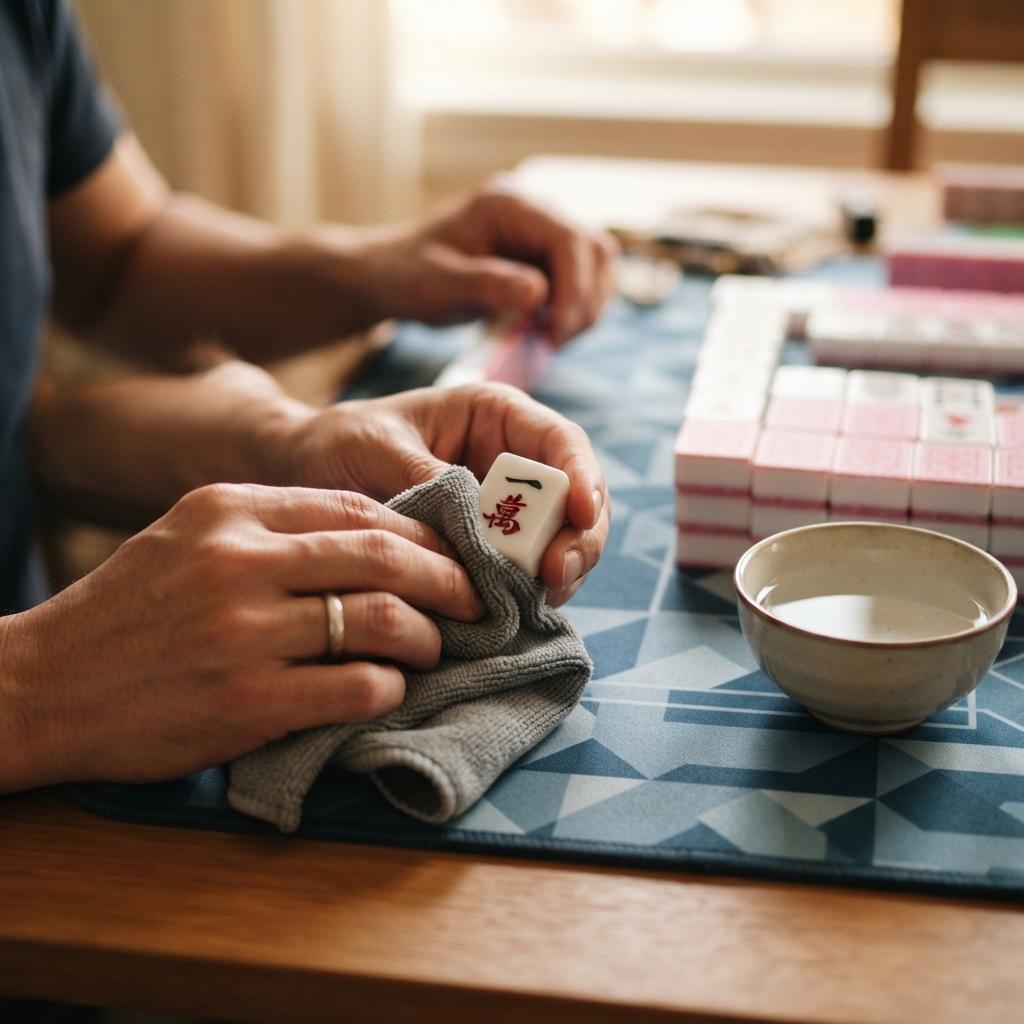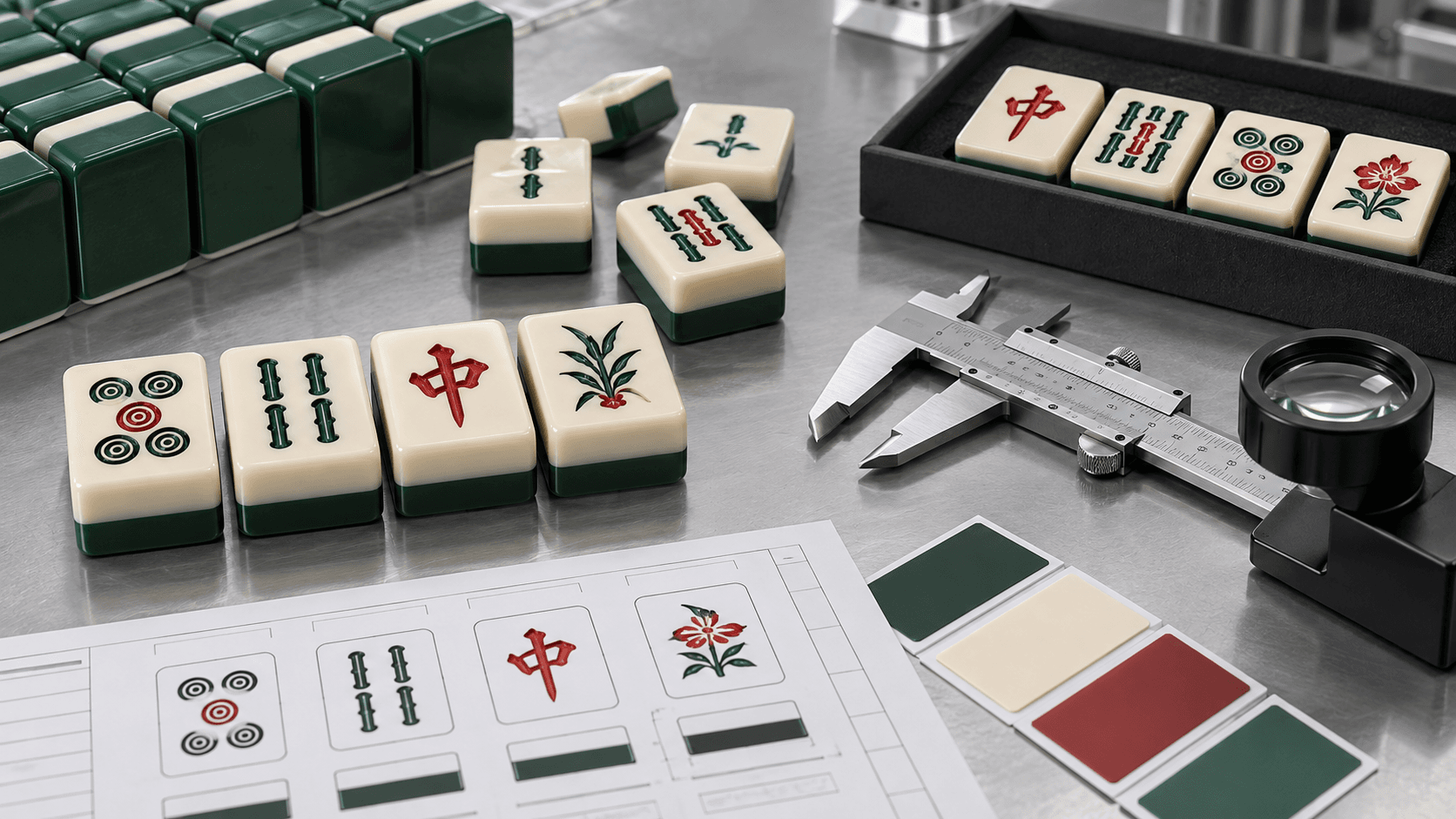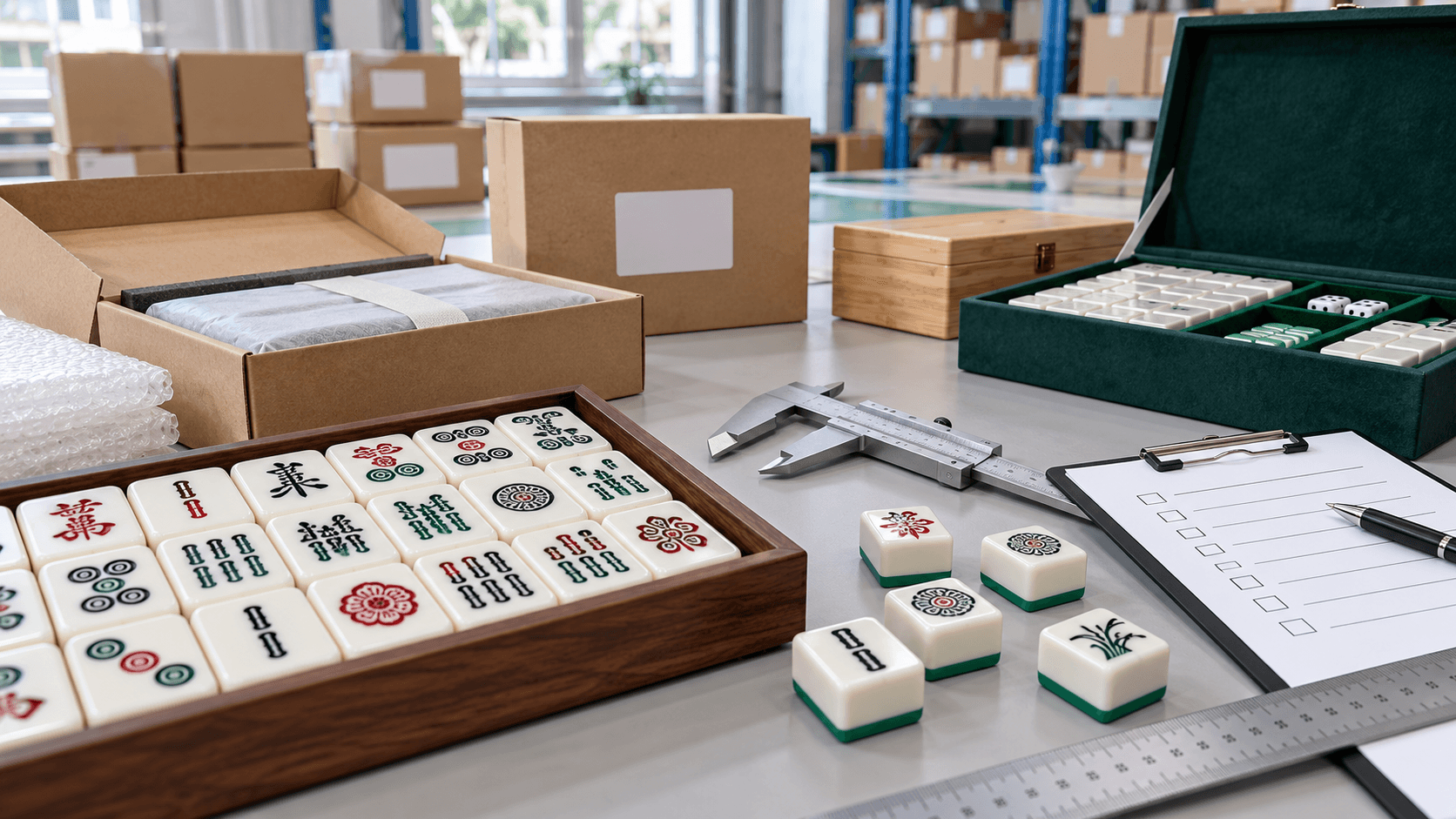

The short answer to how to clean Mahjong tiles is to wipe them with a soft microfiber cloth wrung out in lukewarm water with one drop of mild dish soap, then dry each tile immediately. Never soak the tiles, put them in a dishwasher, or use alcohol, ammonia, acetone or scouring pads, because those can cloud acrylic, craze the surface and lift printed artwork.
Most tile damage we see is not wear from play. It is damage from cleaning: hot water, glass cleaner, disinfecting wipes and a week in a plastic bag. This guide gives a routine that is safe for acrylic and melamine sets, explains what to do when a set is genuinely dirty, and covers the racks, mats and cases that sit around the tiles.
How to clean Mahjong tiles: the short answer
| Item | What to use | What to avoid |
|---|---|---|
| Tile faces and backs | Lukewarm water, one drop of mild dish soap, soft microfiber cloth | Soaking, hot water, alcohol, ammonia, acetone, scouring pads |
| Deep grooves or engraved lines | Soft-bristle brush or cotton swab, barely damp | Toothpicks, metal tools, abrasive cream cleaners |
| Racks and pushers | Damp cloth, quick rinse, immediate drying | Dishwasher, prolonged soaking |
| Gaming mat | Vacuum or soft brush, spot clean with mild soap, air dry flat | Machine washing, tumble drying, bleach |
| Dice | Damp cloth, dry immediately | Soaking, solvent wipes |
| Storage case | Wipe interior, air dry fully before closing | Storing tiles damp |
That is the whole method for how to clean Mahjong tiles. The rest of this guide is about doing it consistently, and about the cases where a well-meant shortcut causes permanent damage.
A safe routine for Mahjong tile cleaning
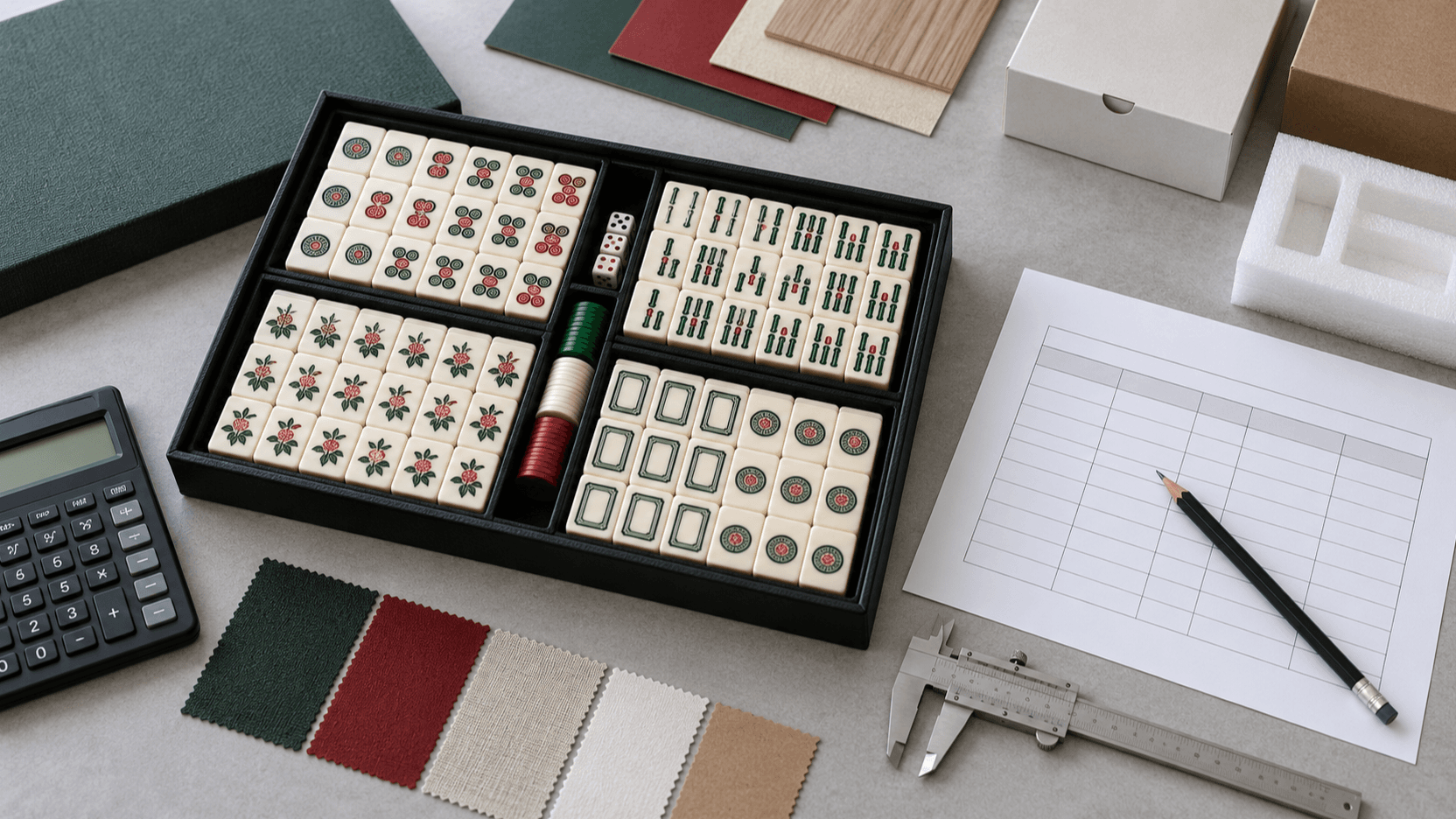
For anyone new to how to clean Mahjong tiles, the sequence below is easy to repeat and takes about two minutes per set once you have the cloths ready. If you are sorting a new set at the same time, our breakdown of how many tiles are in a Mahjong set explains which pieces are playable and which are spares.
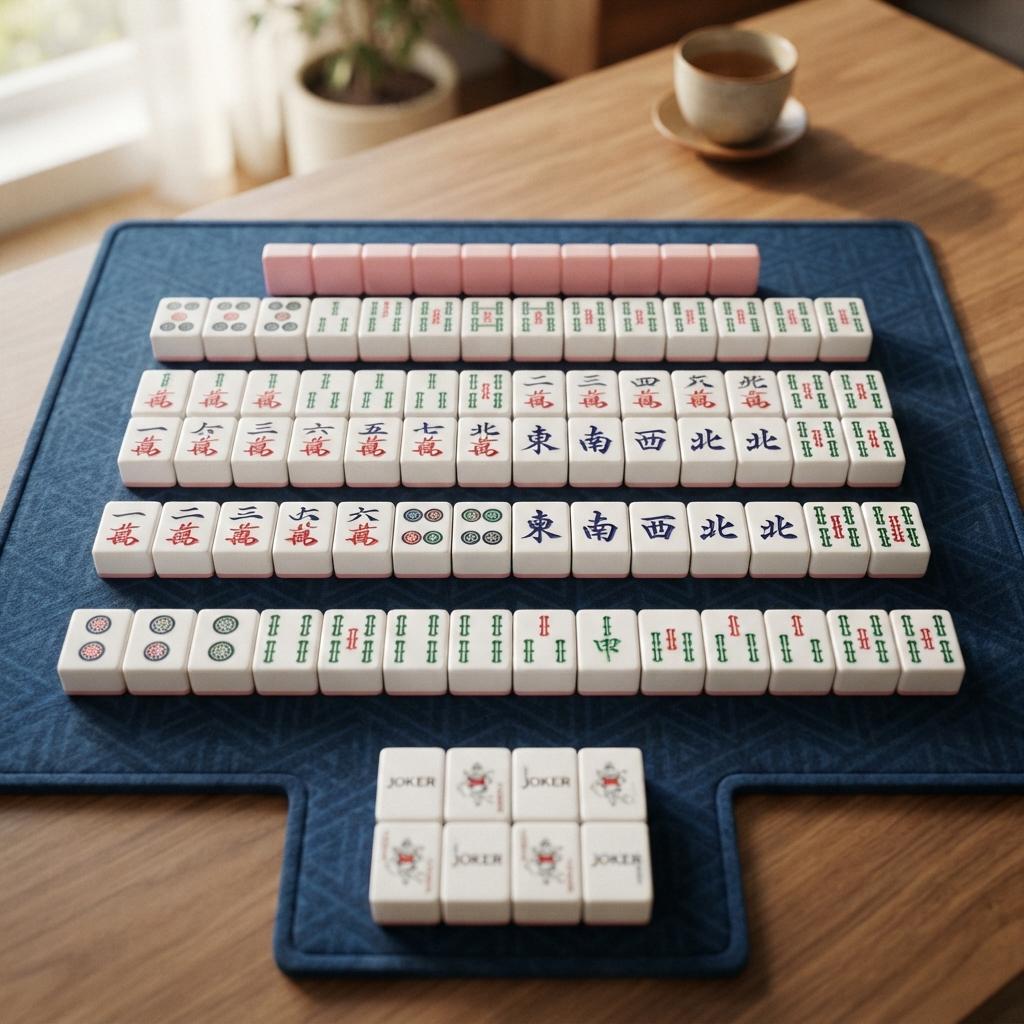
- Clear the table and sort the tiles. Keep jokers, blanks and any spare tiles separate so you can count them back in afterwards.
- Mix the solution. Fill a bowl with lukewarm water and add one drop of mild dish soap. More soap does not clean better; it only leaves residue in the engraved lines.
- Wring the cloth until it stops dripping. The cloth should be damp, not wet. Water sitting on a tile is the start of most problems.
- Wipe one tile at a time. Work from the face to the back with light pressure. Do not scrub the printed symbols; the ink sits on the surface and does not need friction.
- Dry immediately with a second, dry microfiber cloth. Do not let tiles air dry in a stack. Water trapped between two tiles stays there for hours.
- Check the engraved lines. If soil remains in the recesses, use a soft-bristle brush or a cotton swab with almost no water, then dry again.
- Count and store. Return the tiles to a dry case only after they are completely dry to the touch.
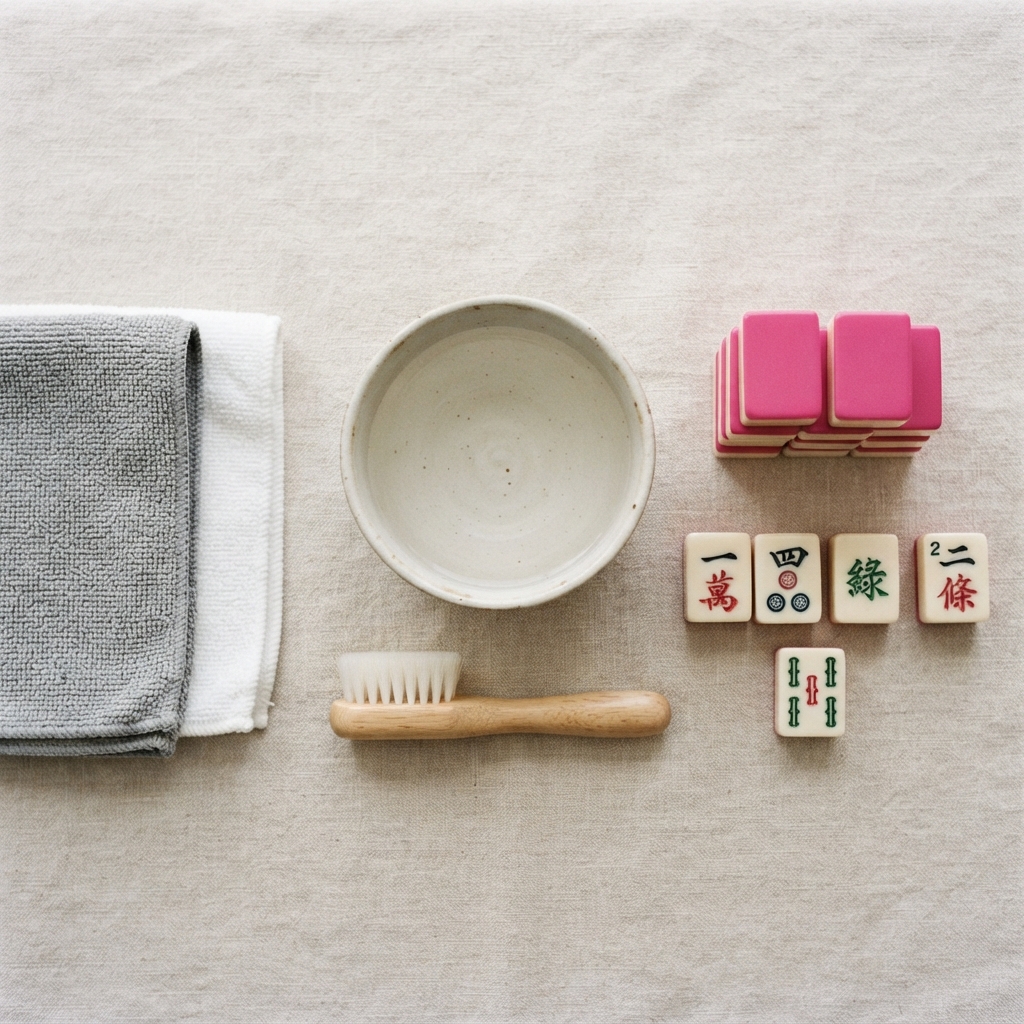
For routine Mahjong tile care after a game night, steps 4 and 5 are enough. A full wash is for sets that have been stored for a season, handled with food nearby, or used in a club rotation.
How to clean acrylic Mahjong tiles versus melamine
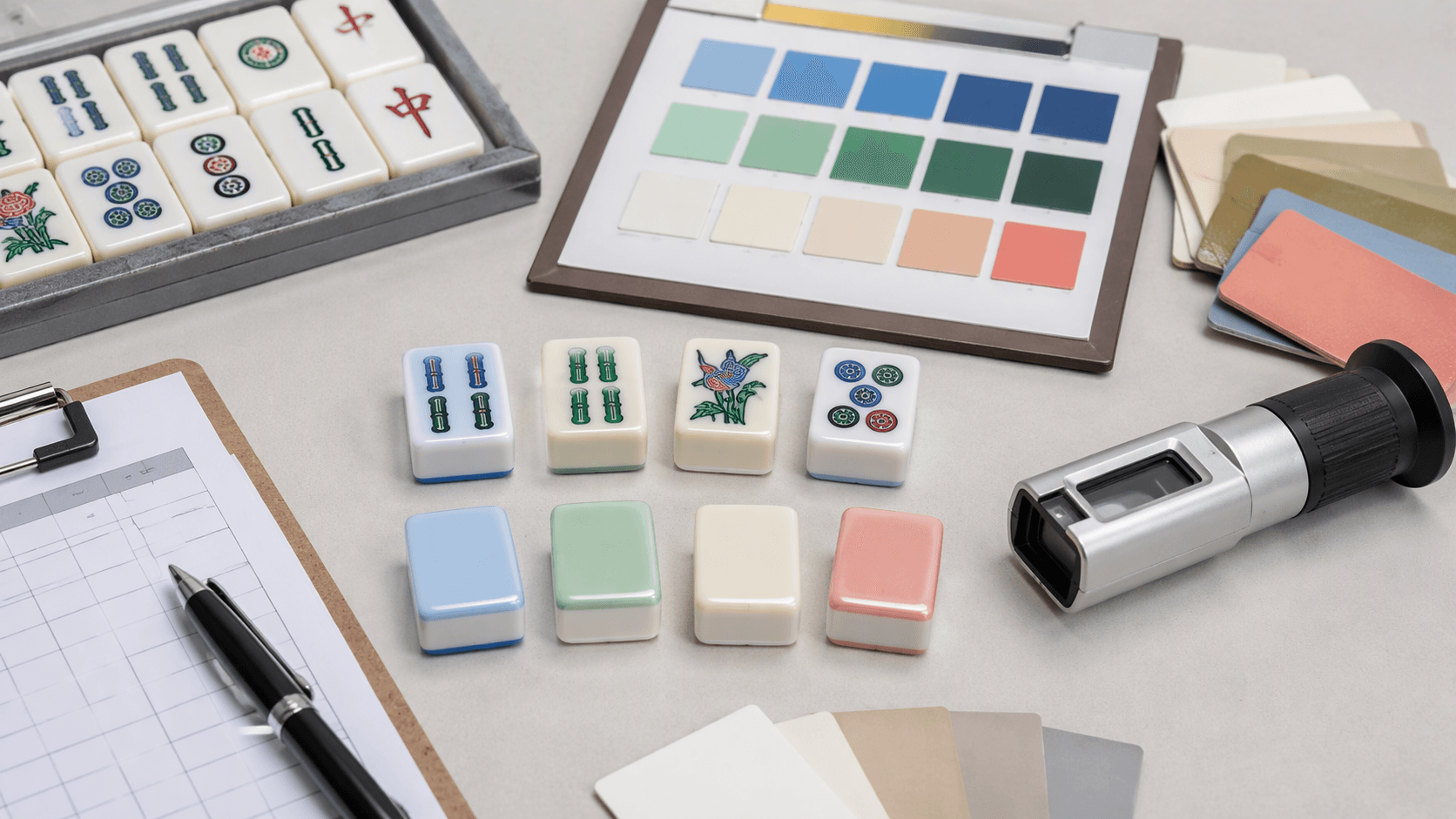
Most modern sets are acrylic, melamine or a combination. Both clean the same way, but they fail differently, so the caution changes.
Acrylic tiles have a glossy, glass-like surface. That finish shows fingerprints and scratches easily, and it is the surface most affected by solvents. Acrylic can craze, meaning fine internal cracks appear under the surface, when it is exposed to alcohol or ammonia-based cleaners. The damage often appears gradually, so a wipe that seems fine the first time can leave a hazy patch after a season of use. Treat acrylic as the more delicate of the two and keep it away from anything labelled glass cleaner, disinfectant or adhesive remover.
To clean melamine Mahjong tiles, use the same damp-cloth method. Melamine is harder and more scratch-resistant, which is why many club sets use it, so it tolerates routine wiping with less risk of surface marking. It still should not be soaked, because water can work into the printed layer at the edges and because prolonged moisture is hard on any laminated face.
If you are unsure how to clean Mahjong tiles made from a mixed or unknown material, clean them as if they were acrylic. That routine is safe for both. Our guide to acrylic versus melamine Mahjong tiles explains how the two materials differ in appearance, weight and production.
What not to use on Mahjong tiles
| Product | Why it is a problem |
|---|---|
| Rubbing alcohol and alcohol wipes | Can craze acrylic and dull the gloss; repeated use leaves a permanent haze |
| Ammonia-based glass cleaner | Attacks the surface and can cloud clear or glossy acrylic |
| Acetone and nail polish remover | Dissolves many plastics on contact |
| Bleach and bathroom disinfectant | Too aggressive for printed faces and glossy backs |
| Scouring pads and abrasive cream | Scratches the surface and wears the printed symbols |
| Dishwasher | Heat, detergent and long water exposure combined |
| Hot water | Can distort thin tiles and soften the bond at printed edges |
The acrylic industry is consistent on this point. Gaylord Archival advises against ammonia and alcohol-based cleaners on acrylic, naming glass cleaners such as Windex, because they cause yellowing, hazing and scratches, and it recommends a non-abrasive, low-lint cloth instead of paper towels. The same logic applies to a Mahjong tile: the material is the same family, and the finish is the part you are trying to protect.
How to clean dirty Mahjong tiles with printed or engraved faces
Printed faces and engraved faces hold dirt differently, so they need slightly different handling. The same method answers how to clean Mahjong tiles with either face type, but the tool changes.
Printed tiles carry ink or a printed film on the surface. Clean them with light passes only. If a mark will not lift with a damp cloth and mild soap, stop rather than scrub; repeated friction is what makes printed symbols fade at the edges. Do not use a brush directly on the print.
Engraved or laser-marked tiles have recesses where dust, skin oil and chalky residue collect. A soft-bristle brush or a cotton swab is the right tool, worked along the line rather than across it. Keep the brush barely damp and dry the recess afterwards with a cloth corner. Avoid toothpicks and metal tools, which can chip the edge of the groove.
For sticky residue from tape, labels or food, try a little more mild soap and a longer dwell time rather than a stronger chemical. If that fails, the residue is usually in the print or the surface has already changed, and cleaning further will not restore it.
Cleaning racks, pushers, mats, dice and cases
The tiles get the attention, but the accessories touch them constantly and transfer dirt back.
- Racks and pushers: wipe with a damp cloth and mild soap, rinse quickly under running water if needed, and dry at once. Do not leave them in a sink to soak; water sits inside the rack channel.
- Gaming mats: Mahjong mat cleaning is simpler than tile cleaning. Shake out crumbs, vacuum on a low setting or brush with a soft brush, then spot clean with mild soap and a damp cloth. Air dry flat, not folded and not in direct sun. For a deeper clean of a Mahjong mat with stitched edges, check the care label before washing the whole surface.
- Dice: wipe with a damp cloth and dry immediately. Do not soak them to clean the pips.
- Cases and bags: wipe the interior, leave it open until fully dry, and keep a desiccant sachet inside if the set lives in a humid room.
This is also the moment to check for loose threads, split stitched edges and cracks in rack corners. Accessory damage is easier to fix before it starts snagging tiles.
Drying and Mahjong tile storage
Drying is where most cleaning mistakes turn into permanent marks. Lay tiles out in a single layer on a dry towel or drying rack if you have space, or dry each one by hand as you go. Never stack damp tiles, and never close a case with moisture inside.
For Mahjong tile storage, use a case with a soft lining and separate compartments for tiles, jokers, dice and racks. Keep the set out of direct sunlight and away from radiators or hot cars; heat is not kind to acrylic or to printed faces. If the set is stored for months, clean and dry it first, then close the case with a desiccant pack rather than sealing in dust and humidity.
How often should you clean Mahjong tiles?
For a home set, a quick wipe after each game and a full clean every few months is enough. Club managers often ask how to clean Mahjong tiles between sessions, and the practical answer is a wipe-down after every session plus the full routine weekly, because handling volume is much higher and shared sets pick up skin oil and food residue quickly.
Clean sooner if the tiles feel tacky, if the faces look dull under a light, or if the set has been stored in a damp room. Tackiness is usually oil and dust, not damage, and it comes off with the mild soap routine.
Common Mahjong tile cleaning mistakes
Soaking the whole set in a bucket. It looks efficient and it is the fastest way to get water into printed edges and engraved recesses.
Using disinfecting wipes after every game. The convenience is real, but repeated alcohol exposure is exactly what dulls acrylic.
Drying in the sun. Heat and UV are not helpful for the finish, and tiles can warp if they are thin.
Cleaning only the faces. The backs and edges touch hands, tables and cases just as much, and dirt transfers back to the faces the next time the tiles are shuffled.
Scrubbing a stubborn mark. If mild soap and a damp cloth do not lift it, friction usually damages the surface before it removes the mark.
When a tile is damaged, not dirty
Some problems cannot be cleaned out. Cloudiness that stays after drying, fine spider-web cracks under the surface, a printed symbol that has worn thin, or a chipped corner are material damage. Cleaning will not reverse them, and scrubbing can make them worse.
For a single damaged tile, a replacement is usually the practical answer, especially for clubs that need a playable set rather than a collectible one. Our article on bulk Mahjong replacement tiles explains how to plan a service pack so a set stays complete.
Mahjong sets and mats from our workshop
We manufacture acrylic Mahjong products and the accessories around them. Our pink-back American Mahjong tile set has a smooth polished playing face, a glossy pink back, rounded corners and printed multicolor artwork with Characters, Bamboos, Dots, Winds, Dragons, Flowers, Seasons and Joker tiles. The polished surface is exactly the kind that benefits from the damp-cloth routine above rather than solvent wipes.
We also make coordinated racks, pushers, mats, cases and packaging, and support OEM/ODM and private-label programs for brands, wholesalers, retailers and e-commerce sellers, backed by more than 20 years of Mahjong manufacturing experience. If you need care guidance for a specific tile material or finish, send us the specification and we will tell you what we recommend for that surface.
Frequently asked questions
Can I use alcohol wipes on Mahjong tiles?
No. Alcohol can craze acrylic and dull the gloss, and repeated use leaves a haze that cannot be wiped away. Use a damp microfiber cloth with mild soap instead.
Can I put Mahjong tiles in the dishwasher?
No. Dishwasher heat, detergent and long water exposure can distort tiles and damage printed faces. Wash by hand with a damp cloth and dry immediately.
How do I clean engraved Mahjong tiles?
Use a soft-bristle brush or cotton swab that is barely damp, work along the engraved line, then dry the recess with a cloth corner. Avoid toothpicks and metal tools that can chip the groove.
Why do my Mahjong tiles look cloudy?
Cloudiness is usually solvent damage or fine crazing rather than dirt. If it remains after a mild soap wipe and full drying, the surface has changed and cleaning will not restore it.
Can I wash a Mahjong mat in the washing machine?
Do not machine wash a mat unless its care label explicitly allows it. Vacuum or brush it, spot clean with mild soap, and air dry flat to protect the backing and stitched edges.
How often should a club clean its Mahjong tiles?
Wipe tiles after every session and do a full mild-soap clean weekly. Shared sets handle far more hands and food residue than a home set, so the routine needs to be more frequent.
Does cleaning remove scratches from Mahjong tiles?
No. Cleaning removes oil, dust and residue. Scratches and crazing are surface damage, and polishing them out is a different process that most sets are not worth.
How should I store Mahjong tiles after cleaning?
Dry them completely, then store them in a lined case with separate compartments, away from sunlight and heat. Add a desiccant pack for long storage in humid conditions.
Conclusion
Learning how to clean Mahjong tiles safely comes down to one rule: mild soap, lukewarm water, a damp cloth and immediate drying. Keep solvents, hot water and the dishwasher out of the routine, and the faces, backs and engraved lines will stay legible for years of play.
If you are choosing a set for a club or a retail range and want to match the tile finish to the way it will be cleaned and stored, tell us about the material, artwork and packaging you need. We can review the specification and suggest a finish that suits the use.