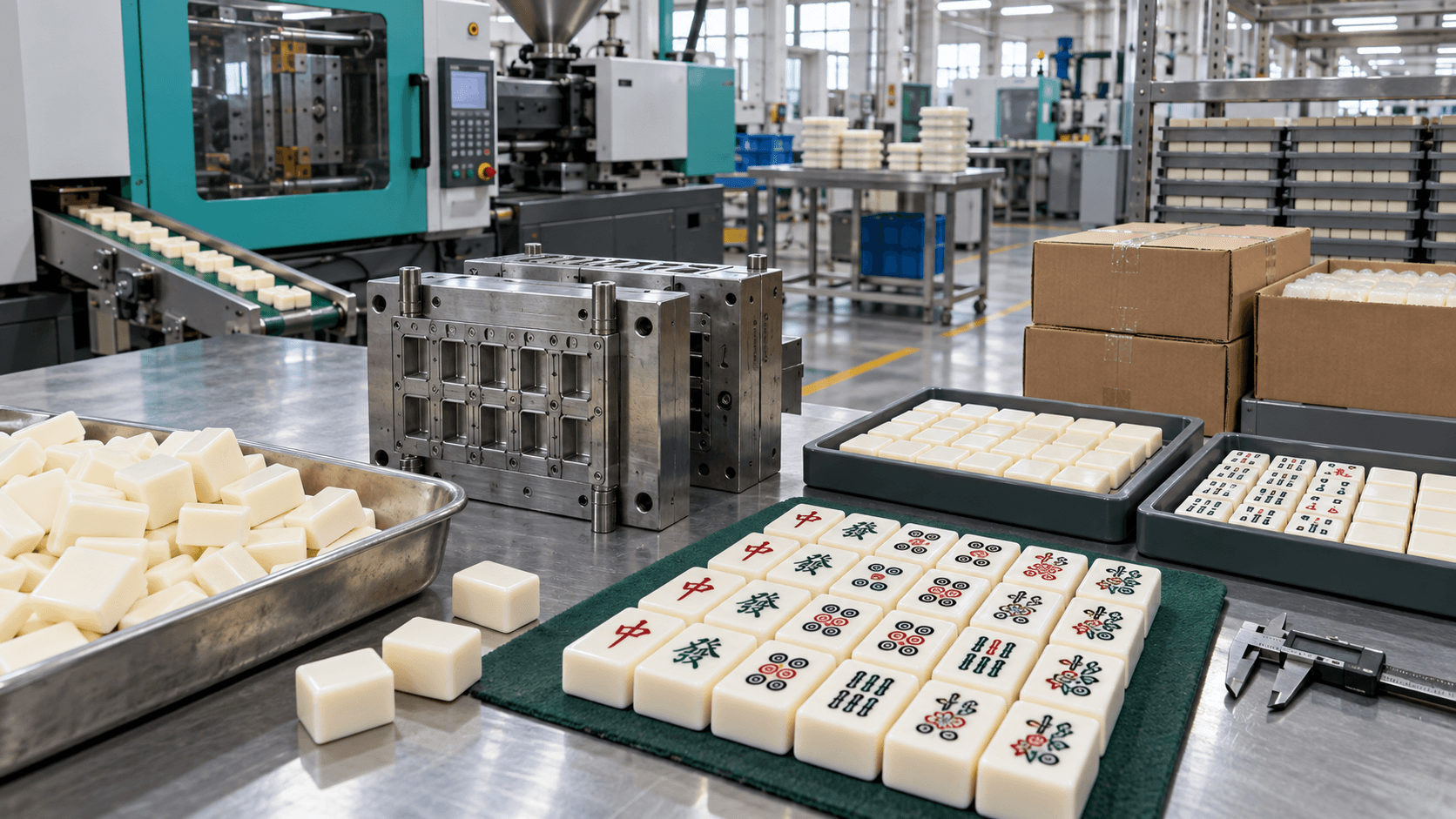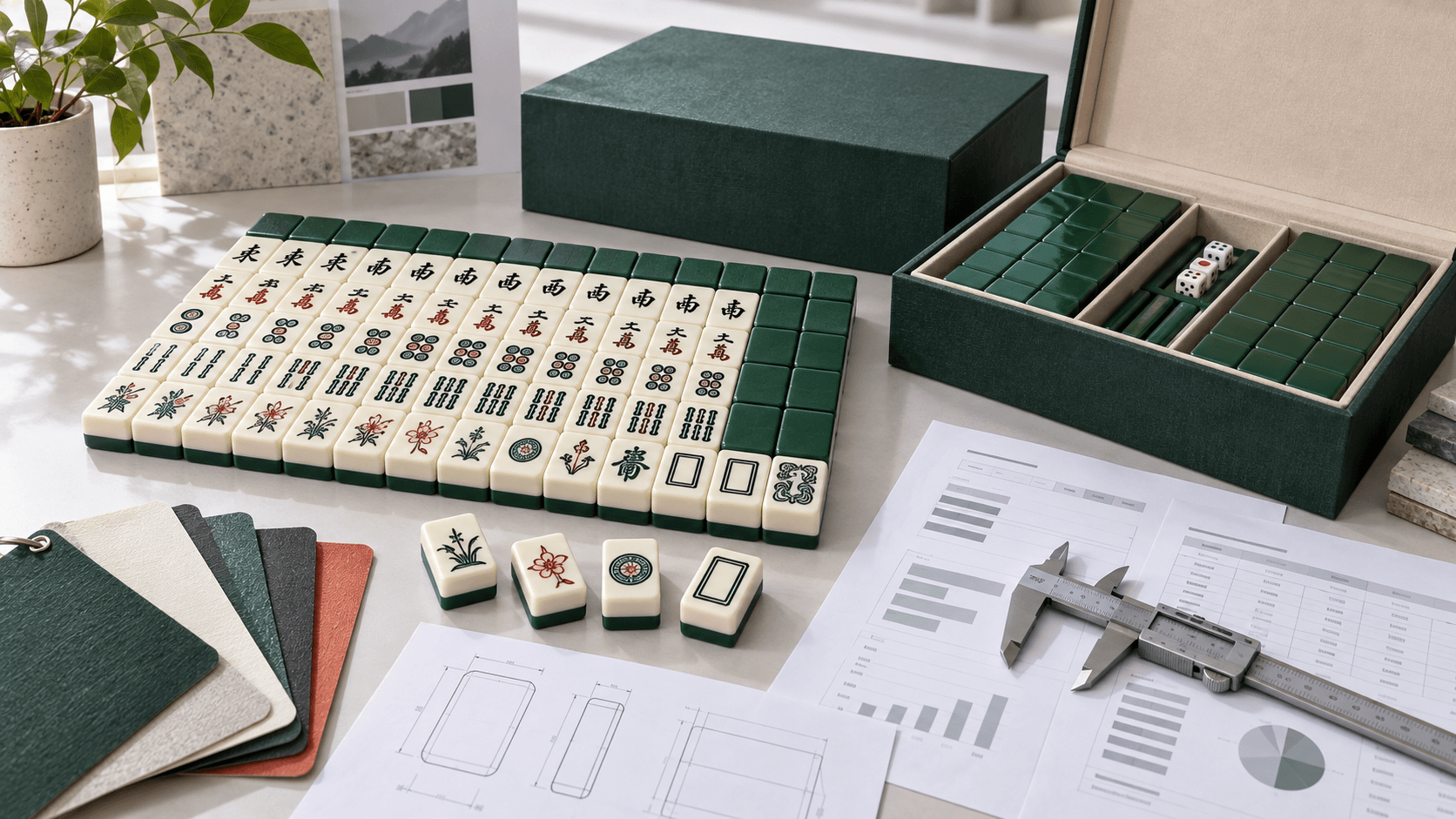

A reliable Mahjong set is not approved because the tiles look attractive in one photograph. Mahjong tile quality inspection is a chain of checks that connects material, dimensions, decoration, completeness, packaging, and the approved sample. The purpose is not to make every tile look artificially identical; it is to define which variation is acceptable and which defect can damage play, presentation, safety, or reorder consistency.
This checklist is for buyers, brand owners, and factory teams preparing a release or pre-shipment inspection. It separates critical, major, and minor observations, explains what to measure, and shows how to turn an inspection result into a decision that production can repeat.
Build the inspection around an approved reference
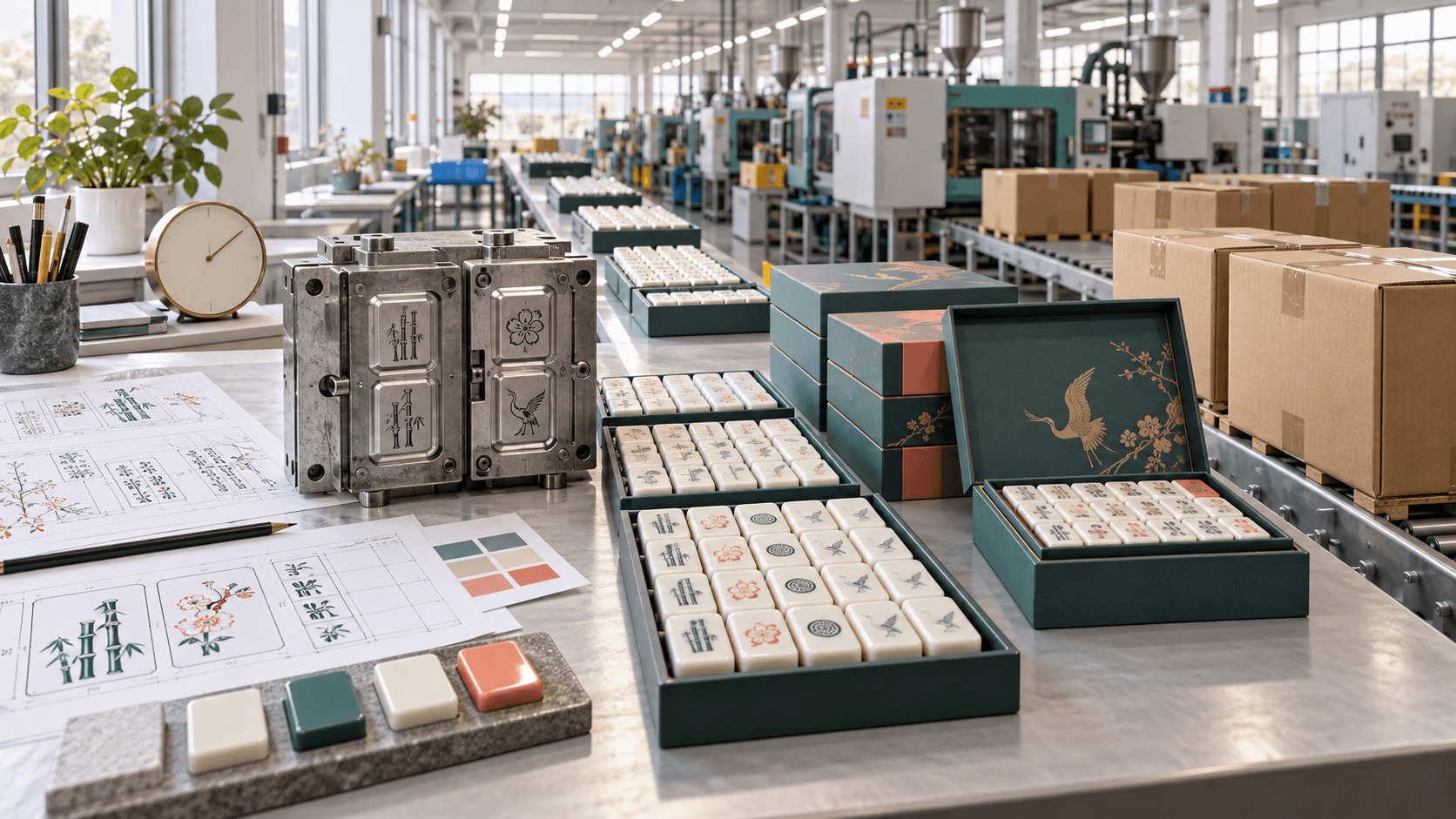
Start with the approved pre-production sample, released specification, artwork revision, component list, packaging file, and approved deviations. The sample is a physical reference; the specification explains the parts of the sample that cannot be judged by appearance alone. Together they answer questions such as tile size, weight, edge profile, color direction, face schedule, accessory count, and pack-out.
Write the inspection scope before the lot is ready. Identify the lot size, sample quantity or full-check requirement, inspection location, measuring tools, defect classes, and release authority. If a buyer, factory, and third-party inspector use different definitions, the argument begins before anyone touches a tile.
The seven checks that protect a sellable Mahjong set
- Material and surface. Check the declared material, color base, gloss or matte finish, contamination, bubbles, sink marks, cracks, sharp edges, and unwanted odor or residue.
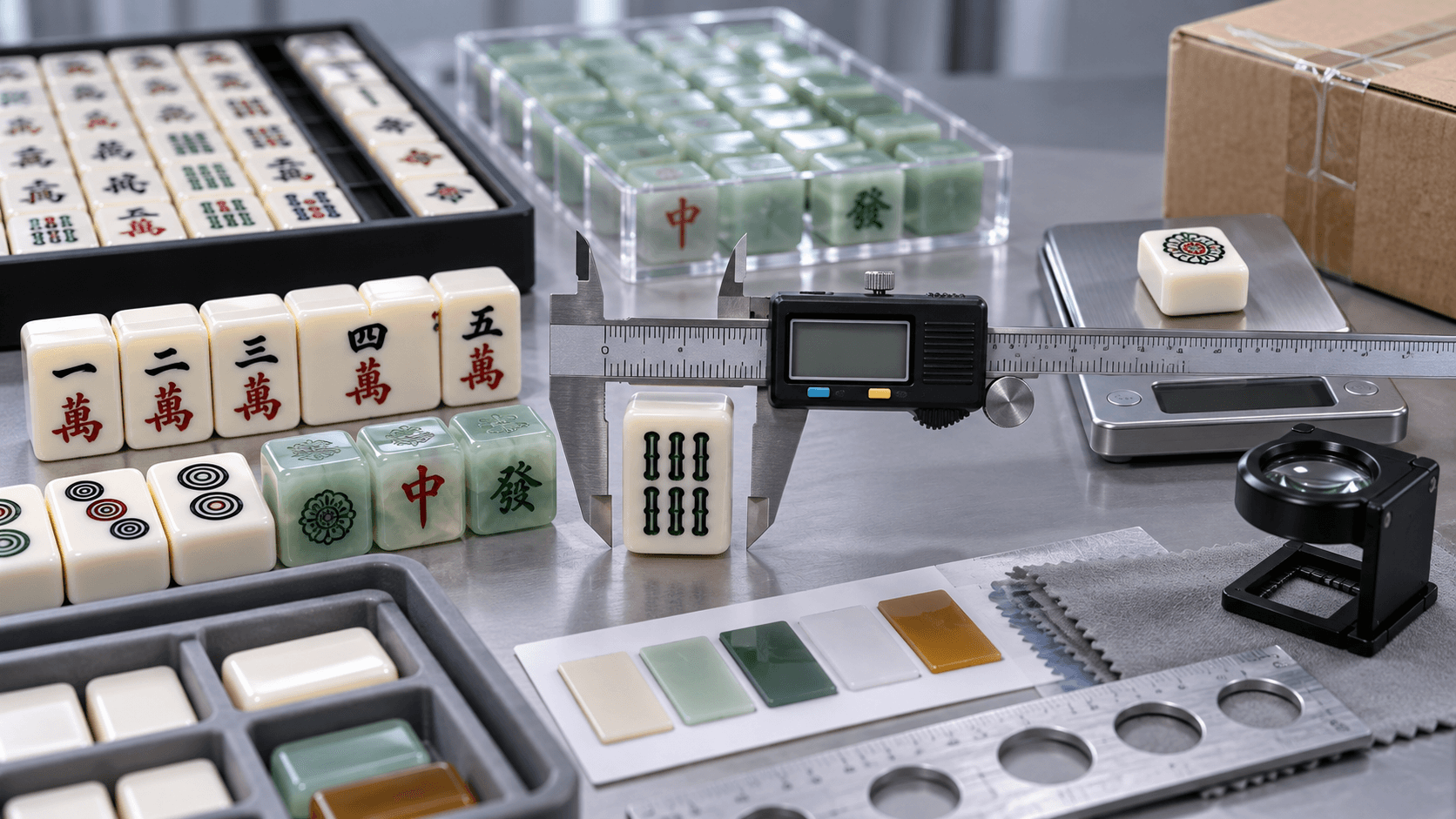
- Dimensions and geometry. Measure length, width, thickness, squareness, weight where relevant, rocking, edge radius, and fit with racks, trays, pushers, or cases.
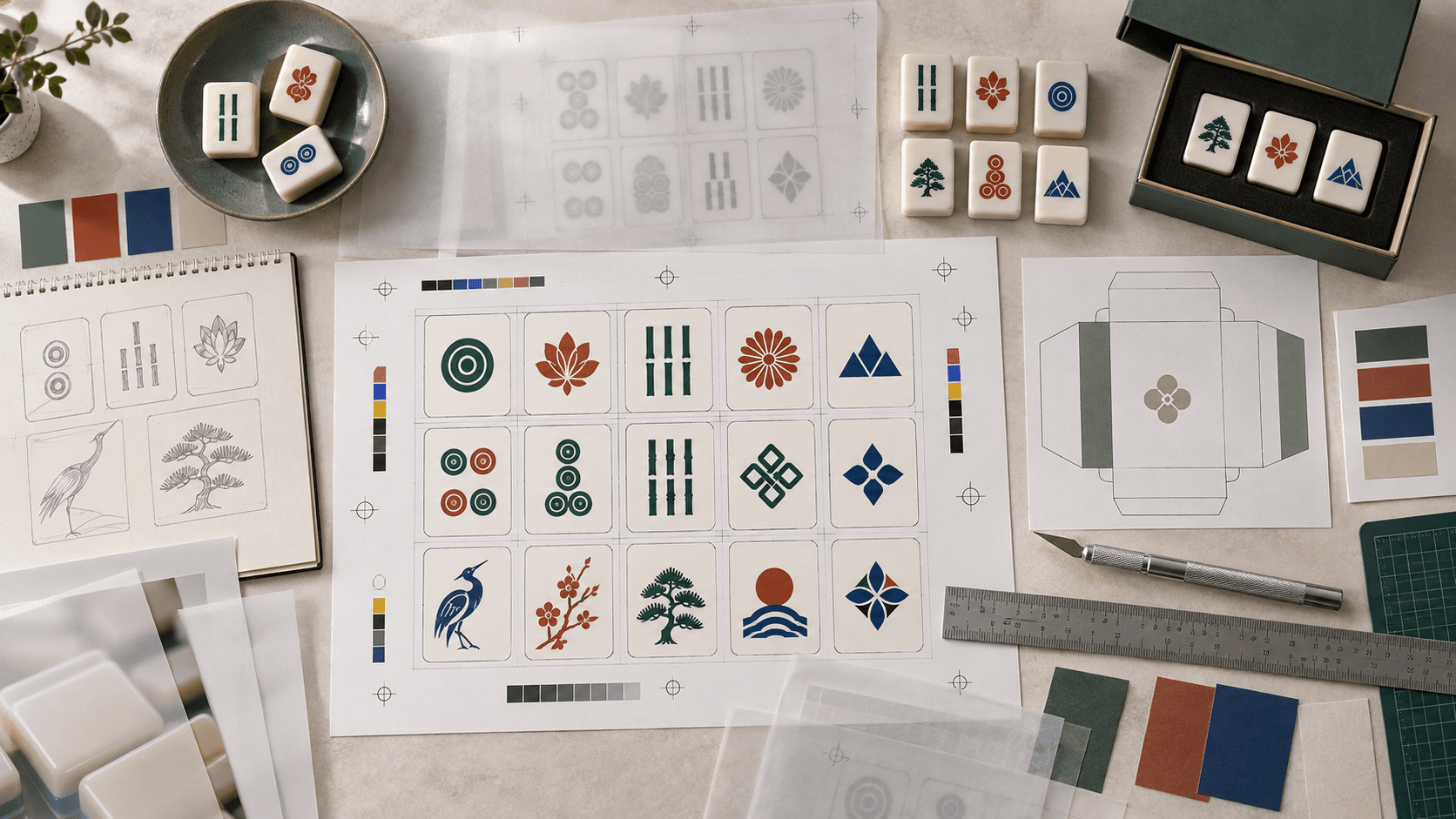
- Artwork and decoration. Check the correct face, position, registration, engraving depth or print clarity, paint fill, contrast, back design, and any repeated mark or symbol.
- Set completeness. Count tiles, dice, racks, chips, wind indicators, bags, instructions, and other accessories against the released component list.
- Function and interaction. Test that tiles stand, slide, stack, fit the case, and remain readable at normal table distance. Check closures, inserts, and accessory interfaces.
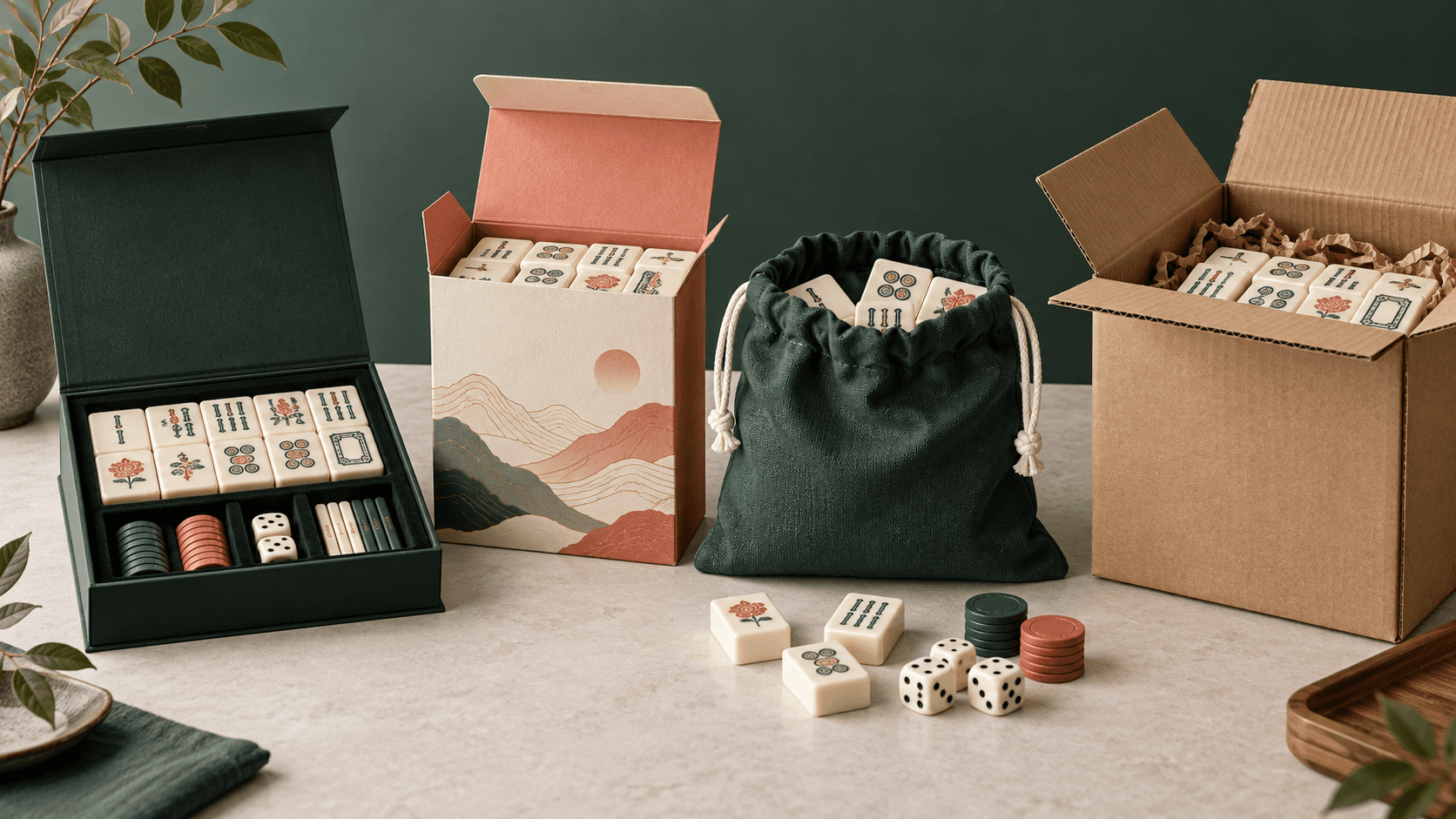
- Packaging and labels. Check the correct box version, protective fit, scuffing, inserts, barcode or label placement, carton marks, and quantity per master carton.
- Records and traceability. Record the lot, date, sample, tools, inspector, defects, photos, decision, and required corrective action.
| Inspection area | Example check | Failure impact | Evidence |
|---|---|---|---|
| Material | Compare surface, color base, odor, and visible molding defects | Perceived quality, durability, customer complaints | Sample photos and material record |
| Geometry | Measure a defined sample with calibrated tools | Rocking tiles, rack mismatch, case fit failure | Measurement sheet |
| Decoration | Match face schedule, placement, contrast, and finish | Unreadable play, wrong symbol, inconsistent brand | Approved artwork and defect photos |
| Completeness | Count every component by SKU or set | Unusable set and expensive customer service | Count checklist |
| Packaging | Check fit, closures, inserts, labels, and carton protection | Transit damage, wrong listing, retail rejection | Pack-out and carton record |
Classify defects by consequence
A defect class should lead to an action. A critical issue is one that can create a serious safety, legal, functional, or identity problem and normally requires immediate hold and escalation. A major issue can make a set unusable, visibly wrong, incomplete, or difficult to sell. A minor issue is a limited cosmetic variation that stays within the agreed standard.
Do not copy an arbitrary defect limit from another product. Set the acceptance rule with the buyer, factory, market, and product use in mind. For example, a small shade shift may be minor on an accessory but major on a matched tile back. A missing tile is major even if the rest of the set is beautiful.
| Class | Mahjong example | Typical disposition |
|---|---|---|
| Critical | Unsafe sharp edge, prohibited material, serious contamination, wrong product identity | Stop, isolate, investigate, written release only |
| Major | Missing tile, wrong face, severe print shift, cracked piece, failed case fit | Hold lot, sort or rework, corrective action and re-inspection |
| Minor | Small non-functional cosmetic variation within agreed tolerance | Record trend and release only within the agreed limit |
Use measurement tools with a defined method
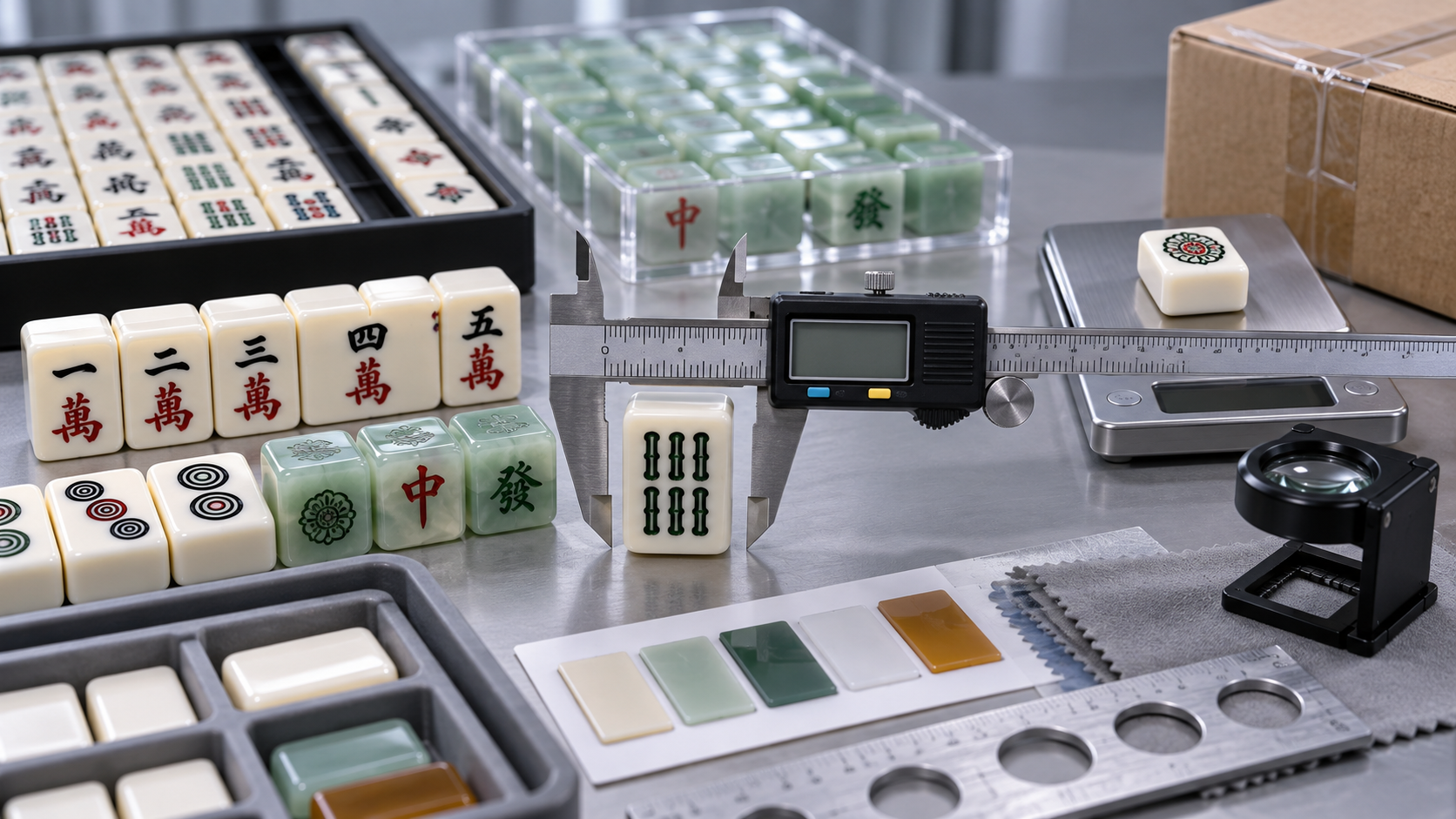
A caliper is useful only when the measurement location and method are consistent. State whether dimensions are taken at the widest point, across the face, or at a defined height. Use the same reference surface and avoid mixing a quick visual check with a precision tolerance decision. A scale, color reference, straightedge, magnifier, and sample tray can support the inspection, but the record should identify the tool and its condition.
For color, inspect under an agreed light condition or beside the approved reference. For decoration, check both the visual result and the interaction: a symbol can be technically present yet too shallow, low contrast, or poorly registered for comfortable play. For flatness, test several orientations rather than balancing one tile on a fingertip.
Decide whether to use full check or sampling
Full inspection is appropriate for small quantities, high-risk components, first production, or a known defect pattern. Sampling can be efficient for stable repeat production when the lot definition, sample size, defect classes, and acceptance criteria are written in advance. Sampling is not a shortcut around a specification; it is a way to make a defined decision from a defined portion of a lot.
ISO’s ISO 28590 introduction to the ISO 2859 series explains acceptance sampling by attributes and the relationship between the series and AQL-based plans. Use it as a standards reference, then agree the actual plan with the inspection provider. AQL is not a statement that every unit is perfect, and it does not replace checks for critical characteristics.
Inspect the complete set, not only loose tiles
Loose-tile inspection can miss problems created during assembly. Load the tiles into the retail tray, close the case, insert the rules, add dice and accessories, and pack the set into the shipping carton. Check that the lid does not press the tiles, the insert does not scratch decoration, the label matches the product, and the carton quantity agrees with the packing list.
Run a short table-use test. Can a player read the faces under normal room light? Do tiles stand in the rack? Do the accessories fit their pockets? Is the opening experience consistent with the product photography? These checks connect factory quality to the customer’s actual moment of use.
The packaging quality checklist is useful for turning the final pack-out into a documented release gate.
For artwork-specific checks, connect the release to the tile artwork and manufacturing guide so the visual standard and inspection method stay aligned.
Write an inspection report that prompts action
A useful report is short enough to read and detailed enough to audit. Include order and lot identifiers, product revision, quantity, inspection level, sample selection, tools, photos, defect table, measurements, carton observations, decision, and corrective-action owner. Link every failed item to a photo or measurement instead of writing “bad quality.”
When a lot fails, identify containment first: hold shipment, isolate cartons, sort units, or request a controlled rework. Then define the cause and the recheck. A corrected sample is not the same as a corrected lot; the buyer should know what was re-inspected and which units were affected.
Use trends to improve the next order
One report tells you whether a lot passed. Several reports tell you where the process is drifting. Track recurring print shifts, edge damage, shade changes, missing accessories, insert compression, carton crush, and measurement movement. Discuss trends at the next sample or production review. Small repeated defects are often a process signal, not random bad luck.
The factory audit checklist can extend the inspection conversation upstream to equipment, training, material storage, subcontracting, and corrective-action discipline.
FAQ
What does Mahjong tile quality inspection cover?
It covers material, surface, dimensions, geometry, decoration, completeness, play function, packaging, labels, and the records needed to trace the release decision.
Should every Mahjong tile be inspected?
Not always. Full inspection may suit small, first, or high-risk lots. Stable repeat production may use a written sampling plan with defined lot, sample, defect classes, and acceptance limits.
What is the difference between a major and minor defect?
A major defect can make a set unusable, visibly wrong, incomplete, or difficult to sell. A minor defect is a limited cosmetic variation that remains within the agreed product standard.
Can AQL guarantee that no defective tiles ship?
No. AQL-based sampling supports a lot decision; it does not promise zero defects. Critical characteristics, product tolerances, and corrective-action rules still need to be defined.
How do I inspect tile dimensions?
Define the measurement location and method, use a suitable calibrated tool, measure a representative sample, and record the values against the released tolerance.
What should a golden sample include?
It should represent the approved material, size, decoration, color, accessories, packaging, and any documented deviations that production must reproduce.
When should inspection happen?
Use layered checks: incoming materials, first pieces, in-process decoration, complete-set assembly, final packing, and pre-shipment release as the product risk requires.
What if the sample passes but the lot fails?
Hold the lot, isolate affected cartons, document the defects, agree sorting or rework, identify the cause, and re-inspect the defined scope before release.
Do packaging defects matter in a tile inspection?
Yes. Retail and transport packaging protect the tiles, communicate the product identity, and affect the customer experience. Include them in the same release plan.
How can I make an inspection report useful for reorders?
Link it to the order, lot, specification revision, artwork, golden sample, tools, photos, defects, and corrective action. Store it with the reorder file.
Make quality a release decision, not a last-minute opinion
The strongest mahjong tile quality inspection program starts before production. It defines the sample, tolerances, defect classes, tools, sampling logic, pack-out, and response to failure. When the report is linked to the released product file, the factory can correct a process and the buyer can approve a shipment with confidence.
Share your tile specification, artwork revision, target quantity, packaging plan, and destination through the ABC Mahjong contact page to build an inspection plan around the actual product.