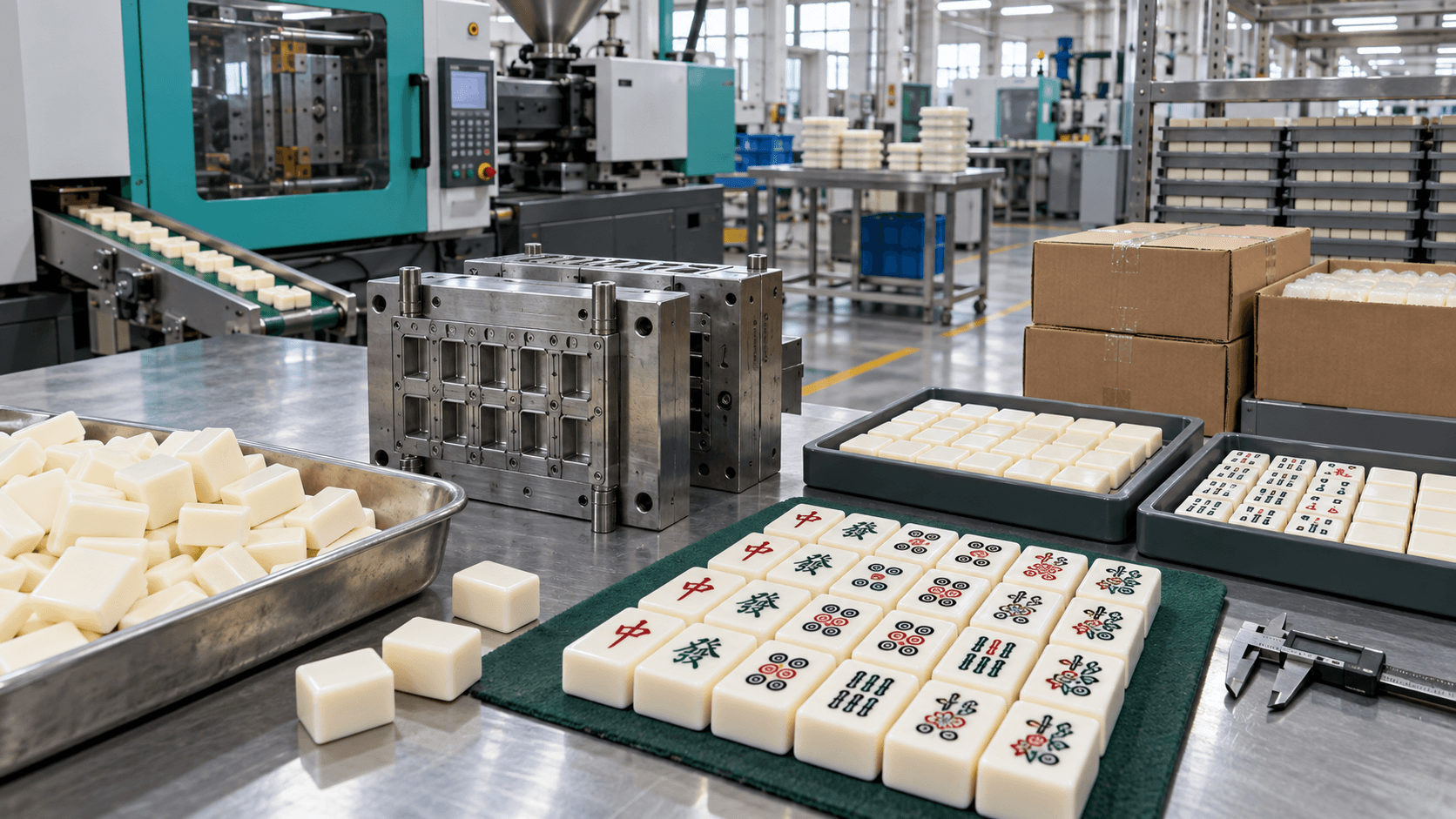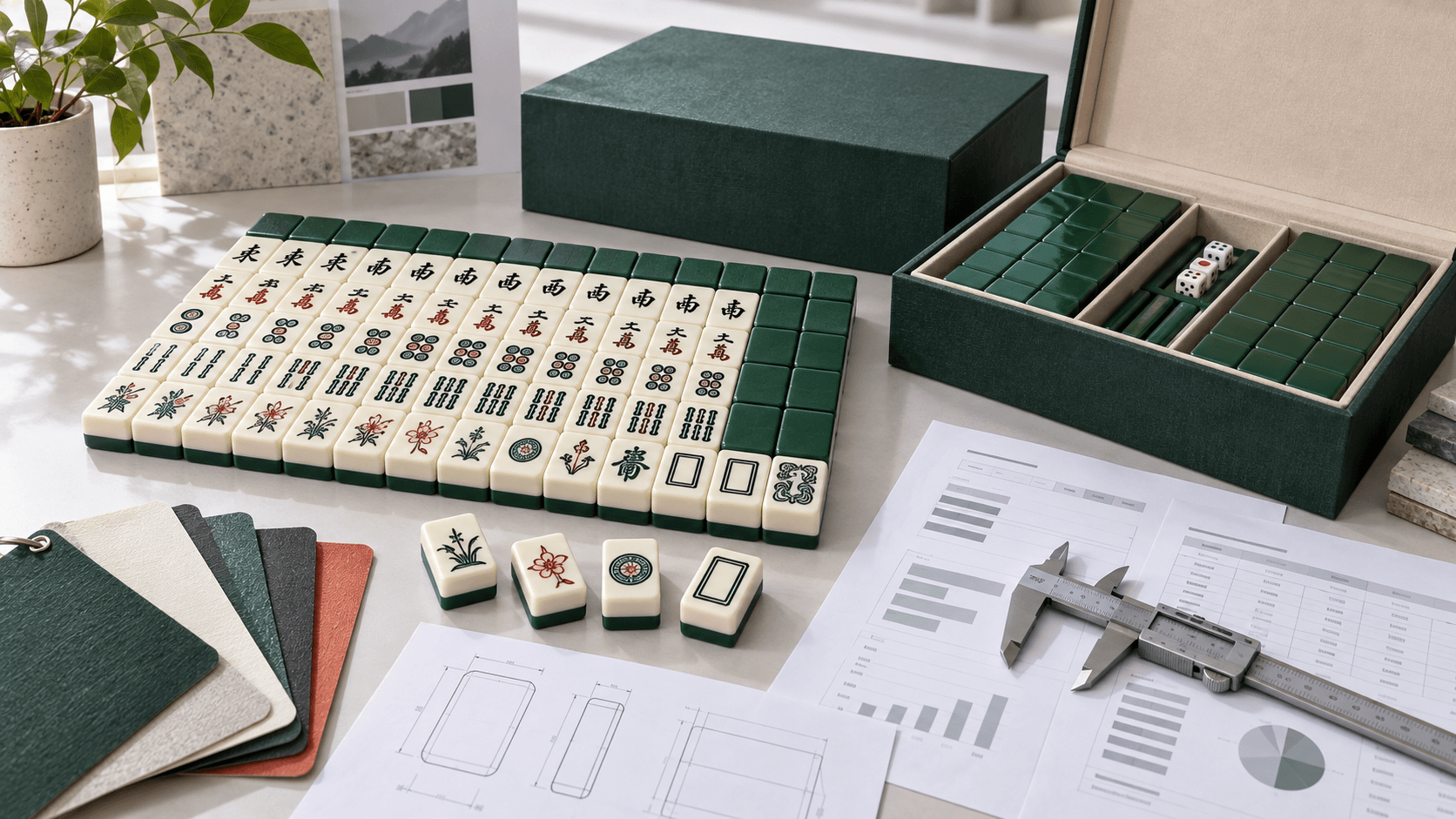

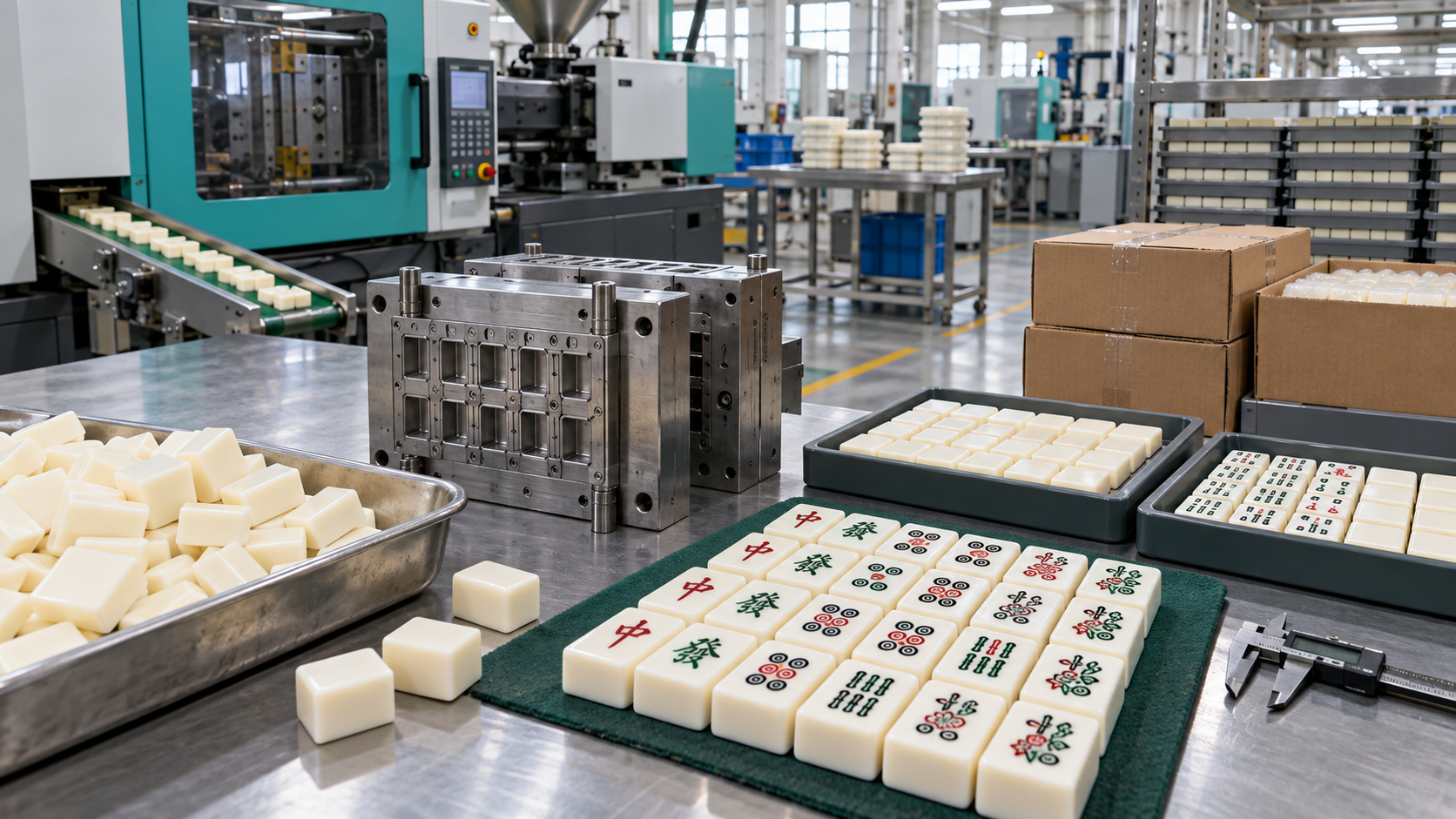
Choosing a mahjong manufacturer in China is less about finding the lowest first quotation and more about proving that the factory can repeat the same product after the first sample. A serious buyer needs evidence for product fit, tooling, decoration, inspection, export preparation, and reorder continuity. A polished catalogue or a fast reply can start a conversation, but it cannot replace a sample, a measurable specification, or a clear production record.
This guide gives an evidence-based path for shortlisting a Chinese supplier. It is written for retailers, private-label teams, game brands, distributors, and event buyers who need a complete Mahjong set rather than loose components. The goal is a comparable decision: each candidate should answer the same questions, show the same proof, and quote the same scope.
Start with the product you actually need to buy
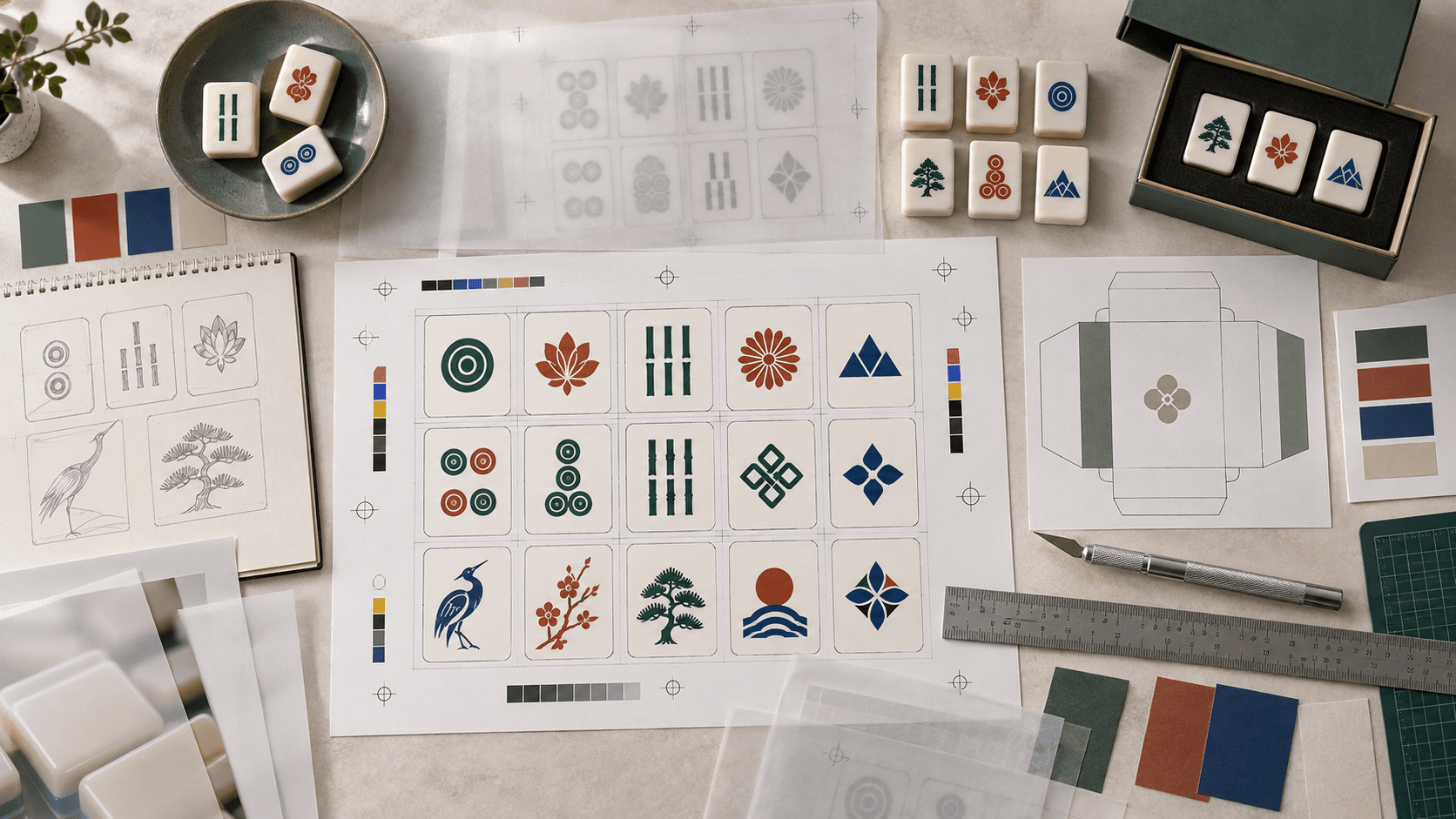
Before contacting factories, write a one-page product brief. Include the play system and tile count, target market, tile dimensions, material direction, face and back artwork, colors, accessories, packaging, quantity tiers, delivery destination, and launch date. Mark each item as fixed, preferred, or open to a supplier recommendation.
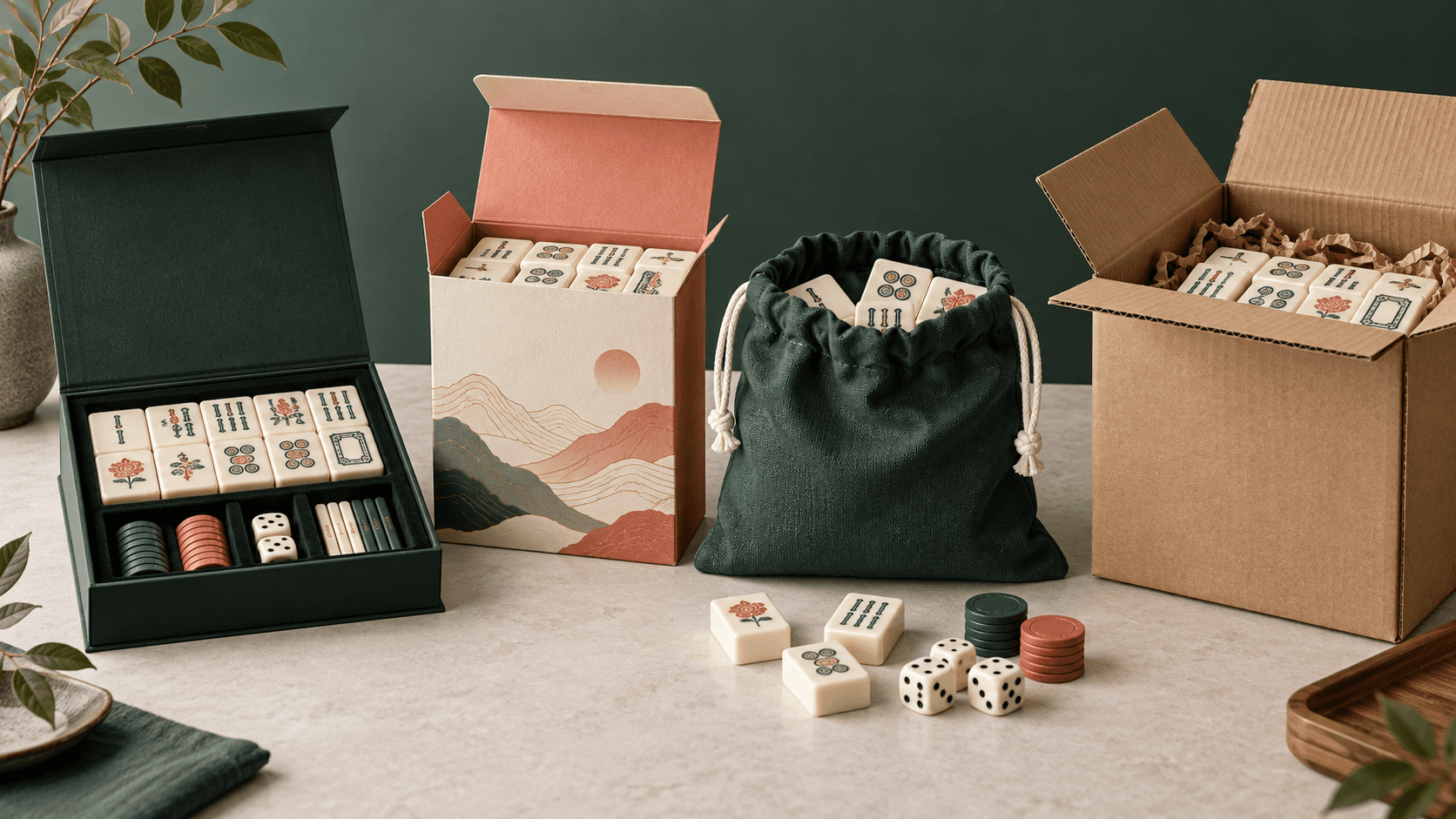
A supplier may be excellent at injection molding but unsuitable for your retail pack, language set, or accessory interface. Conversely, a packaging specialist may offer an attractive box while outsourcing the tiles. Define whether you need one accountable factory or a managed combination of suppliers. Your brief should also identify what customers will notice first: tile feel, print quality, case presentation, compact shipping, or a distinctive face system.
Use five evidence checks before comparing quotes
- Product evidence. Request photos and a live or recent sample showing the exact tile material, size, decoration, accessory list, and packaging level you plan to quote.
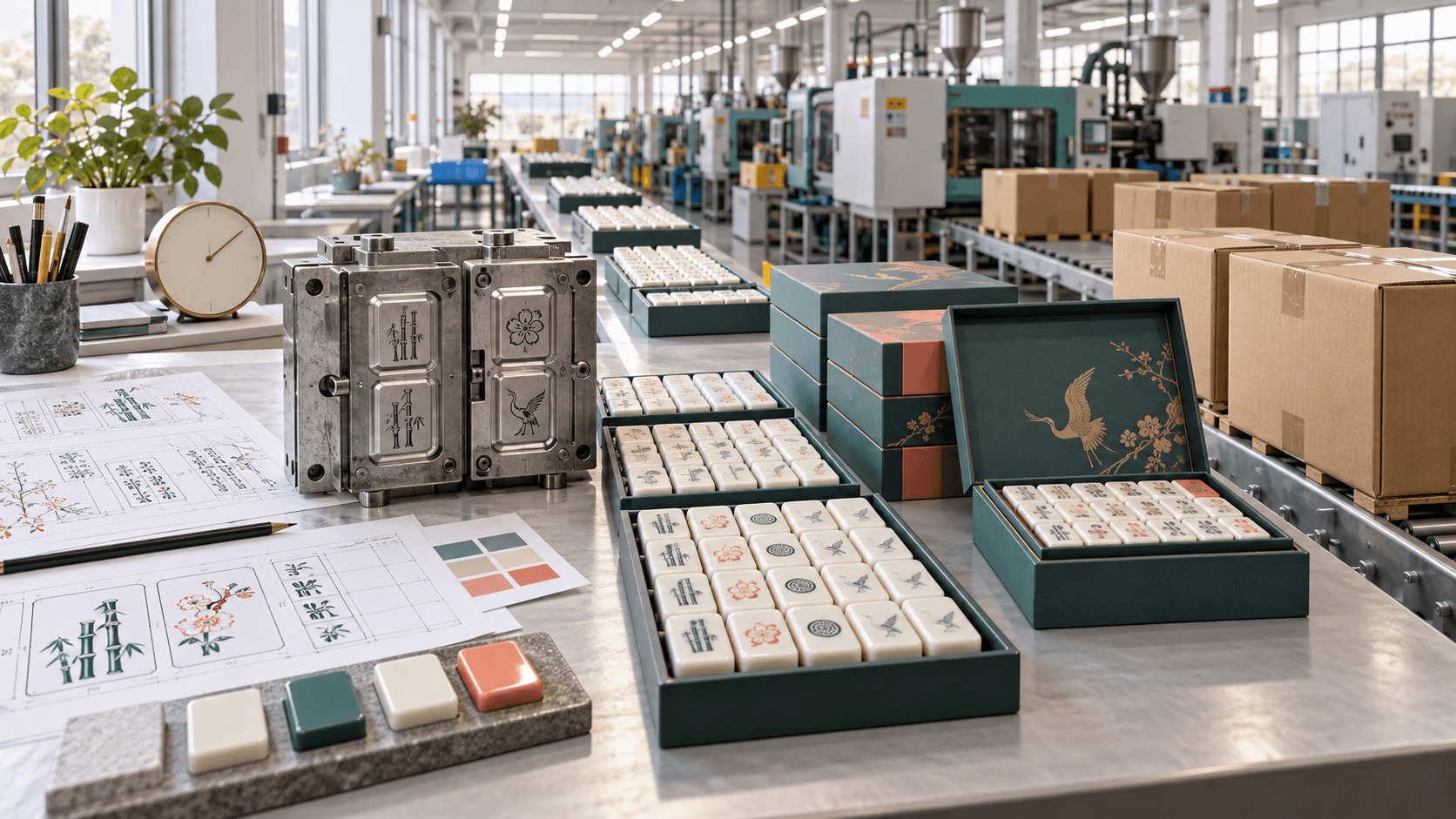
- Process evidence. Ask how the factory moves from artwork and tooling to proof, complete sample, production, inspection, and packing. A short process map reveals whether the sample is connected to mass production.
- Quality evidence. Request a blank inspection record, a final inspection example, or a clear explanation of how dimensions, color, decoration, completeness, and cartons are checked.
- Commercial evidence. Require one quotation that separates one-time engineering, samples, tooling, unit product, packaging, inspection, freight basis, payment, and validity.
- Continuity evidence. Ask how the factory stores artwork, color references, golden samples, tool records, and approved deviations for the next order.
These checks are more useful than a generic “factory direct” claim. They also make it easier to compare a manufacturer with a trading company without assuming that either model is automatically better.
| Buyer question | Evidence to request | Why it matters |
|---|---|---|
| Can the factory make this exact tile? | Measured sample, material statement, face schedule | Prevents a catalogue sample from being mistaken for the quoted product |
| Who controls the artwork? | File workflow, revision naming, approval record | Protects brand assets and reduces artwork drift |
| How is quality released? | Inspection plan, defect definitions, sample report | Turns “good quality” into observable checks |
| What happens at reorder? | Golden sample, retained color reference, component list | Improves repeatability after the launch order |
| Can the supplier export? | Commercial invoice, packing list, carton marks, forwarder workflow | Reduces delays caused by incomplete shipment files |
Check factory fit, not only factory size
A large plant can still be a poor fit for a small branded set if its minimum order, scheduling model, or attention to artwork is wrong. Ask which steps are performed in-house and which are subcontracted: blank molding, engraving or printing, paint fill, accessory sourcing, box production, assembly, and inspection. Subcontracting is not automatically a problem; hidden subcontracting is.
For a Shenzhen or South China project, ask how the factory coordinates nearby tooling, printing, packaging, and freight partners. Confirm who owns the production schedule when several vendors are involved. One project manager should be able to identify the current revision, sample status, open issues, and next approval gate without asking you to chase four companies.
The manufacturer versus trading company guide offers a useful comparison of accountability, sourcing, communication, and documentation. Use it as a question list rather than as a blanket preference for one supplier type.
Run a sample that can be audited later
Ask for a sample plan before paying for a sample. A visual proof confirms artwork placement. A color or material sample confirms the physical direction. A complete pre-production set confirms tile count, accessories, case fit, instructions, and pack-out. A factory sample that omits the final box or accessory set cannot prove the full customer experience.
Record the sample revision, dimensions, color reference, component list, packaging version, open deviations, and approver. Photograph the sample from the same angles you will use for a receiving inspection. Keep one retained reference with the purchase file. The sample approval workflow can be adapted for a first order or a repeat order.
Ask for a quality plan you can read in ten minutes
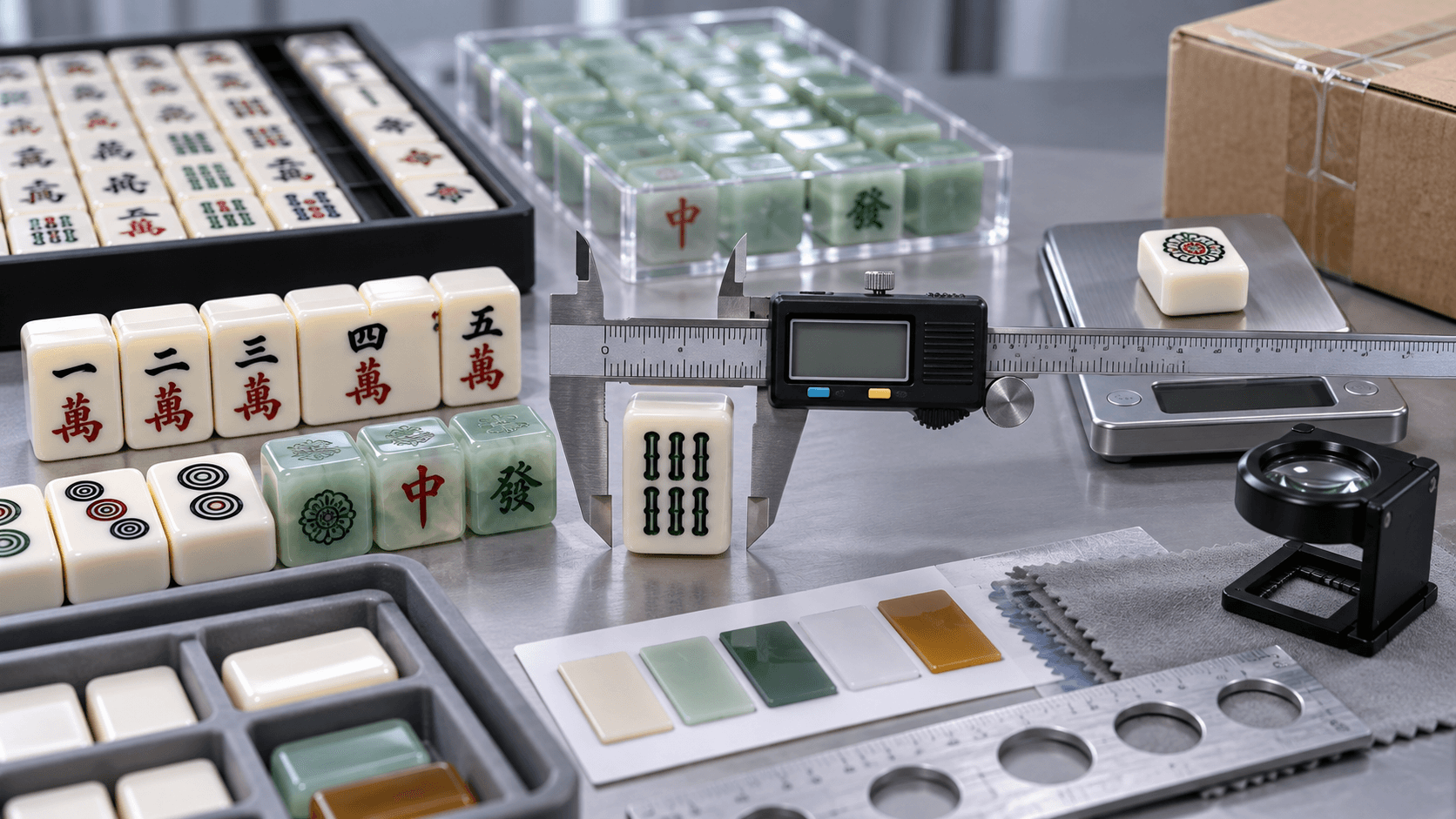
A practical quality plan should explain what is checked, when it is checked, the measuring method, the acceptance rule, and what happens when a result fails. For Mahjong sets, the list often includes tile dimensions and weight, flatness, edge finish, color consistency, face registration, engraving or print clarity, missing pieces, accessory count, tray fit, box scuffing, carton strength, and label accuracy.
If the supplier uses acceptance sampling, ask which lot definition, inspection level, and defect classes apply. ISO’s sampling resources describe the ISO 2859 family and acceptance-by-attributes approach, but a standard does not choose your tolerances for you. Agree the product-specific limits and critical defects in the purchase documents.
Keep a distinction between a cosmetic preference and a functional failure. A tiny shade difference may be acceptable in one collection and unacceptable in another; a tile that rocks on the table or a missing wind tile is a different risk. The four-gate quality control guide shows how to split artwork, physical product, complete set, and final pack checks.
Verify export readiness before the goods are finished
Ask who prepares the commercial invoice, packing list, carton marks, product description, quantities, weights, dimensions, and any documents requested by your forwarder or destination. Confirm the seller name, consignee details, country of origin statement, and shipping term before production is packed. A correct product can still miss a vessel when the shipment file is incomplete.
Use a named Incoterm and named place in the quotation. “FOB” needs a port. “Delivered” needs a destination and an explanation of import responsibility. For destination-specific requirements, confirm the current customs classification and entry process with your broker or the relevant customs authority. The World Customs Organization’s HS nomenclature resources are a useful starting point for understanding why product descriptions and classification matter.
Compare quotations in a single scorecard
Do not let each supplier choose a different definition of “set.” Normalize the component list, quantity, packaging, inspection, delivery term, and approval assumptions. Score each candidate on evidence rather than sales confidence.
| Scorecard area | Strong evidence | Warning sign |
|---|---|---|
| Product match | Exact or clearly comparable sample with measurements | Only lifestyle photos or a generic catalogue link |
| Engineering | Clear answer on geometry, tooling, tolerances, and changes | “We can do it” without a drawing or sample gate |
| Quality | Defect classes, inspection timing, and retained reference | Quality described only as “A grade” |
| Packaging | Retail and transport pack shown separately | Box dimensions and carton protection omitted |
| Delivery | Lead time starts after a named approval milestone | Unqualified “fast delivery” promise |
| Reorder | Files, colors, tools, and deviations are archived | Every repeat order starts from chat history |
Red flags that deserve a written follow-up
- The quote changes the tile count, material, or accessory list without highlighting the change.
- The supplier refuses to identify which parts are standard and which are custom.
- The sample has no revision number or approval record.
- Tooling ownership and access after a relationship ends are not discussed.
- The promised lead time begins before artwork, sample, or packaging approval.
- There is no answer for defective units, shortages, or replacement pieces.
A red flag is a prompt for clarification, not automatic proof of bad faith. Give the supplier a written question and record the answer beside the quote. Clear documentation often separates a workable factory from a risky one.
FAQ
How do I find a Mahjong manufacturer in China?
Start with a measurable product brief, shortlist factories that show relevant samples, and request evidence for tooling, decoration, quality checks, packaging, export files, and reorders. Compare the same scope across suppliers.
Is a factory always better than a trading company?
Not automatically. A factory can provide direct process evidence, while a capable trading company may coordinate several specialist suppliers. The buyer should verify accountability, subcontracting, quality ownership, and continuity.
What should I request before asking for a quote?
Send tile count and dimensions, material, artwork status, accessories, packaging, quantity tiers, destination, quality expectations, sample plan, delivery target, and requested trade term.
How can I confirm a sample is production-representative?
Ask whether it uses the production material, decoration method, tooling, accessories, and packaging planned for the order. Record any exceptions and require a complete pre-production sample before release.
What quality records should a supplier provide?
Useful records include incoming material checks, dimension and appearance checks, decoration inspection, complete-set count, packing verification, and a final report linked to the lot and approved reference.
Should I visit the factory?
A visit can help when the order is strategic, but a remote evidence review is still useful. Request a live walkthrough, current sample, process map, and named owners for engineering, QC, and shipping.
How do I protect my Mahjong artwork?
Use revision-controlled files, written usage terms, a named approval record, and a clear schedule for buyer-supplied artwork, commissioned outputs, molds, packaging dies, and photographs.
What is the most important reorder document?
There is no single document. Keep the released specification, artwork revision, color reference, component list, packaging files, golden sample, inspection plan, quotation, and approved deviations together.
How early should I involve a freight partner?
Involve the partner before packaging is frozen. Carton dimensions, weights, labels, palletization, destination, and trade term can change both the landed cost and the practical schedule.
What should the first purchase order reference?
Reference the approved sample, specification revision, artwork files, packaging version, quality plan, quantity, price scope, delivery term, approval gates, and remedy for shortages or nonconforming units.
Choose evidence you can reuse at the next reorder
The right mahjong manufacturer in China is the one that makes the product understandable after the sales conversation ends. Samples, specifications, inspection records, export files, and retained references turn a promising supplier into a repeatable supply partner. Use the first order to build that evidence, not just to ship inventory.
Send your target market, tile system, artwork status, quantity, packaging direction, destination, and launch window through the ABC Mahjong contact page to review a factory-direct or coordinated manufacturing project.