Mahjong manufacturer vs trading company is a useful comparison when a buyer needs custom artwork, repeatable quality, or a clear owner for technical decisions. The right choice depends on the work required, the evidence available, and how much control the buyer wants to retain.
Begin with the work, not the label
A trading company may be valuable for assortment discovery, language support, consolidation, or access to several factories. A direct manufacturer may be valuable when dimensions, molds, decoration, packaging, and process evidence need to be coordinated. Neither label alone proves capability.
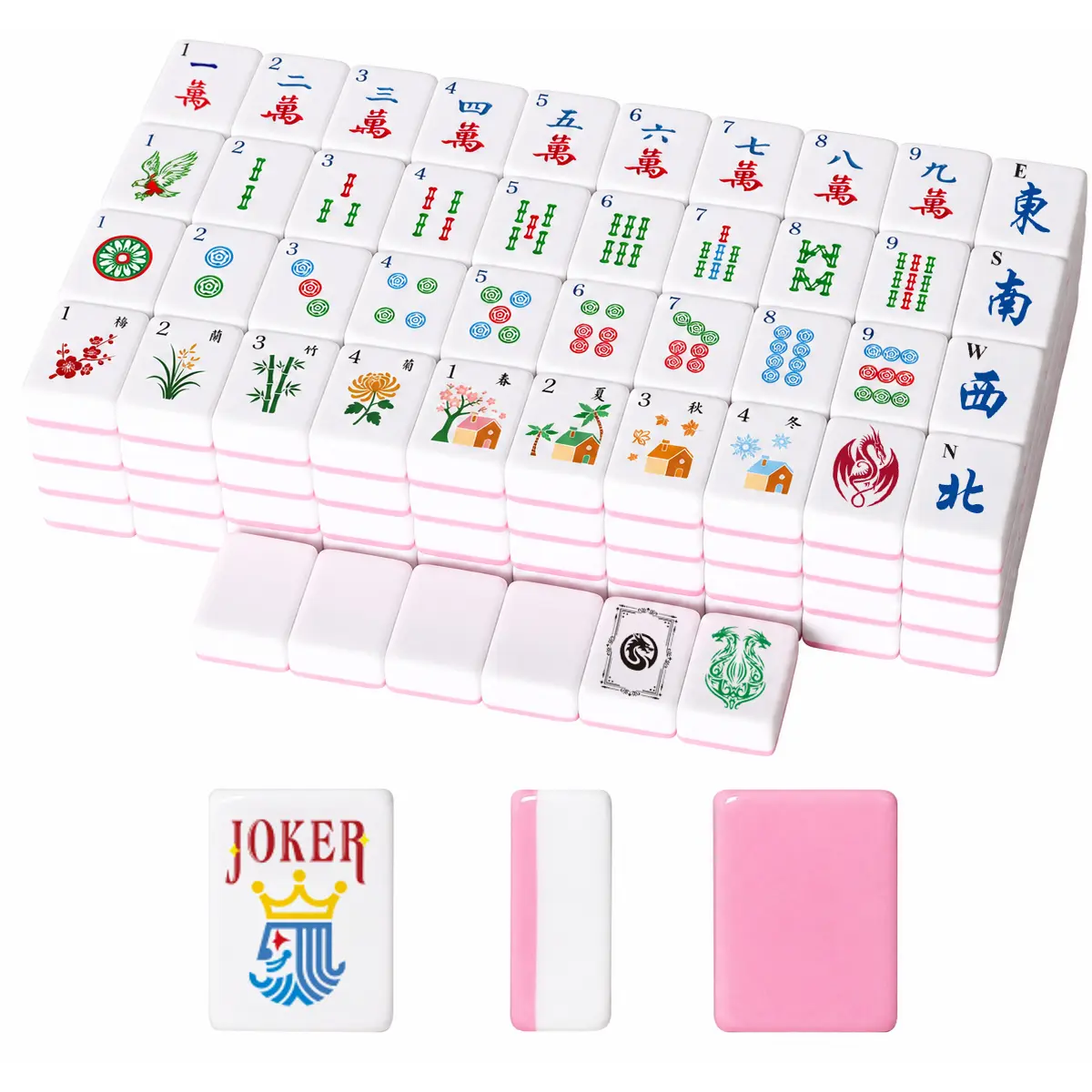
List the decisions your project will require. If every component is catalog stock, channel support may be the central need. If the product carries original faces, a new back, a custom case, and a tight inspection plan, technical ownership becomes more important.
Use a responsibility map
Make mahjong manufacturer vs trading company a scoreable question
Ask the same party to identify the production owner, sample revision, inspection evidence, and remedy when a lot misses the approved brief. A clear answer matters more than a polished title.
| Decision | Direct manufacturer | Trading company |
|---|---|---|
| Product feasibility | Can usually answer from its own process and equipment | May coordinate an answer across a selected factory |
| Artwork handoff | Can connect files to production limits | May translate or route files to a subcontractor |
| Sample revision | Often controls the shop-floor correction | May need to relay comments between parties |
| Quality evidence | Can provide process and inspection records | Can consolidate records but should identify their source |
| Multi-factory sourcing | Usually focused on its own range | May combine different suppliers into one program |
| Accountability | Technical owner and commercial owner may be closer together | Contractual responsibility should be written clearly |
Ask who will answer when the approved sample and the production lot differ. That single question often reveals whether the buyer is speaking with the technical owner or only a sales intermediary.
Test technical depth with a small brief
Send a controlled mini-brief rather than a vague request for a catalog. Include one challenging face, a proposed tile size, a packaging requirement, and a fit question about an accessory. Observe whether the reply identifies constraints, proposes a sample, and records assumptions.
A capable intermediary can still add value by coordinating this test. The buyer should simply retain visibility of the actual production party, the revision record, and the evidence used to approve the work.
Compare sample control
Ask for sample purpose, revision, material, process, and approval scope. A color swatch cannot prove a complete set. A decorated tile cannot prove a packed carton. A polished photograph cannot prove a production lot.
Use a review sheet with observations, owner, due date, and status. Keep the golden reference and the production specification together. If a trading company is managing the project, require the same document discipline between all parties.
Follow the money without assuming the margin
A direct quote may exclude services that an intermediary includes, while an intermediary quote may include coordination that a factory would charge separately. Normalize tooling, samples, artwork support, accessories, packaging, inspection, freight, payment terms, and quote validity.
Ask what happens to the price when quantity, destination, or packaging changes. A transparent quote is more useful than a low opening number that cannot survive a specification review.
Look for evidence of manufacturing control
For general brand-ownership context, buyers can review the WIPO Making a Mark guide when documenting permissions. The reference does not replace product-specific verification.
For a direct factory, request process-specific photos, equipment or workstation evidence where appropriate, and a named quality contact. For a trading company, request the identity of the proposed factory, the scope it controls, and the way it verifies each supplier's records.
Do not treat a showroom, logo wall, or generic certificate as proof of the exact product process. Match the evidence to the risk: mold, decoration, color consistency, accessory fit, packing, and shipment inspection each need a relevant check.
| Evidence type | What it can show | What it cannot prove alone |
|---|---|---|
| Factory photo | That a place or workstation exists | That your order will use the same control path |
| Certificate | A stated management or product claim | That every item in your lot meets your brief |
| Sample | How a defined version looks and fits | Uniformity of a future production lot |
| Inspection report | What was checked at a stated time and lot | Unlisted characteristics or later changes |
| Reference customer | Experience with a particular service relationship | Capability for a different material or volume |
When an intermediary is a sensible choice
A trading company may suit a buyer who needs a mixed basket of products, multi-supplier consolidation, local-language communication, or a small initial trial. The contract should say whether it is acting as seller, agent, project manager, or sourcing coordinator.
Ask who owns the files and samples, who approves a substitute, and who carries responsibility for a nonconforming lot. Clear role language protects the buyer without dismissing the operational value an intermediary can provide.
When direct factory contact is useful
Direct contact is especially useful for custom geometry, process choices, repeated artwork revisions, accessory interfaces, or a quality plan that must be implemented at the line. The buyer can ask the person responsible for production how a change will affect tooling, timing, and inspection.
Direct does not mean self-managed. A good manufacturer still needs a brief, named approver, version control, and a realistic commercial scope.
Clarify the service layer in writing
Some projects fail because the buyer compares a factory's production price with an intermediary's complete project service. List translation, artwork preparation, supplier selection, consolidation, inspection coordination, export paperwork, and after-sales handling as separate responsibilities. Then state which charges are included and which are passed through at cost or quoted separately.
Give every party the same release package: approved dimensions, face schedule, material direction, accessory list, packaging files, inspection points, and destination data. If an intermediary is the seller of record, ask how it controls a factory change and how the buyer is notified. If the manufacturer is the seller, ask how outside accessories are verified. The useful relationship is the one with visible handoffs.
OEM, ODM, and accountability
OEM and ODM labels should describe responsibility, not obscure it. In an OEM-leaning project, the buyer may own the specification and brand assets. In an ODM-leaning project, the supplier may propose a base format. In both cases, document which elements are pre-existing, which are newly created, and who approves changes.
ABC Mahjong combines product categories with custom options for B2B buyers. Review the products, the custom Mahjong process, and the company's background when deciding what level of technical interaction your brief needs.
Use a scorecard for the final decision
- Can the party identify the actual manufacturing location and process owner?
- Can it show a sample path with revisions and approval evidence?
- Are quotation lines and exclusions easy to compare?
- Who owns artwork, tooling, samples, and production records?
- How are defects, rework, replacements, and late changes handled?
- Can the communication model support your destination, quantity, and reorder plan?
FAQ
Is a trading company always a middleman?
It may be an intermediary, but its role can include consolidation, project management, or market access. Ask how it earns its margin and what it controls.
Is a direct factory always the safest choice?
No. A direct relationship still needs a clear brief, evidence, contract, inspection, and change control. Direct contact does not remove project risk.
Who should own the artwork files?
The commercial rights holder or the party specified in the agreement should retain controlled source files. Define access and permitted use in writing.
Can an intermediary hide the factory name?
Some commercial models limit disclosure, but the buyer still needs enough information to assess production evidence, quality responsibility, and remedies.
How should buyers compare quotes from different channels?
Compare the full scope, including services, samples, packaging, inspection, logistics, payment, and accountability. Normalize assumptions before comparing totals.
What is the best test question?
Ask what would happen if the approved sample changes in production. The answer should identify records, owners, corrective action, and communication.
Do certificates prove a factory can make Mahjong sets?
No. Certificates can support a claim about a system or product, but they do not replace a relevant sample, process evidence, and lot inspection.
Should a buyer use one supplier for every accessory?
Not necessarily. One coordinated source can simplify compatibility, while a mixed supply base may broaden options. Decide after comparing control and total cost.
What contract point matters most?
Define specification version, ownership, acceptance criteria, change approval, nonconformance remedies, delivery assumptions, and the responsible legal seller.
How can I request a direct comparison?
Send the intended format, quantity, artwork status, accessory list, packaging needs, inspection expectations, destination, and target date through a structured inquiry.
Choose the relationship that fits the brief
ABC Mahjong supports brands, retailers, distributors, and other B2B buyers with product review, custom files, samples, packaging, and coordinated sets. Use the contact page to share the evidence you already have and discuss whether a direct manufacturing relationship or a coordinated sourcing path is more suitable. A careful mahjong manufacturer vs trading company decision starts with accountability you can see.