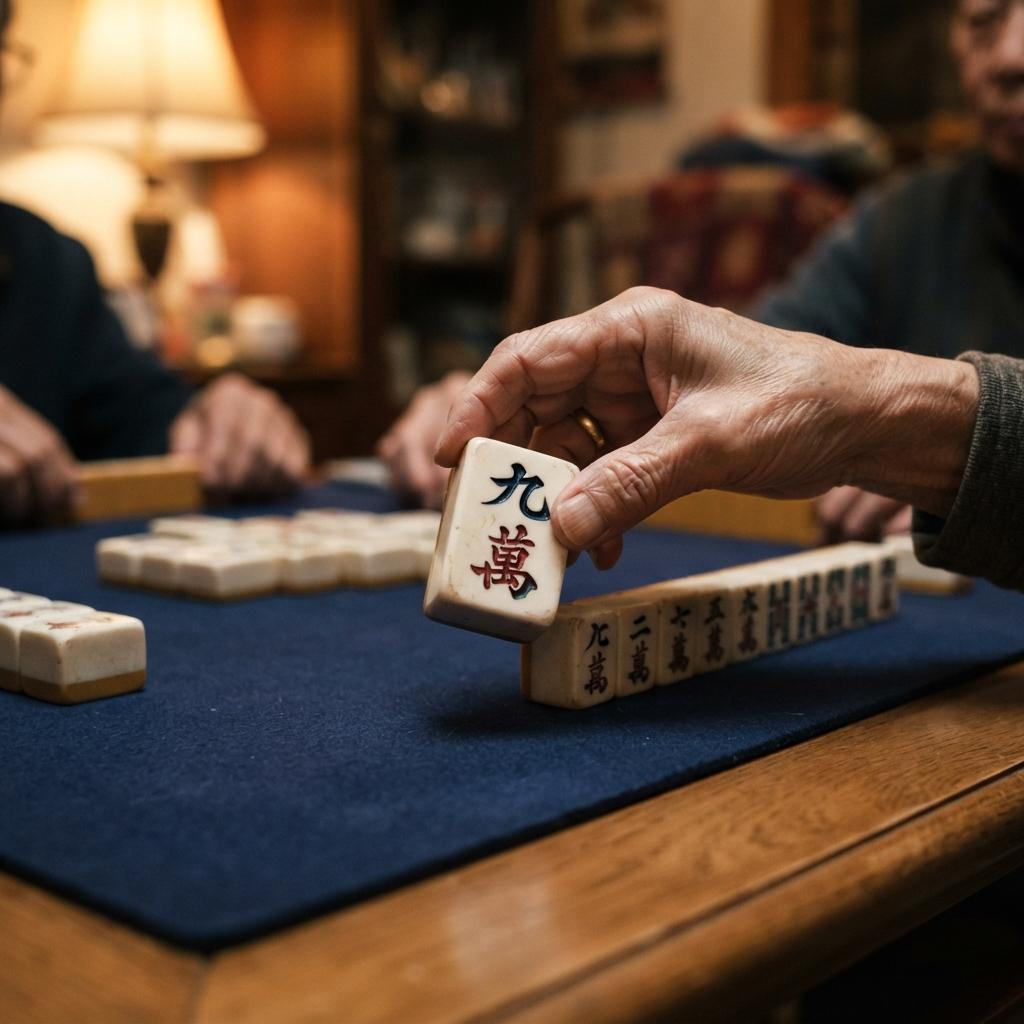

A mahjong club runs on complete sets, not on enthusiasm: every table needs one full 152-tile or 144-tile set, four racks, a pair of dice, and a spare-tile plan that keeps a missing piece from ending the evening. The difference between a mahjong club that meets for years and one that fades after a season is usually equipment discipline, not skill.
What separates a smooth mahjong club night from a chaotic one is rarely the players. It is whether the sets were counted, the racks matched and the cards current before anyone sat down.
This guide covers mahjong club equipment table by table, how to count and store it, and the reset routine that keeps four tables playable week after week. It is written for organisers, instructors, community groups and anyone buying equipment for shared play.
Mahjong club equipment: what a home game never needs
A home game can absorb one chipped tile and a missing die. A mahjong club cannot, because the same equipment is handled by dozens of people and packed away by different volunteers each week.
| Item | Home game | Club requirement |
|---|---|---|
| Tiles | One set, counted occasionally | One verified complete set per table, plus a labelled spare bag |
| Racks and pushers | Whatever came in the box | Four matching racks per table so hands are comparable |
| Dice | One pair | One pair per table plus two replacements in the club kit |
| Rule cards | The current card, shared | One current card per table, replaced the year it expires |
| Surface | Any table | A mat or dedicated table that protects both tiles and furniture |
| Records | None | A per-table equipment log with counts and damage notes |
None of that is expensive. The cost is in the counting, and the counting is what a mahjong club has to systematise.
One complete set per table: the counts that matter
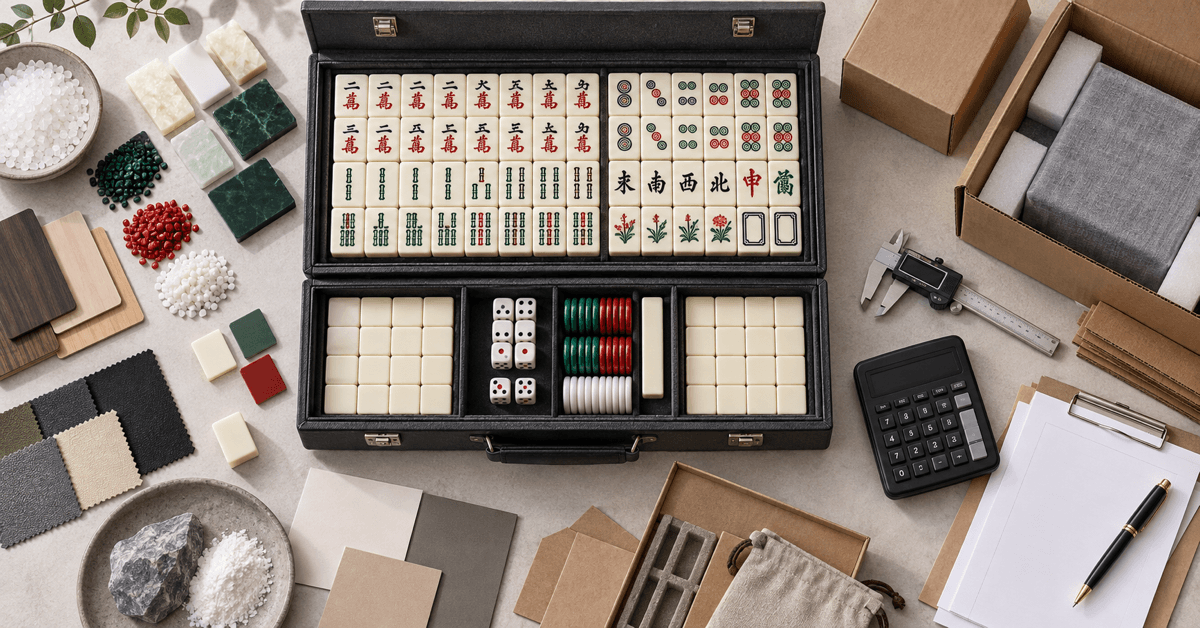
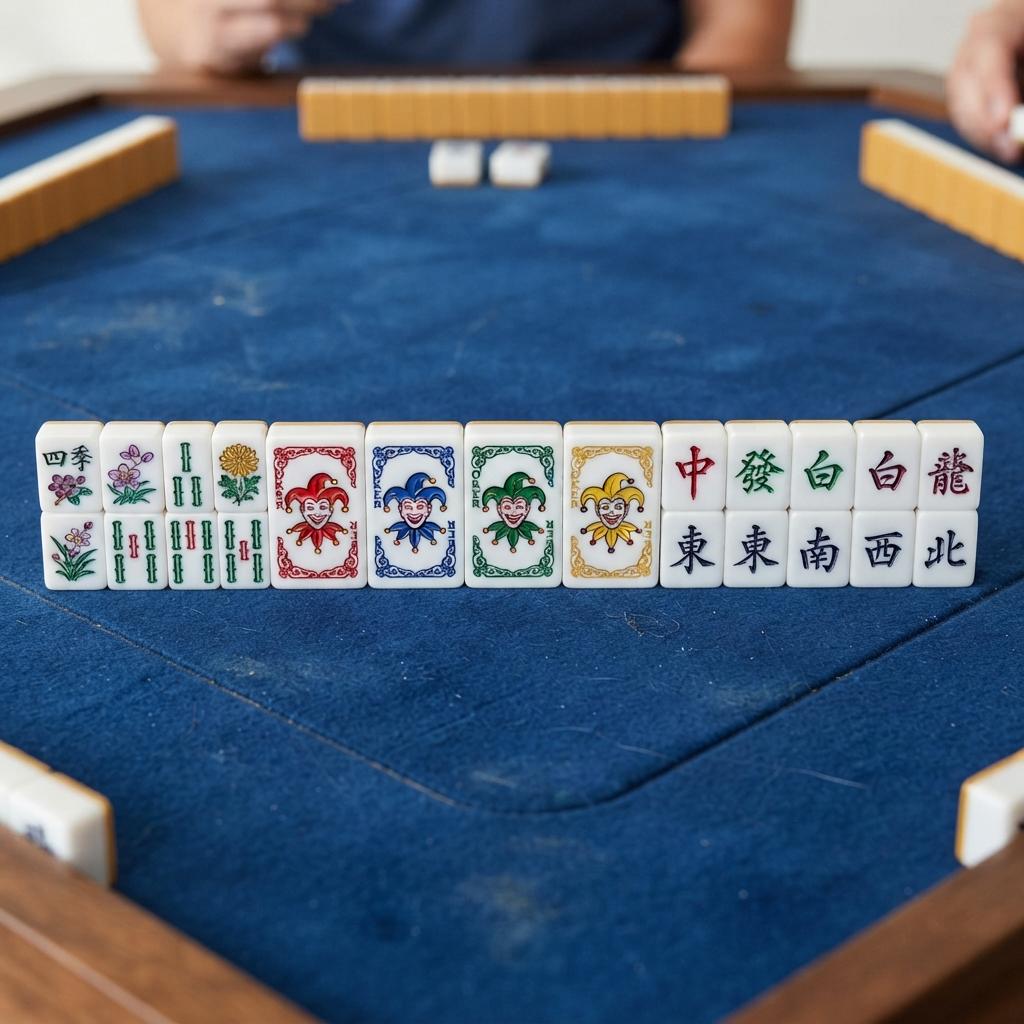
For a mahjong set for clubs, standardise on one rule set before you buy anything. An American Mah Jongg table needs 152 tiles in play — 108 suit tiles, 16 winds, 12 dragons, 8 flowers and 8 jokers — while a Chinese table uses 144.
The mahjong tile count is the first thing to verify, because each player starts with 13 tiles and the dealer with 14. A table is only playable when the full count is present.
Retail boxes often ship 166 tiles by adding spare jokers, blanks and extra flowers; those extras belong in a labelled bag, not in the wall. Our guide to how many tiles a Mahjong set contains breaks the count down category by category.
For a mahjong club, the practical check is simpler: count one suit (36 tiles), the honours (28), the bonus tiles and the jokers, then confirm the total before the first session of the season.
The kit one table needs, in numbers
Buying for a mahjong club goes wrong when someone orders "sets" and assumes the rest comes with them. The per-table kit below is the specification worth putting in a purchase order, because it makes the quantity of each item explicit.
| Item | Quantity per table | Why that number |
|---|---|---|
| Tiles | 144 or 152 in play, plus spares | Four players at 13 tiles, dealer at 14, remainder in the wall |
| Racks | 4 | One per seat; mismatched racks make hand sizes look uneven |
| Pushers | 4 | One per rack, used to move a completed wall without disturbing it |
| Dice | 2 in use, 2 spare | Two dice break the wall; spares cover a lost or chipped die |
| Rule cards | 1 current card | Values and hands change annually, so the year must be visible |
| Mat | 1 | Protects the venue's table and reduces tile noise |
Multiply that by the number of tables and a mahjong club order becomes checkable line by line, rather than a guess at how many boxes to buy.
Racks, pushers and the table surface
Racks get more handling than tiles do. They are picked up, stacked, dropped and wiped every week, and a mismatched set of four makes hand sizes look different from seat to seat.
If you are equipping multiple mahjong tables, matching mahjong racks and pushers matter more than the tile design. Our translucent green rack and pusher set combines a long tile channel with a clear pusher end: the raised sides hold tiles upright, the pusher moves a completed wall without disturbing its alignment, and the rounded polished body is comfortable to handle.
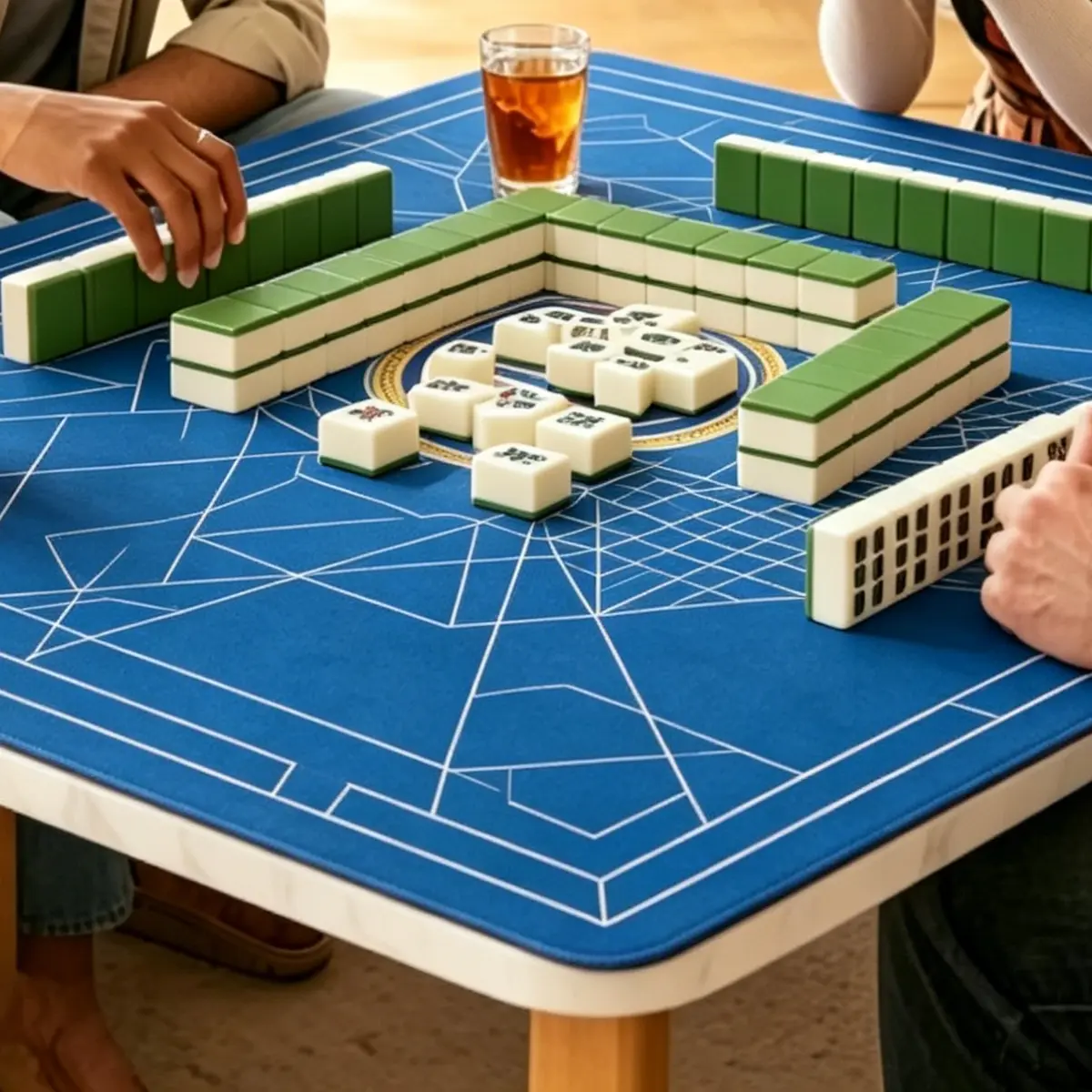
The surface matters just as much at club volume. A dedicated mat protects the host's table, reduces the noise of shuffled tiles, and keeps dice from sliding off polished wood.
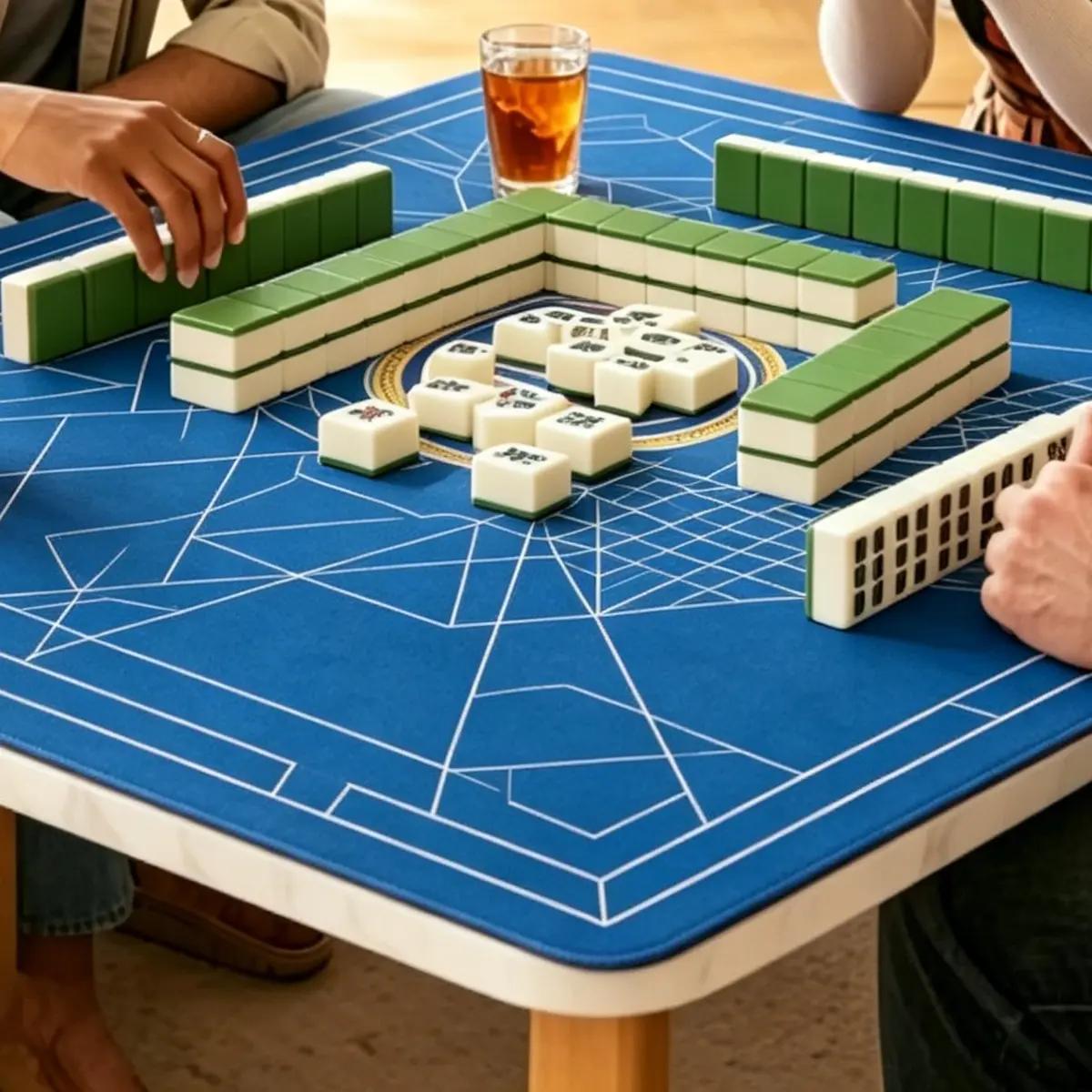
Our blue Mahjong gaming mat uses a soft playing surface with stitched edges and a printed border, and it rolls up for storage between venues. Many mahjong clubs buy one mat per table for exactly this reason.
If you are specifying mats for several tables, measure the wall footprint rather than the tile count alone; a 19-pair wall per side needs more clear space than an 18-pair wall. Our gaming mat buying guide covers the sizing and construction questions worth asking before a volume order.
Dice, cards and rulebooks
Two dice per table is the working standard for breaking the wall, and cheap dice fail in a specific way: the pips wear, the corners chip, and a die that rolls crooked changes who deals.
Our white Mahjong dice use high-contrast red and blue pips on a polished white body with rounded corners, which makes the roll easy to read across the table. Keep two spares in the club kit rather than relying on a member's kitchen drawer.
Rule cards are the item a mahjong club most often forgets to refresh. The National Mah Jongg League issues a new card every year, and a table playing from an old card will score hands that no longer exist. One current card per table, stored with the set, removes the problem.
Our 2026 Mahjong rulebooks present the standard hands in a colour-coded layout with a wipe-clean surface, which survives club use better than a paper card in a plastic sleeve. Custom logo printing and private labeling are available for clubs that want to hand them out or sell them. For the scoring conventions themselves, our guide to how Mahjong scoring works explains what the card values mean in play.
The real failure mode: missing tiles
A mahjong club rarely loses a whole set. It loses one tile, then discovers the loss three weeks later when a player cannot complete a hand.
The fix is a replacement programme, not a new set. Label each set with an ID, record the count at the end of every session, and keep a small stock of the faces that go missing most often — jokers, flowers and the 1 and 9 of each suit.
Retailers and clubs that run this properly treat replacement tiles as a service item rather than a favour. Our guide to bulk Mahjong replacement tiles explains how to map faces, package service packs and keep compatibility across production runs.
A mahjong club checklist for the reset routine
Treat the routine below as your mahjong club checklist. It takes about five minutes per table and prevents most of the problems a mahjong club meets in a season.
- Count in, not out. Before play, count one table's tiles into the rack channel in suit order. A short suit tells you immediately that the bag was mixed.
- Separate the spares. Keep extra jokers, blanks and bonus tiles in a labelled bag inside the case, never in the wall.
- Check the racks. Four racks, four pushers, no cracks at the corners and no missing feet.
- Confirm the cards. Every table has the current-year card, and the year is visible.
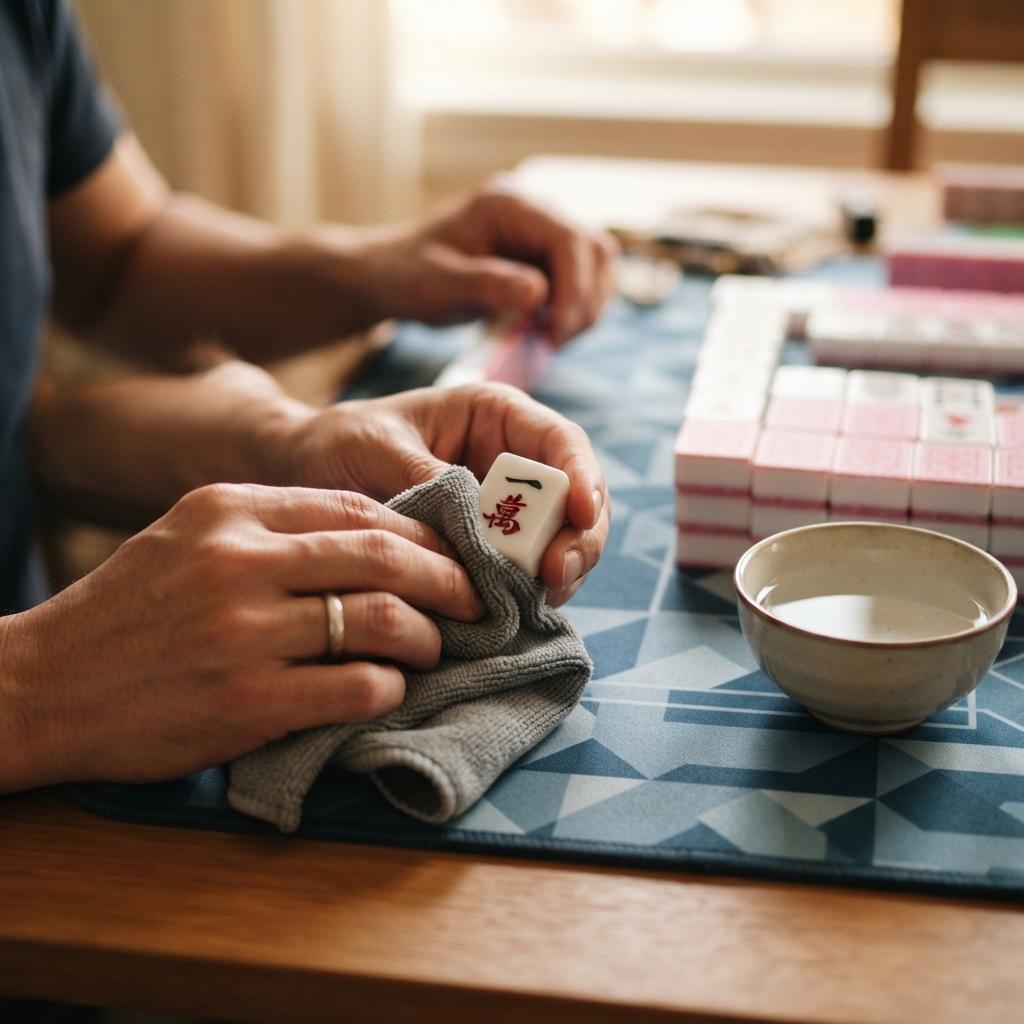
- Wipe the tiles after play. A damp microfiber cloth and a dry cloth, then straight into the case — no stacking damp tiles.
- Log the count and the damage. One line per table: set ID, tile count, missing pieces, notes. The log is what makes reordering possible.
Written down, this looks fussy. In practice it is the difference between a mahjong club that starts on time and one where three players wait while someone counts 152 tiles by hand.
Cleaning and inspection on a club schedule
Shared sets pick up skin oil, hand cream and food residue far faster than a home set. A mahjong club that meets weekly should wipe tiles after every session and do a full clean every few weeks.
The method matters more than the frequency. Mild soap, lukewarm water, a wrung-out microfiber cloth and immediate drying; no soaking, no alcohol wipes and no dishwasher. Our guide to cleaning Mahjong tiles covers acrylic and melamine care, engraved faces and the cleaners that permanently cloud a tile.
Inspect while you clean. Chipped edges, cloudy patches and faded print are cumulative, and a mahjong club that replaces a damaged tile early avoids an argument about whose set was damaged later.
Storage and transport between venues
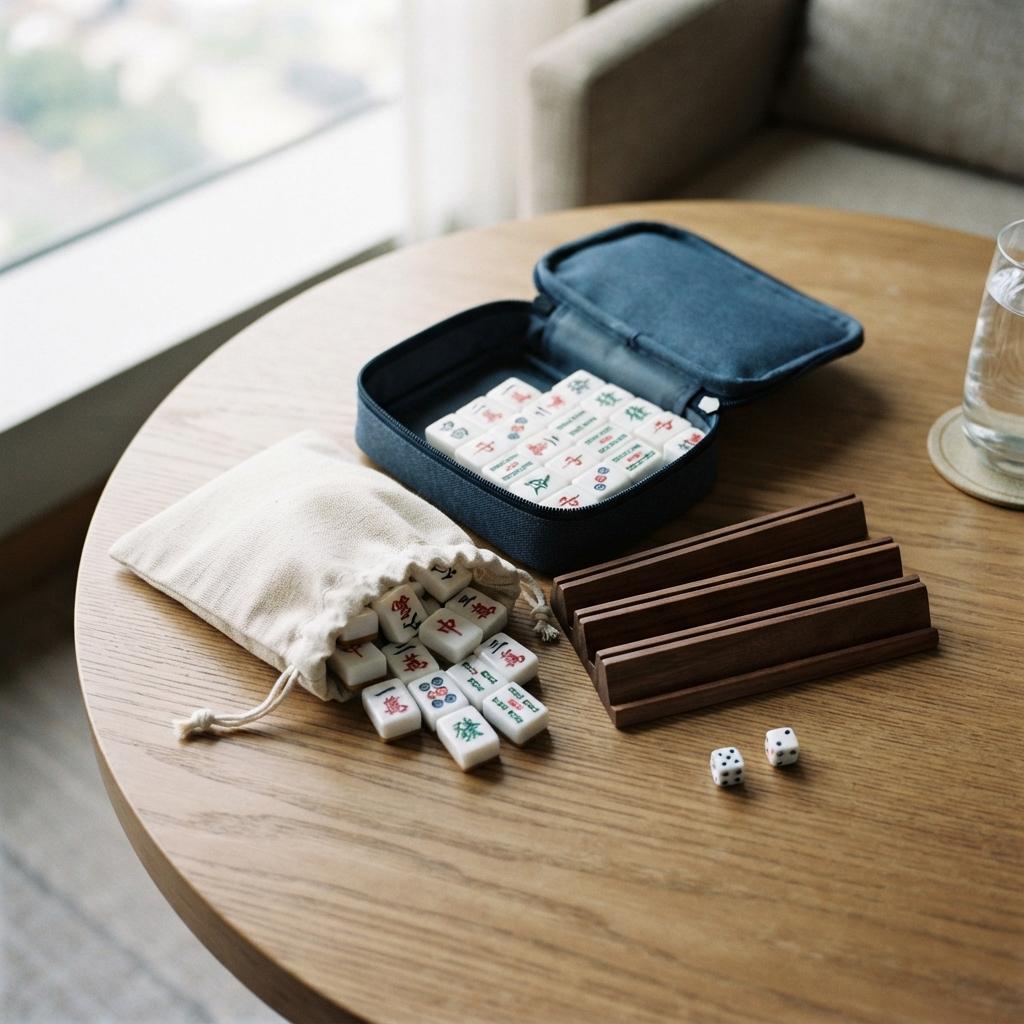
A mahjong club that meets in a hall, a library or a church basement is really a logistics operation. Cases should hold tiles, four racks, dice and cards in separate compartments, and each case should carry the set ID on the outside.
Two rules cover most transport damage: never stack heavy cases on top of a case holding tiles, and never store a set in a hot car between sessions. Heat is unkind to printed faces and to thin acrylic.
If a mahjong club rotates venues, keep one kit per table rather than one large tub. A table kit that one person can carry is easier to account for than a shared box that arrives short.
Common mistakes
- Buying sets without counting them. A 166-tile box that is missing four jokers is not a club set.
- Mixing sets between tables. Thickness and back colour differ between production runs, and mixed tiles are visible on the table.
- Sharing one rule card across four tables. Cards get lost; each table needs its own current card.
- Skipping the log. Without a per-table count, nobody knows which set is short until it matters.
- Cleaning with disinfecting wipes. Repeated alcohol exposure dulls acrylic, and the damage appears slowly.
- Storing damp. Tiles packed away wet develop marks that no later cleaning removes.
Club-grade sets and accessories from our workshop
We supply acrylic Mahjong sets, racks, pushers, mats, dice, rulebooks and cases for club, retail and private-label use, with more than 20 years of Mahjong manufacturing experience behind the range.
For a mahjong club standardising several tables, the working combination is one complete set per table, four racks and pushers, one gaming mat, two dice plus spares, and one current rulebook.
Our pink-back American Mahjong tile set is one option for that kit: white playing faces, glossy pink backs, rounded corners and printed multicolour artwork, with Characters, Bamboos, Dots, Winds, Dragons, Flowers, Seasons and Joker tiles included. Tile quantity, dimensions, accessories and packaging are configured per order.
If your mahjong club mixes American and Chinese play, the tile mix and the accessory requirements differ enough that it is worth planning both formats separately. Our American versus Chinese Mahjong set comparison sets out what changes.
Frequently asked questions
How many sets does a mahjong club need?
One complete set per table of four players, plus a spare-tile stock. A mahjong club running four tables needs four sets, sixteen racks, eight dice and four current rule cards.
Should every table use the same set?
Yes, where possible. Matching sets keep tile thickness, back colour and symbol size consistent, so players moving between tables are not adjusting to a different feel mid-session.
How often should club tiles be cleaned?
Wipe them after every session and do a full clean every few weeks. A mahjong club with heavy rotation often cleans weekly because shared sets pick up residue faster than home sets.
What is the most common equipment failure?
Missing single tiles, usually jokers and flowers, followed by chipped rack corners. Both are cheap to fix early and expensive to fix once a set is out of production.
Do we need a mat for every table?
A mat protects the venue's tables, reduces tile noise and keeps dice in play. For a mahjong club meeting in a hired hall, a mat per table is usually the cheapest way to protect the deposit.
How many dice should a club keep?
Two per table in use, plus at least two spares in the club kit. Dice are small, roll away and are the first item to go missing.
How do we keep sets from getting mixed?
Give every set an ID, label the case, store each table's kit separately, and count tiles back into the case at the end of the session.
Can we order replacement parts for an older set?
Often yes, if the face design and dimensions are still in production. Record the set ID and a photo of a tile face so a replacement request can be matched later.
Conclusion
Running a mahjong club is an equipment system before it is a social one: one verified complete set per table, four matching racks, dice with spares, the current rule card, and a surface that protects both tiles and venue furniture.
Count the tiles, log the sets, and the evening starts on time. If you are equipping a club, a class or a retail programme, tell us how many tables you run and which rule set your players use through our contact page.