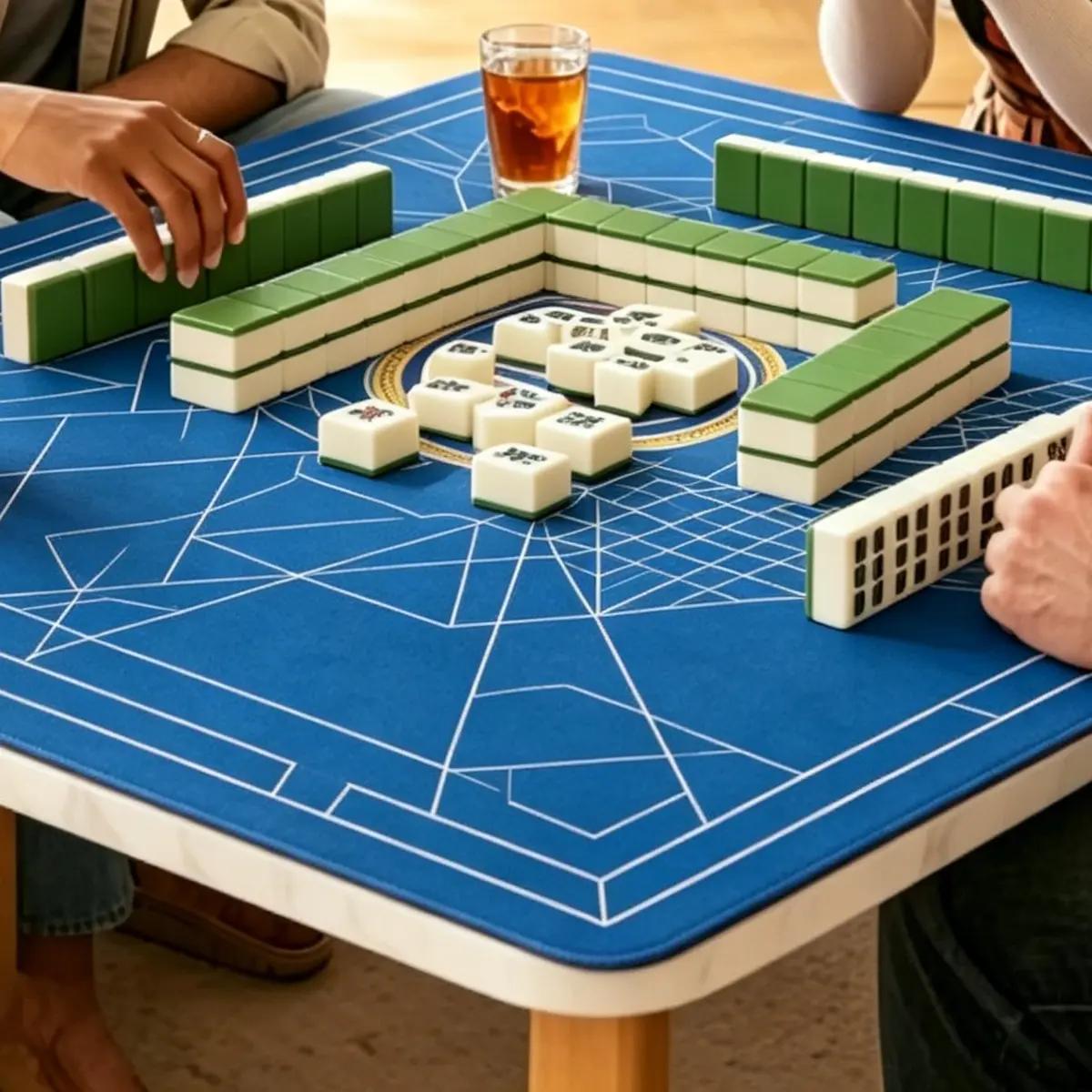

Mahjong scoring depends on the rule set: American Mah Jongg pays the value printed on the annual NMJL card, while Chinese variants build mahjong points from fan combinations and doubles. The winner does not count tiles — the card, the way the hand was completed and the table's rule set decide the total.
That is why two players can win what looks like the same hand and record very different scores. This guide explains how mahjong scoring works in American play, how Chinese scoring differs, and the handful of details that cause most arguments at the table.
How mahjong scoring works: the short answer
Every scoring system answers three questions: what the hand is worth, which bonuses apply, and who pays whom. The table below summarises the three systems most players meet.
| Rule set | What sets the value | Bonuses players usually apply | Who pays |
|---|---|---|---|
| American Mah Jongg (NMJL) | The value printed beside the hand on the current card | Self-picked win, jokerless hand, club-specific concealed-hand bonus | Winner collects from three players; the discarder pays double |
| Chinese and Hong Kong styles | Fan patterns converted into points | Self-draw, full concealment, one-suit hands, all pungs | All three opponents pay; some patterns add multipliers |
| Japanese riichi | Yaku (han) plus fu, translated into points | Riichi declaration, tsumo, dora tiles | Payment differs for self-draw, discard wins and dealer status |
The tile counts differ as well: a standard American set uses 152 tiles including 8 jokers, a Chinese set uses 144, and each player begins the hand with 13 tiles while the dealer holds 14.
The one rule that applies everywhere: agree on the scoring system before the first hand. A group that mixes an American card with Chinese fan counting will argue about every win, and the argument is never really about the tiles.
American mahjong scoring, step by step
American mahjong scoring is card-based. Every valid hand on the National Mah Jongg League card carries a printed value, and that number is the starting point for the hand. American hands are built from 14 tiles, so the card is the only place where a 14-tile combination becomes a number.
- Match the hand to the card. Confirm the exact combination — suit, numbers, sets and pair — before anyone touches a score sheet.
- Read the printed value. The number beside the hand is the base mahjong hand value. It is not a guess or a range.
- Apply the bonuses your group uses. Self-picked wins, jokerless hands and concealed hands are the three that come up most often.
- Settle payments. Decide who pays what, then record the hand before the next deal.
On a discard win, the player who discarded the winning tile pays double the hand value and the other two players pay the single value. On a self-picked win, many groups double what every player pays. A jokerless hand doubles again in most money games, so a modest hand can pay out four times its printed value.
Work one example through, because the arithmetic explains most disputes. Take a 25-point hand won on a discard, with no self-pick and no jokerless bonus. The discarder pays 50, each of the other two players pays 25, and the winner collects 100 points across the table. Change one condition — the same hand picked from the wall — and a group that doubles on self-pick collects 150 instead of 100. Same tiles, same card line, different total.
Concealed hands are where house rules diverge most. A concealed mahjong hand — no exposures and no jokers used — is often paid a bonus, but the size of that bonus is a club decision, not something the card prints.
Why the NMJL card changes every year
The National Mah Jongg League publishes a new card each year, and the hands, their values and sometimes the bonus conventions change with it. Its own site sells the current card and confirms that the league is the body issuing the annual American rules. A line that paid one value last season may not exist at all this season.
The practical consequence is simple: a score sheet from last year is not a scoring reference. Keep the current card with the set, and check the year printed on it whenever a value looks wrong. Our guide to reading an American Mahjong rule card walks through how to compare lines quickly during play.
Chinese mahjong scoring: fan, not fixed values
Chinese mahjong scoring works from patterns rather than a printed hand list. Each recognised pattern adds fan — doubles or points — and the total is converted into a payment at the end of the hand.
| Pattern family | Examples | Typical effect on score |
|---|---|---|
| Suit purity | One suit only, half flush | Adds fan; a pure one-suit hand is one of the biggest single jumps |
| Set structure | All pungs, all chows, mixed sets | Adds fan for the harder structures |
| Winning method | Self-drawn tile versus a discarded tile | Self-draw usually adds fan and changes who pays |
| Concealment | Hand completed without exposures | Adds fan on most tables |
| Bonus tiles | Flowers, seasons, dragons | Small fixed additions or extra draws, depending on the table |
Regional tables differ widely. Hong Kong style often sets a minimum fan threshold — three fan is a common floor — before a hand can be declared at all. Other schools pay any valid hand, and Sichuan play removes the honor tiles entirely and uses a different multiplier system.
Because chinese mahjong scoring is really a family of systems, the exact fan values matter less than agreeing which table you are playing. Ask for the club's scoring sheet before the first deal and keep it next to the tile tray.
What a jokerless or concealed hand is worth
A jokerless hand is completed without any joker standing in for another tile. In American money play it is usually a doubling condition, applied on top of the printed value and any self-pick double.
Concealed and jokerless are not the same thing, even though players use the terms interchangeably. A hand can be concealed and still contain a joker that was drawn but never exposed, and a hand can use no jokers while two exposures sit on the table. Check both conditions separately before you double anything.
If your group plays for points rather than money, decide in advance whether doubles apply at all. Many club nights use the card values only, precisely because stacked doubles make the score sheet hard to reconcile at the end of the evening.
Keeping score at the table
Three methods dominate, and each has a failure mode worth knowing before you pick one. If you are wondering how to score mahjong without an app, the paper sheet is still the fastest option.
- Paper score sheet. Fastest to audit and easiest to correct, but only if someone writes down the hand number and the bonuses on the same line.
- Chips or coins as points. Good for social play because the total is visible, but small denominations disappear into table clutter.
- Phone app. Convenient for rotating groups and cumulative standings, but it locks the group into one scoring convention and can hide how a total was reached.
Whichever you use, record four things for every hand: who won, the printed hand value, the bonuses applied, and each player's payment. If a dispute starts two hands later, those four fields settle it. Tournament scoring often differs from money scoring, so read the event rules rather than assuming your club's convention applies.
Common scoring mistakes
- Using last year's card. The values and the hands change; a stale card produces confident but wrong totals.
- Forgetting the discarder double. It is the most common single error in American play, and it changes the payment for two of the four players.
- Applying a bonus twice. Self-picked and jokerless are separate conditions; apply each once.
- Mixing rule sets. Fan counting and card values do not convert into each other.
- Not agreeing before play. Concealed-hand bonuses and point-versus-money play are club decisions that must be settled first.
- Ignoring dealer rotation. In many systems the dealer position changes payment direction and doubles, so track it with the score.
Mahjong sets and rulebooks from our workshop
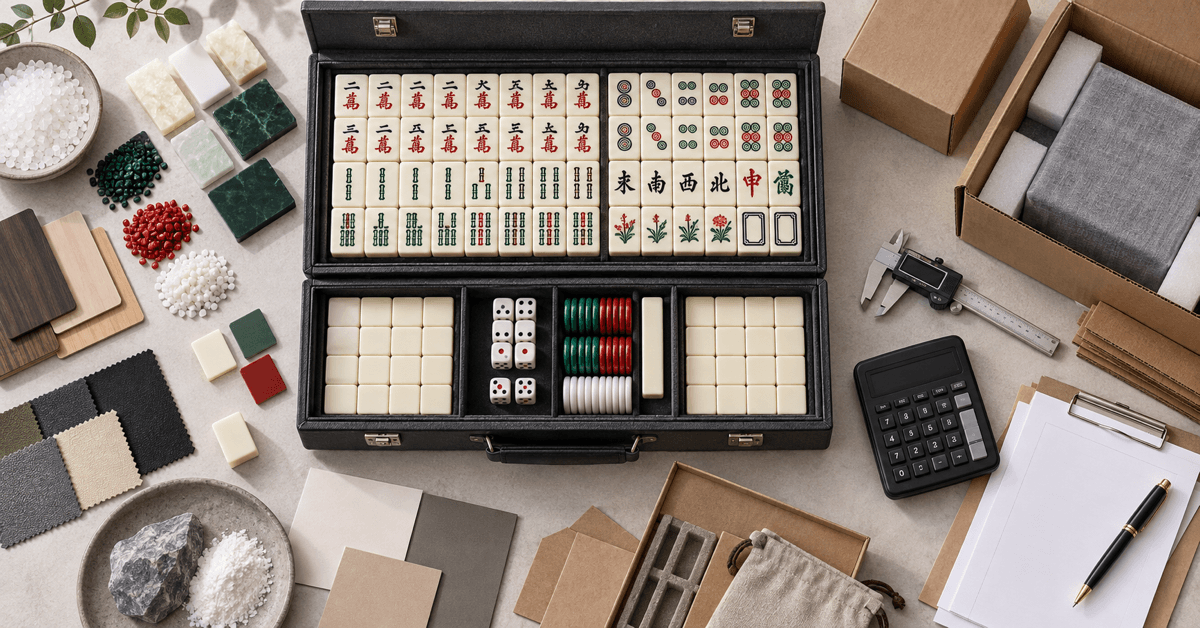
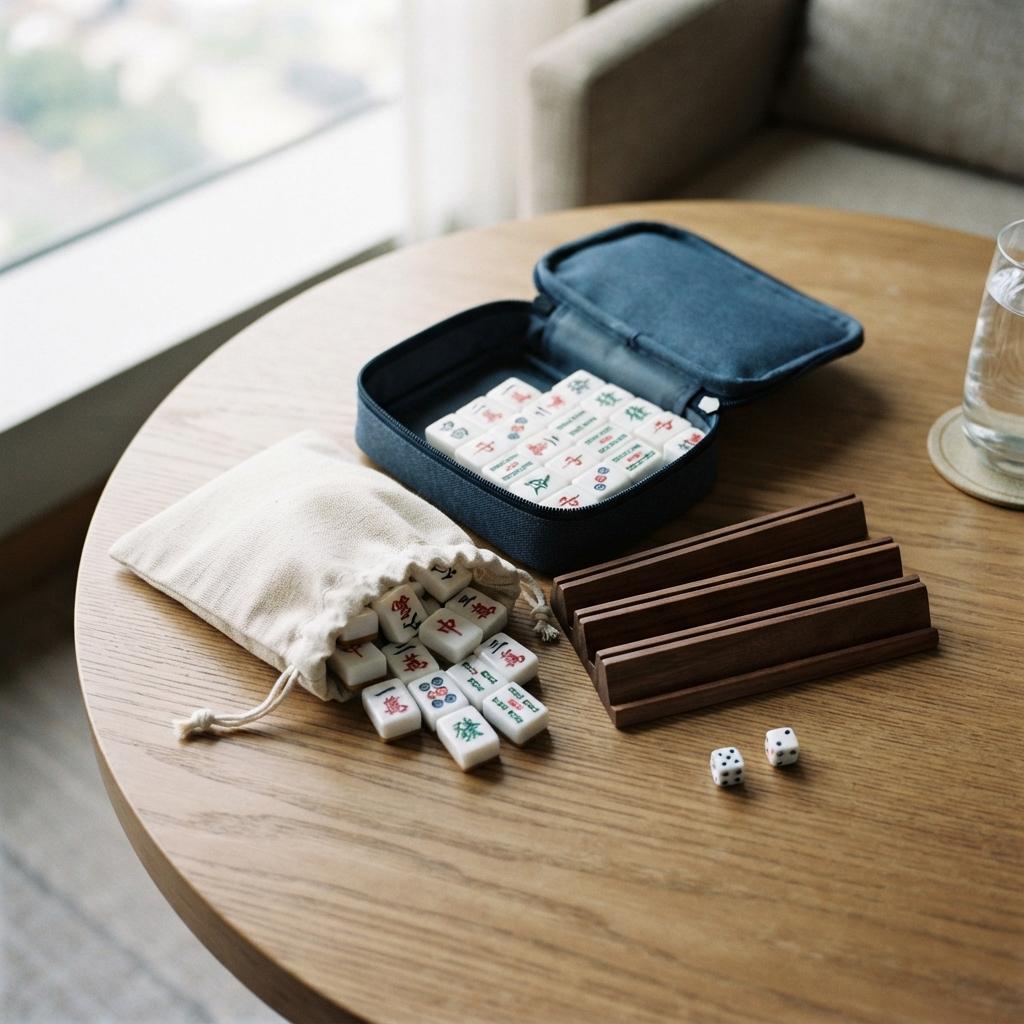
Scoring is easier to teach when everyone at the table is looking at the same reference. Our 2026 Mahjong rulebooks present the standard hands and scoring references in a clear, colour-coded layout, in a compact format that sits beside a rack. The surface is smooth and wipe-clean for repeated club use, and custom logo printing and private labeling are available for retail and promotional editions.
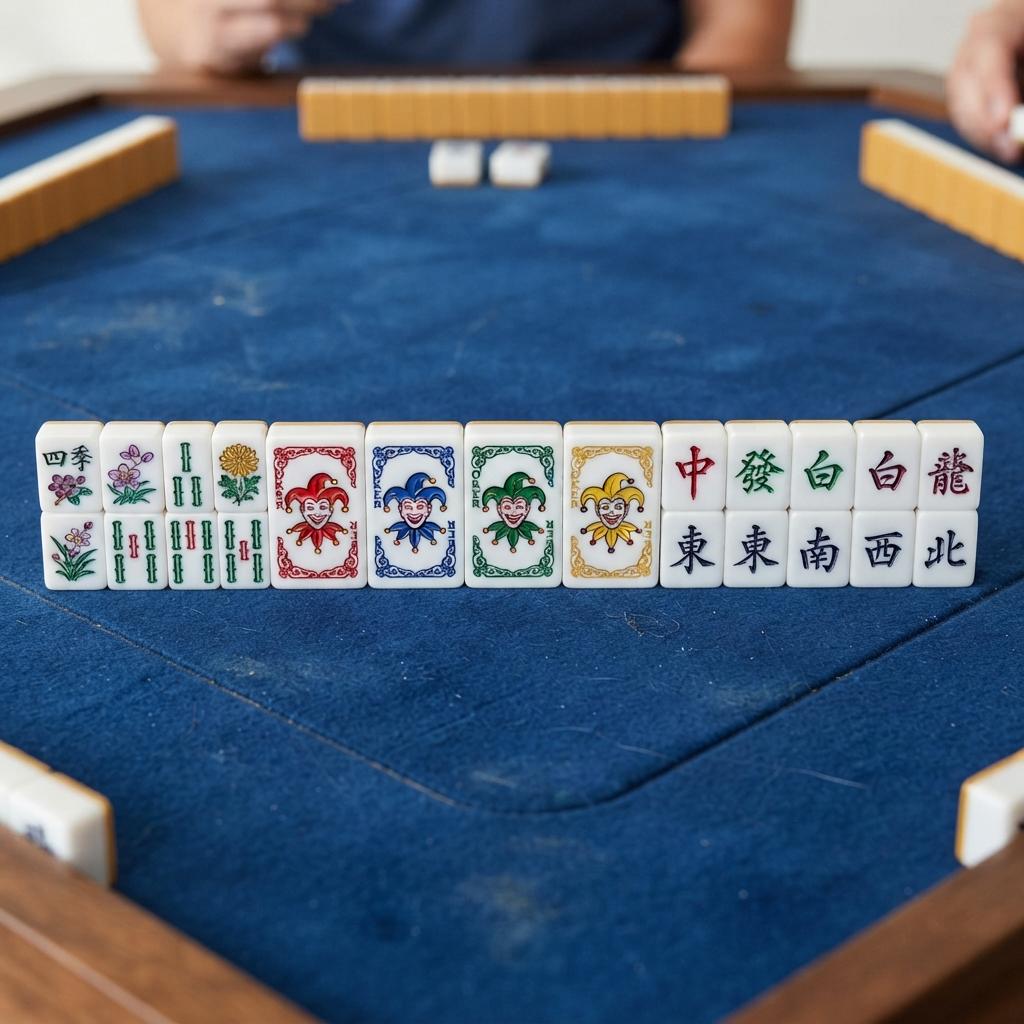
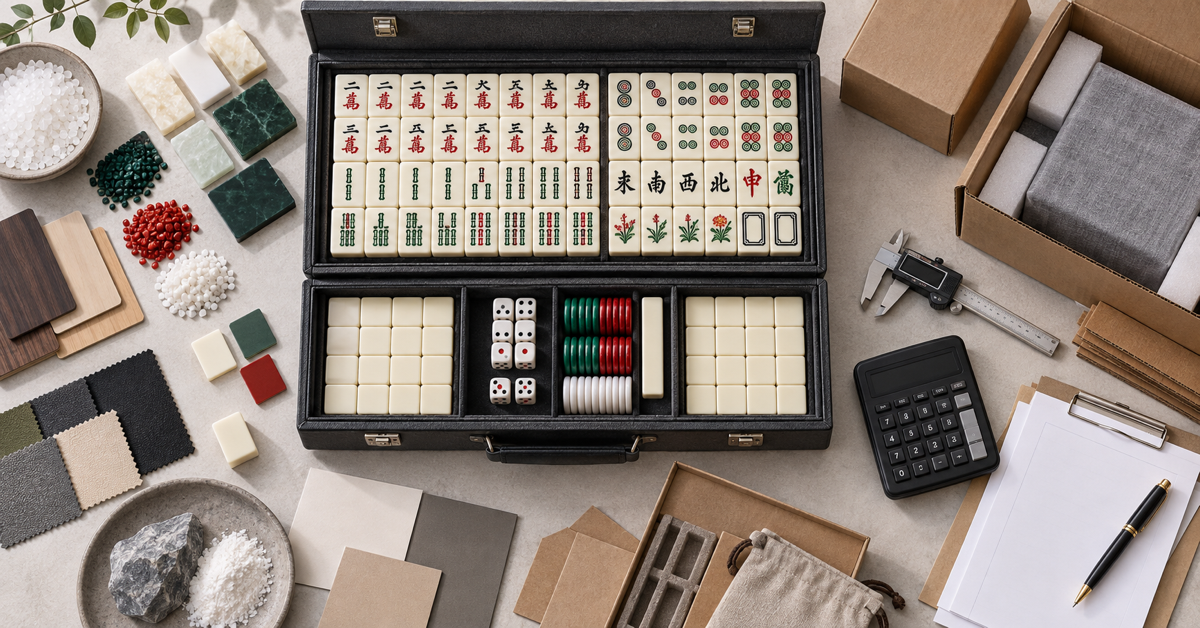
For a complete table, our pink-back American Mahjong tile set pairs white playing faces with glossy pink backs, rounded corners and printed multicolour artwork. It includes Characters, Bamboos, Dots, Winds, Dragons, Flowers, Seasons and Joker tiles, with Arabic numbers and English wind indicators on selected tiles. Tile quantity, dimensions, accessories and packaging are configured per order rather than fixed by the box.
If your group plays Chinese rules instead, the tile mix and the accessory set differ enough that it is worth comparing formats before ordering. Our breakdown of American versus Chinese Mahjong sets covers what changes in the box, and the tile-by-tile count is explained in our guide to how many tiles a Mahjong set contains.
Frequently asked questions
How is mahjong scored?
American Mah Jongg scores each winning hand at the value printed on the current NMJL card, then applies bonuses such as a self-picked win or a jokerless hand. Chinese and Japanese systems instead add pattern-based fan or han and convert the total into points.
How many points is a concealed hand worth?
There is no universal number. Some clubs add a fixed bonus, some double the hand value and some pay it straight. Agree the rule before the first hand and write it on the score sheet.
Does the discarder always pay double?
In American Mah Jongg the player who discards the winning tile normally pays double the hand value while the other two pay single. Clubs that play for points only sometimes drop the double.
What is a jokerless hand?
A hand completed without any joker substituting for another tile. In American money play it is commonly a doubling condition applied on top of the hand value.
Do Chinese and American mahjong score the same way?
No. American play uses fixed values from an annual card; Chinese play builds a score from fan patterns, and the recognised patterns and minimum thresholds vary by region.
How many tiles are in play in a scored hand?
An American hand uses 14 tiles, with each player starting on 13 and the dealer on 14. A standard American set holds 152 tiles, while a Chinese set holds 144.
Is tournament scoring different from club scoring?
Often yes. Tournaments usually publish their own sheet that fixes bonuses and payment direction so that every table scores identically. Read it before play rather than assuming your club's convention applies.
Why do my totals not match my group's?
The usual causes are a stale card, a missed discarder double, or a bonus applied twice. Compare the four recorded fields for the disputed hand before recalculating anything.
Conclusion
Mahjong scoring is not one system but three families of rules: fixed card values in American play, fan-based totals in Chinese play, and yaku-based totals in Japanese play. Within each family, the winner is decided by the hand, the bonuses and the payment direction — not by counting tiles.
Get those three details agreed before the first deal, keep the current card on the table, and most scoring disputes disappear. If you are equipping a club, a class or a retail line, tell us which rule set your players use and which components you need through our contact page.