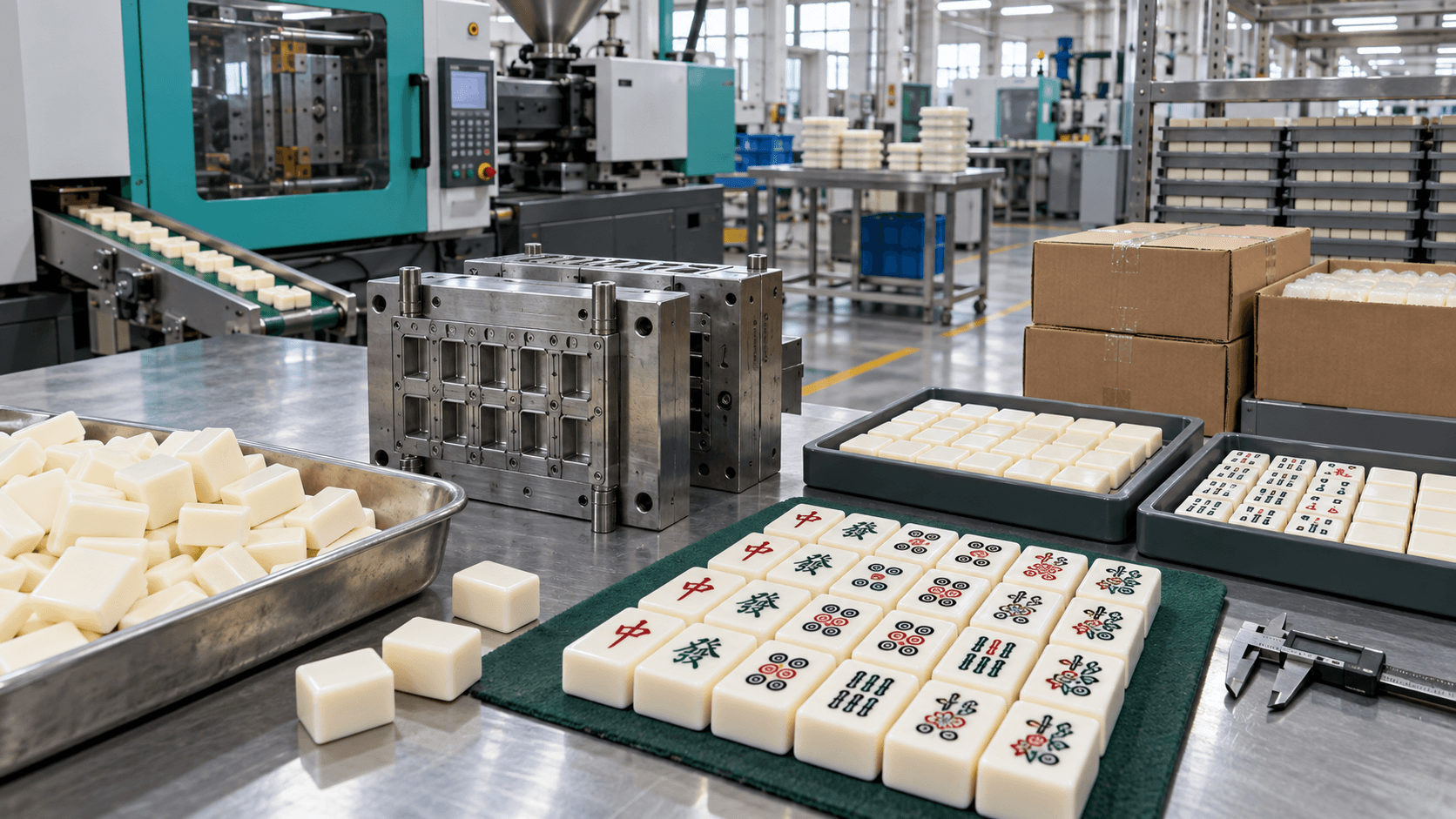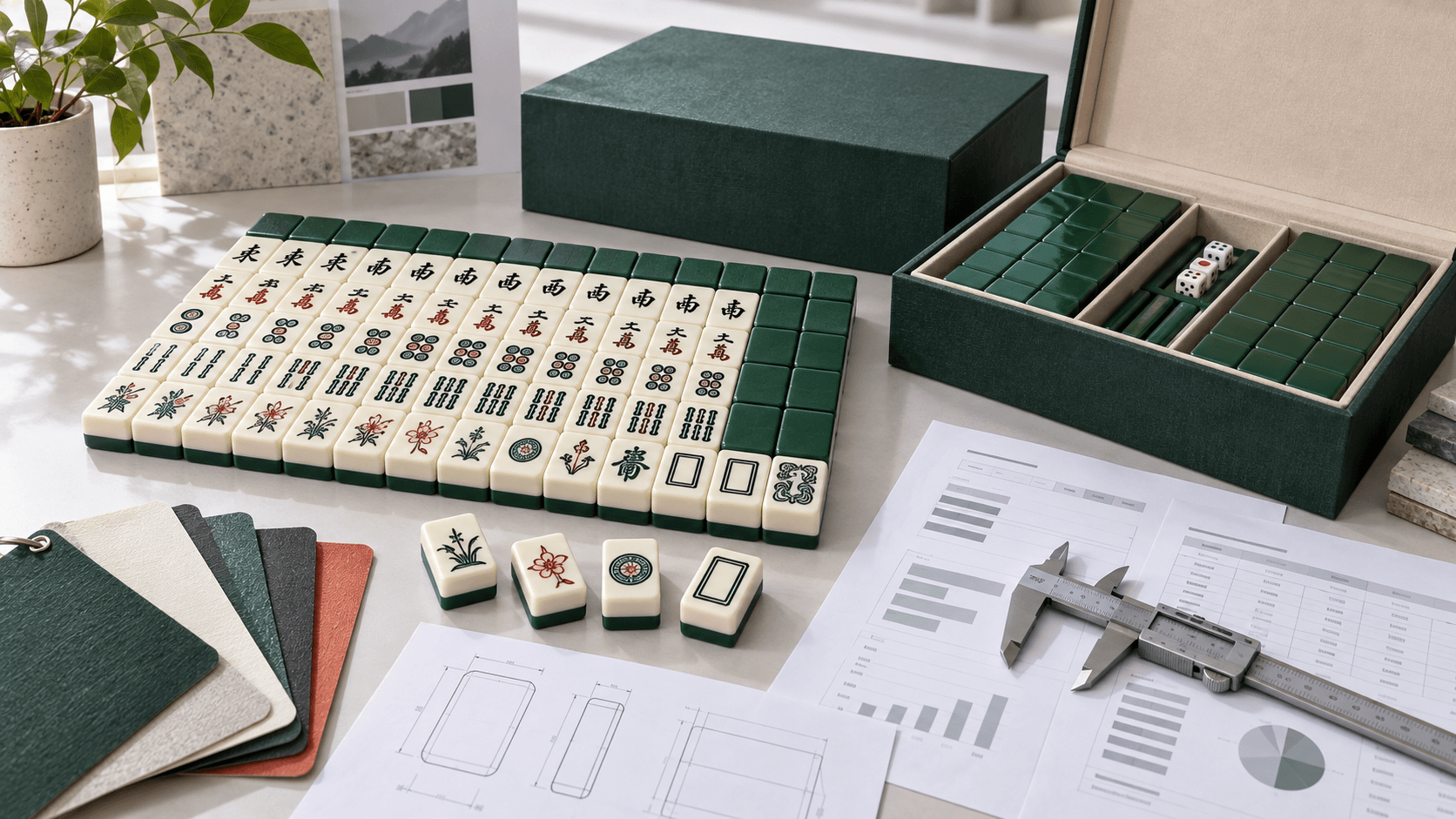

A buyer typing “how much does a custom mahjong set cost” rarely needs a single factory number. The useful answer is a cost model. A complete budget combines one-time development, recurring product cost, packaging, quality control, freight, import charges, and a sensible allowance for changes. Until the tile system, artwork, quantity, accessories, pack-out, and delivery term are defined, a low unit price is only a partial answer.
For a fast first estimate, use this formula: project budget = development charges + (approved unit price × order quantity) + inspection + logistics and import costs + contingency. Then compare suppliers using the same specification and trade term. This guide shows what belongs in each line, which decisions move the quote, and how to reduce cost without making the finished set harder to sell or reorder.
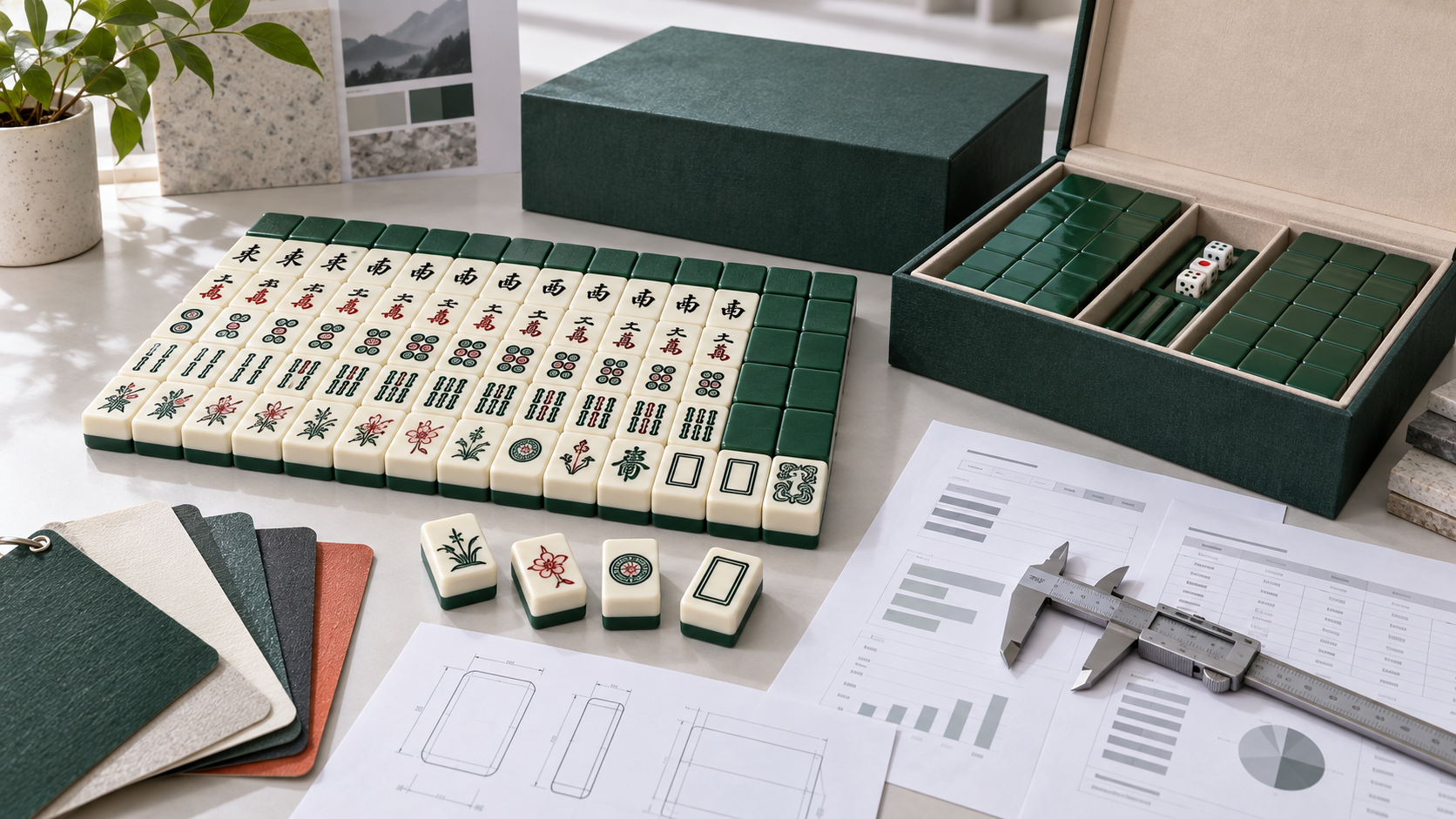
How much does a custom mahjong set cost at each customization level?
Customization is not one service. A catalogue set with a printed sleeve uses a different cost structure from a new tile body with original molds. The first task is to identify the level that matches the customer promise. Paying for engineering that shoppers cannot notice wastes cash; forcing a distinctive idea into a standard product creates compromises that surface later.
| Project level | Typical scope | Main one-time costs | Main recurring costs | Best fit |
|---|---|---|---|---|
| Stock configuration | Existing tiles, accessories, and case | Pre-production sample or none | Set, carton, freight | Demand test or event purchase |
| Private label | Standard set plus logo, insert, sleeve, or label | Artwork setup, proof, packaging sample | Decoration and branded packaging | Fast branded launch |
| Custom appearance | Original faces, backs, colors, rules, and pack | File preparation, color trials, complete sample | More decoration steps and custom components | Retail collection with a clear visual identity |
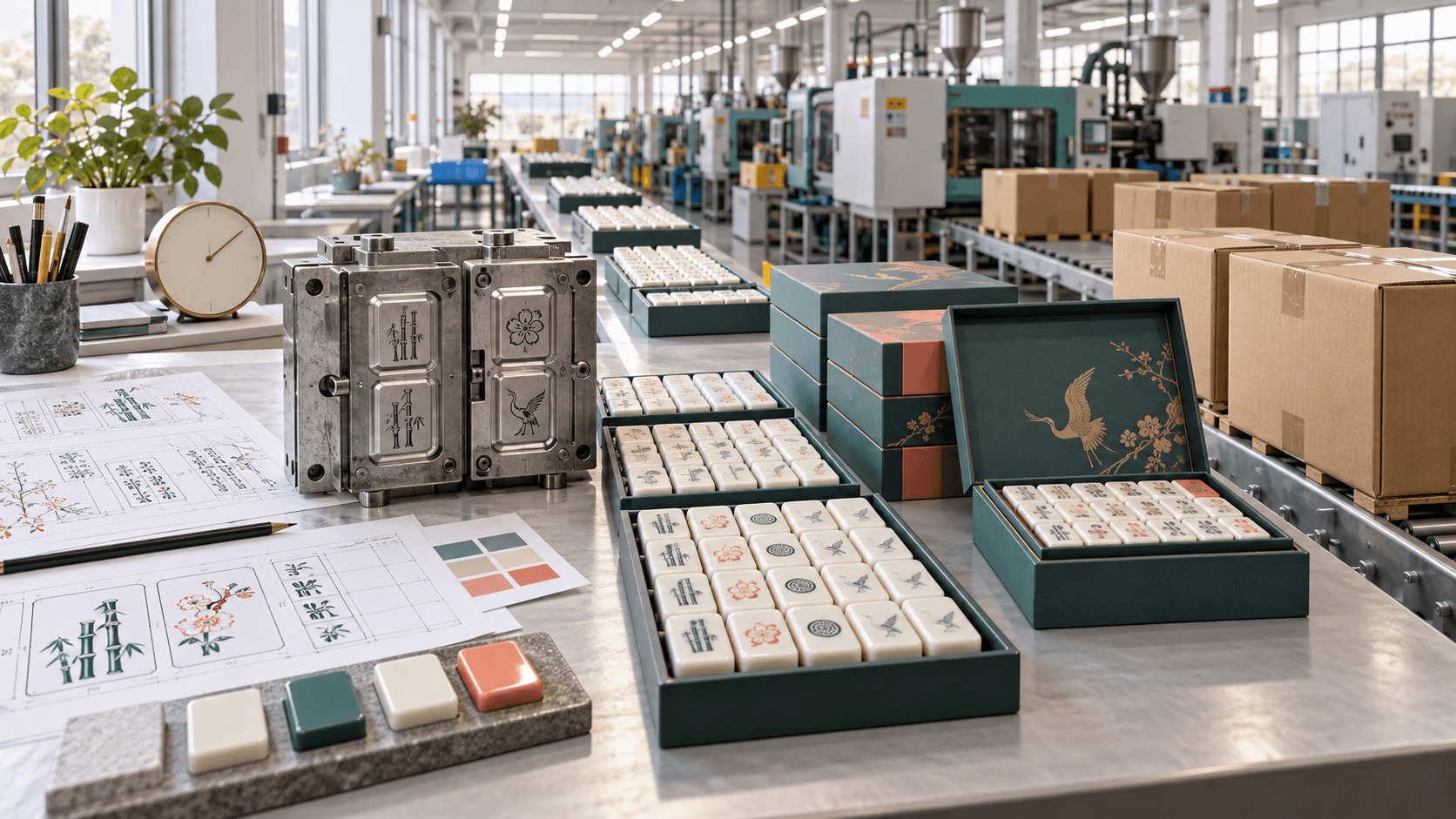
| Custom engineered set | New tile geometry, tooling, accessory fit, and pack-out | Engineering, molds, fixtures, test rounds | Custom production and tighter process control | Distinct product platform or protected form factor |
A hybrid is common. A buyer might keep a proven tile blank and racks but commission new face art, a custom back, a fabric bag, a rulebook, and a rigid retail box. Describe the project by deliverables, not by labels such as “fully custom.” The custom Mahjong set development guide explains how to turn those choices into an approval sequence.
Separate one-time development from recurring unit cost
One-time charges prepare the product for production. They may include engineering review, artwork cleanup, plate or screen setup, color matching, prototype work, molds, packaging dies, and sample freight. Ask whether the charge covers one revision or several, whether it is refundable against an order, and what files or tools the buyer owns afterward.
Recurring cost is what each approved set consumes: tile blanks, decoration, paint fill, accessories, rules, packaging, labor, scrap allowance, inner cartons, and master cartons. A repeat order may remove some development charges, but the unit price can still change if material, quantity, exchange conditions, pack-out, or component sources change. Keep the two categories separate so the first order does not look artificially expensive and the reorder does not look artificially cheap.
| Quote line | Ask the supplier to state | Common comparison error |
|---|---|---|
| Engineering and artwork | Deliverables, revision count, release format, ownership | Assuming “design included” covers production-ready files |
| Tooling and setup | Tool purpose, cavities, life, custody, maintenance, reuse | Comparing a new mold with an existing shared mold |
| Samples | Sample type, included components, freight, approval gate | Treating a printed proof as a complete production sample |
| Unit set | Exact tile count, material, size, finish, accessories | Comparing different component lists |
| Packaging | Retail pack, insert, labels, barcode, cartons, protection | Leaving retail-ready packing outside the unit price |
| Quality and logistics | Inspection scope, Incoterm, named place, freight validity | Comparing factory-gate and delivered quotations |
Understand which product decisions move the unit price
The component list comes first. Tile count varies by rules and market; racks, pushers, dice, wind indicators, chips, trays, bags, and instructions add material, assembly, and packing steps. Record every item and quantity. “Complete set” is not a measurable specification.
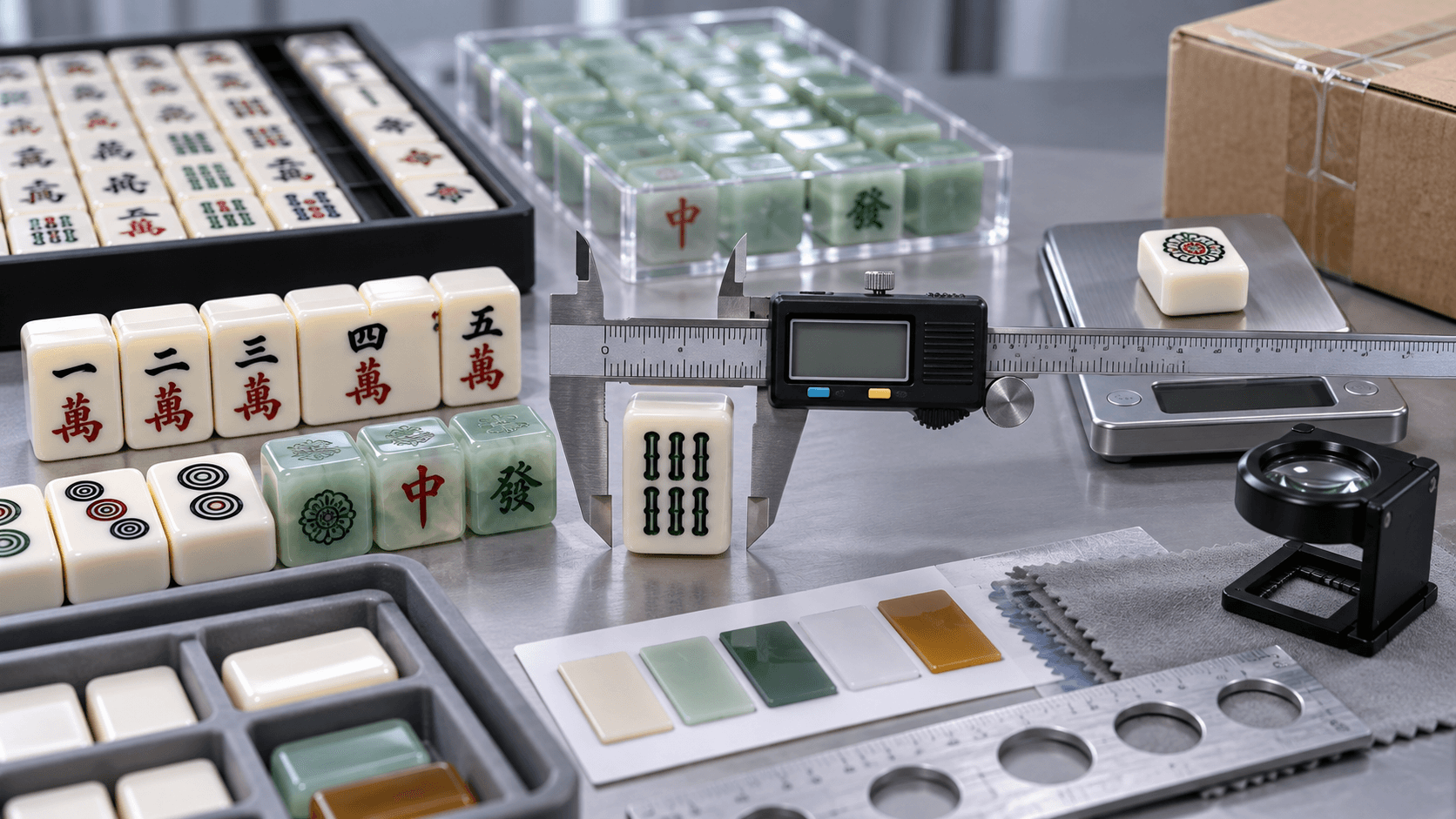
Material and geometry matter together. Tile length, width, thickness, weight, layer construction, edge profile, and finish affect material use, cycle time, tooling, carton weight, and accessory fit. A small dimensional change can also force a new tray or case. The existing Mahjong tile manufacturing cost guide provides a deeper view of how material, process, labor, and quality decisions interact.
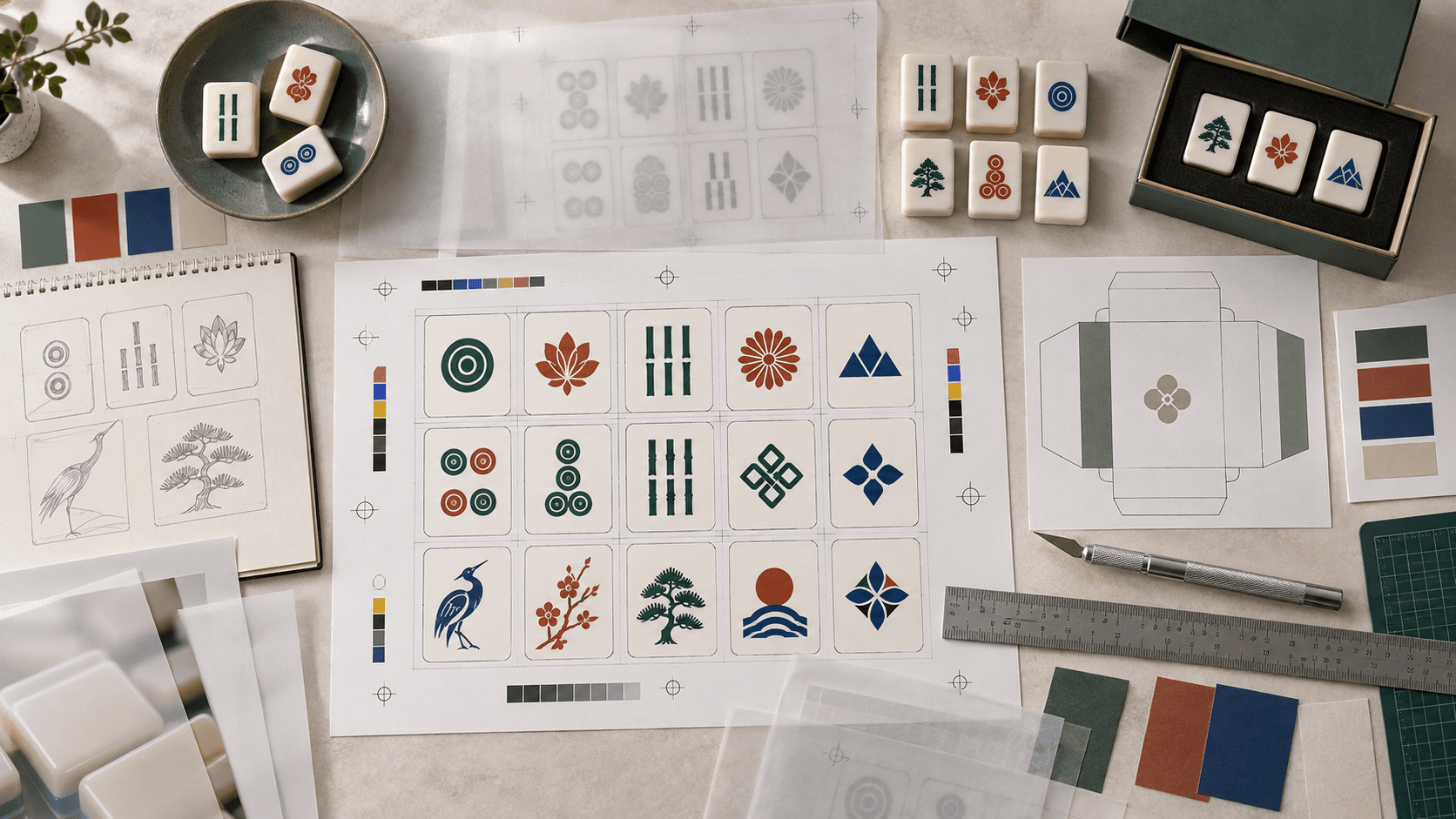
Decoration should be quoted as a process, not merely as “custom artwork.” Engraving depth, printed colors, paint-fill count, registration, back treatment, special finishes, and the number of unique faces can change setup and inspection work. Give the factory a face schedule and production files before asking for a firm quote. Otherwise the supplier must price uncertainty or issue a revision later.
Use MOQ to measure cash exposure, not just unit price
MOQ may be driven by the tile production run, pigment batch, printing setup, packaging printer, accessory supplier, or final assembly plan. One order can therefore contain several minimums. Ask for the binding MOQ and the price breaks above it, then calculate the total cash tied to sellable inventory.
Tooling and setup also need a fair allocation. If a one-time charge is spread over 300 sets, each set carries more first-order development cost than if it is spread over 1,000. That does not make the smaller order wrong; it shows what the pilot costs. Keep the amortized development amount visible instead of hiding it inside unit price.
The custom Mahjong set MOQ guide helps identify which component is setting the minimum and what can be standardized to lower the commitment.
Budget samples as risk-control tools
A sample cost is not only the object in the courier box. It can include artwork preparation, machine setup, color mixing, hand finishing, special material, packaging mockups, and express freight. Ask what the sample proves. A visual prototype may confirm artwork but use a different production process; a color chip may confirm pigment but not engraving; a complete pre-production set should test the released configuration and pack-out.
Plan approval gates before the first payment: artwork proof, color or material sample, physical tile sample, complete set, and final packaging when relevant. State who pays for revisions caused by buyer changes, supplier errors, or an agreed tolerance that was not met. That one paragraph can prevent several rounds of confused sample billing.
Include packaging, inspection, and replacement stock
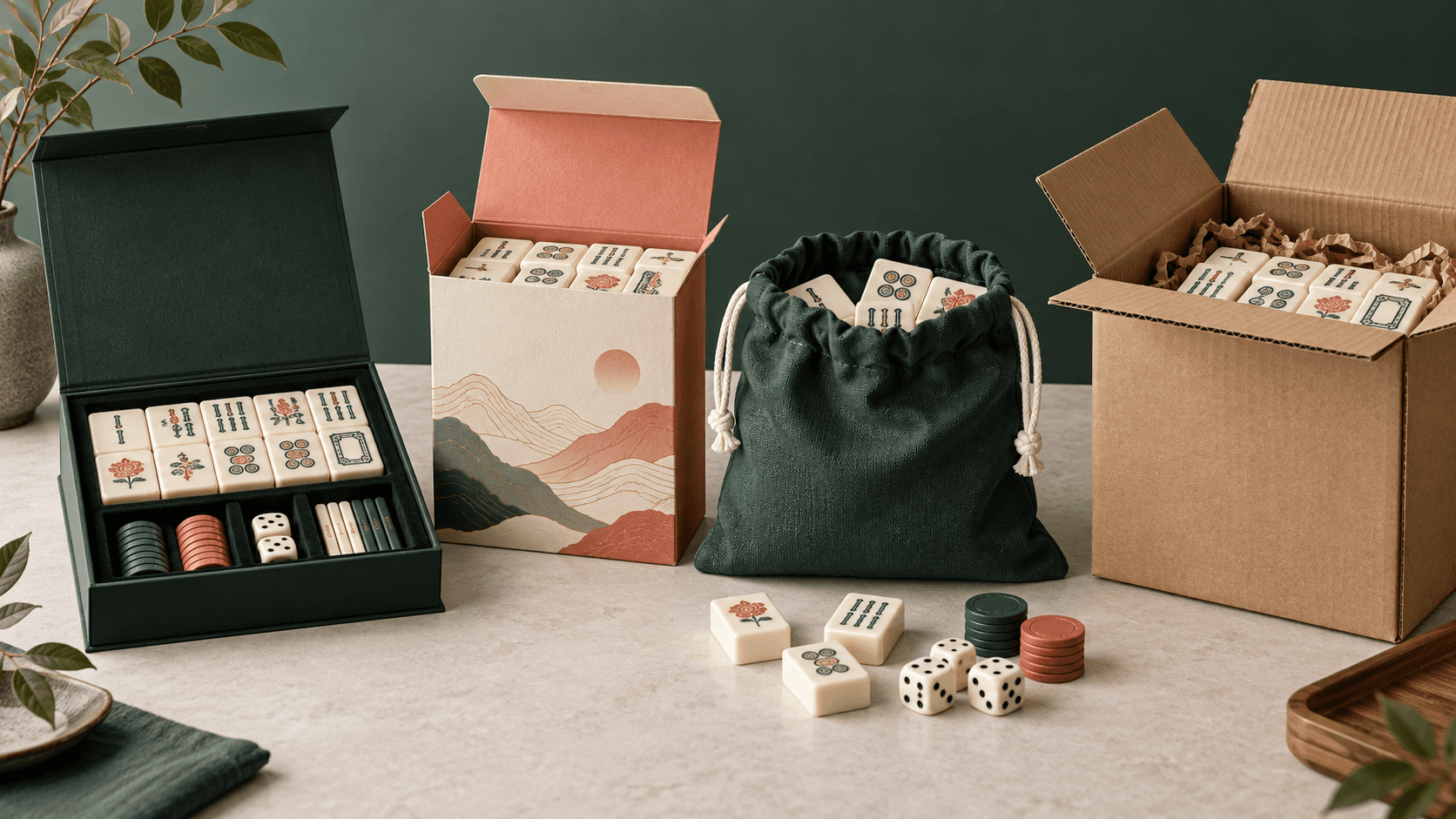
Packaging cost is shaped by structure, board or fabric, printing, finishes, inserts, assembly, labels, carton protection, and order quantity. A premium rigid box can improve presentation but also increase dimensional weight and storage space. A simple case may be cheaper yet require a stronger shipping carton. Review the retail pack and transport pack as one system.
Use the Mahjong packaging quality checklist to define fit, scuff protection, closures, labels, carton marks, and drop-risk points before the packaging quote is frozen.
Inspection belongs in the budget even when the factory performs routine checks. Decide whether the buyer needs an approved golden sample, in-process records, final random inspection, carton checks, or third-party inspection. Add a small quantity of approved replacement tiles or sets when the sales channel needs quick customer support. Planned service stock is usually easier to manage than reproducing a few pieces after the production run has closed.
Calculate landed cost with a named trade term
A factory unit price is not a landed cost. Add export packing, origin handling, freight, insurance when applicable, destination handling, customs brokerage, duty, other import fees, inland delivery, payment charges, and receiving cost. Use the same destination and transport assumption for every quote.
The International Chamber of Commerce Incoterms 2020 guidance explains how named rules allocate delivery responsibilities, costs, and risk between buyer and seller. Write the rule, version, and named place into the quotation; “FOB price” without a port or “DDP shipping” without a destination is incomplete.
For U.S. orders, U.S. Customs and Border Protection notes that duties, taxes, and processing fees can apply to imported goods. Classification and charges depend on the actual product and entry, so confirm the current treatment with a qualified customs broker rather than copying a rate from an old shipment.
| Landed-cost layer | Calculation input | Evidence to retain |
|---|---|---|
| Product | Approved unit price × accepted quantity | Final quotation and purchase order |
| Development | Tooling, setup, samples, revisions | Tool agreement and sample approvals |
| Quality | Inspection, testing, service stock | Inspection plan and report |
| International movement | Origin, freight, insurance, destination | Forwarder quote with validity and named route |
| Import and delivery | Brokerage, duty, fees, inland transport | Classification advice and entry documents |
| Per sellable set | Total landed project cost ÷ accepted sellable units | Receiving and shortage record |
Send a quote brief that suppliers can price consistently
A strong request for quotation includes the target market and rules, tile count, dimensions, material direction, artwork status, color references, decoration method, accessories, packaging, quantity options, sample expectations, quality criteria, delivery location, target date, and requested Incoterm. Mark unknown items instead of letting each supplier make a different assumption.
Ask for quantity tiers, one-time charges, unit costs, sample lead time, production lead time after approval, quote validity, payment stages, exclusions, and substitution rules. Then normalize the answers in one sheet. The lowest comparable landed cost may come from a quote with a higher unit price but fewer missing lines, stronger packaging, or a more stable reorder plan.
Reduce cost without weakening the customer promise
- Standardize invisible components. Keep a proven blank, tray, or accessory when a new version adds no customer value.
- Freeze artwork before physical sampling. Late color or face changes repeat setup and courier work.
- Use packaging dimensions early. A small structural adjustment can improve carton count and storage.
- Limit special processes deliberately. Apply premium decoration where it supports the selling story, not to every surface by default.
- Quote several quantities against one specification. This reveals the real price break without changing the product between scenarios.
- Design the reorder file with the first order. Released files, colors, components, samples, and approved deviations reduce future redevelopment.
Do not remove the complete sample, measurable specification, carton protection, or final inspection just to reach a target price. Those controls protect the sellable quantity used in the landed-cost calculation.
FAQ
Why can’t a factory give an exact custom Mahjong price immediately?
The factory needs a measurable scope: tile system, count, size, material, artwork, process, accessories, packaging, quantity, quality level, and delivery term. Without them, the number contains assumptions that may change later.
What is usually included in a custom Mahjong set unit price?
It may include the specified tiles, decoration, accessories, retail packaging, assembly, and export cartons. Confirm every line because sample fees, tooling, inspection, freight, duty, and destination delivery are often separate.
Are custom molds included in the unit price?
Sometimes tooling is charged separately; sometimes a supplier amortizes it into an agreed quantity. Ask for the tool scope, ownership, custody, maintenance, and pricing treatment in writing.
Does a larger order always lower total project cost?
A larger order may lower unit cost and spread setup over more sets, but it raises inventory, storage, and demand risk. Compare total cash exposure and expected sell-through, not unit price alone.
How much should I budget for samples?
Budget depends on the sample type, custom setup, number of revisions, included components, packaging, and courier route. Ask what each sample proves and how change-related resampling will be charged.
Which customization choices tend to increase cost most?
New geometry and molds, unusual materials, multiple decoration stages, tight color matching, custom accessories, elaborate packaging, small quantities, and repeated revisions commonly add cost or uncertainty.
Can I lower cost by using a standard tile blank?
Often yes. A proven blank can remove new geometry and tooling work while preserving room for custom faces, backs, colors, packaging, and instructions. Confirm that its dimensions and play feel suit the market.
What is the difference between unit price and landed cost?
Unit price covers the quoted product scope. Landed cost adds development, quality control, freight, insurance where applicable, customs charges, brokerage, inland delivery, and receiving, divided by accepted sellable units.
How should two supplier quotations be compared?
Use one specification, quantity, delivery destination, Incoterm, quality plan, and packaging scope. Separate one-time and recurring charges, list exclusions, and compare landed cost plus commercial risk.
What information should I send to request a firm quote?
Send the rules and target market, component list, dimensions, material, artwork, color references, accessories, packaging, quantity tiers, sample plan, quality requirements, destination, schedule, and requested trade term.
Turn the price question into a controlled buying decision
That is the most useful answer to how much does a custom mahjong set cost: define the product, separate development from recurring production, compare identical scopes, and calculate cost through delivery and receipt. A transparent quote makes tradeoffs visible. It also gives the supplier a stable basis for samples, production, inspection, and reorders.
Send ABC Mahjong the target market, rules, component list, artwork status, quantity options, packaging direction, quality expectations, destination, and delivery window through the contact page to prepare a comparable custom project quotation.