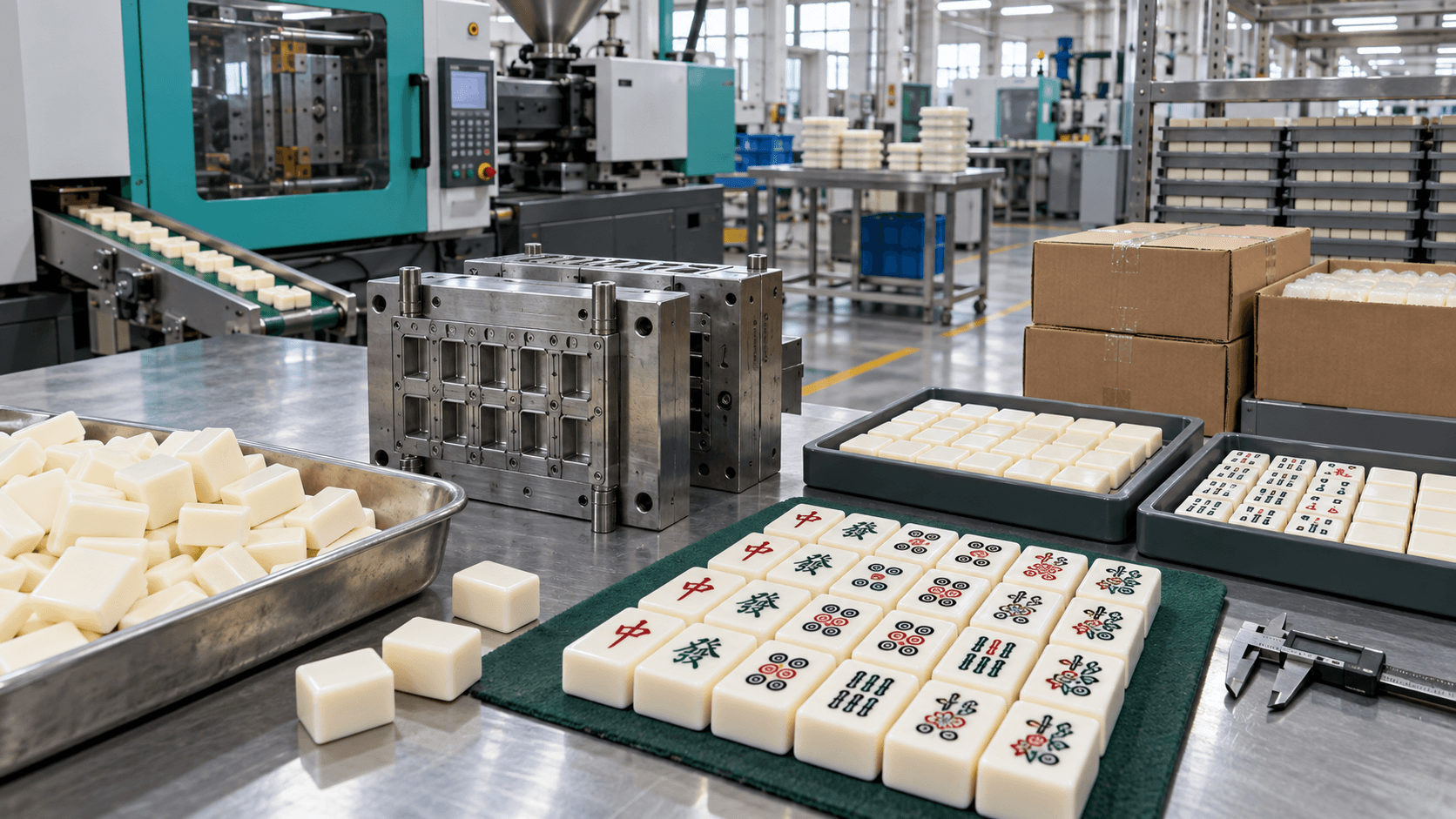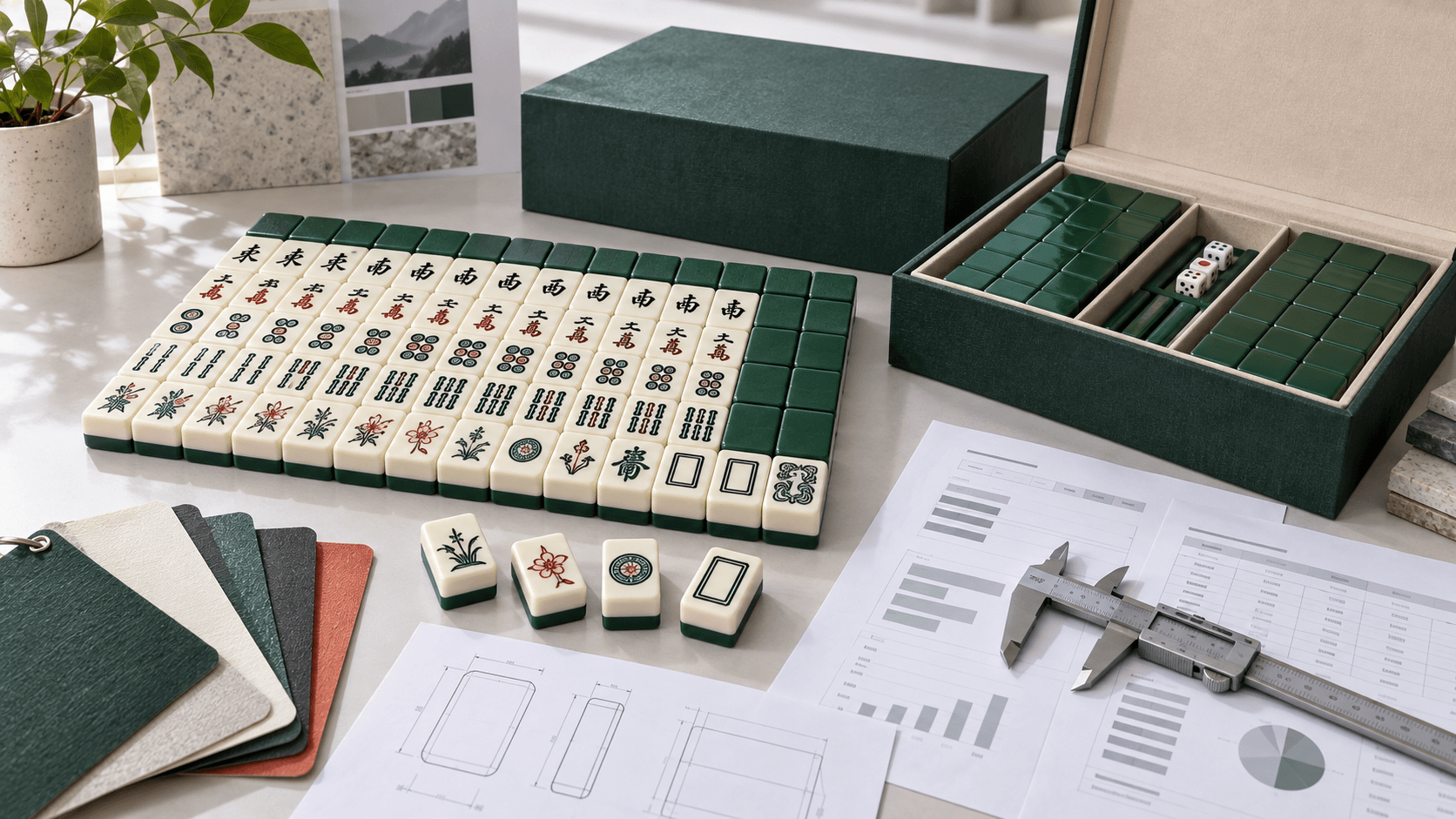
OEM vs ODM mahjong manufacturing is a choice about who brings the product definition, who completes the development work, and who controls the decisions that follow. OEM usually starts with a buyer-owned specification. ODM usually starts with an existing platform that the buyer adapts. The label matters less than the written division of responsibility.
The two routes in one minute
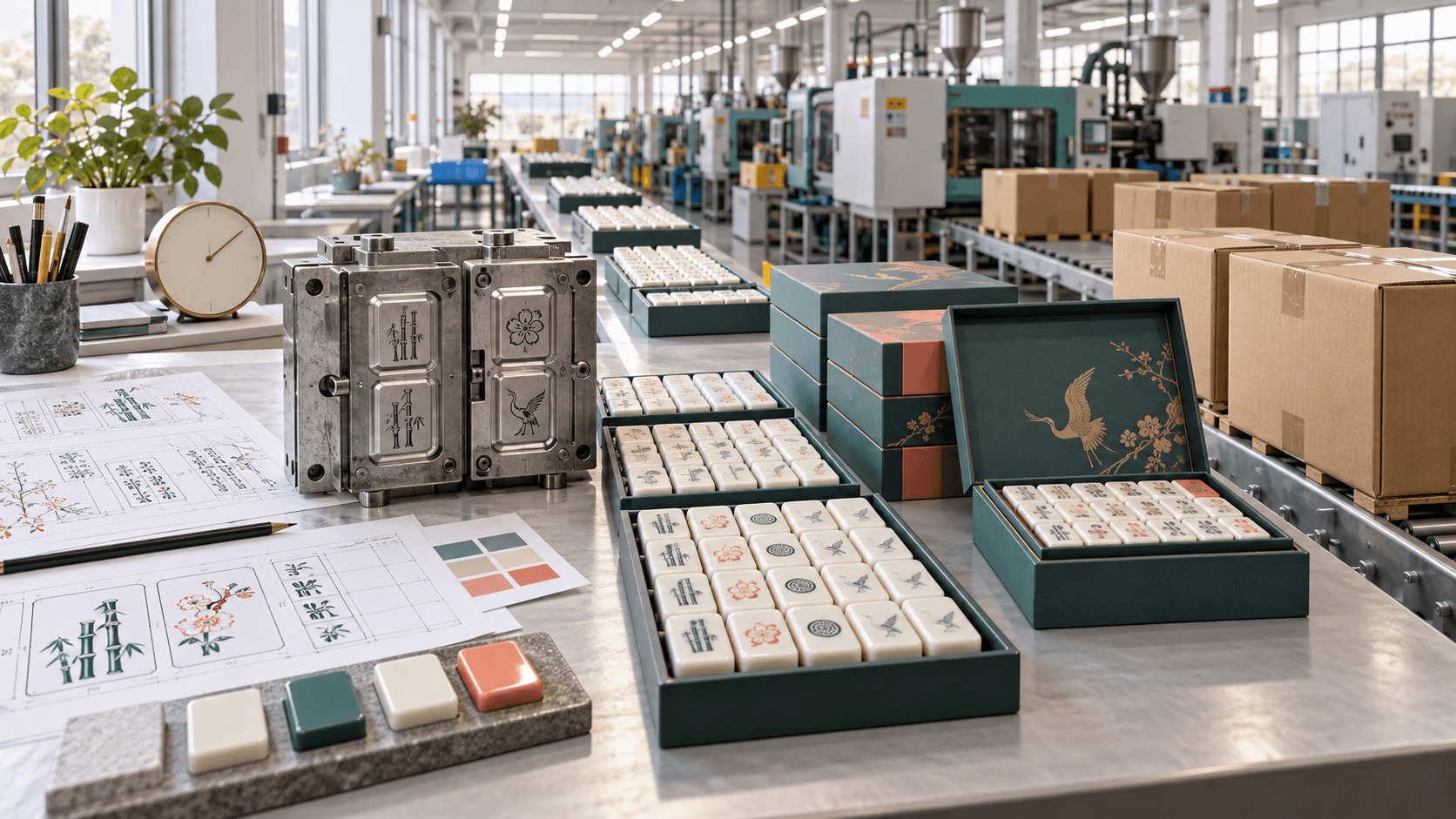
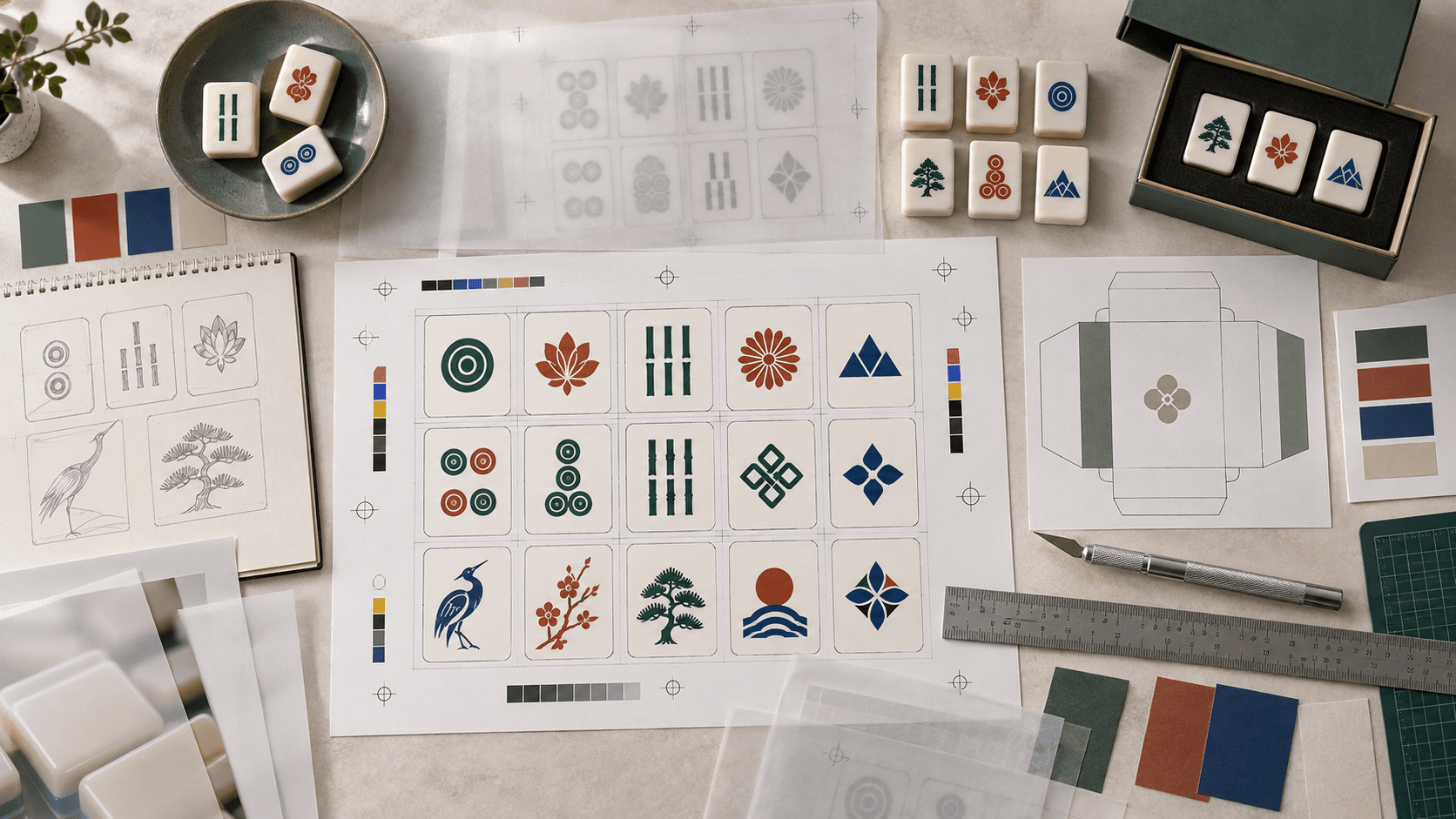
An OEM brief says, in effect, “make this defined product.” The buyer may supply the face schedule, dimensions, artwork, color references, accessory list, packaging drawings, and acceptance criteria. The manufacturer reviews whether those instructions can be produced, then samples and builds against the approved specification.
An ODM conversation begins elsewhere. The buyer may know the audience, price position, visual direction, and sales channel but not every physical detail. A manufacturer proposes a workable base format, then the parties decide what to retain and what to customize. That can shorten some early decisions, but it does not remove the need for artwork approval, product testing, or a clear bill of materials.
| Decision area | OEM-leaning project | ODM-leaning project |
|---|---|---|
| Starting point | Buyer specification and controlled files | Existing product platform plus buyer requirements |
| Design ownership | Mostly buyer-defined; rights must be documented | Existing elements and new brand assets require a written boundary |
| Development load | More preparation before supplier review | More joint selection during supplier review |
| Change control | Changes are measured against the buyer's released specification | Changes are measured against the selected base sample and option list |
| Best fit | Teams with a resolved product and technical ownership | Teams that need a proven starting format and guided configuration |
Begin with the buyer, not the acronym
A retailer replacing a proven line has different needs from a founder launching a first collection. So does a licensing team working under a strict brand guide. Before naming the route, answer five questions: Is the tile format fixed? Is the face list approved? Does packaging already exist? Are the brand assets cleared for use? Can someone on the buyer's team sign off technical changes?
If most answers are yes, the project tends to behave like OEM work. If the buyer still needs help choosing sizes, finishes, backs, cases, and inserts, an ODM-style configuration may be more practical. Some orders sit in the middle. A buyer might use an established tile construction while supplying entirely original faces and retail packaging. Calling that hybrid work is more honest than forcing it into one box.
Write down what each party owns
Ownership has at least three meanings: legal rights, decision authority, and custody of production files. They should not be blurred. The buyer should identify who owns logos, characters, patterns, photography, typefaces, and other supplied assets. The manufacturer should identify which drawings, tooling, processes, or base components are pre-existing and which are created for the project.
WIPO's Making a Mark guide notes that trademark owners can license marks to another business and commonly retain quality control. That is a useful commercial reminder: permission to manufacture branded goods should be explicit, and the approval process should protect the brand. A factory quotation is not an IP license.
Use OEM vs ODM mahjong manufacturing as a responsibility map
A practical responsibility map prevents the sentence “we thought you were handling that.” Build it before artwork moves into sampling. Give every deliverable one owner, one approver, a due date, and a version number. Shared responsibility sounds cooperative but often leaves a gap when a deadline arrives.
| Deliverable | Prepare | Approve | Evidence to retain |
|---|---|---|---|
| Set configuration | Buyer, with supplier feasibility input | Buyer | Dated face schedule and quantities |
| Tile construction | Supplier proposal or buyer drawing | Buyer | Dimensioned specification and sample |
| Artwork | Buyer or agreed design party | Buyer or rights holder | Released source files and contact sheet |
| Packaging structure | Supplier or packaging designer | Buyer | Dieline, packed sample, carton plan |
| Quality criteria | Jointly drafted | Buyer | Defect list, tolerances, inspection plan |
| Production release | Project owner | Named buyer approver | Signed or written approval record |
Three buyer profiles, three sensible starting points
The established brand. It has a design system, target retail price, approved materials, and internal product staff. It benefits from an OEM-leaning brief because decisions can be verified against known standards. The supplier still needs room to flag unworkable lines, colors, or tolerances.
The category newcomer. It understands its customer but has never specified a Mahjong set. An ODM-leaning discussion can expose choices that are easy to miss: regional tile count, numeral style, rack fit, storage, rulebook, carton weight, and what the customer sees first when opening the box.
The campaign team. It needs a branded gift for a fixed event. The fastest route is often a controlled customization of an established format rather than new construction. The true constraint is the approval calendar. A modest product with stable files is more useful than an ambitious concept that misses the event.
Do not mistake a catalog choice for a finished specification
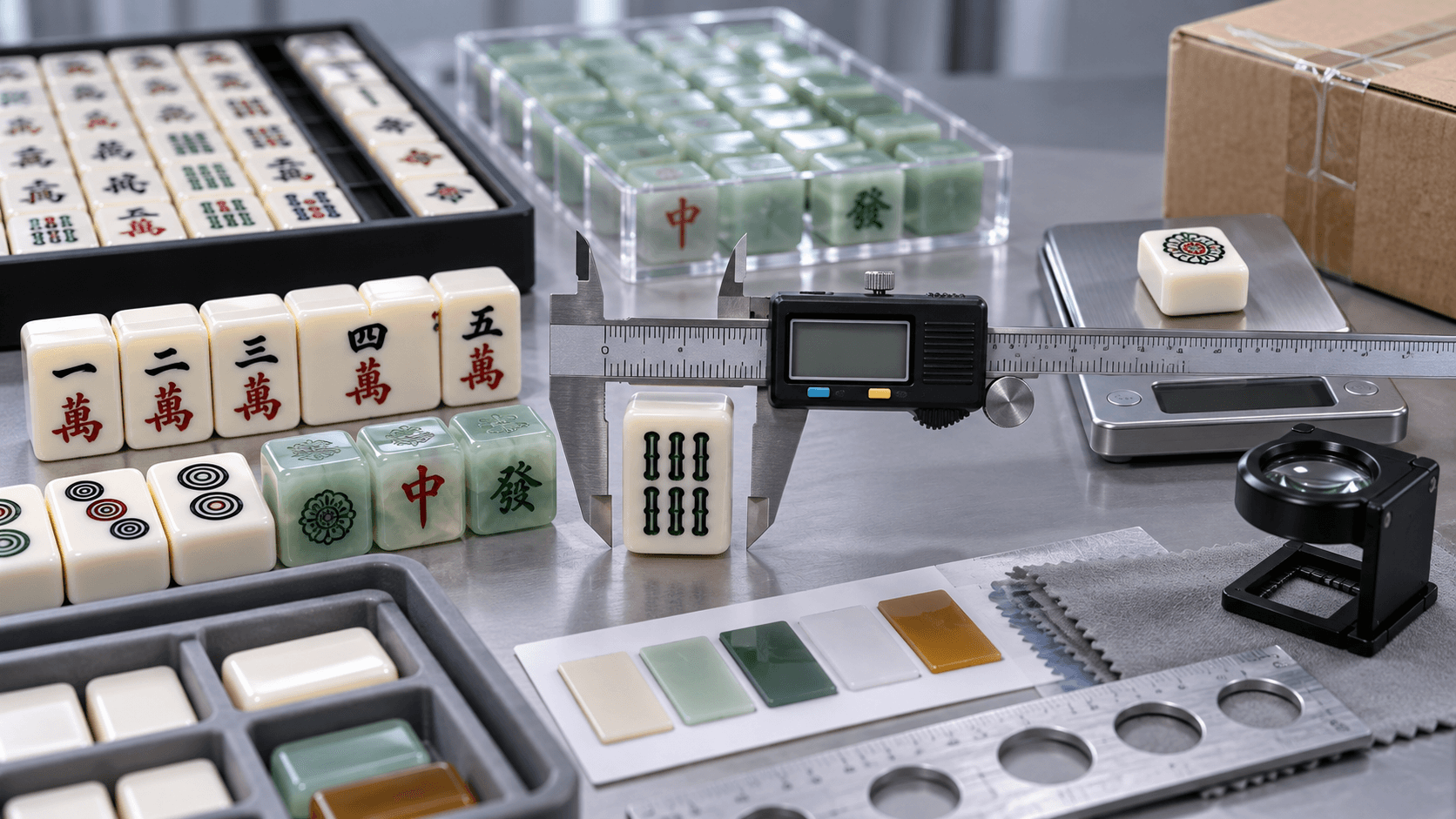
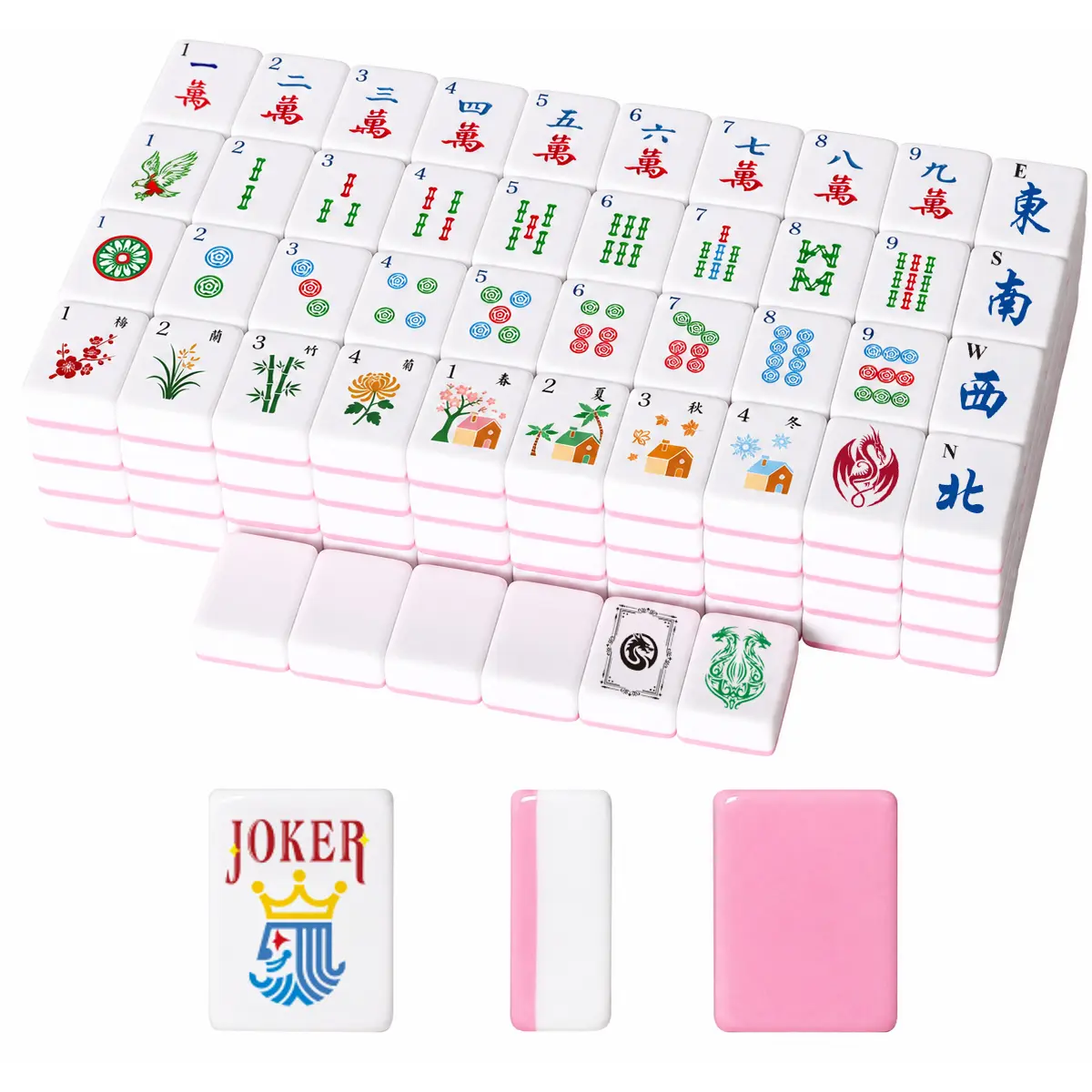
Selecting a reference model answers only part of the brief. The final specification still needs exact quantities, dimensions, colors, artwork method, surface direction, accessories, labels, inner packing, outer carton, and inspection criteria. Photos are helpful references, but they do not define thickness, color tolerance, or which spare pieces belong in each set.
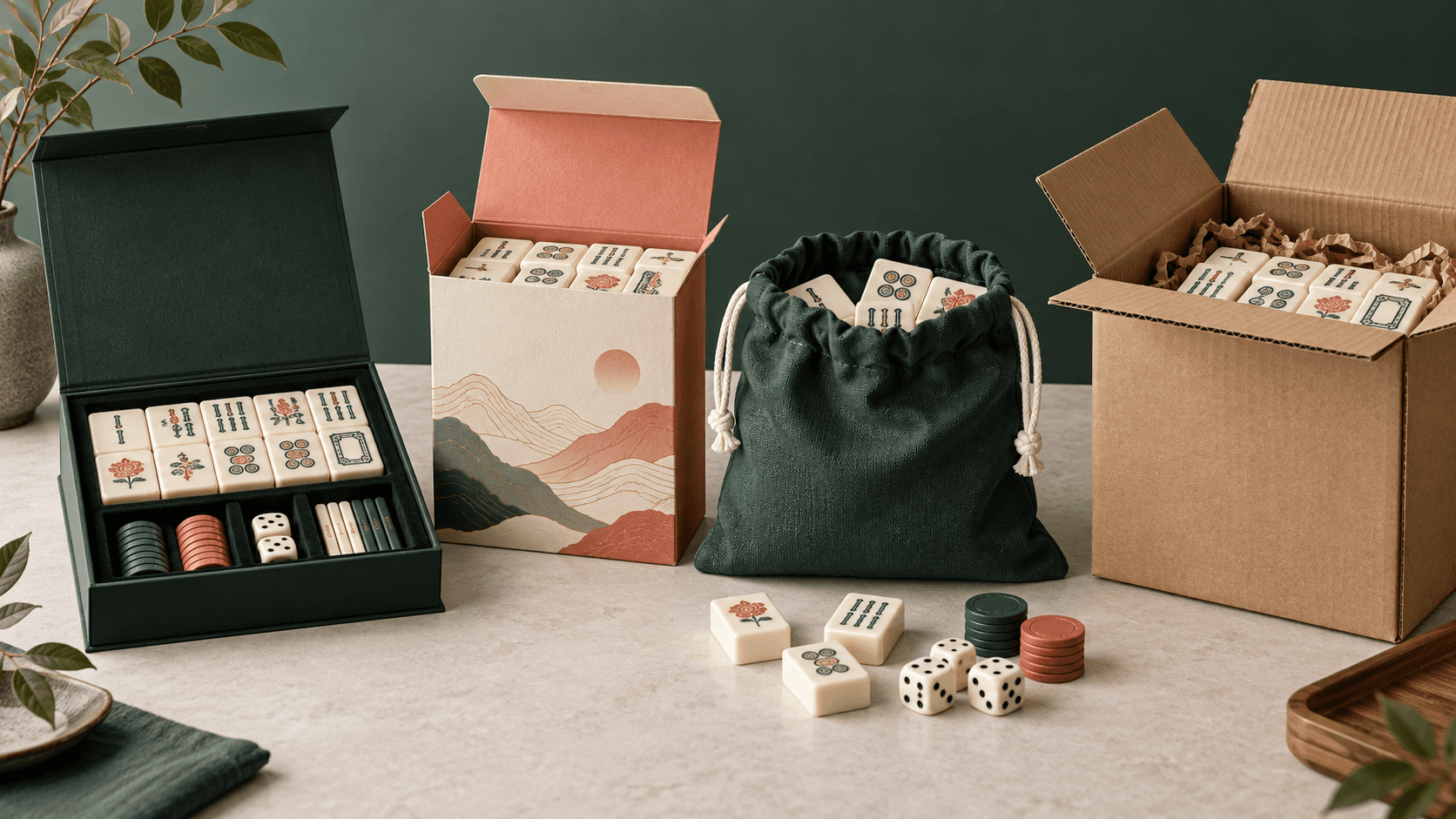
ABC Mahjong presents custom options covering artwork, colors, molds, packaging, and coordinated accessories. Buyers can review the custom Mahjong service and the product range to identify a starting format. The next step is to turn that visual choice into a controlled bill of materials.
Compare quotations on the same scope
A low quotation may simply omit work that another proposal includes. Ask each supplier to separate tooling, design support, physical samples, production units, packaging, inspection, and freight. State the number of artwork versions and delivery destinations. Confirm whether taxes, duties, testing, or third-party inspection are outside the quote.
Also record assumptions. If price depends on a standard insert, a particular color, one SKU, or buyer-ready artwork, that condition belongs next to the number. A quote is useful only while its assumptions remain true.
Use a change ledger after the first sample
Sample review is where a clean route can become messy. Keep one table with the observation, required change, responsible party, revision, due date, and approval status. Separate corrections from new preferences. Fixing a wrong face count is a correction. Asking for a different pink after approving the original reference is a change. The commercial and schedule effects may differ.
Never approve by silence or by sending several unlabelled chat images. Release a consolidated record. If the buyer changes the configuration, update the face schedule, artwork index, packaging list, and quotation together.
Build the RFQ so a supplier can answer it
- Target market and intended game format
- Estimated quantity by SKU and expected reorder pattern
- Reference size, construction, finish, and color direction
- Complete tile and accessory list
- Artwork status: concept, editable files, or production-ready package
- Packaging channel: retail shelf, e-commerce, gift, or distribution
- Required sample stages and named approver
- Delivery destination and requested commercial term
- Known compliance, labelling, and documentation requirements
- Launch date, plus the date goods must actually be available
This list gives the supplier enough context to identify missing decisions. It also makes proposals easier to compare without pretending that every project is identical.
FAQ
Is OEM always more expensive than ODM?
No. Cost follows the actual development, tooling, artwork, materials, packaging, quantities, and revisions. A heavily modified base product may require more work than a well-prepared buyer design.
Does ODM mean the product cannot carry our brand?
No. Branding may be one of the configurable elements. The parties should document where the logo appears, who approves it, and which underlying product elements remain unchanged.
Can a project combine the two routes?
Yes. A buyer can adopt an existing construction while owning original face art, a special back, and custom packaging. Define the mixed responsibilities deliverable by deliverable.
Who should approve the tile count?
The buyer should approve the exact configuration for the intended market and rules. The supplier can raise feasibility or packing questions but should not infer the game format.
When is new tooling worth discussing?
Discuss it when an existing size, shape, edge, or construction cannot meet the product requirement. Evaluate cost, ownership, maintenance, expected volume, and sample stages before proceeding.
What files should accompany a logo?
Provide an approved source file, color references, clear-space or placement rules, and written authority to use the mark. Include a named person who can approve proofs.
Should a buyer ask for exclusivity?
That is a commercial and legal decision. Define the product elements, territory, term, tooling, minimum commitments, and enforcement rather than relying on a vague promise.
Can a digital render replace a physical sample?
A render can approve layout direction. It cannot fully show material, finish, physical color, edge treatment, balance, or fit with accessories. Use a physical sample where those details matter.
What makes an ODM proposal comparable?
Ask for the base configuration, included changes, excluded work, sample plan, unit scope, packaging, and revision assumptions. Compare the same deliverables across proposals.
What should be approved before production?
Approve the complete specification, released artwork, physical sample or agreed references, packing method, inspection criteria, commercial scope, and production version in writing.
Turn the route into a useful first conversation
ABC Mahjong works with brands and B2B buyers on product concepts, custom files, samples, packaging, and coordinated sets. Read about the company and project approach, then use the contact page to send your audience, quantity, target date, and current files. The team can review whether your OEM vs ODM mahjong manufacturing brief is resolved enough for quotation or needs a short discovery step first.