
Wholesale buying can go wrong even when the product looks good and the unit price seems attractive. The usual trouble appears later: one color barely moves, a box is awkward for parcel shipping, or a repeat order no longer matches the first. A workable mahjong wholesale plan begins with the place where the goods will be sold and the speed at which the buyer expects to replenish them. Price still counts, of course. It just cannot answer the entire purchasing question.
Define the channel before selecting products
Picture four buyers looking at the same set: a small gift shop, an Amazon seller, a regional distributor, and a club manager. The product may suit all four, but the order probably should not look the same. Tell the factory what happens after the cartons arrive. That short explanation often changes the sensible case pack, accessory mix, and packaging choice.
- Boutiques and gift stores: a sharp-looking box and a few memorable designs may be more useful than a deep catalog.
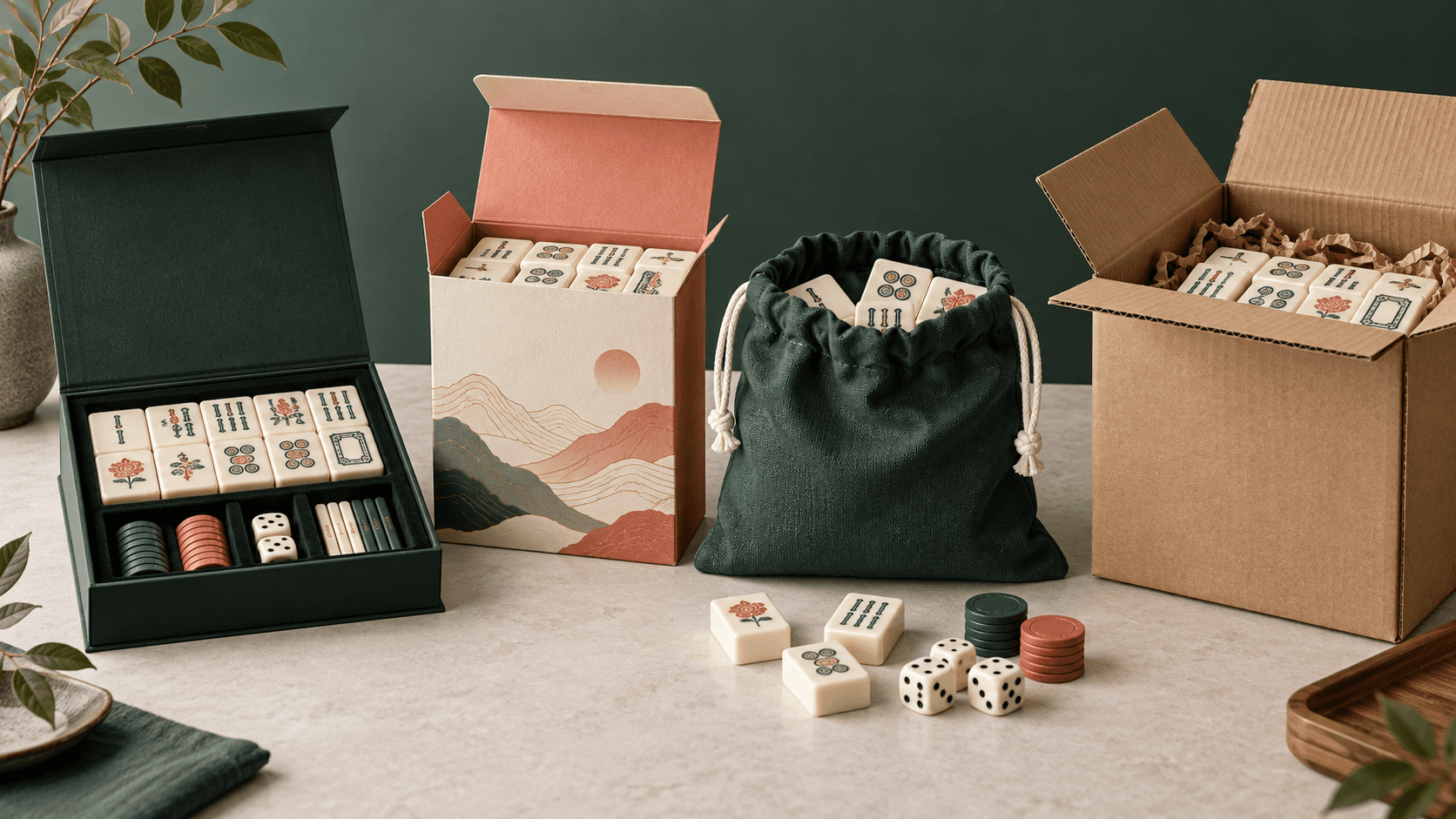
- E-commerce sellers: the set has to reach a customer after ordinary parcel handling, not merely survive a trip from the factory to a warehouse.
- Distributors: product codes, repeat availability, and dealer-friendly cartons usually become important once several customers reorder at different times.
- Clubs and event programs: matching formats, simple storage, and access to extra accessories may matter more than retail decoration.
Tell the manufacturer which channel comes first. Otherwise, a visually impressive assortment can miss the actual operational need.
Wholesale decision table
| Planning area | Buyer question | Risk if ignored |
|---|---|---|
| Assortment | Which sets and accessories serve the same customer? | Disconnected range and weak cross-selling |
| MOQ | Is the threshold per design, color, product, or total order? | Too much inventory in one SKU |
| Packaging | Is it retail-ready and suitable for the delivery method? | Damage, relabeling, or poor shelf presentation |
| Quality | How are count, artwork, fit, finish, and packing verified? | Returns and inconsistent customer experience |
| Replenishment | Which designs and materials can be repeated? | Unplanned substitutions or long stock gaps |
| Landed cost | What is included in the quote and freight assumption? | Margin calculated on incomplete cost |
Build a focused opening assortment
A broad opening range can feel safer because it appears to cover every taste. It can also hide which design customers actually want. For a first order, give each SKU a job:
- A dependable core set with broad appeal
- A visually distinctive set that attracts attention
- A travel or storage-oriented option if the channel needs portability
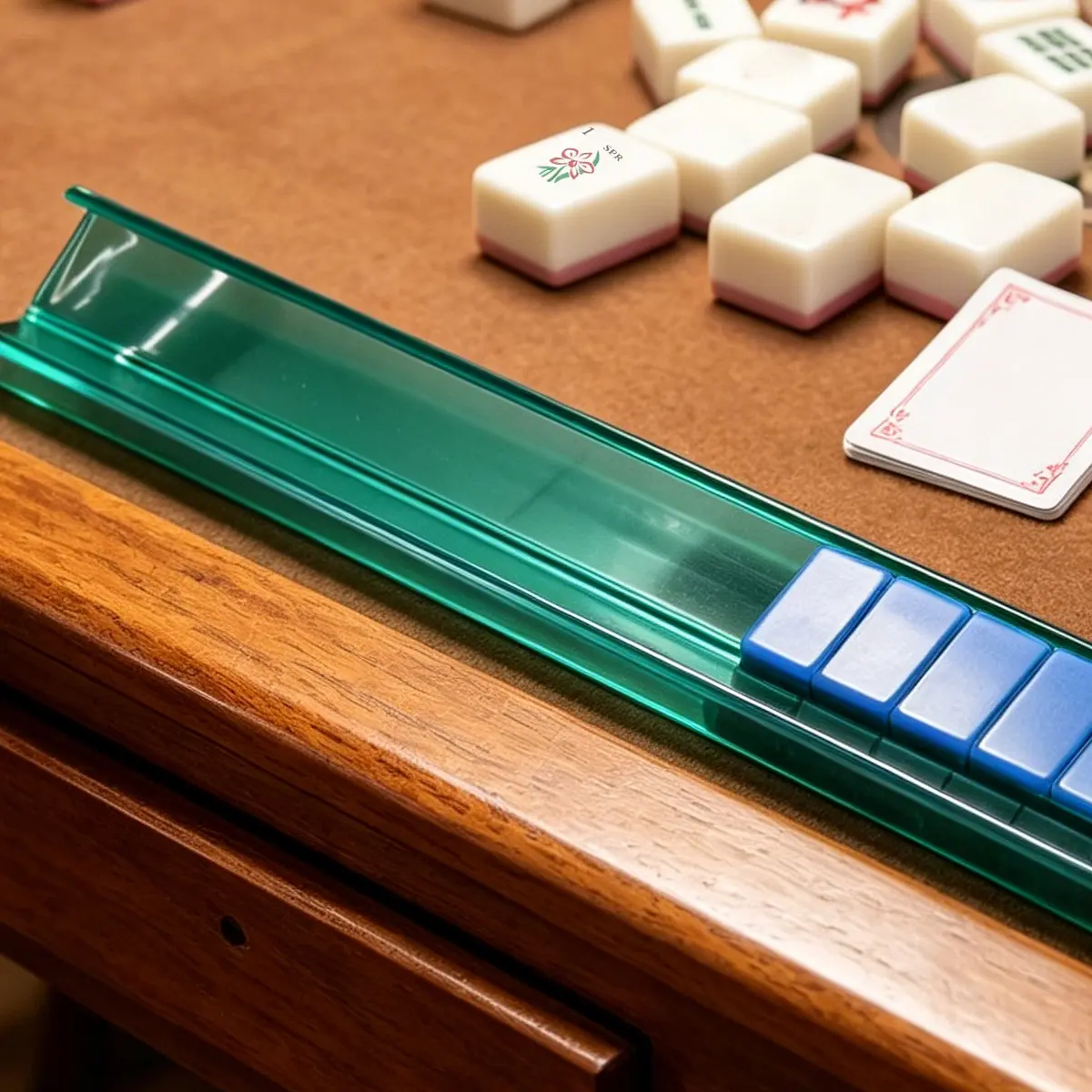
- Matching racks and pushers
- A mat, dice, rulebook, or case that raises basket value
If two designs speak to the same shopper and occupy the same price point, they may simply divide the same demand. Pick the one with the clearer story. The next purchase order can grow from actual sales rather than from a guess made at launch.
Understand MOQ at the SKU level
Ask precisely how the minimum is calculated. A total order may meet the factory’s broad quantity requirement while individual colors, print runs, packaging designs, or accessories still have their own thresholds. The relevant unit may be a design, a color, a carton, or a production process.
For custom work, MOQ can be influenced by:
- Existing or new tile structure
- Custom color and material preparation
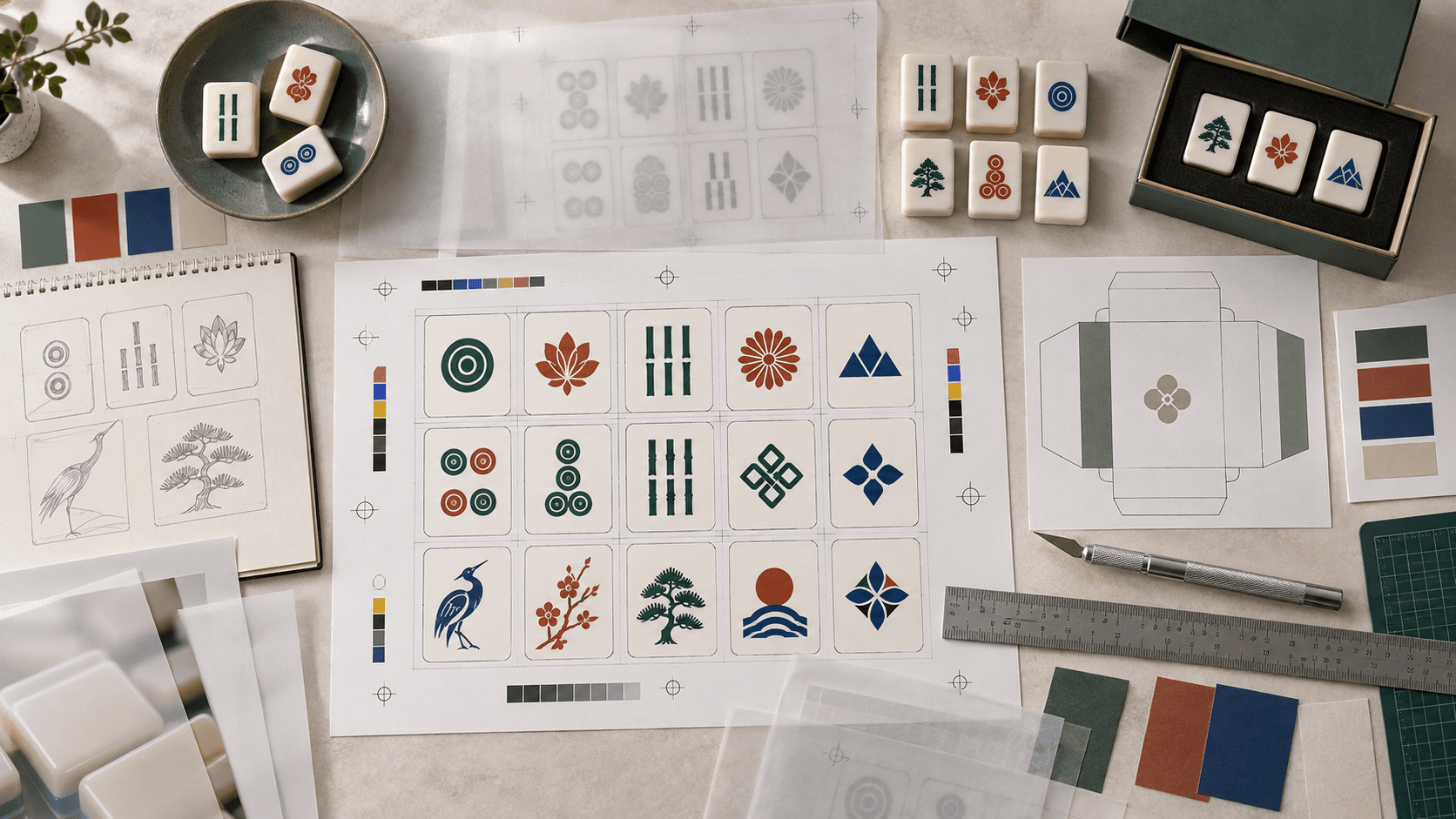
- Printing, engraving, or decorative process
- Number of artwork versions
- Custom cases, gift boxes, labels, and inserts
- Whether accessories are standard, colored, or branded
A clear breakdown lets a buyer adjust the assortment intelligently. It may be better to use one custom box across two tile colors, or to launch one fully branded set with standard accessories rather than dilute the budget across several complex SKUs.
Do not compare unit prices until the scope matches
The tempting number is the unit price. The useful number is the cost of a saleable set at the point where your business receives it. Check whether a quotation includes the same tile format, accessories, retail pack, labels, inner quantity, export carton, artwork work, samples, inspection, and trade term as the offer beside it. If one line is vague, circle it before deciding which quote is lower.
A simple landed-cost sheet should leave room for:
- Product and accessory cost
- Retail packaging and outer carton
- Tooling, artwork, or setup amortization
- Sample and courier expense
- Inspection, if separately arranged
- Freight, duty, brokerage, insurance, and local handling
- Warehouse receiving and fulfillment preparation
- Expected damage, return, and promotional allowance
Only after these pieces are visible can a buyer estimate margin with any confidence. Ex-factory price is a starting point, not a finished cost.
Use samples to test more than appearance
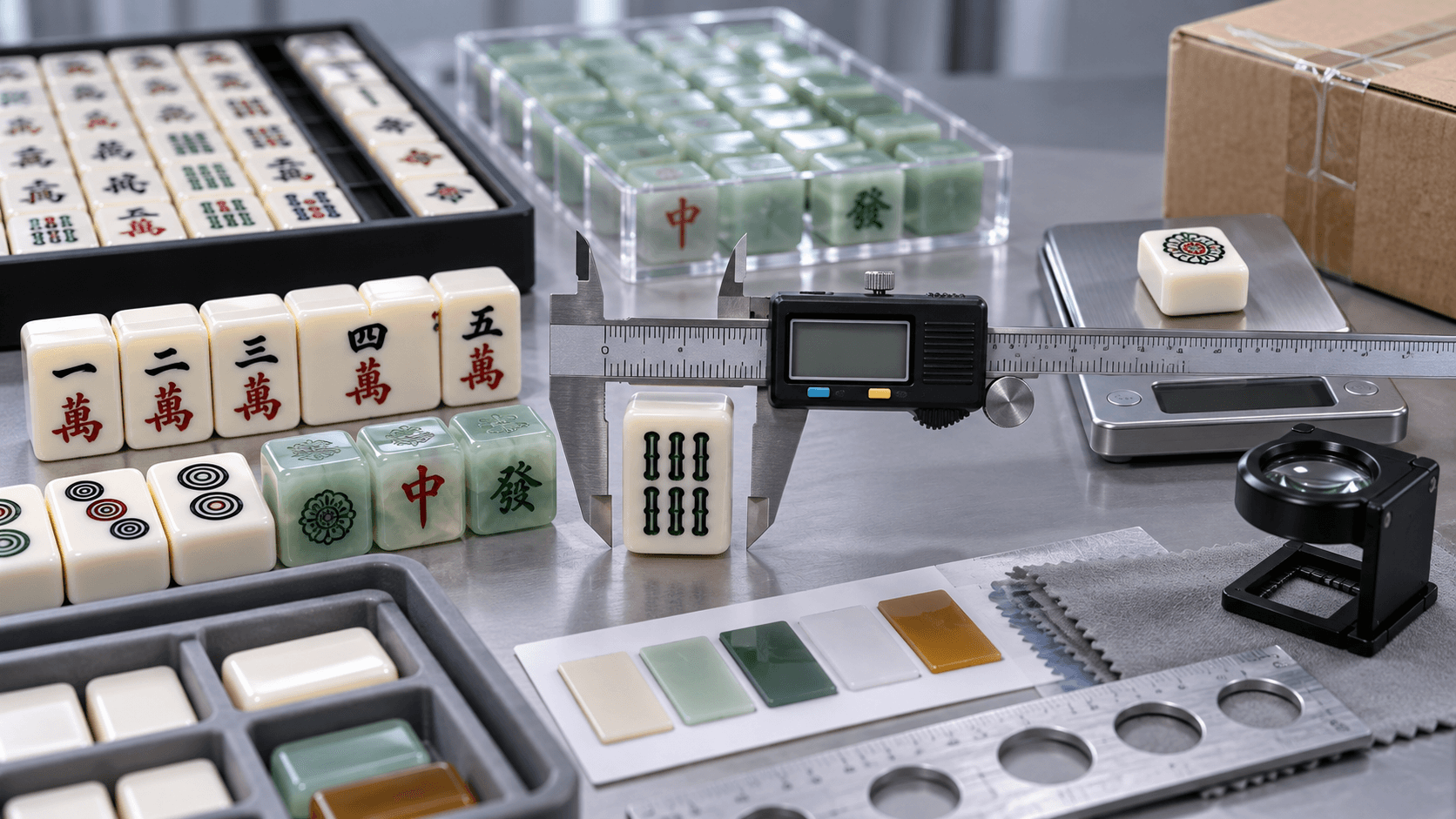
Look at tile legibility, edges, surface finish, weight and handling, rack fit, pusher function, mat behavior, case organization, component count, and customer-facing copy. Pack and unpack the set. If it will ship through a parcel network, consider whether the internal protection and outer packaging suit that route.
Record approved details in writing. Photos are helpful, but they do not replace dimensions, material descriptions, artwork versions, color references, component counts, and packaging specifications.
Inspection points that matter for wholesale orders
Set completeness
Verify the correct tile faces and quantities, jokers or special tiles, dice, racks, pushers, printed materials, and other listed components. Counting errors are especially costly because the problem may not appear until a customer begins playing.
Visual consistency
Review color, transparency, print or engraving placement, surface marks, edge quality, and how matching items look together. An accessory that is technically acceptable can still feel off-brand beside the tiles.
Packaging and identification
Check inserts, labels, barcodes, warnings where applicable, carton marks, product codes, and the quantity per carton. A distributor needs to receive and identify goods without opening every retail box.
Approved-sample comparison
Specify which sample and files form the reference. If the factory and buyer are comparing against different versions, inspection becomes an argument rather than a control process.
Plan replenishment before the first purchase order
Before placing the first order, ask an unfashionable but valuable question: “What will we need to send you when this sells out?” Keep the final codes, artwork, color reference, packaging file, and approved sample tied together. Also ask whether a special color or accessory is likely to remain available.
Clean records make a mahjong wholesale reorder much less fragile. If a material or box component later becomes unavailable, the supplier should flag the change and provide a sample or clear comparison. The warehouse door is a poor place to learn that a substitution was made.
Where ABC Mahjong fits
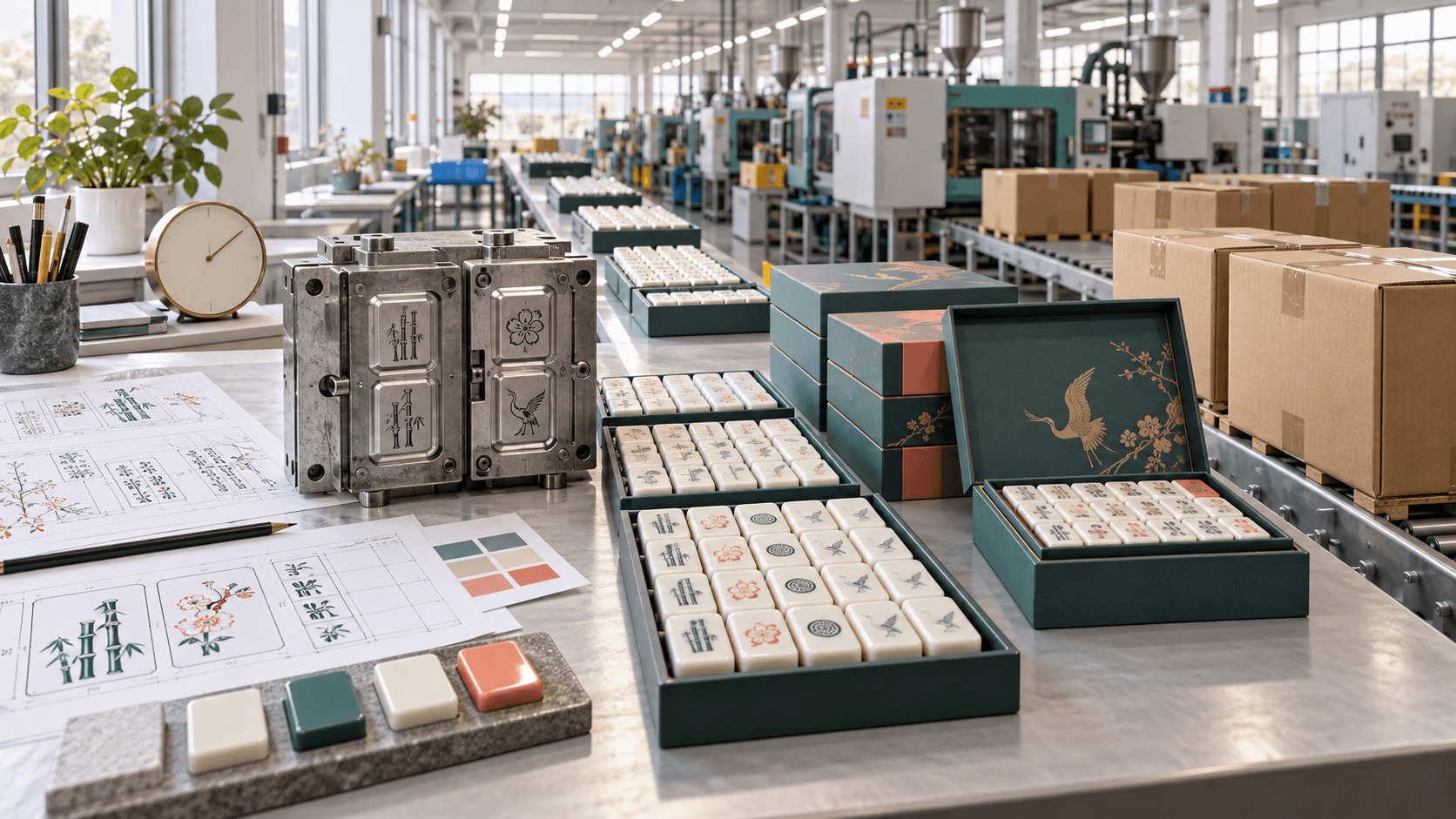
ABC Mahjong’s current range includes acrylic tiles, racks, pushers, cases, dice, mats, rulebooks, packaging, and related parts. The product catalog is the quickest place to see what is already available. For branded colors, artwork, molds, labels, or a coordinated collection, the details sit under the OEM/ODM service.
There is no single MOQ or timetable that honestly describes all of those combinations. A quote becomes more precise when the inquiry names the quantities for each SKU, the destination, the retail pack, and exactly how much branding is required.
FAQ
Can I combine Mahjong sets and accessories in one wholesale inquiry?
Yes. Put the sets and accessories on one list, but show a quantity beside every line. Some pieces may share a color, carton, or shipping plan; others may have a separate production minimum. That is what the quotation should make clear.
Is wholesale the same as private label?
No. A wholesale order may use an existing product exactly as offered. Private label work adds your identity and can extend from a simple label to new artwork, packaging, or product development.
Can I order samples before a bulk order?
Usually, but “sample” needs a definition. An existing item can show current workmanship. A custom sample should be linked to the artwork, color, accessories, and packaging you intend to approve for production.
What information is needed for wholesale pricing?
Start with product type and quantity by SKU. Add the sales market, branding, retail packaging, destination, required date, and any labels or documents. Reference images help when the product direction is still open.
How can a retailer reduce first-order inventory risk?
Keep the assortment tight, find out how the minimum applies to each design, and test the complete packed sample. Add colors and variants after customers show you where the demand sits.
What should be checked before final payment or shipment?
Go back to the purchase order and approved sample. Confirm the inspection result, complete contents, artwork, labels, carton count, shipping marks, documents, and any open commercial point before the goods leave.
Make the RFQ comparable
A useful mahjong wholesale RFQ is not long; it is complete. Put the assortment, line-by-line quantities, customization, packaging, destination, and timing in one document. You will get fewer assumptions in return, and competing offers will be much easier to place side by side.