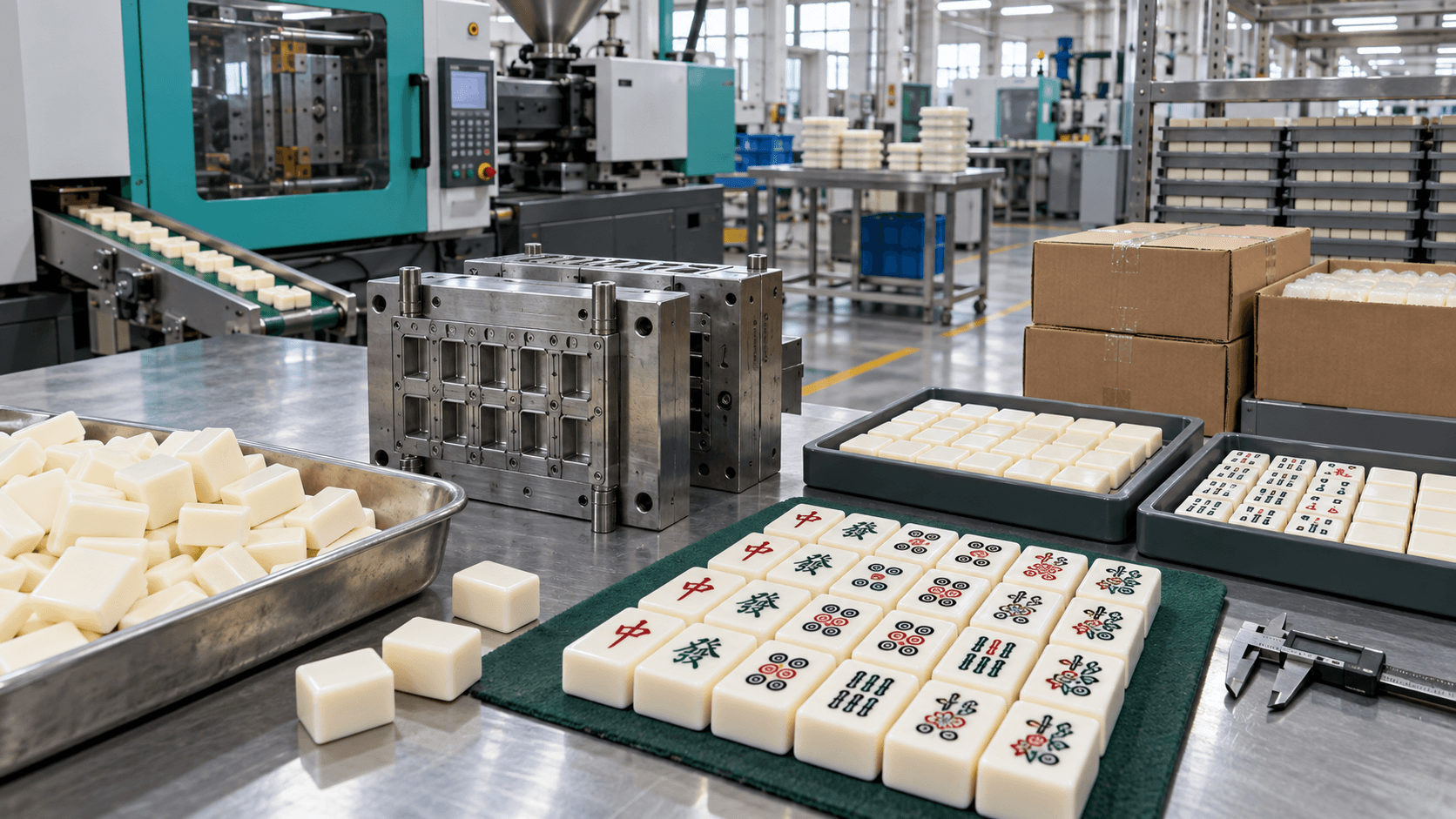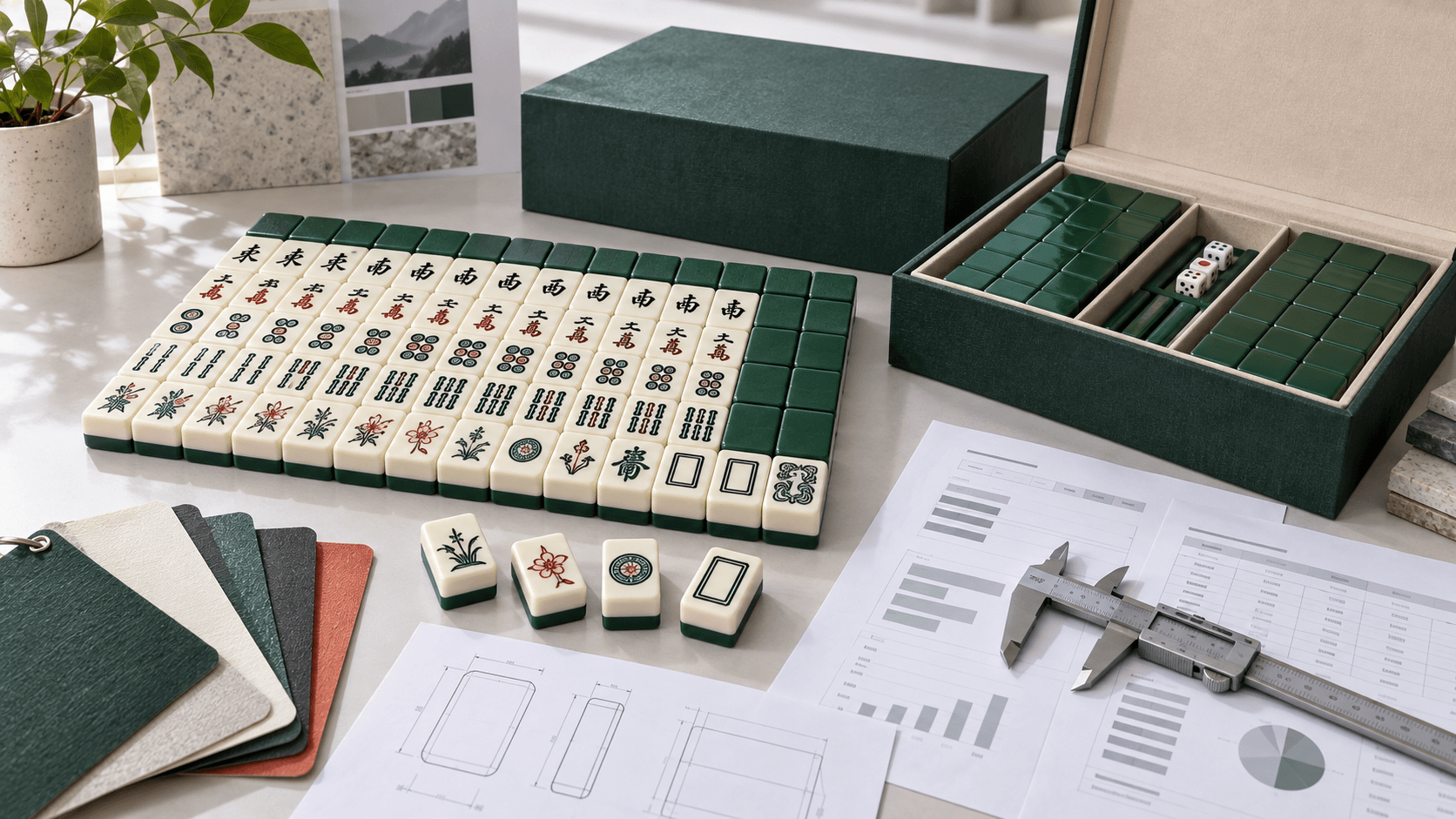

Mahjong tile manufacturing cost is a stack of decisions, not a single material number. The useful question is what each quoted amount includes, which assumptions can move it, and which quality or packaging choices protect the buyer's margin after the goods arrive.
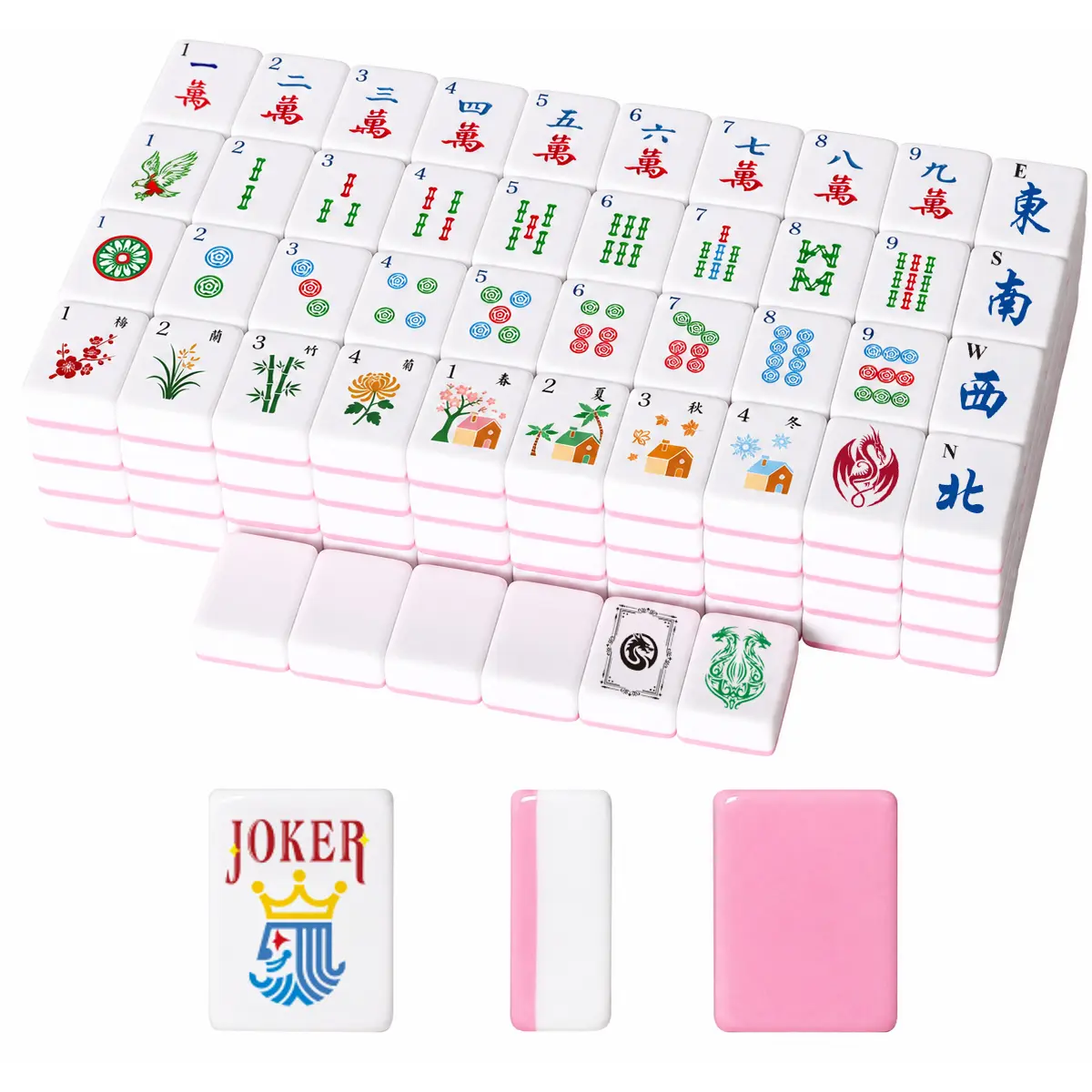
Start with the cost object
Before asking for a price, decide what is being priced. Is it one complete set, a run of replacement tiles, a decorated component, or a multi-SKU collection? Define the market format, tile count, accessories, packaging level, and quantity by SKU. A quote for 144 plain tiles cannot be compared with a quote for a retail-ready set containing racks, a case, an insert, and custom cartons.
Use a one-page cost brief. Mark every item as required, optional, or undecided. This simple status prevents an attractive low number from quietly excluding the work your customer will expect.
Read a quote from the inside out
Use mahjong tile manufacturing cost as a decision model
When a buyer asks for a lower number, point to the layer that can change: construction, decoration, accessories, packaging, inspection, or logistics. This keeps the conversation practical and protects the product promise.
| Cost layer | What can change it | Evidence to request |
|---|---|---|
| Tile construction | Material, dimensions, weight, finish, mold and scrap allowance | Dimensioned sample and material description |
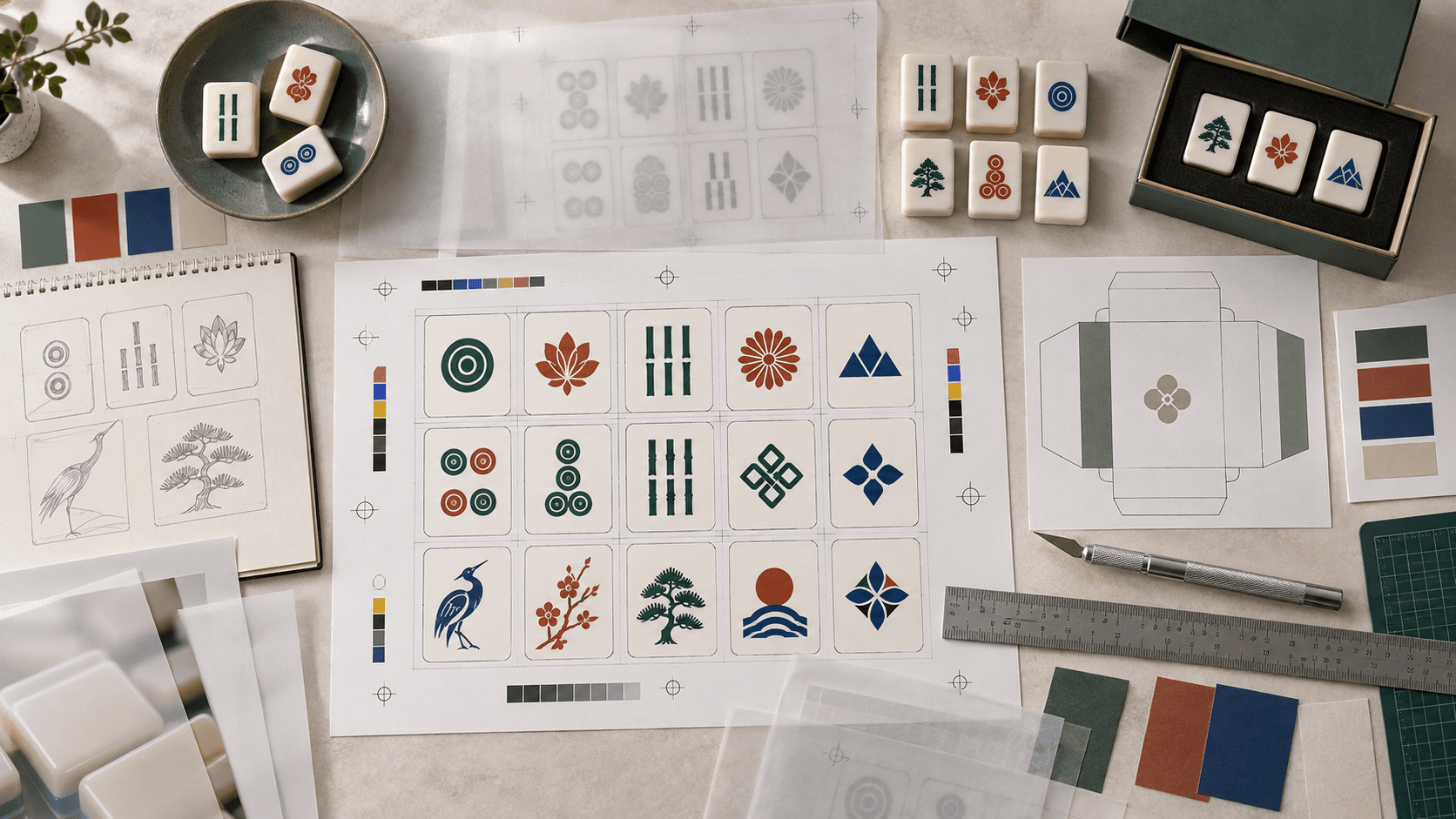
| Decoration | Face count, colors, print or engraving process, revisions | Proof, artwork index and process sample |
| Accessories | Racks, pushers, dice, mat, manual, case and compatibility | Component list and fit photographs |
| Packaging | Box structure, insert, labels, barcode, carton and packing labor | Packed sample, dieline and carton plan |
| Quality and logistics | Inspection point, rework policy, freight, duties and destination | Inspection scope and freight assumptions |
Ask the supplier to separate one-time items from recurring unit costs. Tooling, engineering, color references, and sample charges should not be buried in a unit price that will be misunderstood during a reorder.
Material is only one part of tile economics
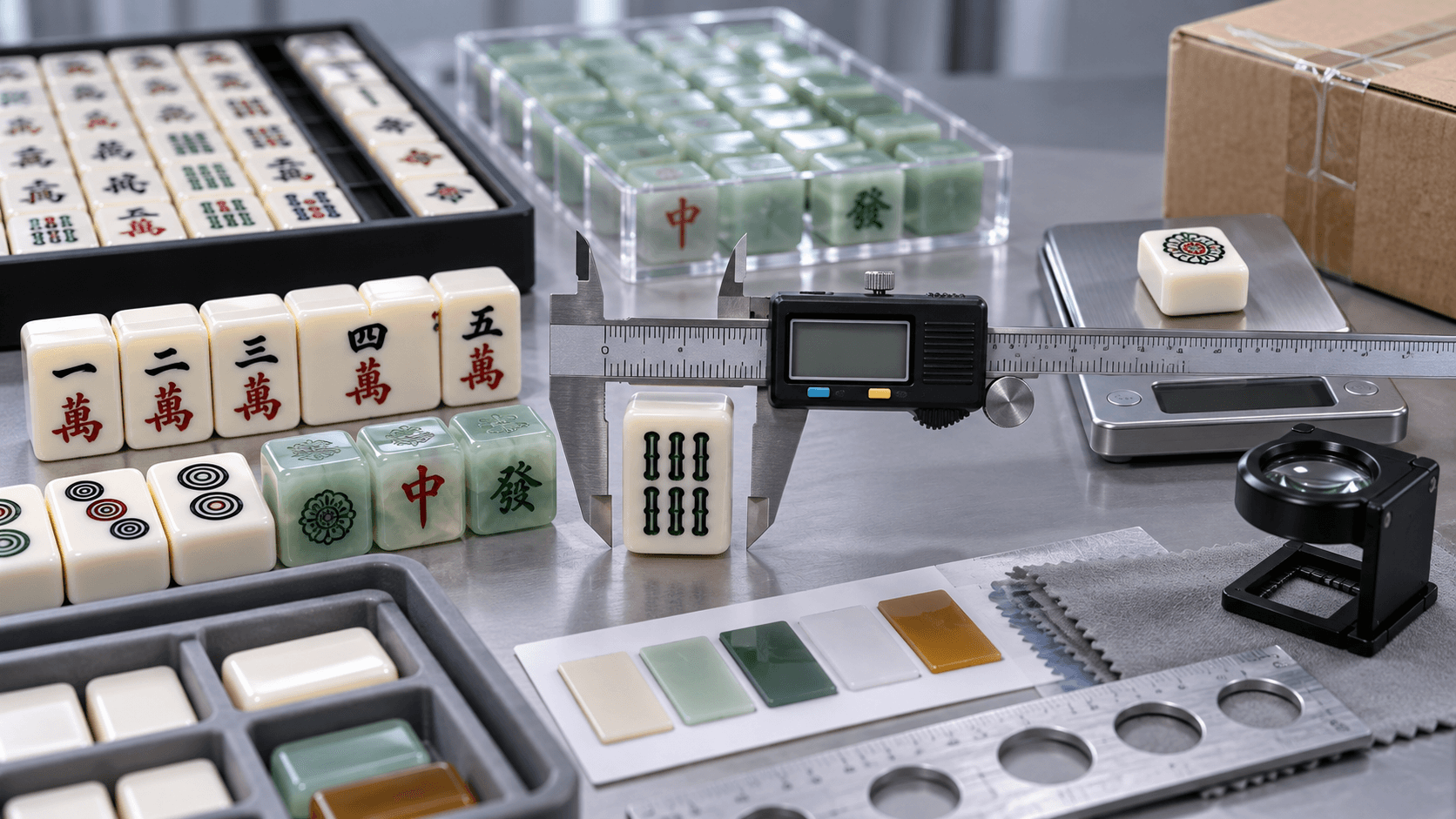
Acrylic can support clear, layered, glitter, or saturated visual directions, but the buyer still needs to specify clarity, color, edge finish, and decoration method. Other constructions may offer a different feel or production route. The best choice depends on the customer promise, not on a generic “premium” label.
Request a physical comparison when material changes the visual result. Check several pieces for variation, and ask whether the proposed sample uses the same substrate, finishing, and decoration operation as production. A screen render cannot settle those questions.
Tooling and artwork create different cost curves
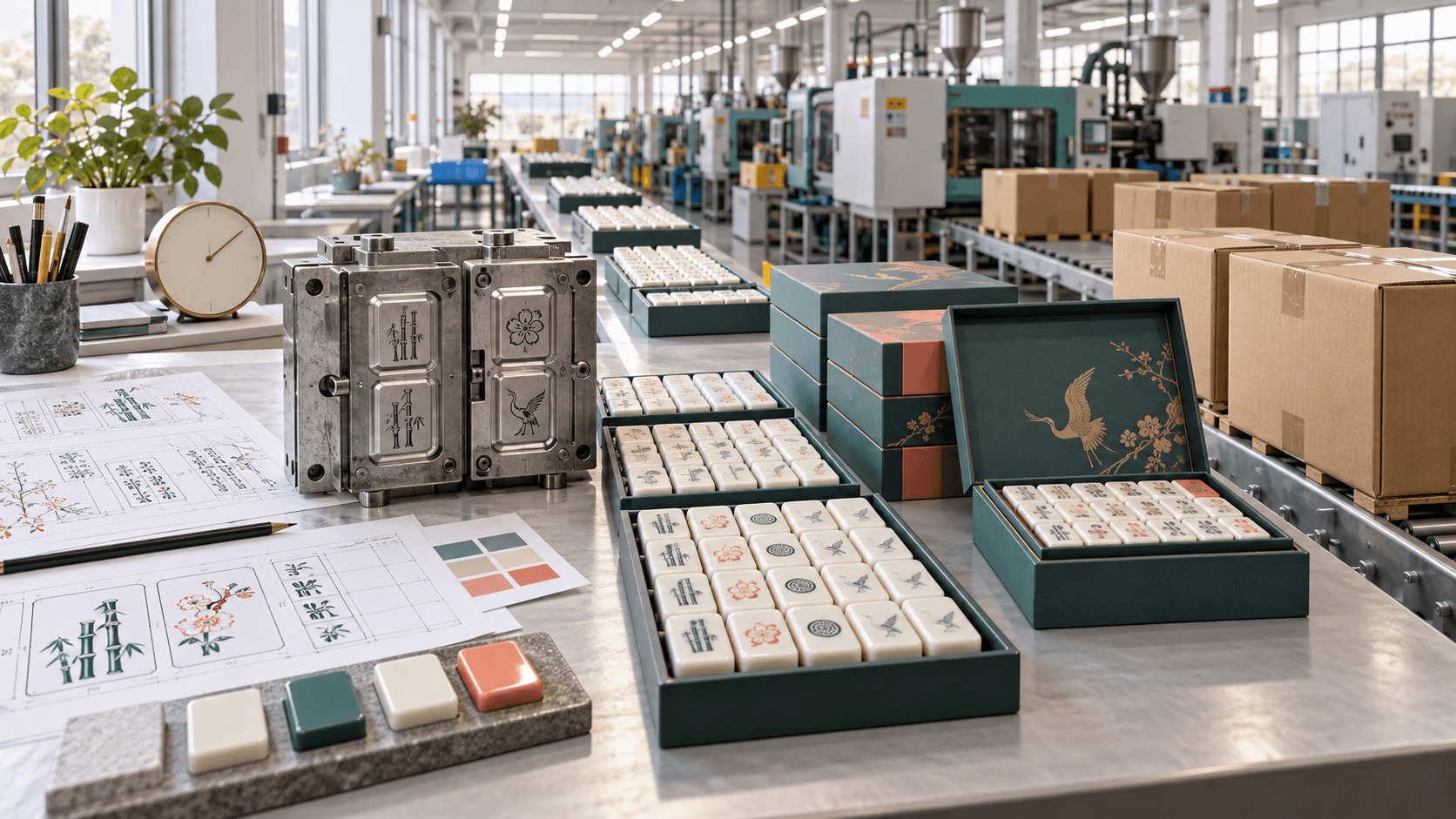
New geometry can require engineering review, molds, trials, and a dimensional sample. Artwork can add file preparation, proofs, color matching, setup, and rejected-piece risk. They should be shown as different workstreams because changing a logo is not the same commercial event as changing tile thickness.
Keep a revision allowance. If the buyer expects several art rounds or multiple colorways, ask for the included number and the charge for additional work. The cost of a controlled extra proof is easier to manage than a late production correction.
Volume affects more than the unit price
Quantity can change material purchasing, machine setup, labor efficiency, packaging runs, inspection sampling, and freight utilization. A small pilot may carry higher per-unit setup costs while reducing inventory exposure. A larger run may reduce unit cost but increase cash tied up in stock and the cost of a wrong specification.
Ask for a stepped quotation using the same specification. Keep tooling and sample assumptions constant so the volume comparison shows a real curve rather than a different product at each quantity.
| Volume question | Why it matters | Buyer decision |
|---|---|---|
| One SKU or several? | Shared components may lower setup while unique artwork adds work | Choose a core SKU and define variants |
| Pilot or launch run? | Cash, storage, and correction exposure are different | Set a learning goal for the first batch |
| Reorder expectation? | Files, materials and capacity may be reserved differently | Archive the release version and ask about continuity |
| Destination split? | Labels, cartons and freight can change by location | Issue the split before packing is finalized |
| Replacement allowance? | Service stock may need to be produced and stored | Budget a policy, not only the initial quantity |
Include packaging in the landed-cost conversation
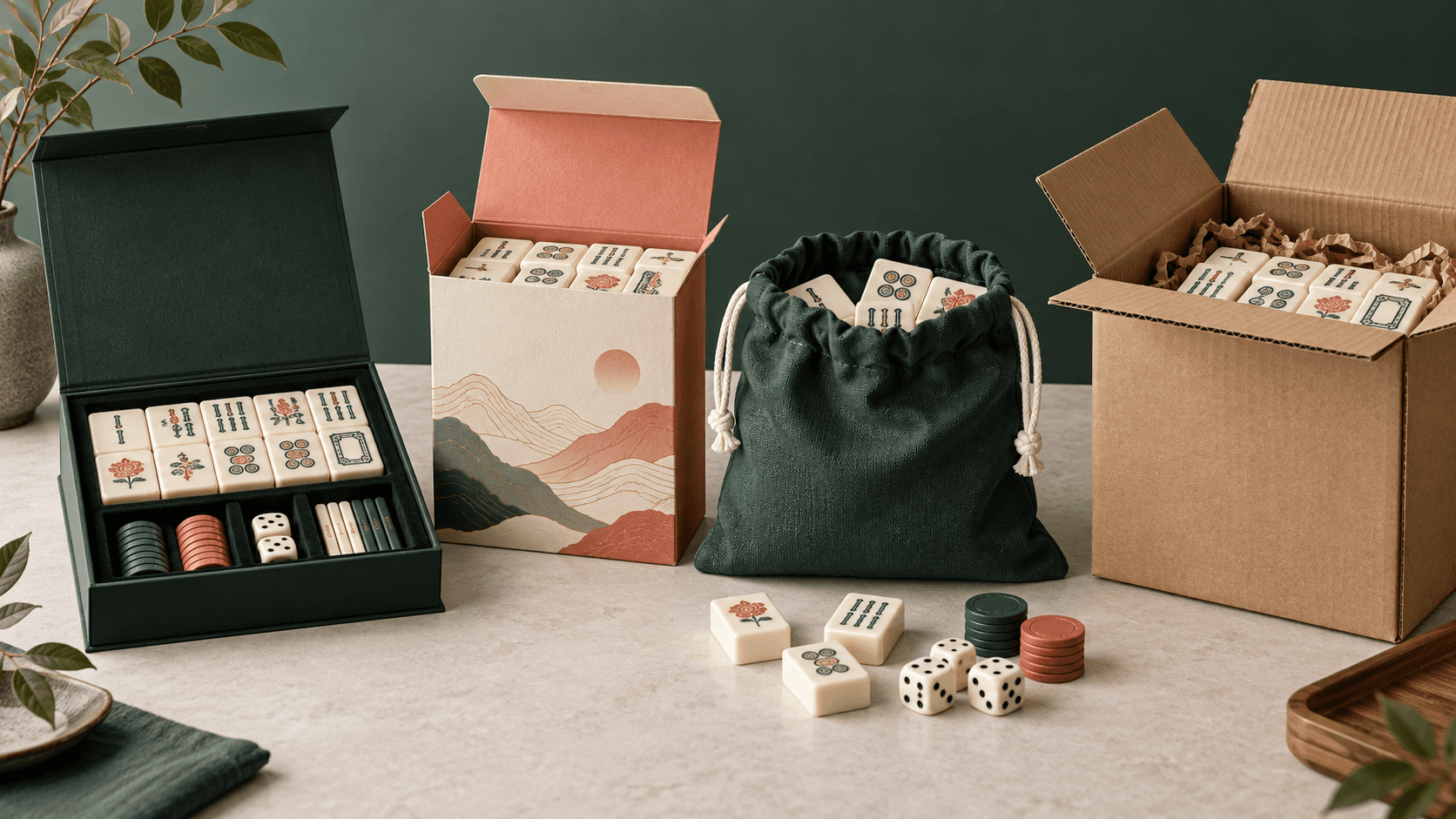
The retail box, insert, protective structure, outer carton, labels, and barcode can add substantial labor and shipping volume. A smaller product package may reduce freight but create a poor unboxing experience or damage risk. Ask for packed dimensions and weight after the physical configuration is real.
For channel-specific packaging, compare store, e-commerce, gift, and distribution requirements. A parcel exposed to repeated handling may need a different protection strategy than a palletized wholesale carton. Testing should match the actual route; a generic test name does not substitute for a defined hazard and acceptance method.
Price quality work as protection
Quality control has a cost because it creates inspection time, records, and sometimes rework. It also protects the commercial result. Define count checks, artwork checks, surface checks, accessory fit, packing completeness, and carton verification. If a formal sampling plan is used, define defect classes and lot rules with qualified professionals; ISO's ISO 2859-1 overview describes AQL-indexed acceptance sampling for lot-by-lot inspection.
Ask whether inspection occurs before final packing, after packing, or at both points. Record what the supplier will do when a result is outside the agreed limit. A corrective-action path is part of the cost model because it determines who pays for sorting, rework, replacement, or a delayed shipment.
Compare commercial terms without hiding risk
Unit price, payment timing, freight, duties, currency movement, and quote validity all influence the buyer's exposure. Put the trade term and named place next to every comparison. Confirm what happens if the quantity changes, if a sample is revised, or if the destination split is altered.
Do not use an unsupported target cost as a promise. Instead, ask the factory to identify the three largest drivers and the lowest-risk ways to change them. A simpler insert, a stock case, or fewer early colorways may protect margin without weakening the product's central idea.
Model the cash impact of the first run
A unit quotation becomes commercially useful when it is connected to cash timing. Map the sample payment, tooling payment, production deposit, balance, freight, duties, and receiving costs against the date inventory can be sold. Include a reserve for inspection, replacements, and a small amount of packaging rework. This view can support a smaller pilot even when a larger run has a lower quoted unit price.
Also define the reorder trigger. A buyer who waits until every unit is sold may face a gap while artwork, materials, and production are repeated. Ask the supplier which released files and components can remain active, and record how long a quote or material assumption is expected to remain valid.
OEM, ODM, or a hybrid cost path?
OEM work may carry more buyer preparation and original artwork control. ODM work may start with an established construction but add configuration and selection decisions. A hybrid can use a proven tile body with custom faces, a new back, and branded packaging. The cost path follows the actual deliverables, so name each responsibility instead of relying on an acronym.
ABC Mahjong supports custom artwork, colors, molds, packaging, and coordinated accessories. Browse the custom Mahjong options and product categories to decide what should remain standard and what needs a project-specific quote.
Build a quote comparison sheet
- Scope and version: format, quantity, components, artwork and packaging
- One-time charges: tooling, engineering, setup, color references and samples
- Recurring charges: unit build, decoration, accessories, packing and cartons
- Quality scope: inspection point, records, defect classes and rework policy
- Logistics: packed data, trade term, freight estimate, duties and destination split
- Commercial assumptions: validity, payment milestones, change charges and reorder notes
FAQ
What is usually the biggest cost driver?
It depends on the brief. Quantity, tile construction, decoration complexity, tooling, packaging, and freight can each dominate in different projects.
Does a higher unit price mean better quality?
No. Quality depends on the released specification, process controls, materials, inspection, and evidence. A higher number without scope is not a quality guarantee.
Are sample charges refundable?
Policies vary. Ask whether sample fees are separate, credited against a production order, or affected by revisions and tooling.
How can a buyer compare two quotes fairly?
Normalize tile count, dimensions, artwork, accessories, packaging, inspection, quantity, trade term, and destination before comparing totals.
Should freight be included in the unit price?
Keep it visible as a separate line when possible. Separating factory and logistics costs makes changes and reorder planning clearer.
Can changing color lower cost?
Sometimes, but the effect depends on material, setup, minimum color run, and whether the change creates a new SKU. Ask for the actual cost and schedule effect.
What is a tooling charge paying for?
It may cover mold design, machining, trials, and related engineering. Confirm ownership, maintenance, reuse, and what the charge excludes.
How should packaging cost be tested?
Use a packed physical sample with the actual product and accessories. Review fit, protection, labels, carton data, and the distribution route.
What if a supplier will not separate costs?
Ask for a scope statement and explicit exclusions at minimum. If assumptions remain hidden, treat the quote as difficult to compare.
When should the buyer request a refreshed quote?
Refresh it after changes to quantity, material, artwork, packaging, destination, trade term, or approval scope. Keep the old version for traceability.
Turn a cost question into a usable brief
ABC Mahjong works with B2B buyers on product configuration, custom development, artwork, samples, packaging, and coordinated accessories. Read about the company and send the current bill of materials through the contact page. A project-specific review will make mahjong tile manufacturing cost easier to understand, compare, and manage.