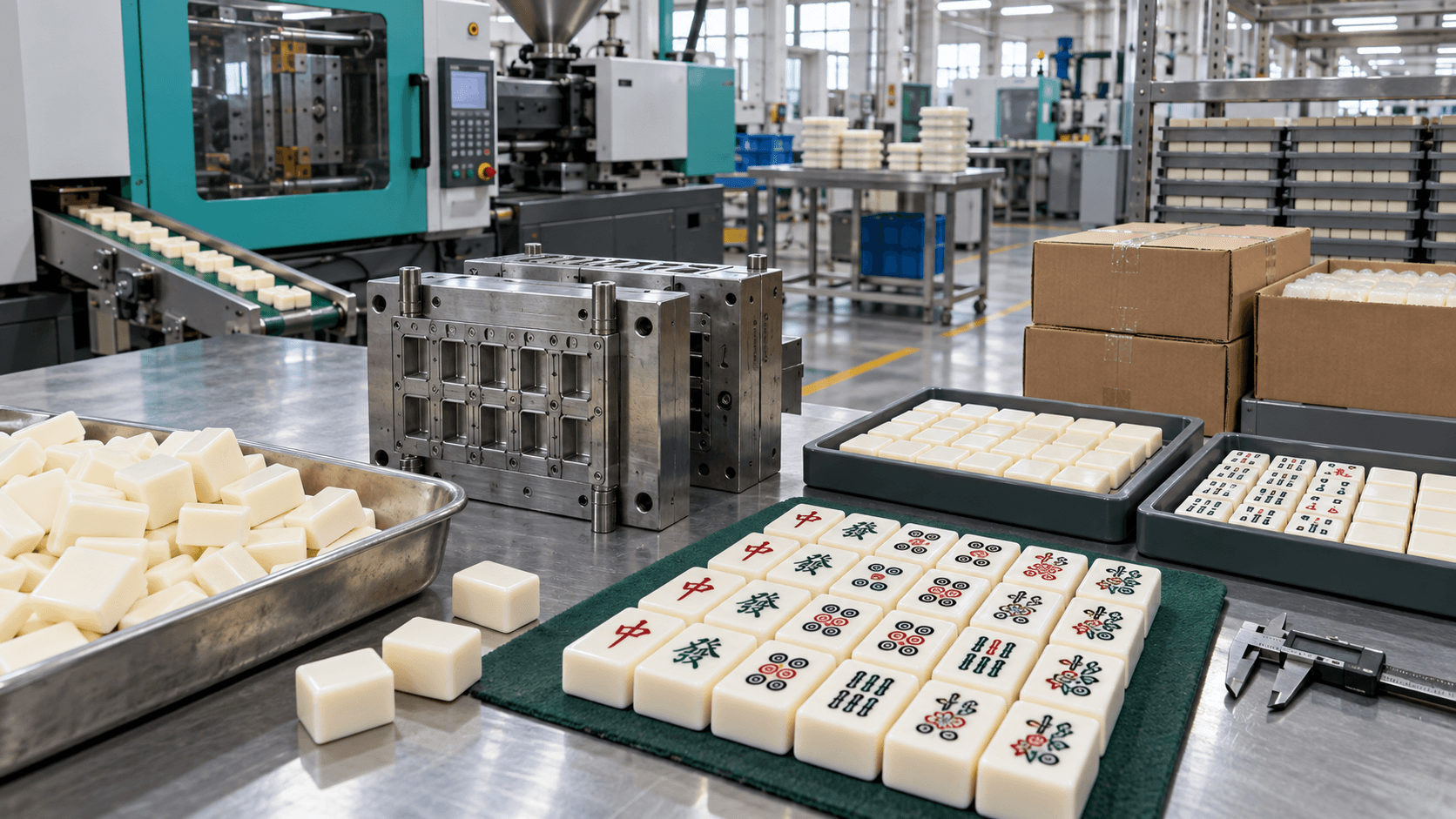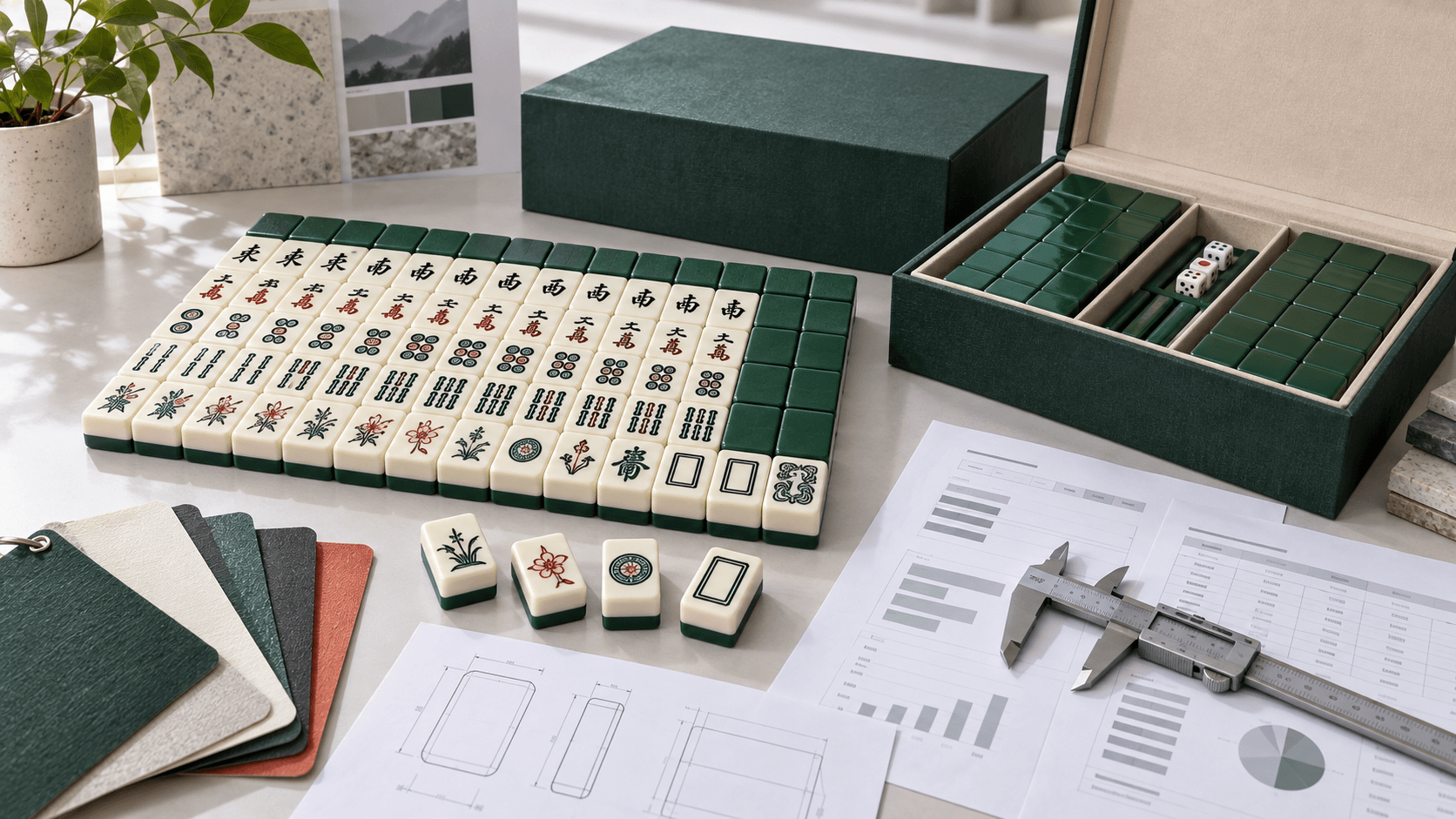

custom mahjong tile mold decisions should begin with the object a buyer intends to sell, not with a quote for steel. Geometry, tile format, artwork area, stacking behavior, and the expected reorder all influence whether a tool will remain useful after the first run.
Start with the commercial job
Write down who will use the set, which regional rules it supports, how many tiles belong in the saleable configuration, and where the set will be stored. A travel set may need a smaller footprint than a club product. A premium gift set may give more space to edge feel and case presentation. These choices affect the tile envelope before a toolmaker draws a cavity.
Ask the purchasing team to freeze the target quantity, expected repeat orders, destination, and launch window. A one-off promotional run can justify a different tooling strategy from a core line that will be replenished for years.
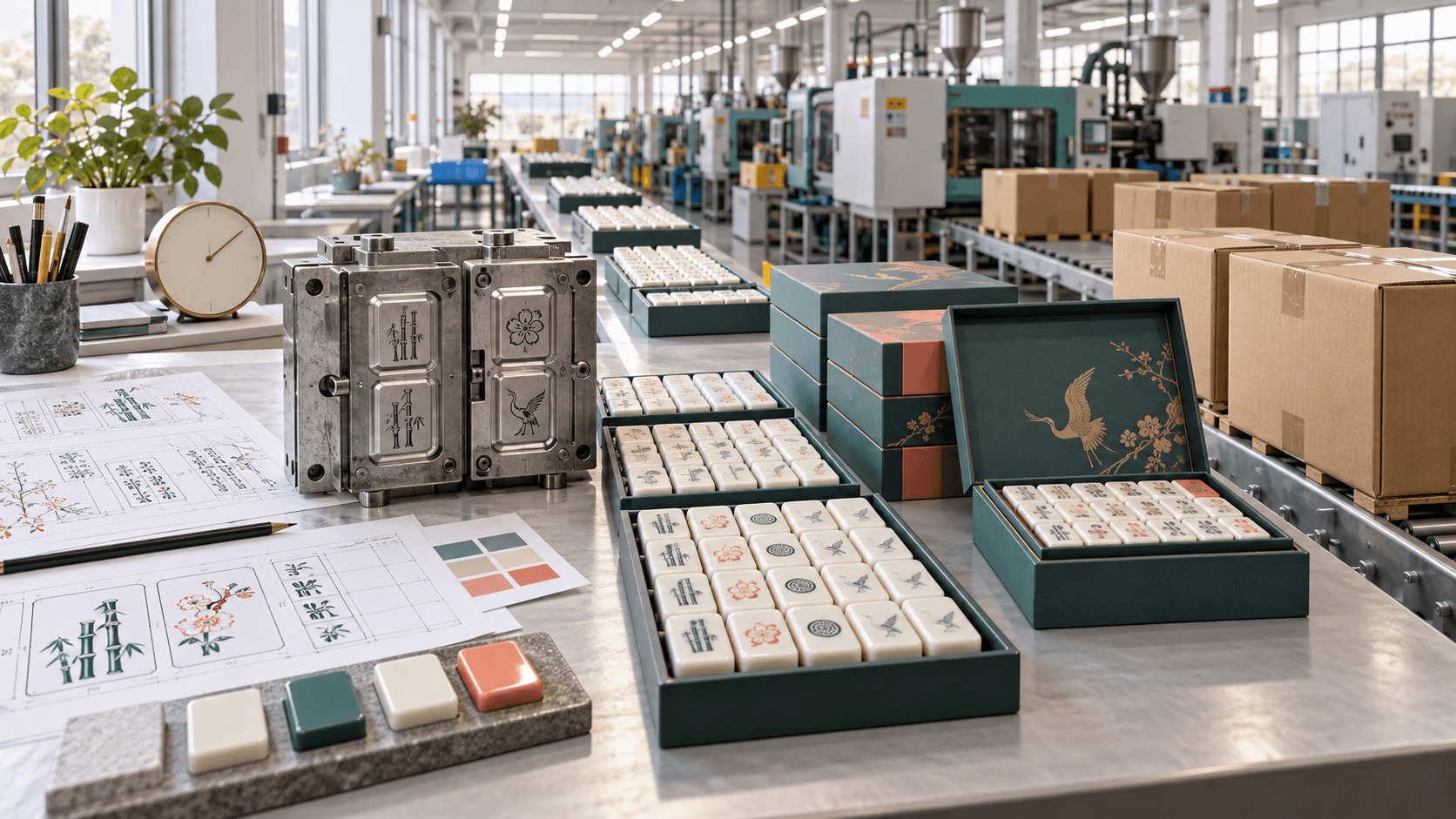
For a brand team, the phrase custom mahjong tile mold should refer to a controlled project object. It includes the drawing, the physical blank, the cavity plan, and the commercial assumptions that made the investment reasonable. Write those pieces down before a supplier orders steel. Otherwise a discussion about a rounded corner can quietly become a new thickness, a new insert, and a different freight cube. A short scope note also helps a second buyer understand why an existing tool can or cannot be reused. This is especially important when several collections share a visual language but need different rack clearances or case layouts.
What a tooling brief must name
| Brief item | Decision to record | Why it matters later |
|---|---|---|
| Tile format | Regional set, count, and special pieces | Prevents a cavity plan that cannot support the SKU |
| Envelope | Length, width, thickness, corner treatment | Controls rack fit, insert space, and handling feel |
| Artwork zones | Face, back, edge, and safe areas | Leaves room for print, engraving, or inlay |
| Material route | Resin, acrylic, melamine, or another agreed material | Changes shrinkage, finish, and process assumptions |
| Order horizon | Pilot only, seasonal, or repeat program | Supports a sensible cavity and maintenance plan |
The brief should also identify the approved reference sample, measurement units, and the person who can release a revision. A photograph can show intent, but a controlled sample or drawing must decide the production envelope.
Geometry comes before decoration
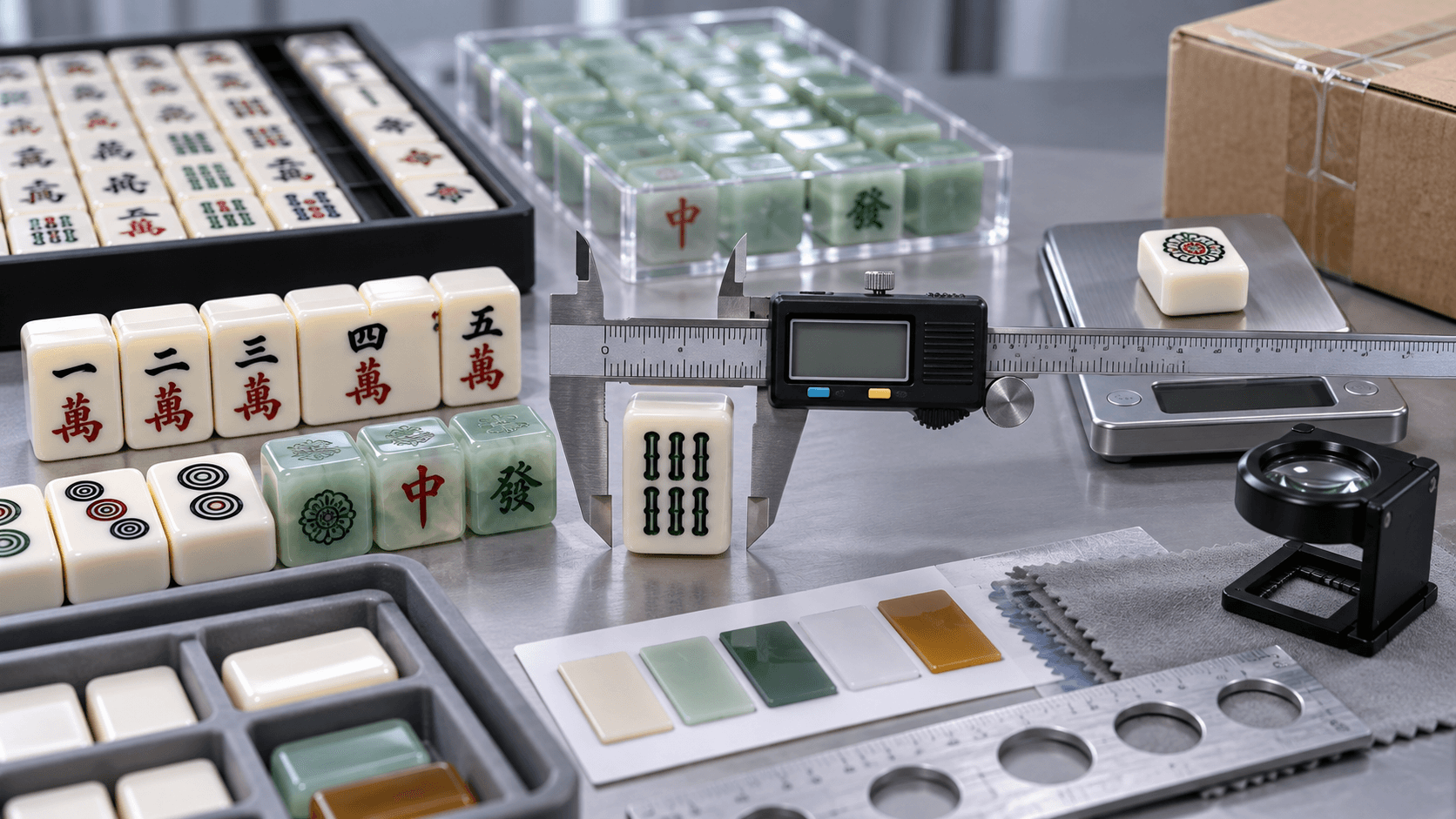
Confirm the working dimensions with a plain sample before adding face artwork. Measure more than one piece and note the method. Check whether corners are sharp, rounded, chamfered, or intentionally asymmetric. Record how the tile stands, stacks, and enters a rack. If the design includes a back recess or raised mark, show its depth and its relationship to the usable face.
Draft is a practical tooling question. A cavity may release cleanly in one direction and drag in another. Ask the mold engineer to identify the parting line, gate position, ejection approach, and any visible witness that could reach a customer-facing surface. These notes turn a promising render into a reviewable manufacturing proposal.
Choose cavities for the release plan
More cavities can improve output, but they also increase the number of positions that must remain balanced. Fewer cavities may make an early trial easier to inspect while extending the cycle for a large order. The right choice depends on demand, tolerance, machine limits, and how the supplier controls variation across the tool.
Ask for a cavity map with identifiers. During sampling, record which cavity produced each piece. When a surface or dimension drifts, traceability lets the team investigate a position instead of treating the whole tool as mysterious.
Trial samples answer different questions
| Sample stage | Question answered | Release gate |
|---|---|---|
| Geometry proof | Does the blank tile meet the envelope and handling brief? | Dimensions, stack, rack, and edge review |
| Process sample | Can the chosen material and finish be produced consistently? | Surface, shrinkage, marks, and color review |
| Decorated sample | Do faces, backs, and fills fit the approved art? | Identity, position, contrast, and wear check |
| Complete set | Does the final tile work with accessories and packaging? | Count, play, case, insert, and pack-out approval |
Do not ask one photograph to prove all four stages. Keep the sample ID, cavity or process note, date, and open questions beside every review. A rejection should explain whether the geometry, material, decoration, or complete-set interface failed.
Plan the material and finish together
Transparent and translucent bodies can reveal marks or internal color shifts that an opaque reference hides. Polished faces show scratches readily, while a matte texture can change the apparent depth of an engraved mark. State the finish on the same revision as the geometry, then check the proposed finish on production-equivalent thickness.
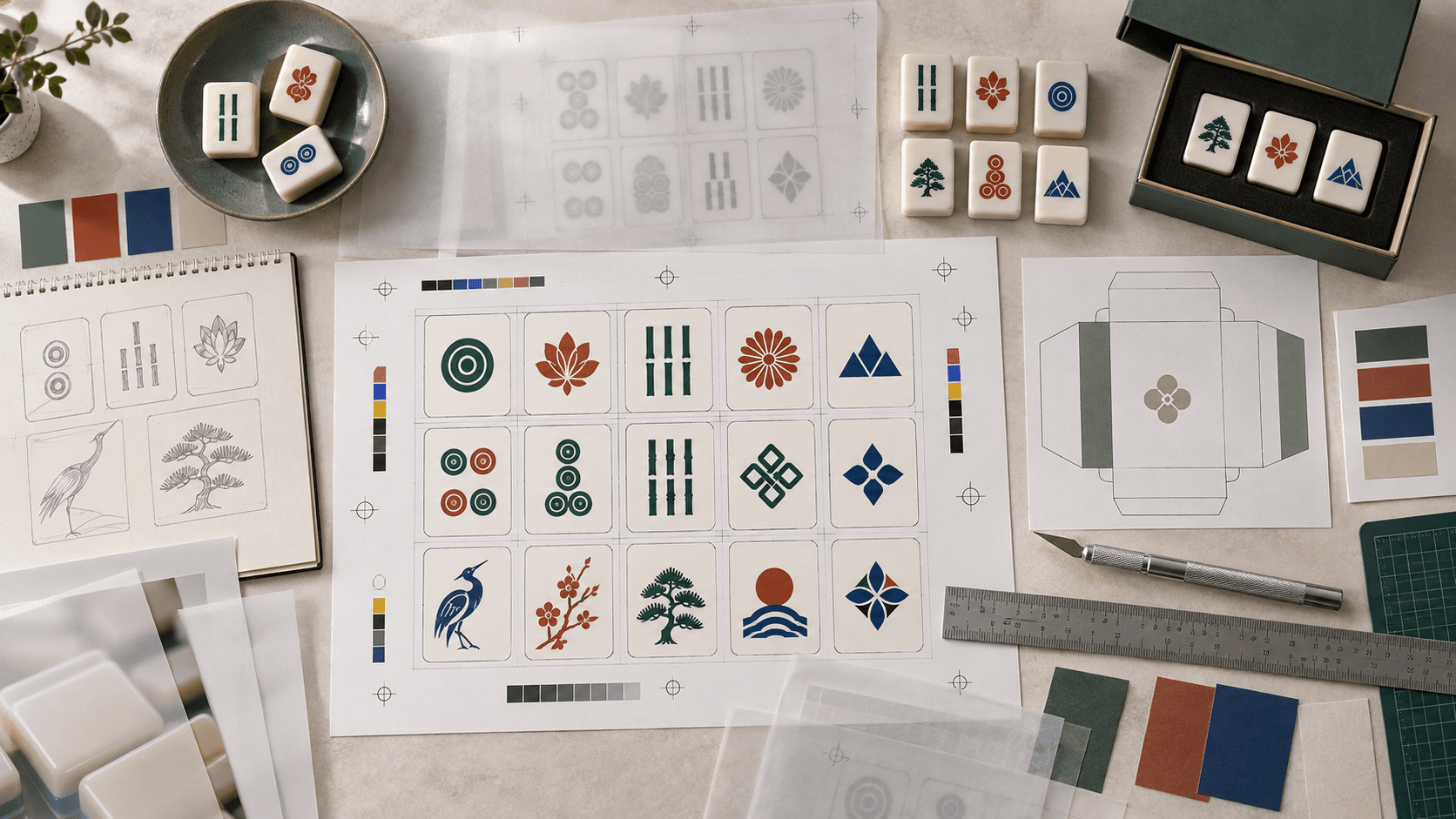
For decorated tiles, define which surface receives ink, paint, foil, or an insert. Note cure, wipe, masking, and handling steps when they affect the edge or back. A smooth face is not proof that the decoration will survive repeated shuffling; plan a practical handling trial and keep the result.
Use a controlled tooling review
ISO 1101 provides a framework for expressing geometrical specifications and tolerancing. The ISO overview is useful background for a buyer reviewing drawings with a qualified engineer, although a Mahjong project still needs product-specific limits and functional tests.
Review the drawing in a short meeting with design, sourcing, production, and quality. Mark each dimension as critical to fit, appearance, function, or information only. This prevents a long drawing from hiding the few characteristics that can stop a shipment.
Ownership and change control are commercial terms
Before payment, state who owns the tool, where it is stored, who may use it, and what happens if the program pauses. Record maintenance responsibility, replacement parts, and the evidence required before a tool is moved or modified.
Define a change route for tile size, back pattern, logo, cavity count, material, or finish. A new request may require a drawing revision, trial, price review, and a fresh sample. Keeping those effects visible protects both the buyer's launch date and the supplier's production plan.
Compare tooling approaches honestly
| Approach | Strength | Trade-off | Good fit |
|---|---|---|---|
| Adapt an established envelope | Faster learning and accessory compatibility | Less freedom for unusual geometry | New brand using a proven format |
| New single-purpose tool | Clear control of a distinctive shape | Higher learning and one-time cost | Signature product with repeat demand |
| Multi-cavity family tool | Several related sizes or variants | More complex balance and maintenance | Program with planned SKU breadth |
| Short-run process sample | Tests market response before full investment | May not represent final cycle economics | Limited launch or artwork validation |
Compare the total path: design time, tool charge, sample iterations, expected output, inspection burden, maintenance, and the cost of changing course. The cheapest quote can be expensive when an untested geometry reaches packaging.
Check risk before the first production order
- Confirm the sample can be measured with an agreed method.
- Check blank tiles in the real rack, insert, and case.
- Review cavity identification and retention of trial records.
- Separate a tooling change from a decoration correction.
- Set an approval deadline for each open drawing question.
- Keep the released file with the quotation and purchase order.
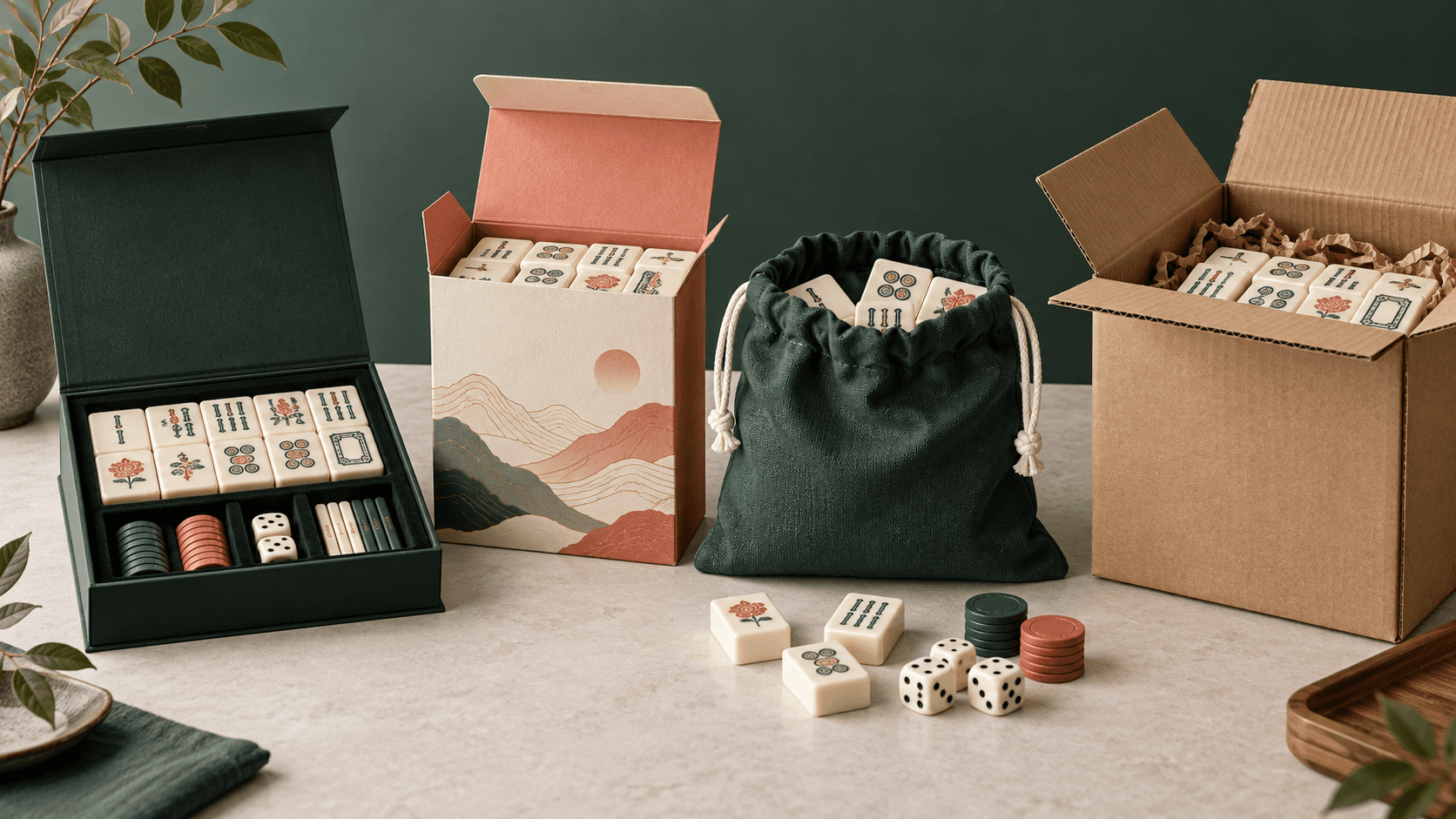
ABC Mahjong's custom Mahjong service can coordinate artwork, colors, molds, packaging, and accessories. Buyers can compare established products in the product range before deciding which dimensions should stay familiar and which should become a signature.
FAQ
Does every custom tile require a new mold?
No. A proven envelope may support new colors or artwork, while a new shape, recess, or special edge may require dedicated tooling. Confirm the physical change rather than assuming from a new graphic.
Who should approve the cavity drawing?
The buyer's product owner and the supplier's tooling or engineering owner should both be named. Quality and packaging reviewers may add checks where fit or protection depends on the geometry.
What dimensions matter most?
Prioritize dimensions that affect rack fit, stacking, insert clearance, artwork safe area, case closure, handling comfort, and the customer promise. Record units and measurement method beside each limit.
Can a 3D render release tooling?
A render communicates design intent but cannot establish shrinkage, surface finish, draft, or working fit. Use a dimensioned file and an approved physical stage before releasing the tool.
How many sample rounds are normal?
The number depends on the questions and the stability of the process. Separate geometry, material, decoration, and complete-set approvals so a single attractive sample does not hide an unresolved issue.
Should buyers pay the tooling charge upfront?
Commercial terms vary. The quote should state payment timing, ownership, storage, maintenance, reuse, and what happens if the project is paused or the drawing changes.
How can a buyer protect a reorder?
Keep the released drawing, cavity map, approved samples, material note, artwork index, inspection record, and change log together. Ask for notice before a tool or process changes.
What is a cavity map?
It identifies each position in a multi-cavity tool and links that position to sample or inspection evidence. The map helps trace a local defect to a tool location.
Do accessories need to be sampled with the tile?
Yes when dimensions affect a rack, pusher, insert, case, or pack-out. A blank tile that passes a drawing review can still fail a real interface.
Where can a brand request a tooling review?
Send the market format, target geometry, artwork status, quantity, accessories, destination, and sample questions through the supplier's structured inquiry channel.
Release a mold that supports the business
Read about ABC Mahjong and send the geometry brief through the contact page. A well-planned custom mahjong tile mold gives a B2B buyer a repeatable object, a traceable approval path, and a clearer decision about when custom tooling is commercially justified.