
What buyers usually mean by custom Mahjong
Custom Mahjong is one of those sourcing requests that sounds simple until someone has to turn it into a sellable product. Buyers may want a private-label game set for retail, a premium gift box for a resort or club, a travel-friendly family set, or a branded promotional item that feels more substantial than a deck of cards. On paper, it is just a tile game. In practice, the details decide whether the set looks polished, plays smoothly, and survives repeated handling.
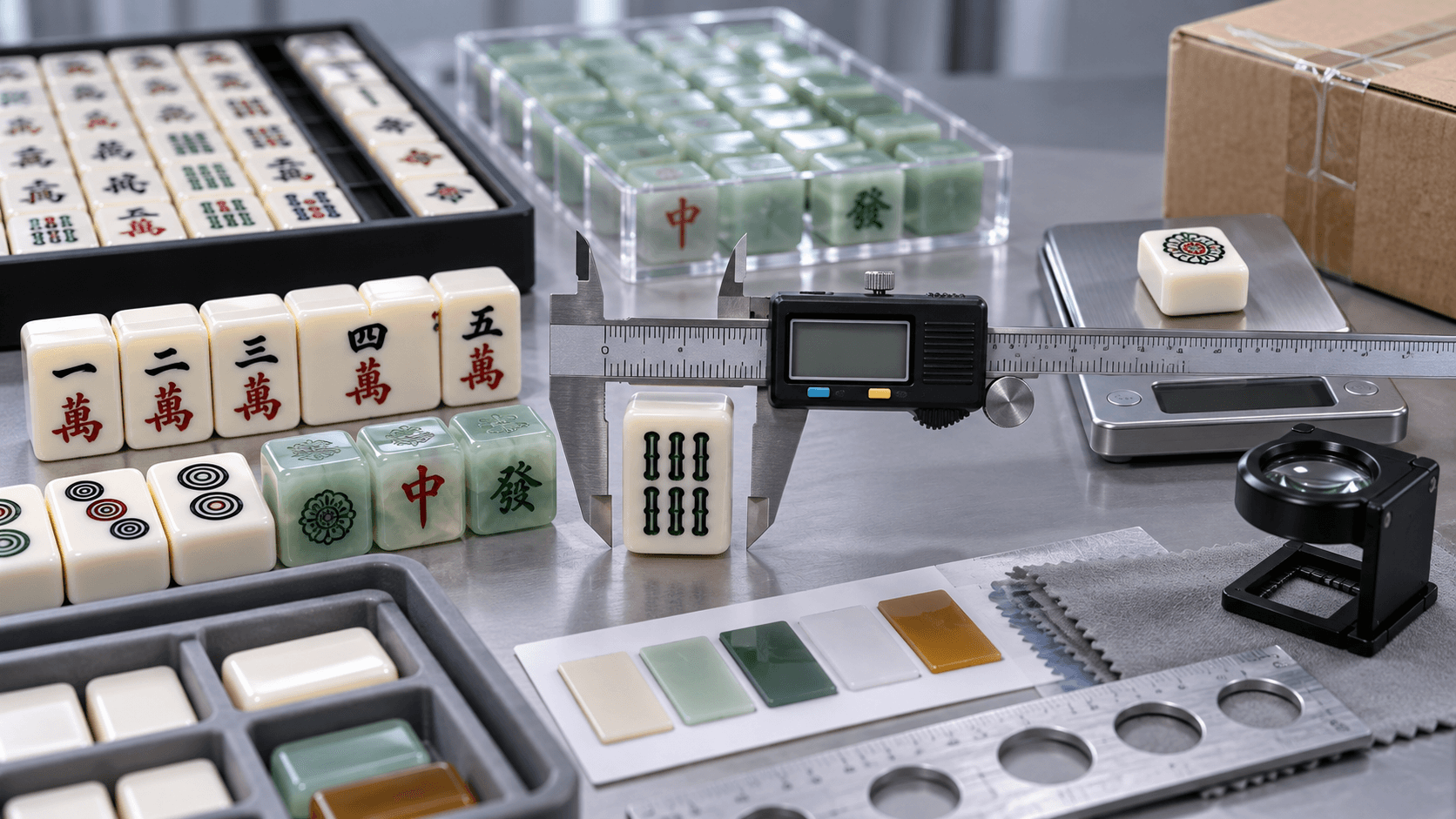
That matters because mahjong is judged with the hands as much as the eyes. The weight of the tiles, the finish on the surface, the legibility of the markings, and even the sound when tiles are shuffled all shape the user’s experience. A set that photographs well but feels awkward in play will not hold up in the market for long. For sourcing managers and product teams, the real decision is not “can we make it?” but “what kind of set are we making, for whom, and at what quality level?”
A quick look at the product type
The set described here appears to be a full Chinese-style mahjong game set with suit tiles, honor tiles, flower or season tiles, blank tiles, and at least one joker tile. Visually, the tiles have a glossy finish and a white face with pink side or border coloration. The pieces are thick, rectangular blocks with rounded edges, which is a common shape for consumer game sets because it is easier to handle and stack.
That visual profile suggests a product aimed at casual entertainment, gift retail, or game-room use rather than a bare-bones tournament package. It also hints at a manufacturing approach based on molded plastic or a resin-like material, though the exact material and process cannot be confirmed from the image alone. In sourcing, that kind of restraint matters. It is easy to assume a lot from a photo; it is wiser to specify what is visible and then build the rest into the brief.
Why customization changes the sourcing discussion
A standard mahjong set can be purchased as a commodity item. A custom mahjong set is a packaging, design, and product-development exercise.
Buyers often customize one or more of the following:
Tile faces and symbols
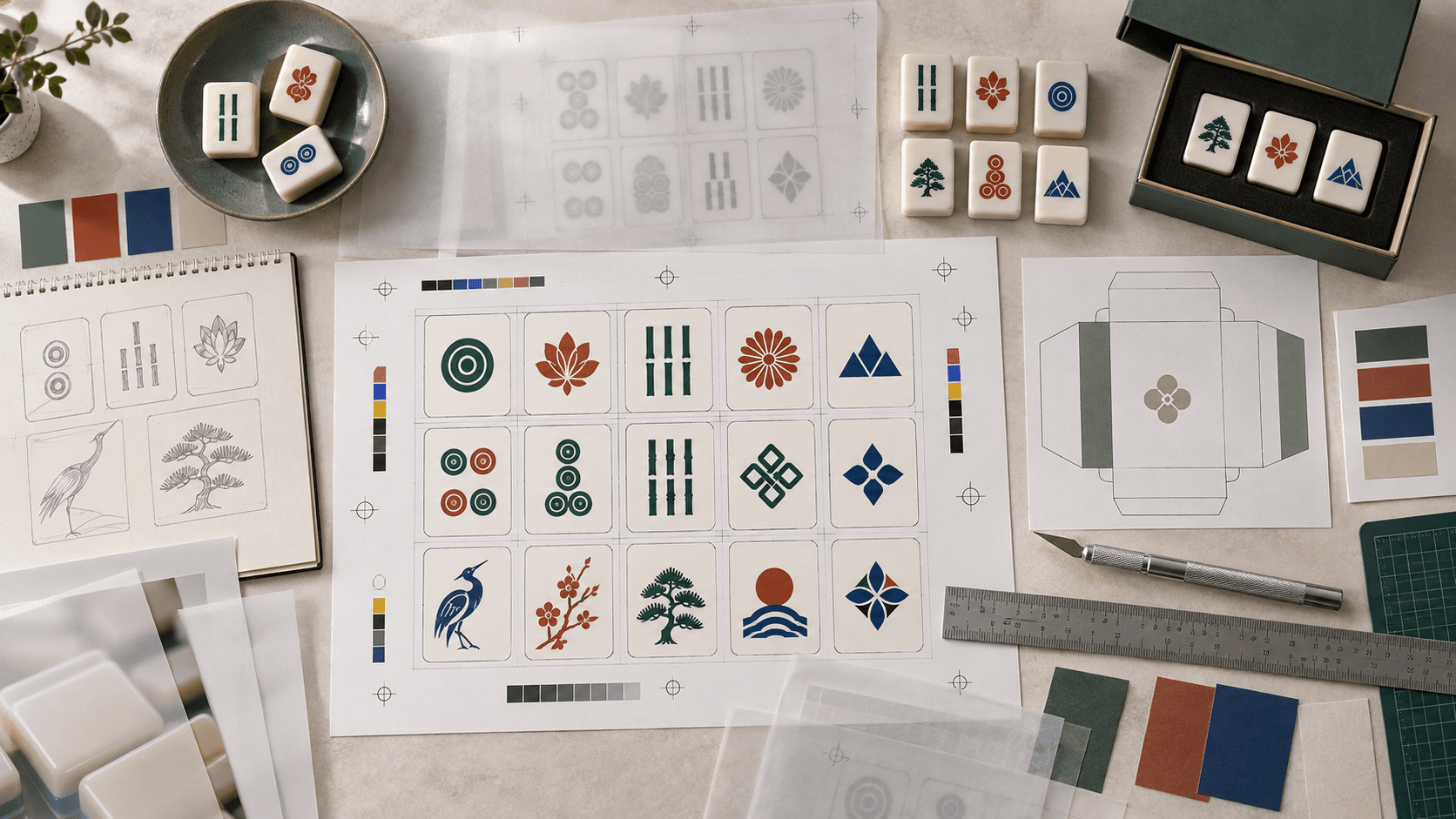
The face graphics may be changed for branding, regional play variants, gift themes, or simplified learning sets. Some buyers want traditional Chinese characters and suit symbols; others want cleaner, more contemporary markings that are easier for first-time players to read.
Color palette
The pink-and-white combination visible in this set is distinctive and immediately changes the product’s shelf appeal. Color is not a minor detail. It affects how premium the set looks, how quickly the tiles can be recognized, and whether the game leans classic, playful, or decorative.
Packaging and presentation
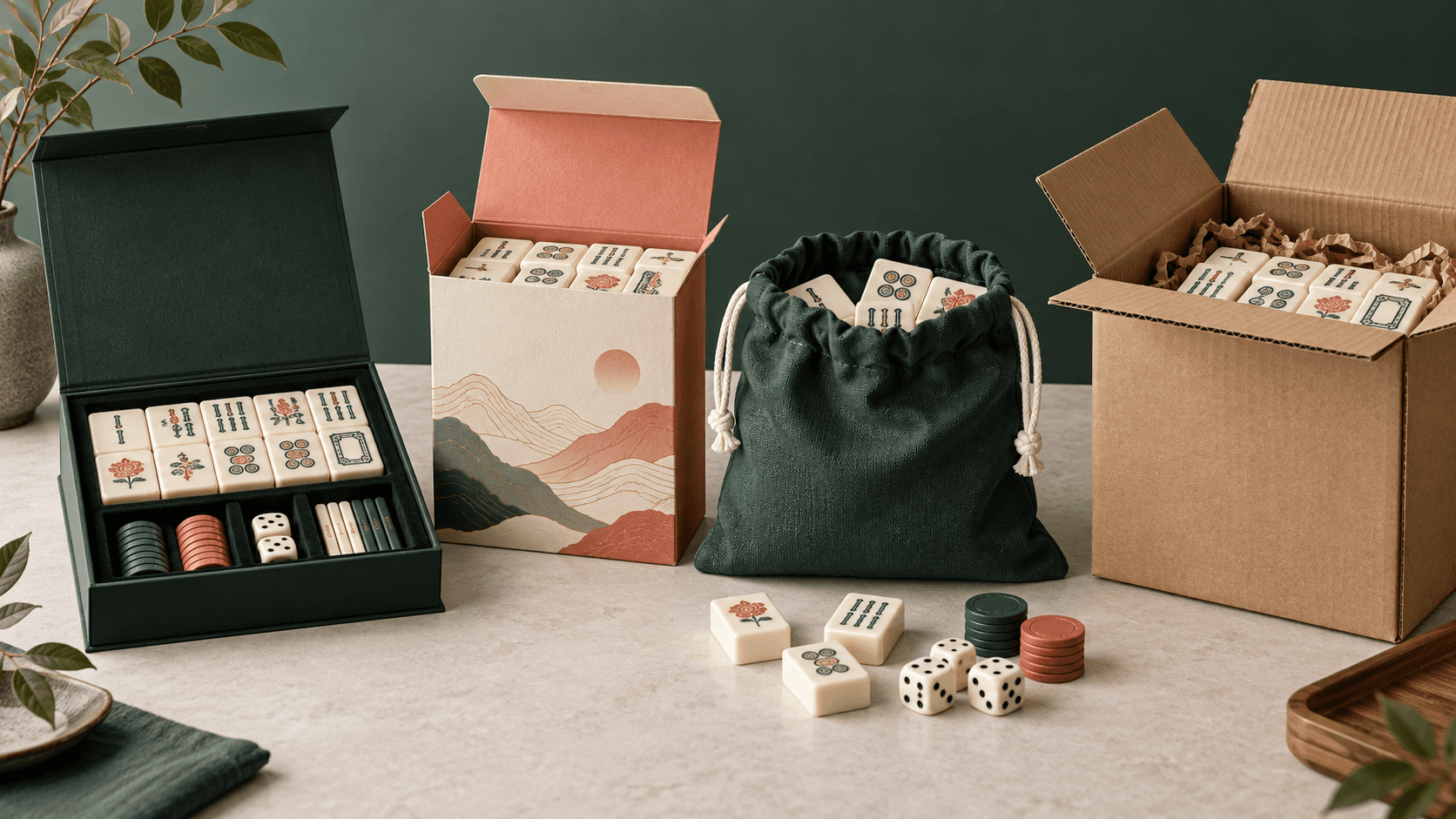
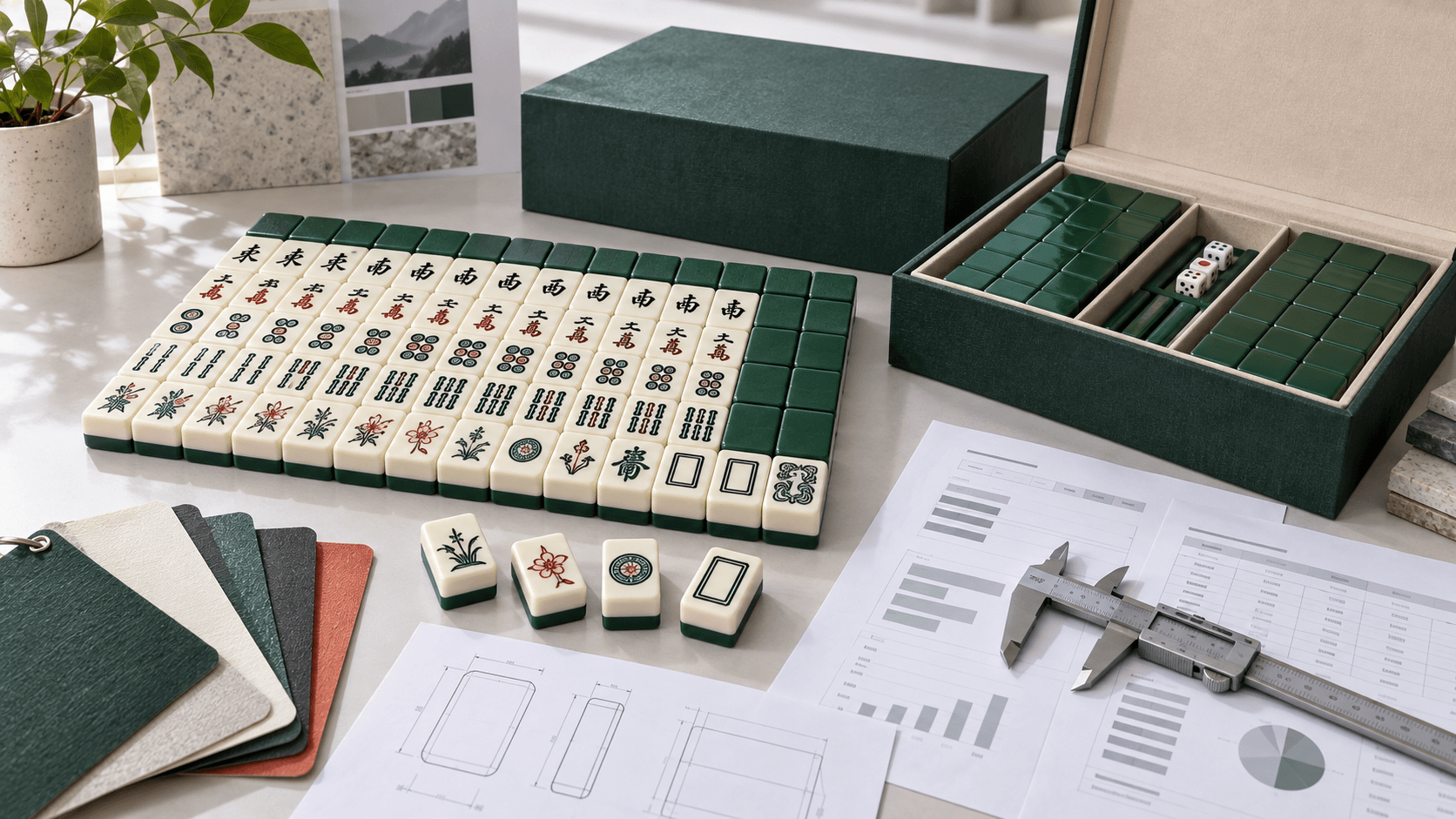
Even when the tiles themselves are simple, the box design can shift the entire market position. A compact case suggests travel use. A rigid gift box suggests retail or corporate gifting. A tray-based arrangement can make the set look more expensive without changing the core tile design very much.
Set composition
The visible layout includes multiple tile categories, but the exact count is not supplied. That is an important note for buyers: mahjong sets are not interchangeable just because they look similar. Tile count, regional rule variation, and the inclusion or exclusion of jokers, flowers, or blank tiles all need to be confirmed before tooling or packaging begins.
Material and manufacturing: what to ask before placing an order
The set appears to be made from a glossy molded material, likely plastic or a resin-like compound. That is common in consumer mahjong because it balances cost, repeatability, and visual clarity. But “plastic” is too broad to be useful in a purchase order.
A buyer should ask the supplier to define:
- Base material and any filler content
- Surface finish and print method for the symbols
- Whether the graphics are molded, printed, or applied
- Edge treatment and rounding consistency
- Color stability across the full batch
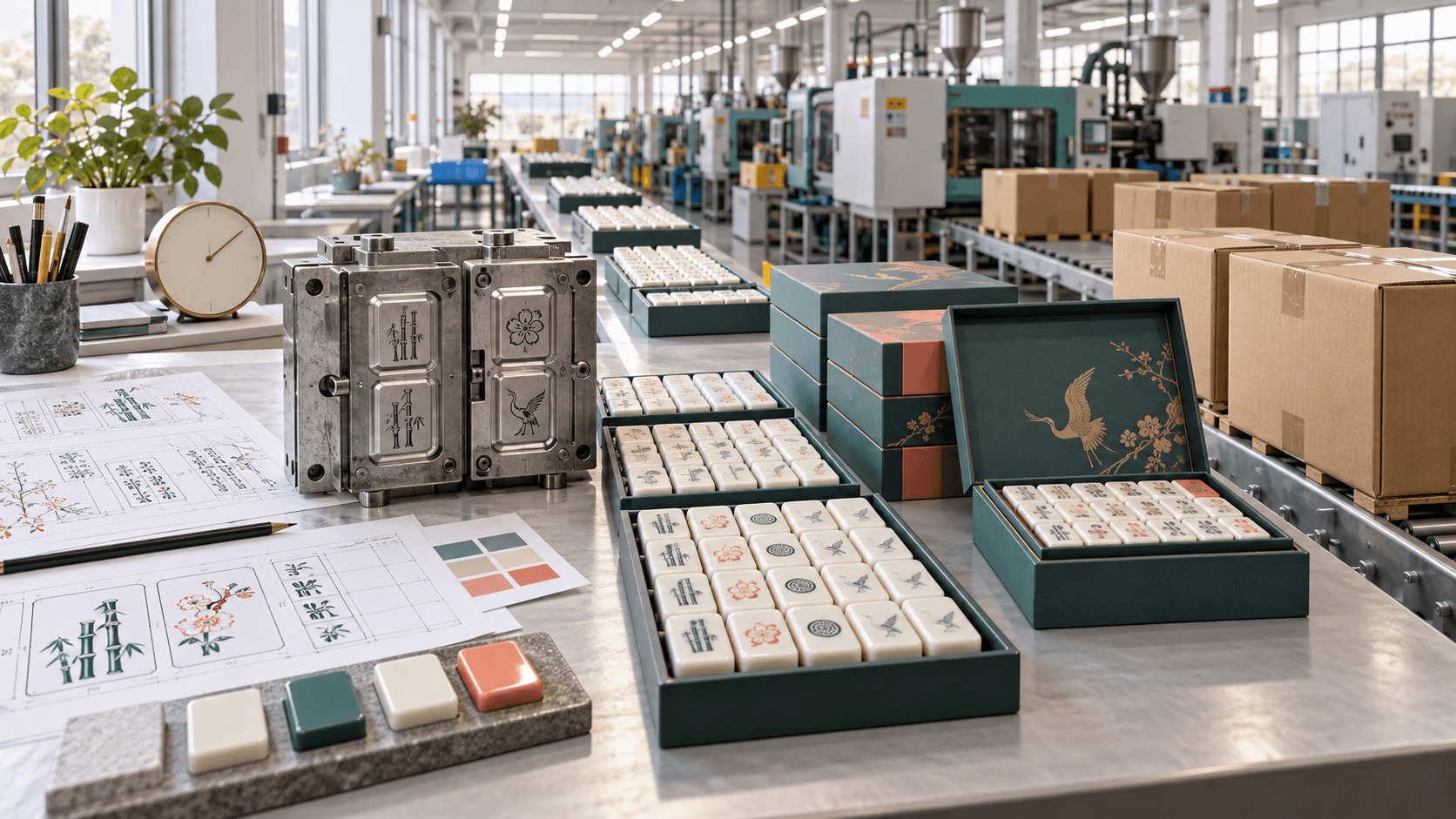
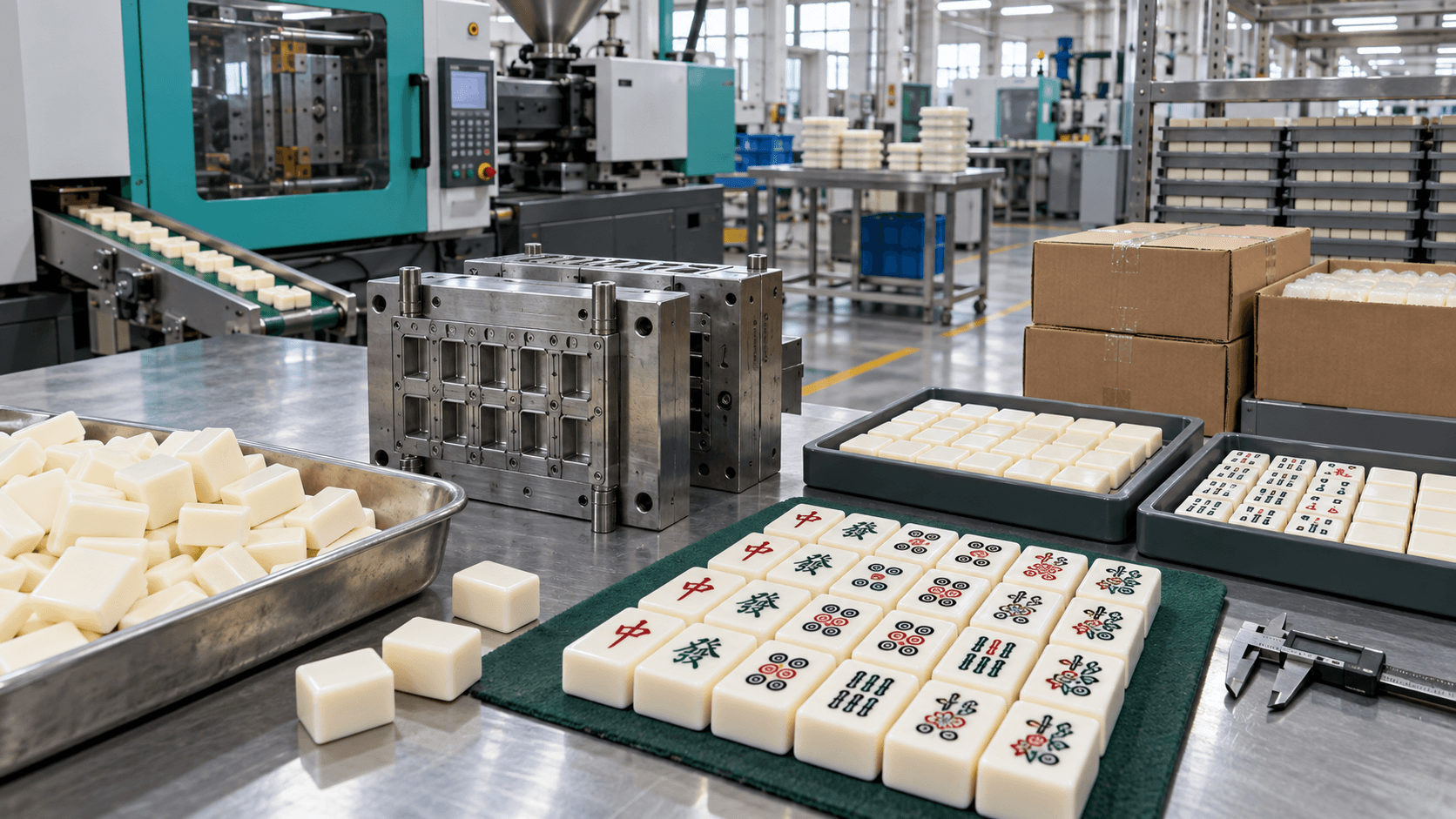
If the tiles are injection molded, the supplier should also be able to discuss parting lines, flash control, and how the printed graphics are aligned from tile to tile. If the process is compression molding or a similar method, the practical issue becomes consistency in density, gloss, and feel. In either case, the sample set should be handled, not just photographed. A tile that looks clean in a catalog image may still feel too light, too slippery, or oddly noisy on the table.
How to select the right custom Mahjong format
The right specification depends less on the game itself than on the selling channel.
For retail
Retail buyers usually need a set that looks complete from the outside and understandable at first glance. The box art, the tile color, and the organization of the contents matter. If the set is targeting family buyers, readability should be prioritized over decorative excess.
For gift and premium channels
Here, presentation carries more weight. The tiles may not need to be extravagant, but the packaging, tray design, and visual theme should feel deliberate. A custom Mahjong gift set that looks assembled from generic stock parts will struggle against more thoughtful competitors.
For clubs or frequent play
Durability and handling are the main concerns. Buyers in this segment should pay closer attention to finish wear, tile stability, and whether the set stacks cleanly. Fancy graphics are less important than a reliable, legible, repeat-use product.
For promotional projects
Promotional buyers often want branding without altering the whole game. That can mean subtle logo placement on the box, a custom instruction insert, or a colorway that matches a campaign. It is usually better to keep the game rules familiar and customize the presentation instead of redesigning the tiles too aggressively.
Common mistakes buyers make
The first mistake is treating tile count as a detail to finalize later. It should be settled early. If the buyer and supplier are working from different assumptions about the set contents, the sample process becomes wasteful fast.
The second mistake is over-customizing the graphics. A mahjong set still has to be playable. Symbols that look stylish in a mockup can become hard to distinguish once the tiles are stacked, shuffled, and viewed under ordinary indoor lighting.
The third mistake is ignoring the unglamorous parts: storage tray fit, box closure strength, surface scuffing, and the consistency of the tile backs. These are the parts customers notice after the first evening of play, which is usually when complaints begin.
One practical caution: if the design includes special tiles such as jokers or blanks, make sure the rule set and packaging copy explain them clearly. Nothing frustrates a new owner faster than opening a box that seems complete but is not obviously self-explanatory.
Buyer-facing checklist before you request samples
Before moving to sampling, a sourcing team should prepare a short but specific brief:
- Intended market: retail, gift, club, travel, or promotional
- Tile style: traditional, simplified, decorative, or branded
- Color scheme and print direction
- Required set composition
- Packaging style and any accessory needs
- Target quality level for feel, gloss, and finish consistency
This may sound basic, but it saves a surprising amount of time. Suppliers can usually adapt quickly when the brief is clear. What slows projects down is ambiguity disguised as flexibility.
FAQ for custom Mahjong sourcing
Can a custom Mahjong set be made for different regional rule systems?
Yes, in principle. The tile mix, count, and printed references can be adapted, but the buyer should define the rule system early so the supplier can plan the correct layout.
Is the material always plastic?
Not always. The pictured set appears to be a molded glossy material, but the exact composition is not verifiable from the image. Buyers should confirm the material rather than assuming.
What matters more: the tile design or the packaging?
For retail, both matter. For club use, tile handling and durability matter more. For gifts, packaging often carries more of the first impression than buyers expect.
Do custom sets need to include every possible tile type?
No. The set should match the intended game format and target customer. Including unnecessary pieces can complicate instruction and inflate cost without improving usability.
What to do next if you are sourcing this product
If you are evaluating custom Mahjong as a product line, start with the use case, not the artwork. Decide whether the set is meant for play, display, gifting, or promotional use, then build the specification around that decision. From there, request a sample with clearly stated tile count, material direction, surface finish, and packaging requirements.
A good supplier can help refine the design. A good buyer keeps the brief grounded in actual use. That combination is what turns a generic game concept into a product that feels considered, handles well, and has a better chance of moving through the market without awkward surprises.