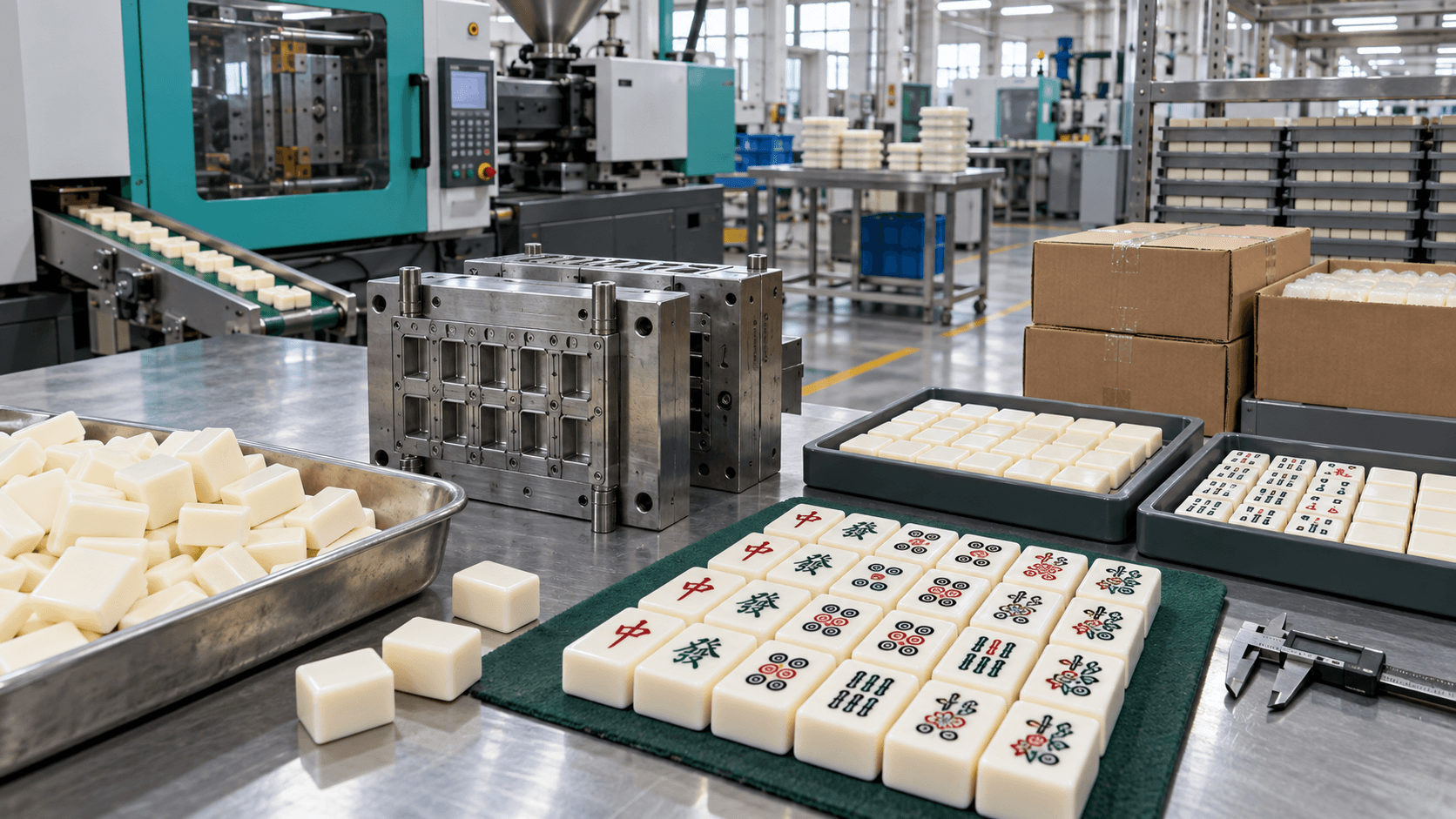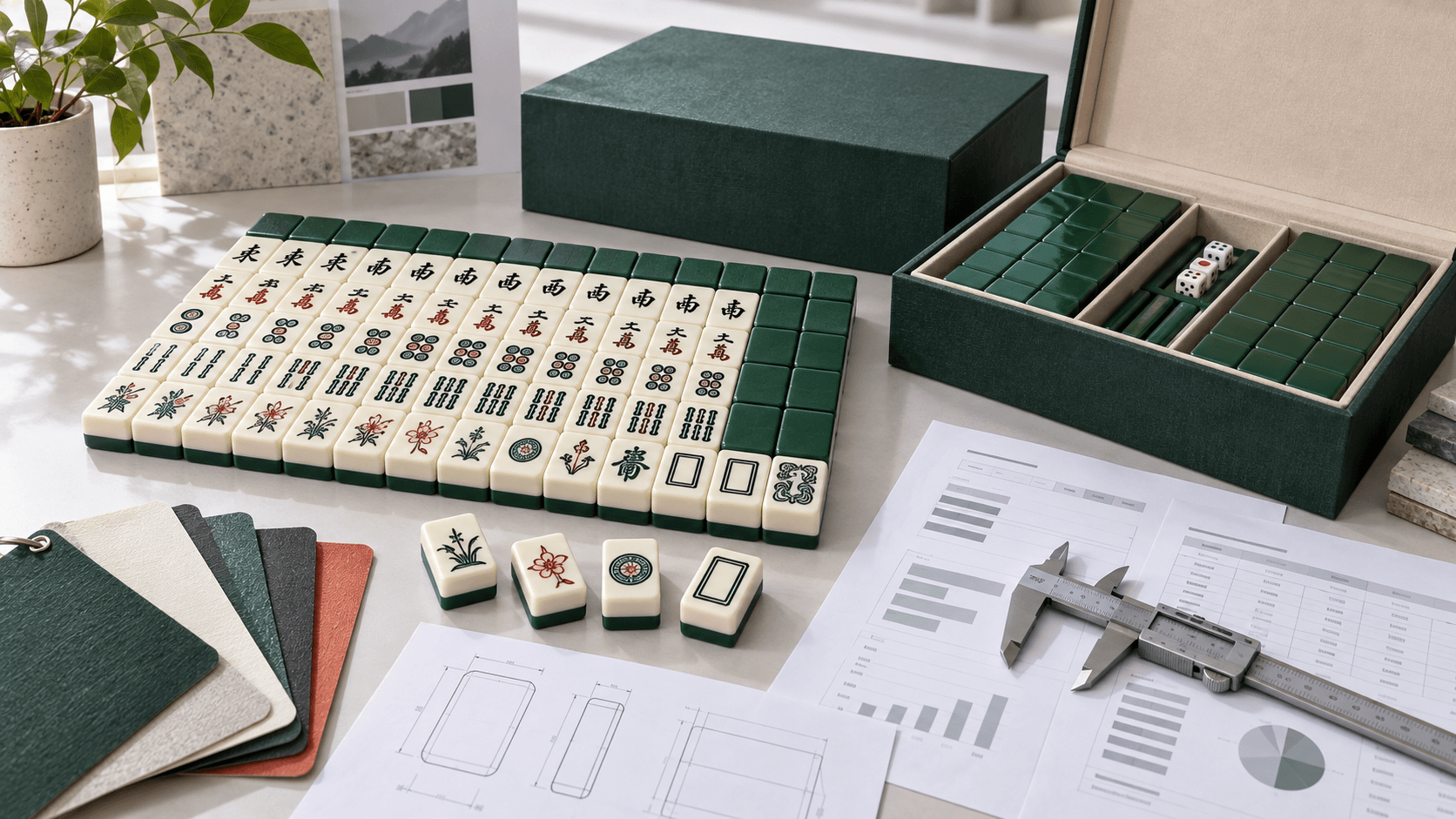

American vs Chinese mahjong sets for retailers is an assortment and specification decision, not just a regional naming question. A retailer must match the set to the customer, rules, tile count, artwork, accessories, packaging, and replenishment plan before adding a SKU.
Start with the customer promise
Ask what the buyer will do after opening the box. A beginner product may need a clear rules insert and highly legible faces. A club supply may need a repeatable format and compatible accessories. A gift-focused SKU may be judged first by its case, finish, and presentation.
Write the promise in one line, then list the facts that must be true for it to be honest: regional format, exact count, included extras, language, dimensions, and whether the set is complete for the stated play style.
Build the format comparison
Use American vs Chinese mahjong sets for retailers as an assortment test
Put the regional format, exact count, language, accessories, and customer promise beside the proposed SKU. This makes the comparison useful to merchandising, customer service, and the factory at the same time.
For barcode and packaging context, review GS1's barcode guidance before the final artwork is released. It is a reference for planning, not a substitute for the retailer's own requirements.
| Retail decision | American-oriented offer | Chinese-oriented offer |
|---|---|---|
| Configuration | Often requires a larger set with format-specific extras | Often centers on a different count and face system |
| Artwork | Must support the intended English-language or market convention | May prioritize Chinese characters and regional familiarity |
| Accessories | Racks, pushers, cards or other market expectations may matter | Accessory mix can follow the chosen regional rules and channel |
| Customer education | Insert should explain included items and references used | Insert should identify the format and any regional assumptions |
| Merchandising | Size, price and packaging must support the target shelf or listing | Visual story should make the intended use clear to the customer |
Do not infer a complete configuration from the word American or Chinese alone. Put the actual count and component list on the purchase specification and product page.
Make the tile count visible
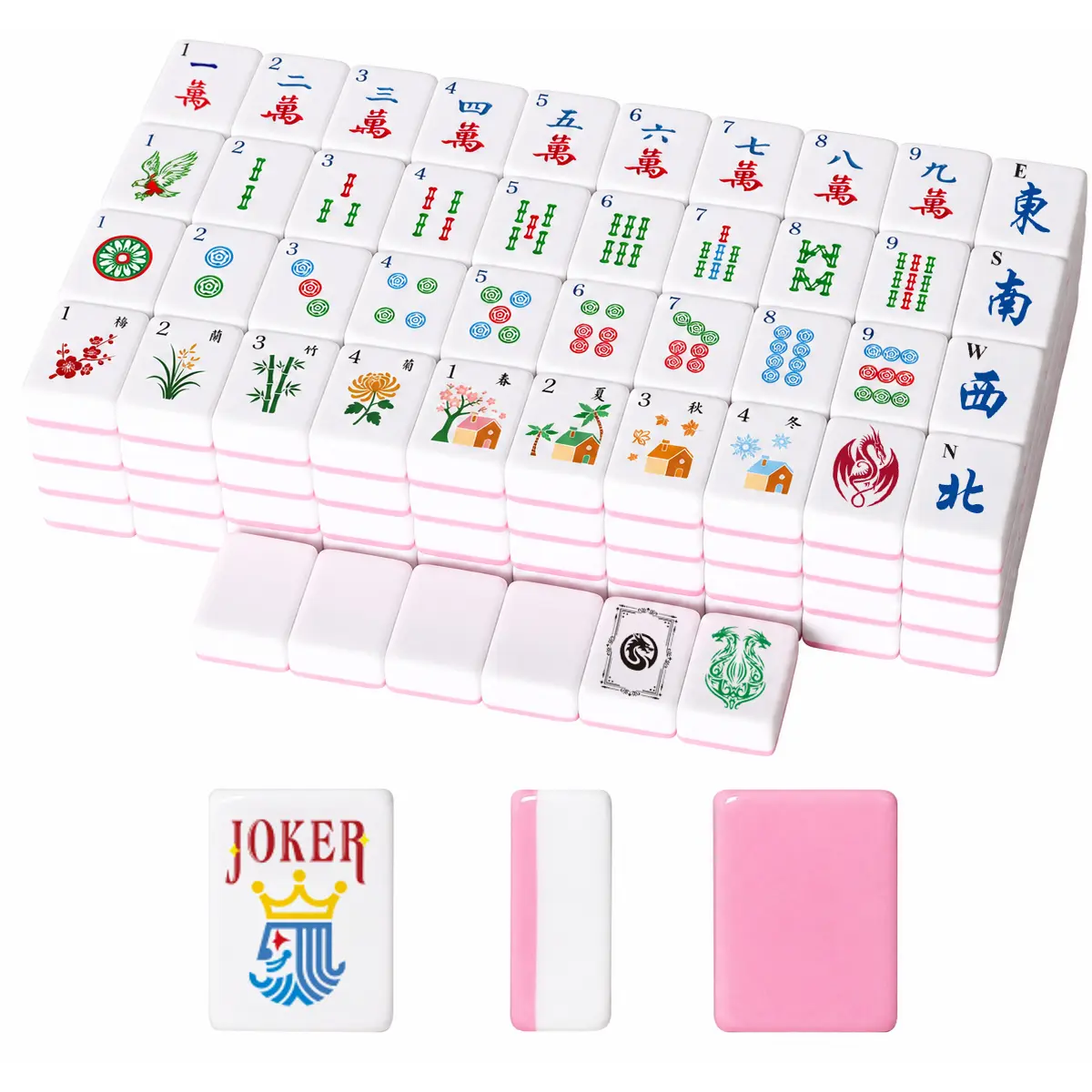
Count every tile, joker, flower, blank, spare, die, rack, pusher, manual, and storage component. Separate playable components from replacement stock. A retailer needs the same count in the quotation, sample sheet, package copy, and customer-service script.
Use a face schedule rather than a generic product photo. The schedule can show repeated quantities, orientation, language, color, and special marks. It also gives the factory a controlled checklist for packing.
Choose size and feel for the channel
Retail buyers should compare legibility, handling, rack fit, case footprint, packed weight, and shelf presence. The largest tile is not always the easiest to sell or use. The best size is the one that works across the entire system and matches the promised customer experience.
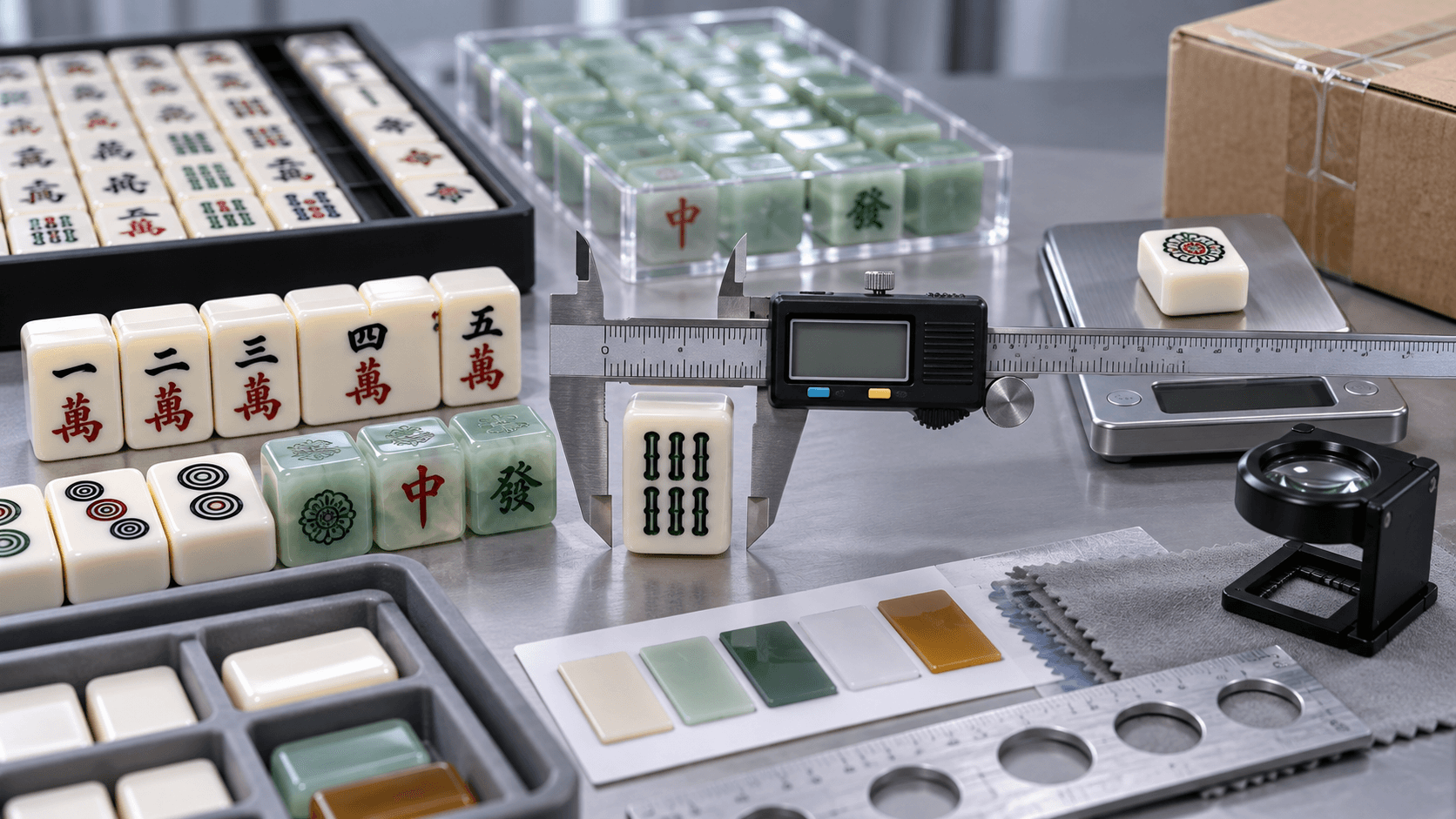
Request a dimensional sample and use the actual accessories. Test how tiles sit in racks, how the set returns to storage, and whether the insert retains every component. For custom work, the custom Mahjong service can be considered alongside the product range.
Design packaging that answers questions
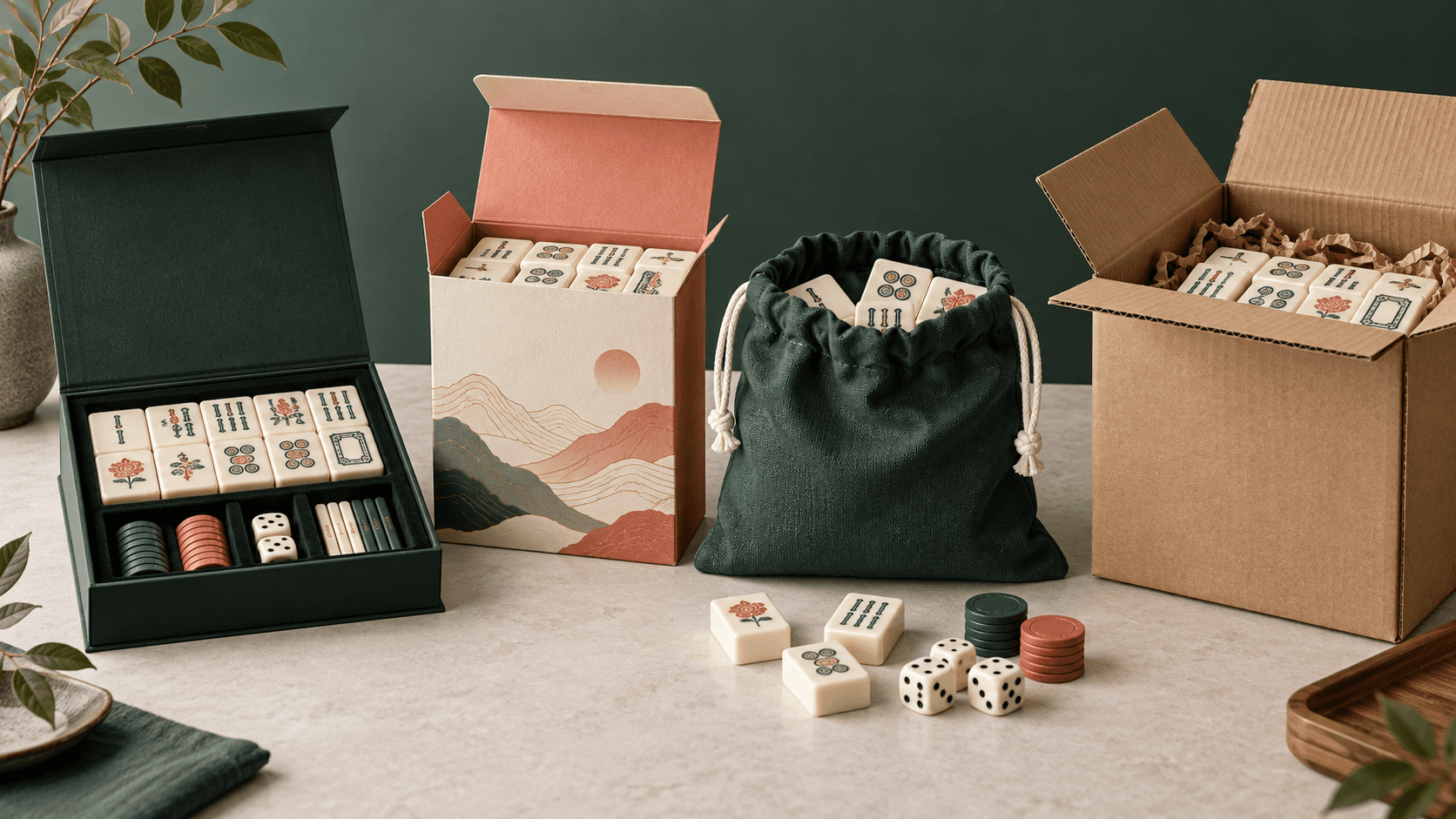
The front panel should identify the regional format, tile count, key accessories, and intended customer without forcing a shopper to decode the photo. The back or insert can explain what is included, how to access rules, and who to contact about a missing part.
For e-commerce, make the first product image and title agree with the physical contents. For stores, check shelf width, barcode quiet area, carton marks, and how the package looks beside other SKUs. A retailer may need separate packaging versions even when the underlying tiles share components.
Plan assortment roles
| SKU role | Purpose | Buyer's watch point |
|---|---|---|
| Entry set | Introduce the format at a reachable price | Clarity, complete promise and return risk |
| Core set | Carry the main volume and repeat demand | Stable components, margin and replenishment |
| Premium set | Support gift, design, or collector positioning | Finish, case, presentation and controlled artwork |
| Accessory add-on | Increase compatibility or average order value | Fit with the exact tile format and use case |
| Replacement pack | Support service without replacing a full set | Face IDs, quantities, packaging and inventory policy |
Set a role before choosing colors. Five similar colorways can create more inventory complexity than customer choice. A small, well-defined assortment often gives a new retail program better learning signals.
Use regional language carefully
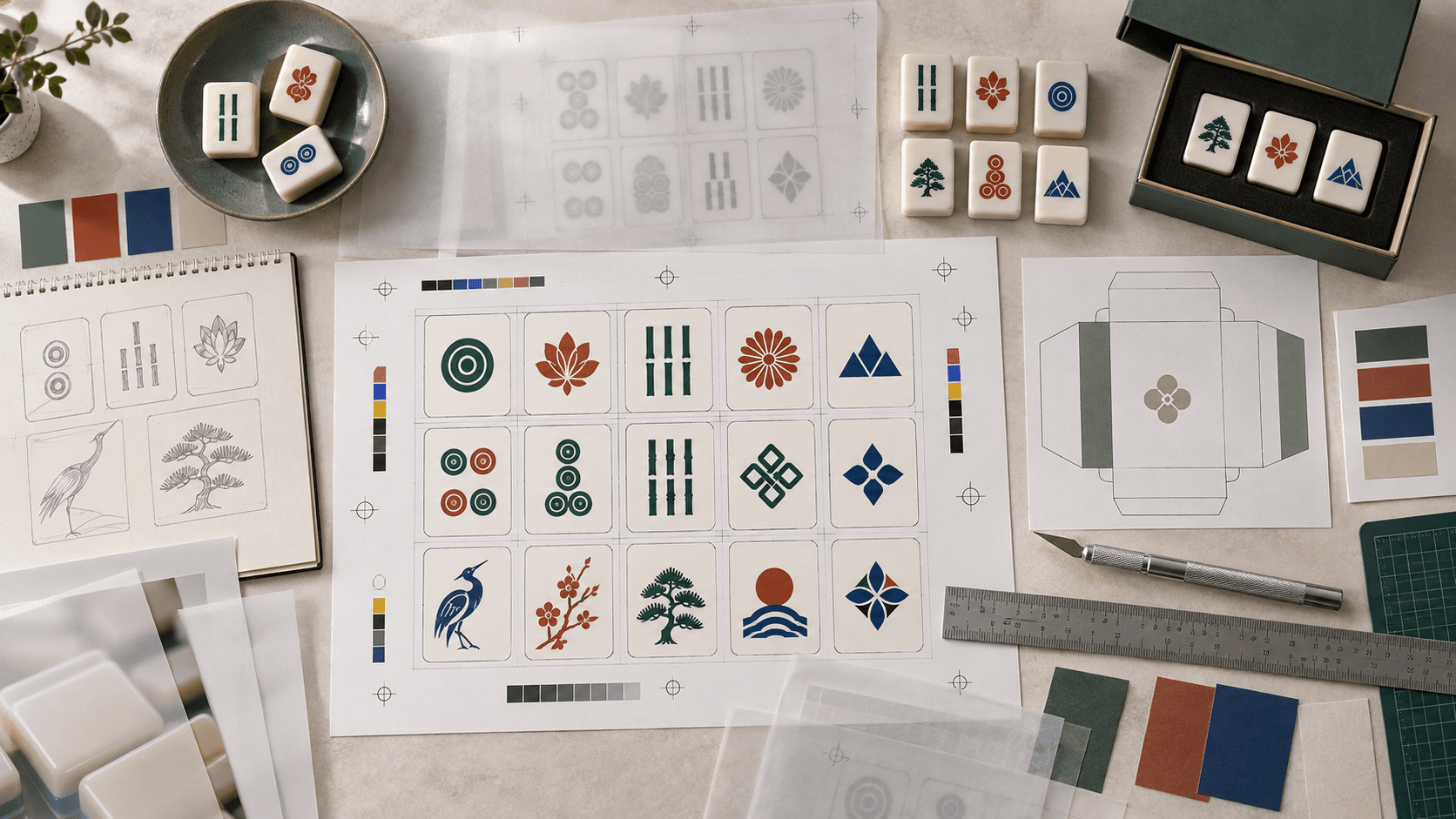
Artwork, numerals, characters, labels, and rules language should be approved for the target market. Ask a qualified reviewer to confirm spelling and usage. Keep translated copy separate from production geometry until both wording and layout are released together.
When a product is marketed to more than one region, consider whether a shared physical SKU can use a controlled multilingual insert or whether the faces and package need separate versions. Do not let a broad regional name hide a meaningful configuration difference.
Quality checks that protect the shelf promise
At sample stage, verify count, face identity, orientation, legibility, color, edge treatment, accessory fit, case closure, insert accuracy, and package labels. At production stage, repeat the checks on a representative lot and record the result. A retail product is only as reliable as the least controlled component.
Define defect language before inspection. “Wrong format” should point to count or face schedule. “Damaged” should identify location and severity. Clear terms help the supplier correct issues and help customer service classify replacements.
Compare cost and reorder risk
Regional format affects more than tile quantity. It can change artwork setup, accessories, insert language, packing density, carton weight, and the number of components held in reserve. Ask for a quote that separates these drivers and shows the assumptions behind MOQ and lead time.
Ask how a reorder is protected from silent substitutions. Archive approved samples, artwork files, packing photographs, and the component list. If a supplier proposes a material or accessory change, require a new sample or a written risk review.
Plan the launch around customer questions
Before the first shipment, give merchandising and support teams a concise answer sheet. It should name the format, count, language, included accessories, dimensions, care notes, and the correct replacement path. Include a photograph or diagram that identifies each component. This reduces returns caused by a customer expecting a different regional configuration.
Review the same facts in the product title, images, package copy, wholesale sheet, and inbound inspection record. Consistency is especially important when a retailer carries both regional formats. A clear distinction helps searchers find the right item and helps warehouse staff pick the correct carton.
OEM, ODM, or retail-ready configuration
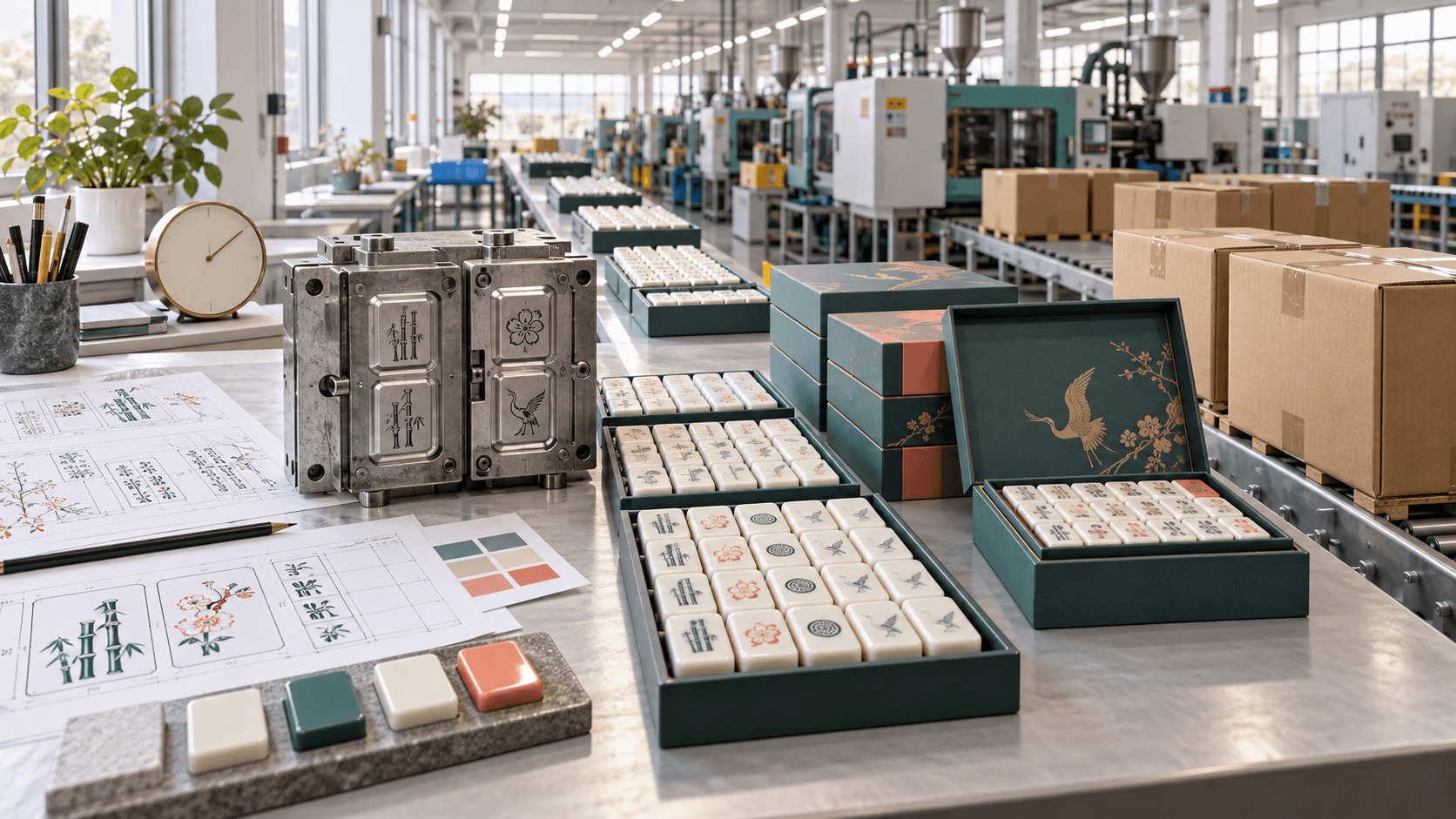
A retailer can start with an established regional format and add its own branding, colors, package, or insert. A more original program may need new artwork, tooling, or a custom accessory combination. Name what is being changed and what remains standard so the quote and schedule stay understandable.
ABC Mahjong supports B2B product review, custom artwork, samples, packaging, and coordinated accessories. Read about the company before asking for a retail-ready plan.
Retail launch checklist
- Choose the regional format and write the exact component count
- Define the customer, use case, price position and channel
- Confirm dimensions, material, finish and accessory compatibility
- Approve face schedule, language, artwork rights and packaging copy
- Test a complete physical sample, including case and insert
- Set inspection checks, defect language and replacement policy
- Plan cartons, destination split, reorder files and launch timing
FAQ
Are American and Chinese sets interchangeable?
Not automatically. Count, faces, accessories, rules references, and customer expectations may differ. Confirm the intended format before describing compatibility.
How should a retailer name the SKU?
Use a clear format name plus count, key accessories, and any audience or language note needed to avoid confusion.
Does an American set always need the same accessories?
Accessory expectations depend on the product promise and customer market. List exactly what is included and test it with the selected tiles.
Can one package serve both regional versions?
Only if every product fact, image, count, language, and included item remains accurate. Otherwise use controlled packaging versions.
Should a retailer stock replacement tiles?
It can reduce service friction, especially for complex sets. Base the quantity and format on the defect policy and component availability.
What should a buyer ask about artwork?
Ask about file format, language review, face index, color references, safe area, orientation, rights, proofing, and revision charges.
How can a retailer compare two samples?
Use the same review sheet for count, visual checks, handling, accessory fit, packaging, and the customer promise. Record differences by face or component.
Does a larger set always sell at a higher price?
Price also reflects material, decoration, accessories, case, packaging, brand position, and channel. Build a landed-cost view before setting retail pricing.
When should the package be tested?
After the product and accessories are stable enough to represent the packed configuration, and before mass packing or a major channel launch.
How can ABC Mahjong help with regional formats?
Send the market, intended format, quantity, artwork status, accessory list, packaging needs, and target date through the inquiry channel for a project-specific review.
Build a retail SKU that is easy to explain
Use the ABC Mahjong contact page to share the format decision, component schedule, packaging direction, and replenishment plan. The team can help translate American vs Chinese mahjong sets for retailers into a controlled product brief that supports samples, quotation, and a clearer customer promise.