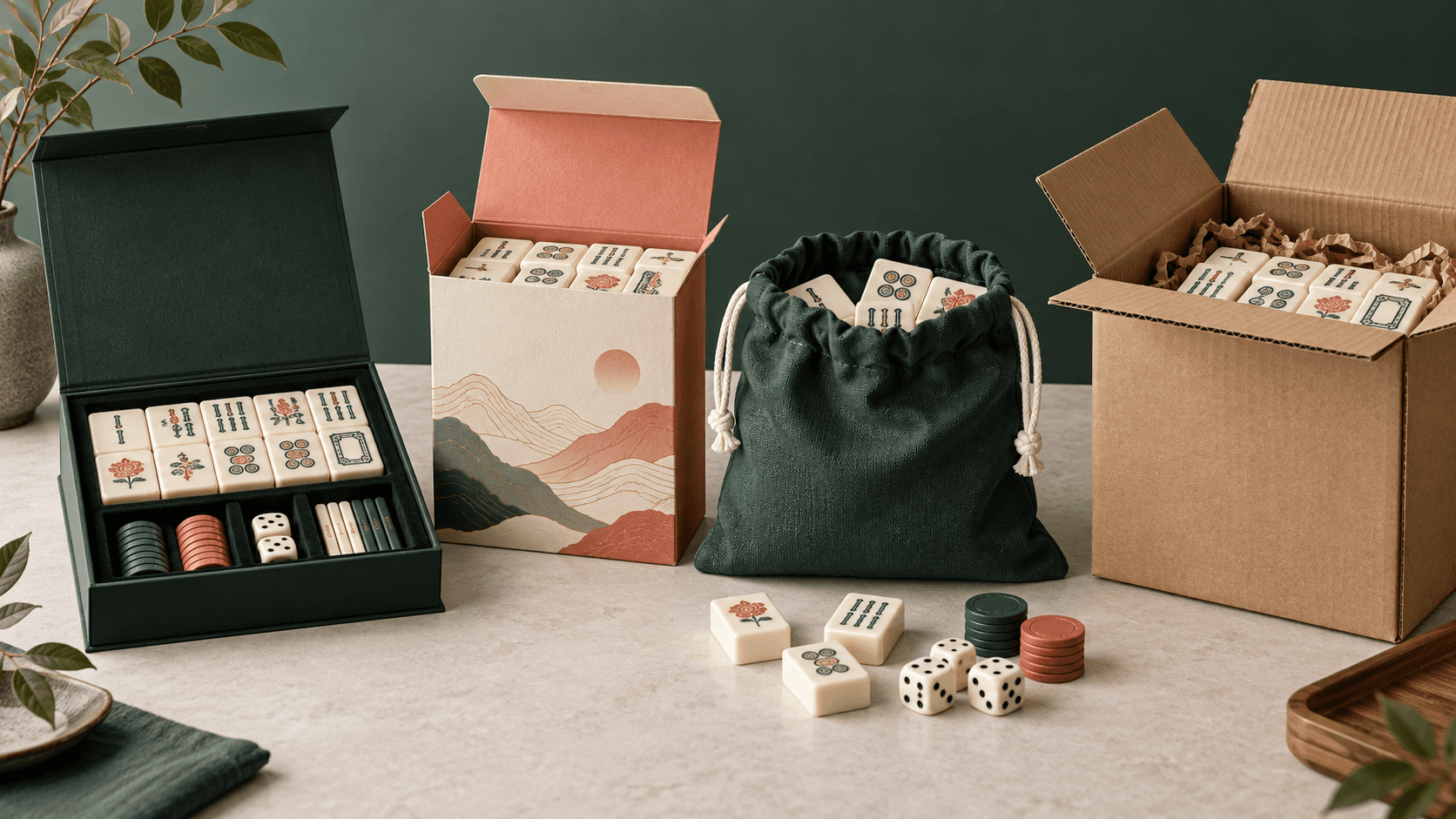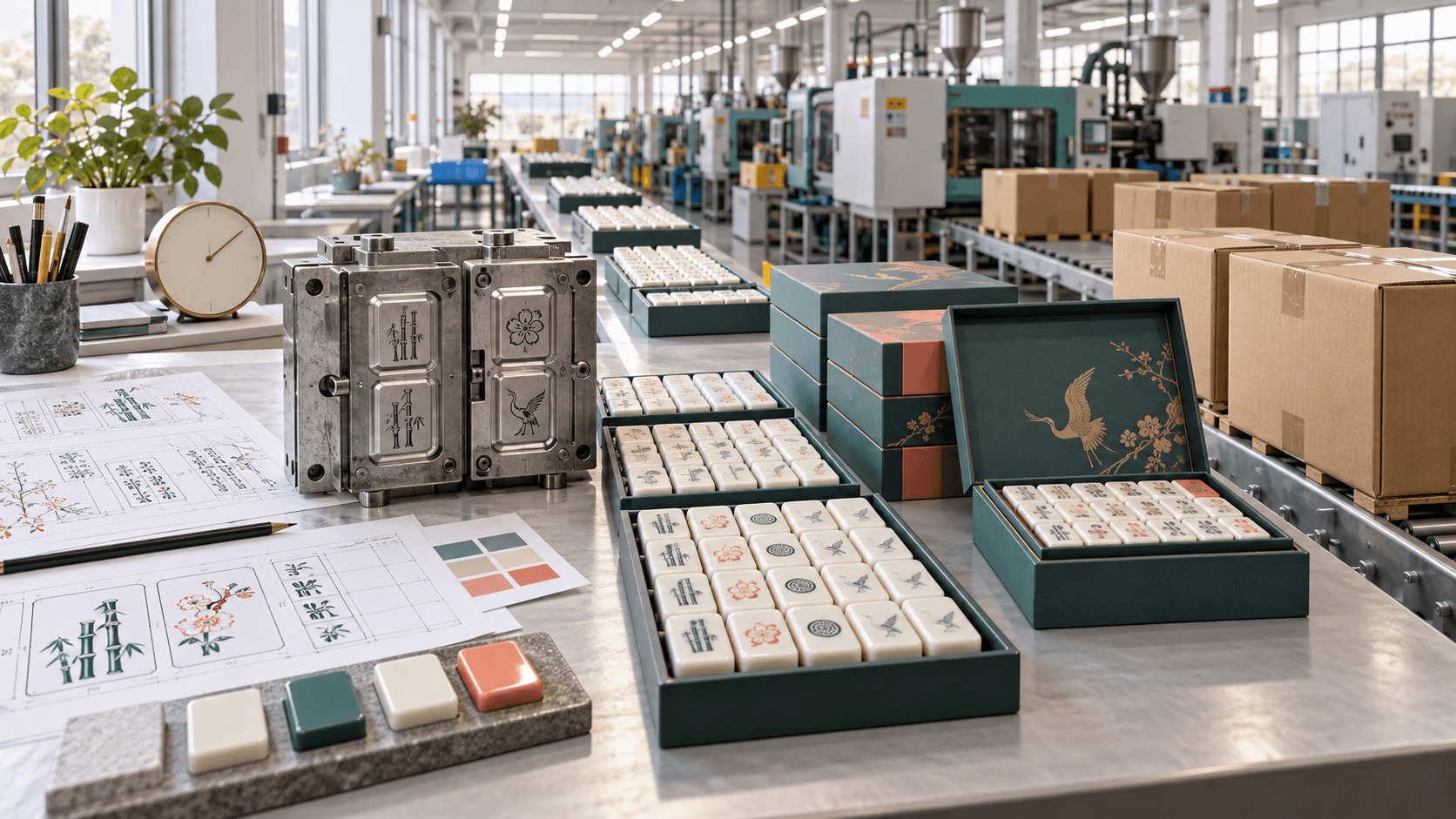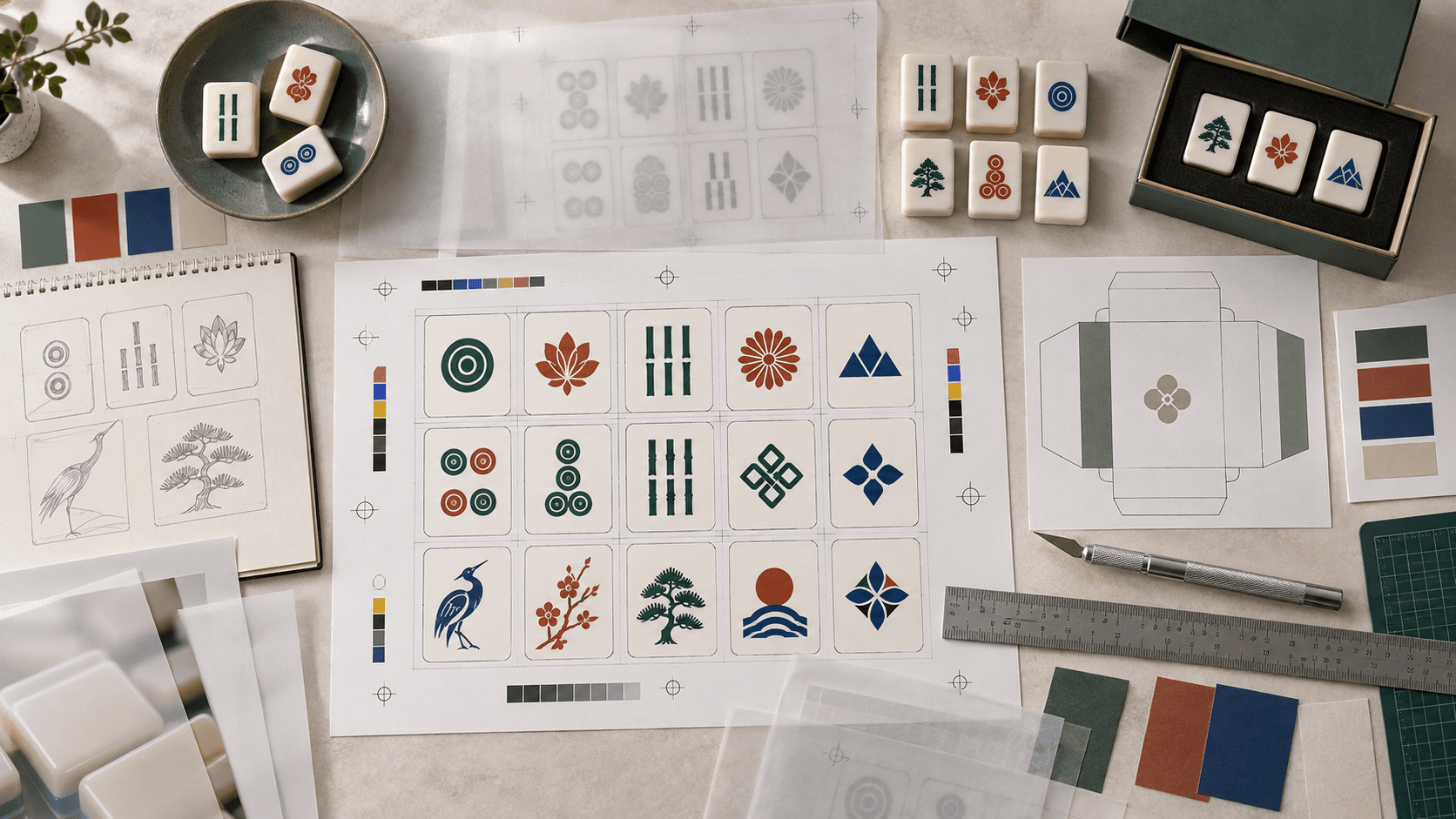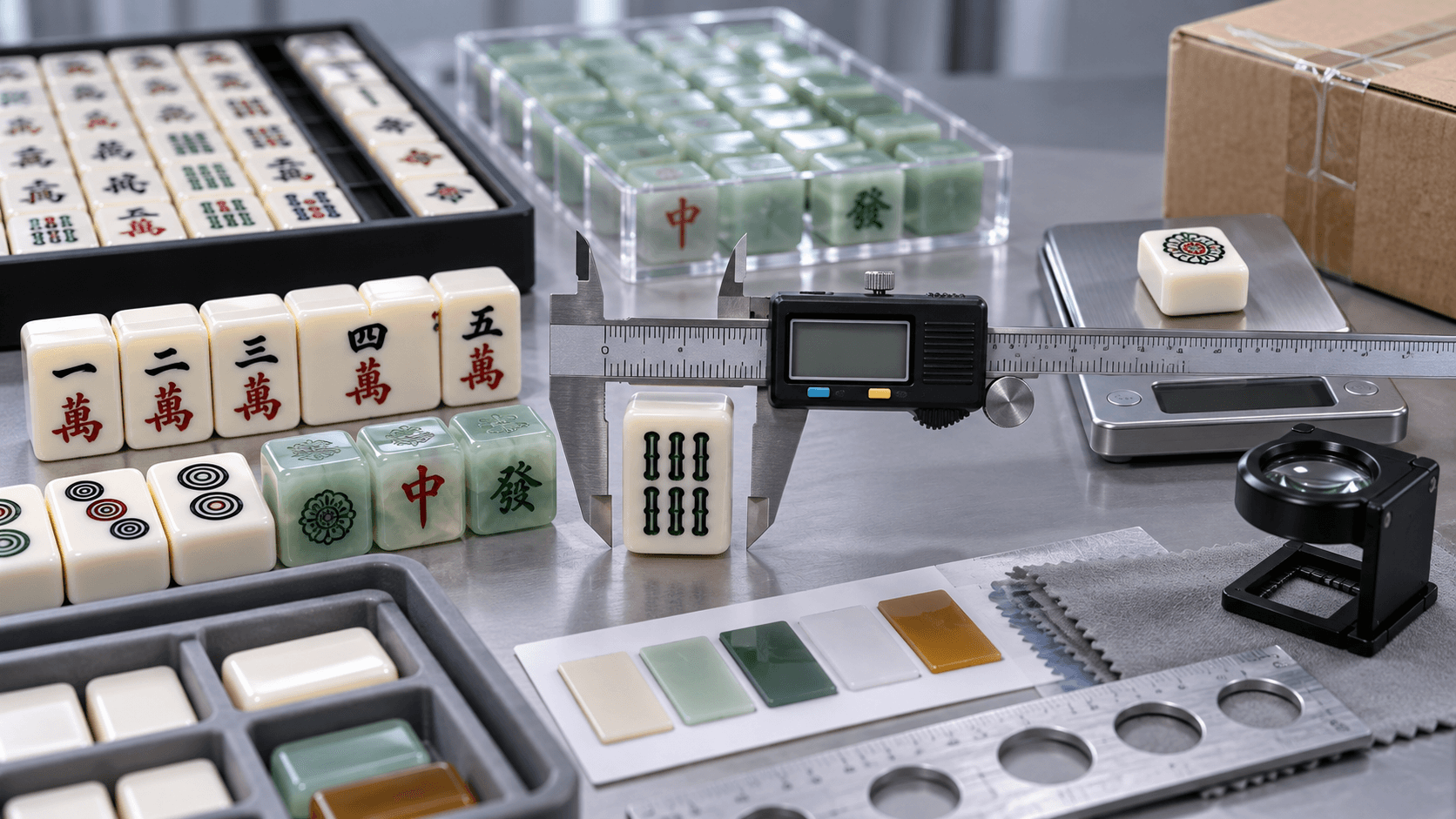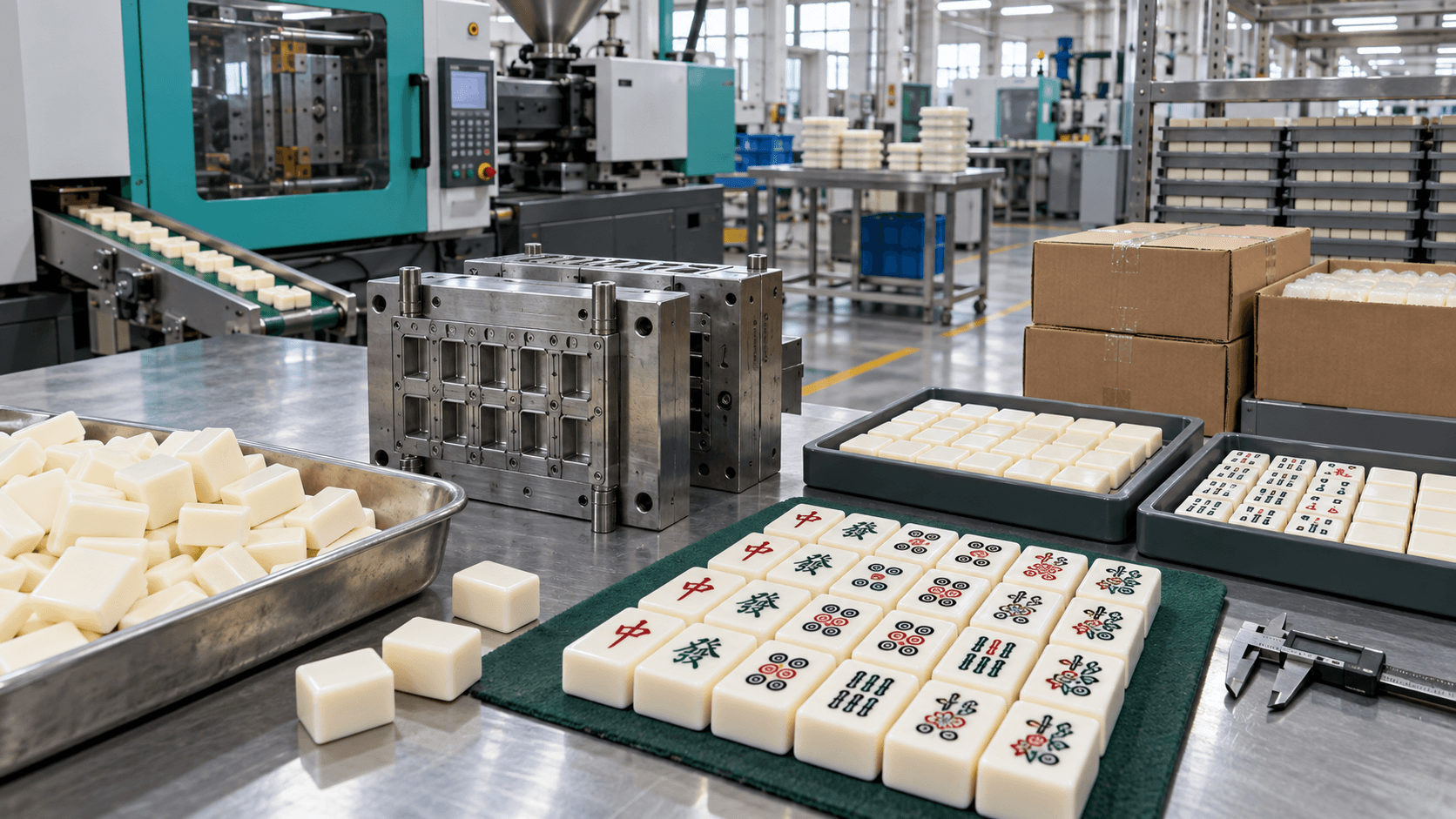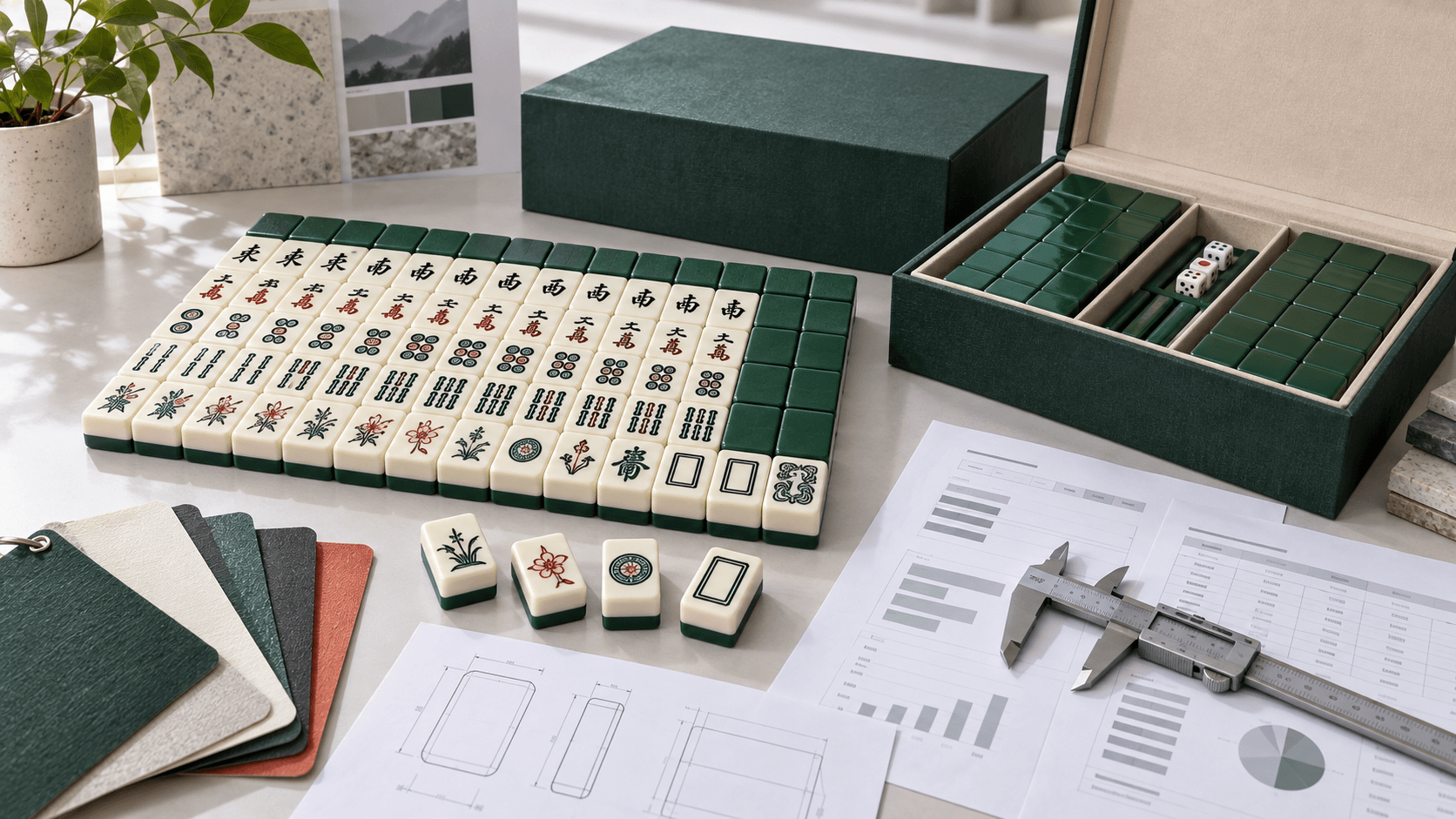

Acrylic mahjong tiles and melamine tiles can both serve a serious product line, but they create different design opportunities and sourcing questions. Acrylic is especially useful when a brand wants transparent color, layered effects, glitter, visible depth, or a fashion-led presentation. Melamine is often considered when the brief favors a dense, more traditional solid-resin look and feel. The better material is the one that supports the intended customer, artwork, handling, price position, and production process.
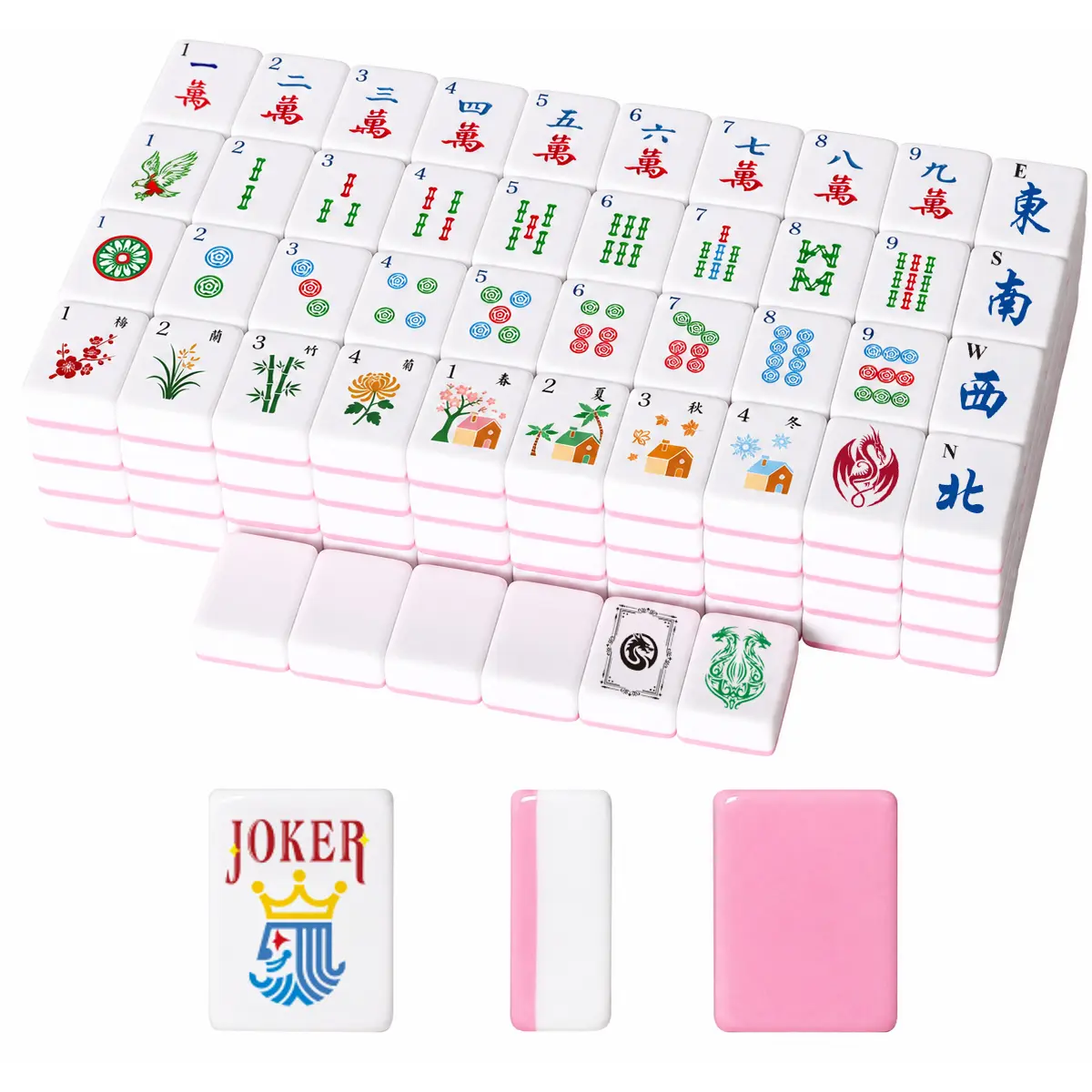
Do not choose a material from a name alone
“Acrylic” and “melamine” describe material families, not a complete finished-product specification. Colorants, construction, dimensions, artwork method, edge finishing, and quality control change the result. Ask for physical samples that represent the proposed process. A sample from a different tile structure or finish may not answer the important questions.
Start with the customer experience:
- Should the set feel modern, playful, traditional, minimal, or collectible?
- Is transparency part of the design, or should the tile look solid?
- Will the artwork use engraving, printing, layered color, or another method?
- Does the set need to match racks, pushers, a case, mat, and gift box?
- What retail price and shipping model must the product support?
Acrylic and melamine at a glance
| Buyer criterion | Acrylic direction | Melamine direction |
|---|---|---|
| Visual language | Clear, translucent, layered, glitter, vivid, design-led | Solid, opaque, conventional resin appearance |
| Design depth | Can use visible depth and back-layer effects | Usually emphasizes solid body color and face treatment |
| Sample focus | Transparency, inclusions, bonding, polish, and scratches | Color, molding consistency, surface, edges, and face durability |
| Collection fit | Strong for coordinated fashion colors and visual themes | Strong for a solid, familiar product direction |
| Decision method | Approve actual construction and finish | Approve actual formulation, molding, and finish |
This comparison is directional, not a substitute for sample testing. Material behavior depends on the supplier’s specific construction and process.
Why brands choose acrylic
Transparency becomes part of the artwork
A clear or translucent body can make the tile itself part of the visual story. Color can appear in a back layer, around an engraved face, or through decorative inclusions. That opens a broader design space than a simple opaque block.
Color can carry a collection
Acrylic works well for brands that build seasonal drops or coordinated accessories. Tile backs, racks, pushers, cases, mats, and boxes can share a palette without being identical. A deliberate color system is more realistic than expecting different materials to produce the same appearance from one screen value.
It supports a modern retail position
Clear edges, bold color, layered depth, and polished surfaces photograph well when the construction is controlled. This can suit boutiques, gifts, direct-to-consumer brands, and collections where visual distinction drives the purchase.
Where acrylic needs careful approval
Surface marks and edge finish
Transparent or glossy surfaces can make scratches, haze, chips, or inconsistent polish easier to notice. Agree on acceptable appearance using relevant physical samples. Inspect tiles under normal lighting as well as close inspection.
Layer and decorative consistency
If the design uses layered construction, glitter, transparent color, or visible inclusions, review distribution and appearance across several pieces. A dramatic effect still needs a repeatable acceptance standard.
Artwork contrast
Transparent color can change how printed or engraved artwork reads. Check the face against realistic backgrounds and on a rack. Contrast that works on a white design screen may weaken when light passes through the tile.
Fit with accessories and packaging
Dimensions and edge profile affect racks, pushers, case inserts, and carton volume. Approve the physical system together. Do not finalize the case around an estimated tile size.
When a buyer may consider melamine
Melamine can suit a brief that calls for an opaque, solid tile and a more conventional resin direction. Some buyers also compare the perceived weight, sound, surface, and handling of specific samples. Those qualities should be evaluated on the proposed product rather than generalized across every factory or formulation.
If comparing suppliers, ask for the material description and process behind each sample. A high-quality piece from one construction should not be used to judge an unrelated quote that uses a different size, finish, artwork process, or quality standard.
Eight sample tests for material selection
- Readability: Can target users identify every face quickly under ordinary lighting?
- Handling: Do the dimensions, edges, surface, and weight feel suitable during a real game?
- Rack fit: Do tiles sit securely and remain easy to pick up?
- Visual consistency: Are color, transparency, decorative effects, and finish reasonably consistent?
- Artwork quality: Is engraving or print aligned, clean, and durable enough for the intended use?
- Set completeness: Are face counts, jokers, blanks, flowers, and spares correct?
- Case fit: Do tiles and accessories fit without damaging movement or excessive pressure?
- Transit readiness: Does the packed sample arrive in good condition through a realistic shipping route?
Questions for an acrylic tile RFQ
- Is the proposed tile clear, translucent, opaque, layered, or decorated?
- What dimensions and edge profile does the sample represent?
- How will face and back artwork be applied?
- Which color reference and physical sample will be approved?
- Does the design use existing tooling or require a structural change?
- How are surface, edge, color, artwork, and set completeness inspected?
- Which racks, pushers, cases, and packaging fit the tile?
- What determines MOQ, sample cost, tooling, and lead time?
These questions turn a material preference into a manufacturable brief. They also expose whether two quotes describe the same product.
Cost comparisons need a complete specification
Material is only one cost driver. Dimensions, construction, color preparation, engraving or print, artwork count, molds, finishing, inspection, accessories, case structure, gift packaging, and order quantity all matter. Freight also changes with the set’s weight and carton volume.
Ask for a quotation that identifies assumptions. If the budget changes, the team can then simplify the right element instead of weakening the product at random. For example, an existing tile structure with distinctive artwork and packaging may protect the brand idea better than an expensive new mold paired with an underdeveloped case.
ABC Mahjong’s acrylic focus
ABC Mahjong specializes in acrylic Mahjong products and accessories, with customization covering tile formats, colors, transparent effects, artwork, logos, molds, finishes, packaging, labels, manuals, racks, pushers, mats, dice, and cases. Buyers can explore the Mahjong product category and the full custom development options.
For acrylic mahjong tiles, the project team reviews the product idea, market, quantity, reference material, packaging, and destination before confirming a solution and quotation. Specific claims about MOQ, timing, tooling, or performance should be tied to the selected construction and approved sample.
FAQ
Are acrylic tiles always transparent?
No. Acrylic product directions can include clear, translucent, colored, layered, or more opaque visual effects. Confirm the exact construction with samples.
Which material is better for a premium Mahjong set?
Premium positioning does not come from the material name alone. Design, construction, finish, artwork, component fit, packaging, consistency, and the target customer all influence the result.
Can acrylic tile colors be customized?
Color and visual effects can be reviewed as part of a custom project. Feasibility, minimums, sample work, and acceptable variation depend on the selected process.
Can acrylic tiles use custom engraving or printing?
Custom face and back artwork can be evaluated for suitable engraving, printing, or layered methods. The artwork must be tested at actual size for legibility and production feasibility.
Do tile dimensions affect the rack and case?
Yes. Tile width, height, thickness, and edge shape affect rack support, pusher length, insert layout, case dimensions, and shipping volume. Sample them together.
How should buyers compare acrylic and melamine samples?
Use the same customer and product criteria: readability, handling, fit, surface, artwork, consistency, packaging, price position, and realistic delivery needs. Document the proposed construction behind each sample.
Choose the product experience first
The material decision becomes easier after the brand defines its customer, design language, play format, accessory system, and retail position. Acrylic mahjong tiles are a strong choice when color, transparency, depth, and coordinated design are central to the collection, provided the sample and inspection standard make those effects repeatable.