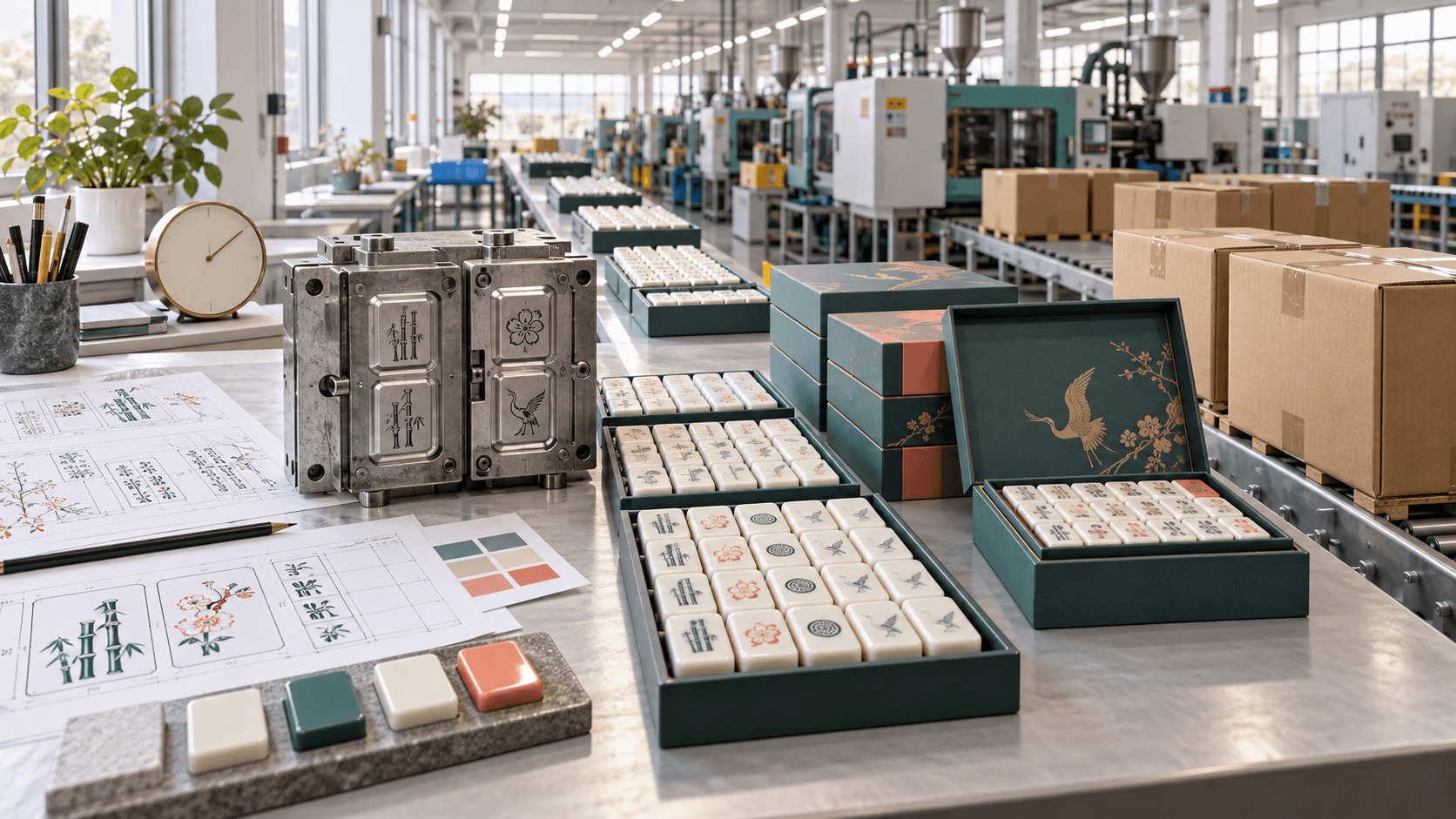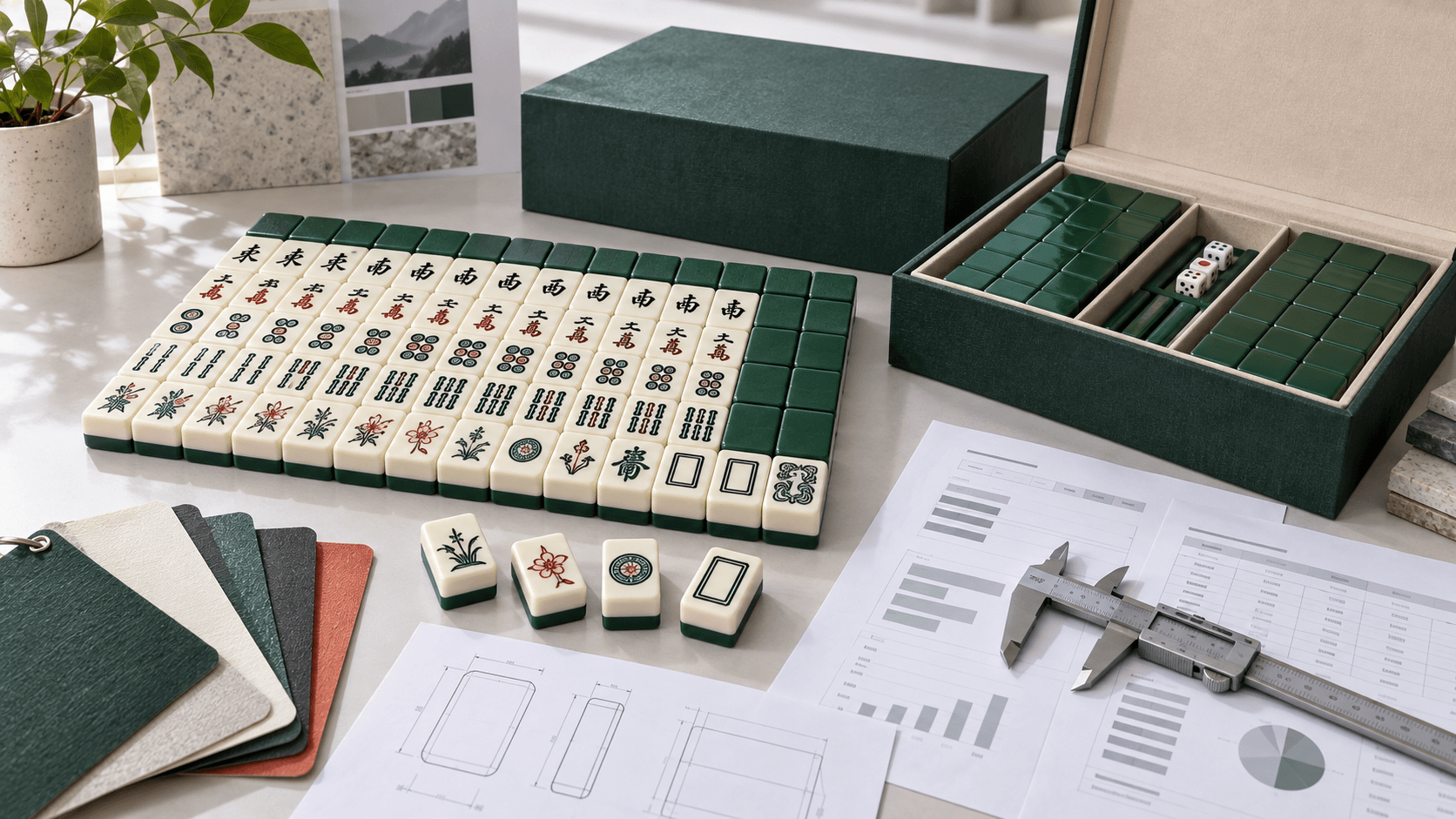

Mahjong production lead time is not one block of factory days. It is a chain of approvals, material decisions, sample work, production, inspection, packing, and transport handoffs. A credible schedule shows those dependencies separately and names the person who can release each stage.
Start at the date the goods must be usable
A buyer often begins with a launch date. That date is not necessarily the delivery deadline. Retail teams may need time for inbound receiving, photography, product-page setup, retailer routing, labelling, or distribution to several warehouses. Event buyers need stock available before guest packs are assembled. Work backward from the first operational use, not the public announcement.
Place a buffer between arrival and use. Its size depends on the consequences of a delay and the recovery options available. A repeat order for a stable SKU may need less uncertainty allowance than a newly tooled set with licensed artwork and a fixed event date.
Map the schedule as gates, not optimistic arrows
| Gate | Input needed | Exit evidence | Typical blocker |
|---|---|---|---|
| Scope freeze | Market, tile count, accessories, quantity, packaging | Agreed project brief | Unresolved game format or SKU count |
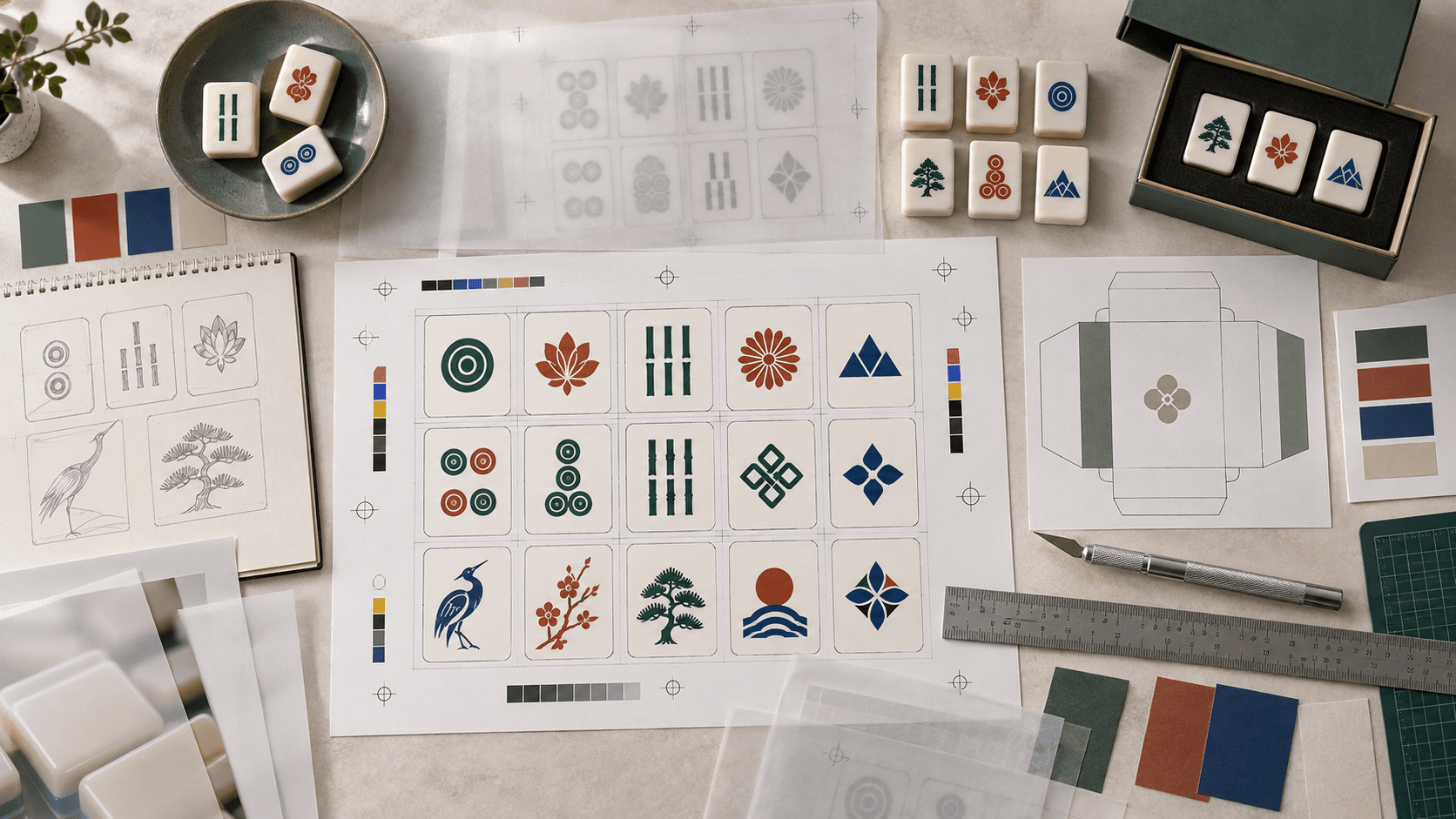
| Artwork release | Editable files, face schedule, colors, rights approval | Versioned production package | Conflicting files or missing fonts |
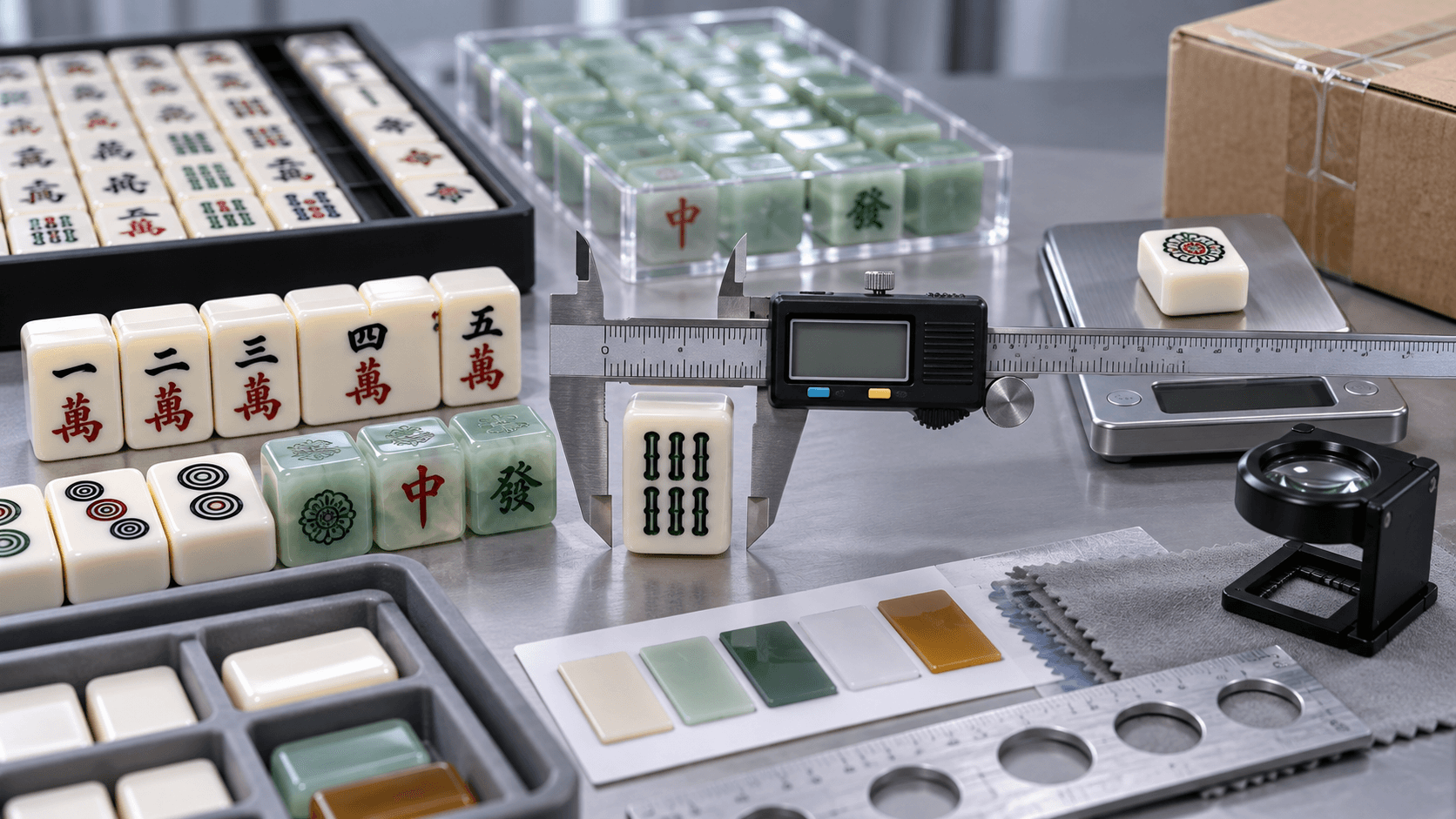
| Sample approval | Supplier sample and buyer review sheet | Written release or revision list | Feedback arriving in separate messages |
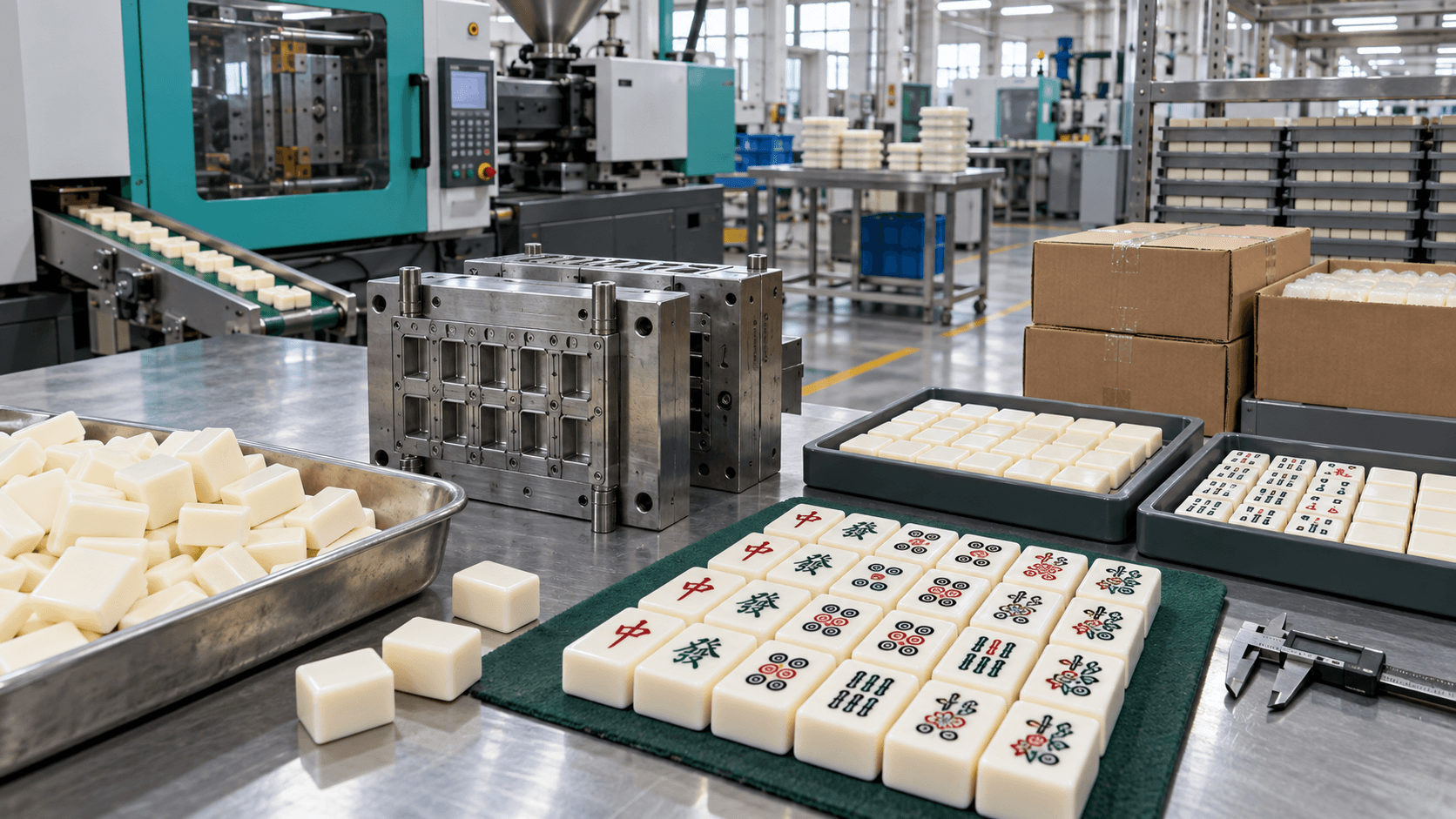
| Production release | Approved sample, order scope, packing list | Confirmed production version | Late design change |
| Shipment release | Inspection result, carton data, documents | Release instruction and freight handoff | Unclear acceptance criteria |
A gate is complete only when the named evidence exists. “Artwork nearly finished” is not an artwork release. “Sample looks good” is not approval if nobody has confirmed the face count, back orientation, packaging, and version.
Separate active work from waiting time
Some tasks consume production effort. Others wait for a buyer decision, material arrival, courier movement, or consolidated freight. Put both on the calendar. A three-day review that sits unanswered for ten days is a thirteen-day event from the launch team's point of view.
For every approval, assign a primary reviewer and a backup. Agree on the file format for comments. A single marked PDF or spreadsheet is faster to resolve than a mixture of chat screenshots, voice notes, and emails sent by different people.
The critical path changes with the product
A logo applied to an established set follows a different path from a new tile construction. So does a one-SKU order compared with five colorways sharing some components. Identify which work must finish before the next task can begin. Those linked tasks form the critical path; delays there move the completion date.
| Project pattern | Likely schedule driver | Buyer action that helps |
|---|---|---|
| Existing format, new logo | Brand-file approval and decoration sample | Supply released vector files and placement rules |
| Original face artwork | Face schedule, proofing, and revision rounds | Use one index and approve every unique face |
| New mold or dimensions | Engineering review, tooling, and dimensional sample | Freeze accessory fit and tolerance requirements early |
| Retail-ready collection | Product plus insert, label, barcode, and carton coordination | Approve physical packing, not only the flat artwork |
| Multiple destinations | Carton allocation, marks, documents, and freight booking | Issue a final destination split before packing |
Build a mahjong production lead time worksheet
The worksheet can be simple, current, and shared. Use columns for task, owner, input, planned start, planned finish, actual finish, status, and effect on later work. Add a notes field for assumptions. If a date is based on buyer approval within two business days, write that condition next to it.
Use versions for the schedule as well as the artwork. When a change is accepted, update the dates and record why. Do not preserve the old delivery date on the front page while quietly moving every task underneath it.
Four delays that hide inside ordinary requests
- “Can we see another color?” The question may require a new physical reference, not a screen adjustment.
- “Please add one accessory.” The addition can change the insert, box size, carton count, and shipping weight.
- “Use the newest logo.” If the released file is unclear, artwork preparation stops while ownership and version are checked.
- “Ship part of the order first.” A split can affect packing, labels, documents, freight bookings, and inspection timing.
None of these requests is automatically unreasonable. The problem begins when a commercial change is treated as a free calendar edit. Ask what work must be repeated, then make the new decision with its schedule effect visible.
Freight belongs on the same plan, but not in the same promise
Factory completion, shipment departure, customs clearance, and delivery are different milestones. Record the agreed trade term and named place. The International Chamber of Commerce explains that Incoterms rules allocate important buyer and seller responsibilities, costs, and risks for transport and formalities. They do not replace a route-specific freight plan.
Ask the freight provider which dates are estimates and which bookings are confirmed. Include time for export documents, destination requirements, warehouse appointments, and local delivery. Seasonal congestion and customs review are not controlled by the production floor.
Packaging changes can reopen finished work
A heavier case or larger insert can change the product-package combination and the outer carton. ISTA describes transport testing as a way to challenge or simulate hazards affecting that combination, and its test procedure overview distinguishes screening, partial simulation, and general simulation approaches. Buyers should select any test plan according to the real distribution channel and risk, rather than adding a generic test name to the calendar.
If the product, package, or distribution method changes after testing, review whether testing or packing approval must be repeated. A completed artwork date does not protect a box whose physical configuration changed later.
Run one short schedule meeting each week
The meeting needs four questions: What closed since the last update? What must close next? Which decision is late? What changed the critical path? Record answers in the shared schedule. Long status presentations rarely improve the date; fast decisions do.
Use photographs when physical work is involved and filenames when documents are involved. “Sample sent” should include the courier reference and sample revision. “Art approved” should include the released filename and approver.
Define recovery options before you need them
A recovery plan may include reducing initial SKUs, using an established component, separating optional accessories, approving substitute packaging, or changing the shipment split. Each option changes cost, product experience, or risk. List acceptable fallbacks during planning so the team is not inventing them under deadline pressure.
Do not assume faster freight can rescue unfinished production. Expedited transport only affects the relevant transport segment, and its availability and cost need confirmation.
FAQ
When does the production clock start?
Define this in writing. A reasonable trigger may require confirmed scope, commercial agreement, deposit where applicable, released artwork, and sample approval. A purchase order alone may not close all inputs.
Can a supplier quote one total number of days?
It can provide an estimate, but the buyer should ask for stage assumptions and exclusions. A stage plan shows where buyer approvals and external transport affect the result.
Does a repeat order use the old schedule?
Not automatically. Confirm that specifications, files, materials, quantities, packaging, factory capacity, and shipping route remain the same before using prior timing as a reference.
How should revision time be budgeted?
Plan at least one defined review cycle and state how additional rounds affect timing. The right allowance depends on artwork complexity and the buyer's approval process.
Can packaging and tile artwork run in parallel?
Concepts can, but final inserts and dimensions may depend on the approved product and accessories. Mark which packaging tasks are provisional and which are safe to release.
What happens when the quantity changes?
Ask the supplier to reconfirm materials, capacity, packing, inspection, and completion. A quantity change can alter more than the number of production units.
Who owns the master schedule?
One project owner should maintain it, while each task has its own responsible person. Buyers and suppliers should refer to the same current version.
Should inspection happen before all packing is complete?
The inspection point depends on what must be seen and sampled. Agree on timing so the goods are accessible while the final packing configuration can still be verified.
Is air freight always the fastest recovery choice?
No. Route availability, booking, export handling, customs, destination delivery, volume, and cost all matter. Obtain a current freight proposal for the actual shipment.
What date belongs in an internal launch plan?
Use the date inventory must be available for the next operation, then add receiving and contingency time. Do not substitute the factory completion date.
Ask for a schedule built around your actual brief
ABC Mahjong supports custom product review, artwork, samples, packaging, coordinated accessories, and production planning. Browse the available product categories, review the customization process, and read about ABC Mahjong. Then send the project team your configuration, quantity, artwork status, destination, and in-use date so it can map a project-specific mahjong production lead time rather than guess from a headline date.