
Custom mahjong packaging should be designed around the route a set takes after it leaves the factory. A box displayed in a boutique has a different job from a parcel shipped by an online seller, a presentation kit handed to an executive, or a master carton opened by a distributor. Before choosing materials or decoration, define where the product is sold, who handles it, how often it is shipped alone, and what the buyer should see first.
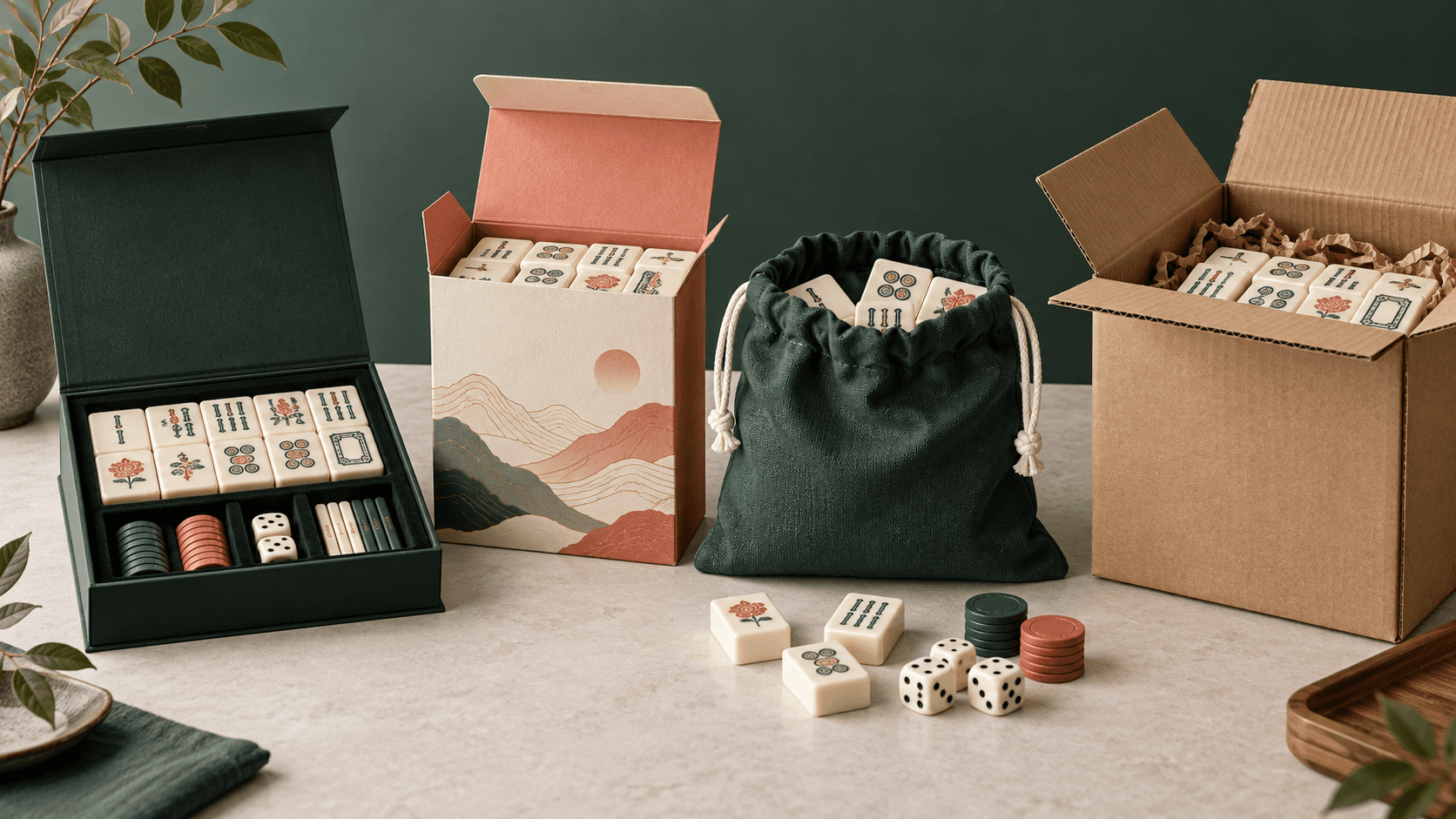
Four boxes arrive at four different doors
Imagine the same Mahjong set arriving in four places. At a gift shop, staff place it on a shelf and customers judge the front panel from a few feet away. At an e-commerce customer's home, the pack has already passed through a fulfillment center and a parcel network. At a corporate event, the recipient opens it at a table while a brand manager watches. At a distributor's warehouse, workers scan labels, count cartons, and split stock for dealers.
The tiles may be identical. The best packaging specification probably is not. Treat the sales channel as an engineering input, not a marketing footnote.
Channel decision matrix
| Primary channel | Packaging must do well | Questions to resolve |
|---|---|---|
| Physical retail | Communicate the set quickly, stack neatly, support shelf handling | Front panel, dimensions, barcode, hanging or shelving, tamper evidence |
| E-commerce | Protect a heavy multi-part set through parcel handling | Internal movement, corners, closures, ship-in-own-container or overbox |
| Corporate gift | Create a deliberate opening sequence and carry brand meaning | Message card, logo position, recipient names, event date, presentation |
| Wholesale distribution | Support counting, scanning, storage, and repeat replenishment | Case pack, carton marks, product codes, mixed SKUs, pallet or parcel route |
| Club or event use | Open, close, carry, and organize components repeatedly | Durability, handles, replaceable parts, fast count, owner identification |
Design the inside before decorating the outside
A Mahjong product is a collection of dense pieces. Tiles, racks, pushers, dice, markers, rule material, and other components may have very different shapes. Begin with a component map showing the quantity, dimensions, weight, material, finish, and removal method for every part.
Then decide what the interior must accomplish. Does each component need a fixed location? Can tiles be packed in trays or rows? Will a customer understand where accessories belong after the first game? Can a rack rub against a polished tile? Is there enough finger space to lift a tray without turning the box upside down?
An insert is not only a shipping protector. It teaches the customer how the set is organized. A beautiful interior that is difficult to repack will feel careless after the first use.
Build the unboxing sequence on paper
- Closed pack: name the product, show the brand, and set expectations without overcrowding the front.
- First opening: decide whether the customer sees tiles, a message card, a rule guide, or an accessory layer first.
- Component removal: make heavy or tightly fitted pieces easy to lift without damage.
- First game: help the user identify components and understand where each item belongs.
- Storage after play: confirm that the original organization still makes sense once protective films and temporary packing are removed.
Sketch these five moments before discussing foil, embossing, windows, ribbons, or decorative sleeves. Decoration works best when the structure already supports the experience.
What changes in custom mahjong packaging for e-commerce?
Parcel delivery adds drops, vibration, compression, repeated transfers, and the possibility that the set travels in several orientations. The retail box and transport packaging should be considered as one system. A rigid gift box may look substantial but still allow dense tiles to move. A soft bag may protect surfaces while doing little for corner impact. An overbox may solve transport risk but change fulfillment cost and customer presentation.
The International Safe Transit Association explains that test selection should reflect the actual distribution environment. Its test procedures range from screening tests to general simulations of transport hazards, and its official test procedure overview includes options for parcel, e-commerce, and international distribution patterns. Buyers do not need to name a test casually. They should first document the route, packaged weight, handling method, acceptable product condition, and whether a retailer has its own protocol.
A simple in-house drop check can be useful during early design, but it is not the same as a formal test or certification. Write down the method and result. If a project needs a recognized procedure, use the current protocol and a capable laboratory.
Retail labels are part of the artwork system
Product name, set contents, origin marking, responsible business details, warnings, language, barcode, and any channel-specific data need reserved space. The exact legal content depends on the product classification and destination market, so it should be reviewed by the buyer or qualified adviser. Do not ask the graphic designer to invent compliance language at the last minute.
Barcode position deserves an early decision. GS1 advises considering the packaging process and avoiding locations where the symbol may be obscured or damaged, such as an edge, fold, flap, or covering layer. Its 10 steps to barcode a product offers a practical starting point. Confirm the required symbol, number assignment, size, contrast, and verification with the retailer or GS1 organization serving the target market.
Choose a structure by behavior, not by name
Terms such as gift box, rigid box, carrying case, storage box, travel bag, sleeve, and mailer can describe many constructions. Ask for a structural sample or drawing with external and internal dimensions. Record the board, fabric, plastic, foam, paper, hardware, closure, handle, insert, surface decoration, and packing method that matter to the approved design.
A few useful questions:
- Will the pack be opened once or hundreds of times?
- Must it stand upright, lie flat, or fit a standard shelf depth?
- Can the contents move when the pack is shaken gently?
- Will a glossy surface show scratches or fingerprints?
- Does a magnetic or mechanical closure remain reliable at the packed weight?
- Can components be replaced without redesigning the entire insert?
- What happens when several retail boxes are stacked in an export carton?
A packaging brief the factory can quote
| Brief section | Include |
|---|---|
| Product | Component list, quantities, dimensions, weight, finish, approved samples |
| Channel | Retail, marketplace, DTC, gift, club, distribution, or mixed route |
| Structure | Preferred format, opening direction, insert plan, closure, handle, storage use |
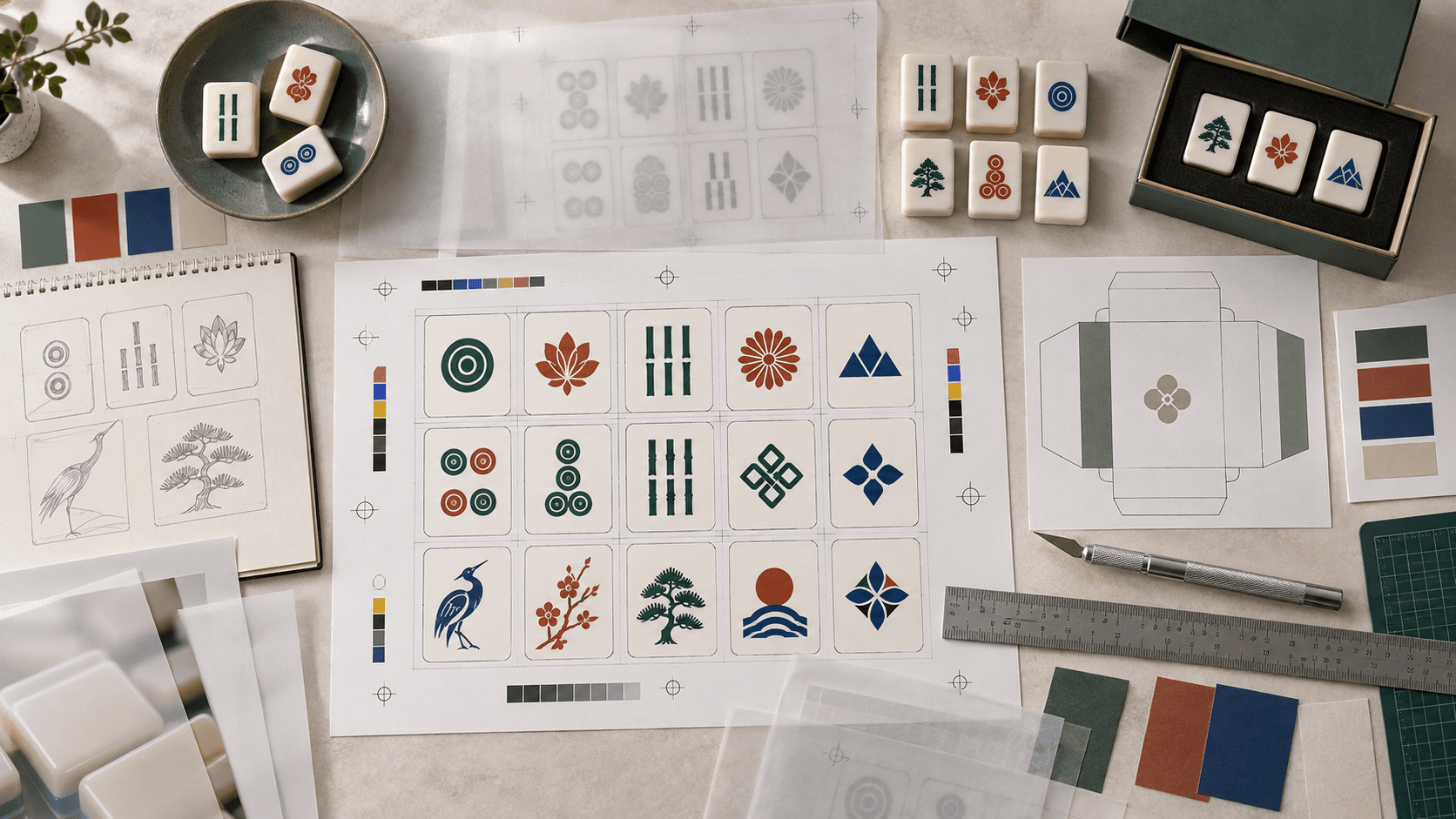
| Graphics | Logo, panels, colors, finishes, languages, product photography, approval files |
| Identification | SKU, barcode, batch or lot needs, labels, carton marks |
| Distribution | Destination, case pack, parcel or pallet route, fulfillment rules, test requirement |
Prototype in the right order
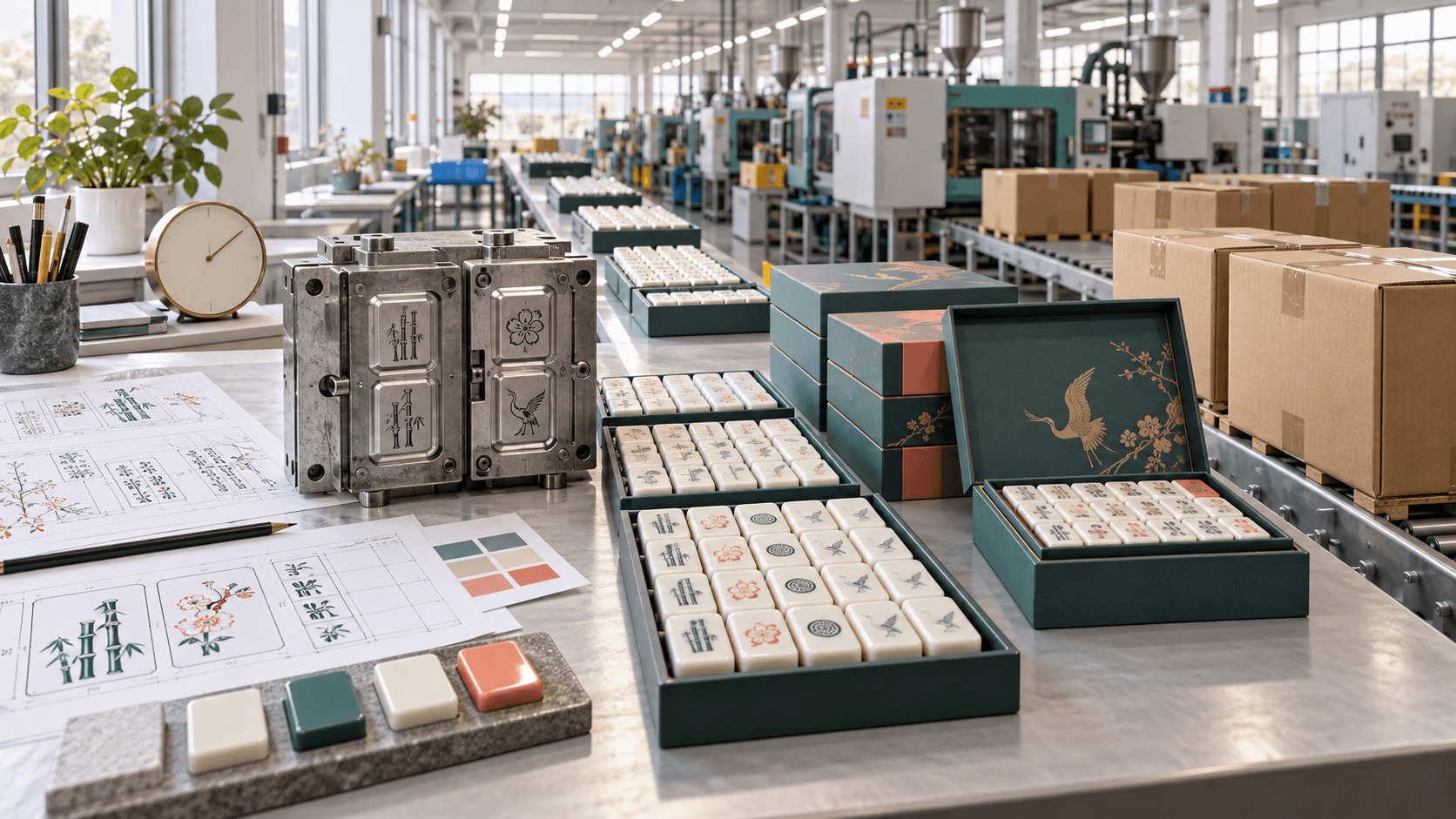
A white structural mockup can answer fit and opening questions before expensive decoration is added. A printed proof can answer text, position, and color questions without proving structural durability. A finished pre-production sample brings those decisions together. Label each sample by purpose so nobody assumes that a color proof has already validated transit performance.
Use the approved sample as one reference, but also retain drawings, material descriptions, artwork versions, component lists, and inspection points. Physical samples can be lost or damaged. Written specifications make repeat orders easier to compare.
Do not let sustainability become a vague label
Reducing unnecessary volume, making inserts easier to separate, avoiding redundant layers, and preventing product damage can all be useful design goals. But broad claims such as eco-friendly or recyclable depend on materials, adhesives, coatings, local collection systems, and applicable marketing rules. Ask the supplier for material information, and let the buyer verify any environmental claim intended for the target market.
Sometimes a slightly stronger pack that prevents a heavy set from being discarded is the more responsible choice. Measure the tradeoff rather than choosing the thinnest material for appearance's sake.
Approval should cover the carton, not only the gift box
Before production, approve the finished product pack, inner quantity, master carton dimensions, gross and net weight expectations, carton marks, label position, sealing method, and any pallet pattern or fulfillment label. Check that the retail packaging does not scuff when packed and removed. Confirm that heavy contents do not crush neighboring packs.
For multi-SKU programs, make the colorway or product code readable without opening cartons. A warehouse should not need to judge a set by subtle artwork differences.
FAQ
Should a retail box also be the shipping box?
It depends on the distribution route, structure, surface, security, and customer experience. Test the exact packed configuration. Many projects use an overbox or additional protection when the presentation box is not designed for parcel handling.
When should the insert be designed?
Begin after the component list and approximate dimensions are stable. Finalize it after the tiles, accessories, and pack structure have been confirmed together.
Can the same box support several tile colors?
Possibly. A shared structure may improve production efficiency, while sleeves, labels, or printed panels differentiate SKUs. Confirm whether the colorways have identical components and whether the retail channel accepts the proposed identification method.
What files are needed for printed boxes?
Ask for the approved dieline and printing requirements. Supply editable artwork, linked images, fonts or outlined text, color references, copy, barcode assets, and a flattened proof. Keep a revision log.
How can buyers reduce movement inside the box?
Map every component, use correctly sized compartments or wraps, protect contact surfaces, and test the closed pack in expected orientations. Avoid solving all movement with loose filler that makes repacking confusing.
Who is responsible for compliance text?
The buyer should determine required statements for the target market and product classification, with qualified advice where needed. The factory can apply approved copy and help assess available panel space.
What should be checked on a packaging sample?
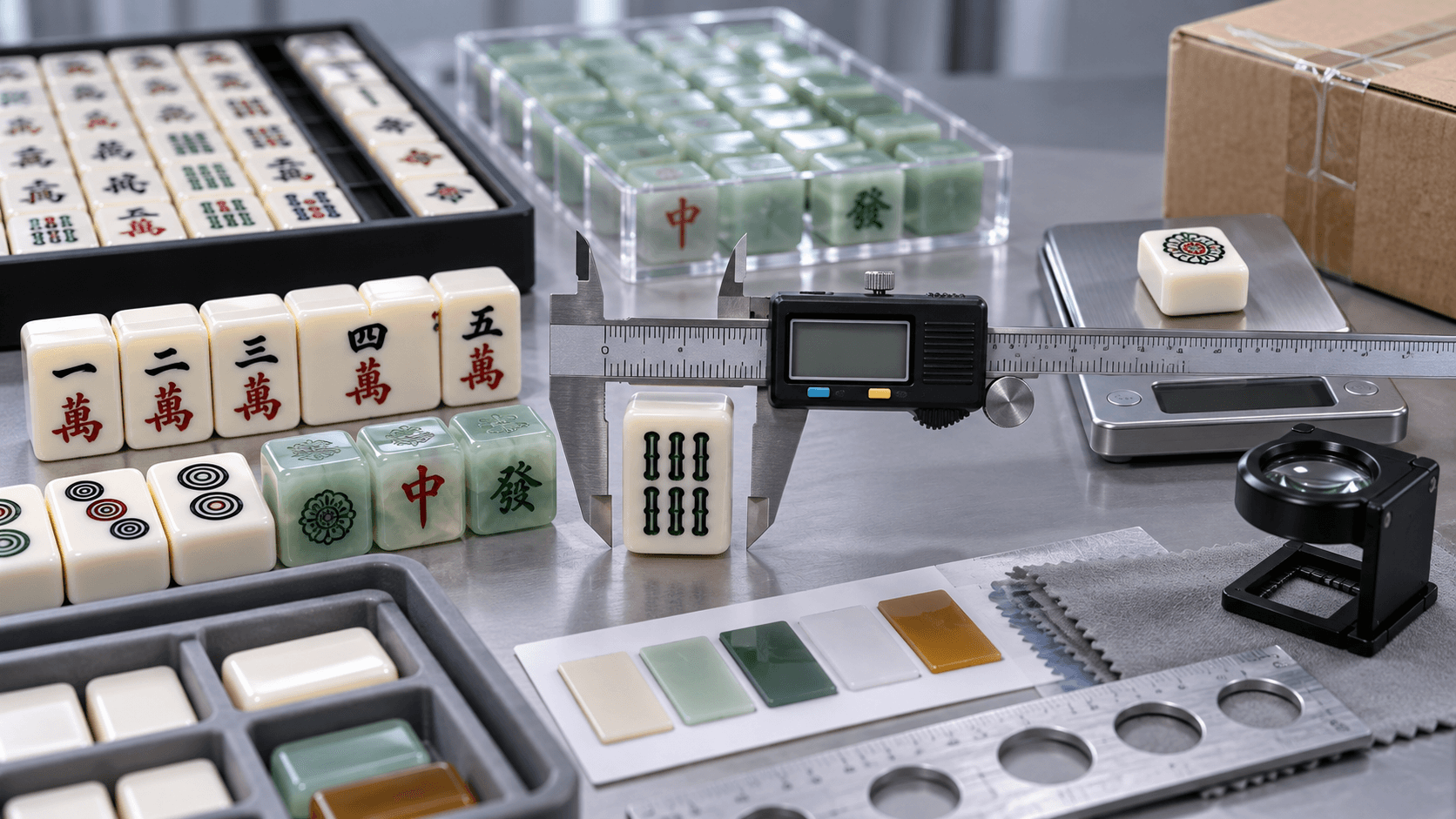
Check fit, removal, repacking, closures, handles, print, color, finish, rub points, odor, labels, barcode position, component protection, carton fit, and the complete opening sequence.
Bring the product route into the first conversation
ABC Mahjong supports tiles, racks, pushers, cases, storage solutions, gift boxes, labels, manuals, and coordinated accessories. See the product range and the company's OEM/ODM workflow, then review its manufacturing and quality approach. To discuss custom mahjong packaging, use the contact form and include the component list, sales channel, quantity, destination, artwork status, and any retailer or transit requirements.