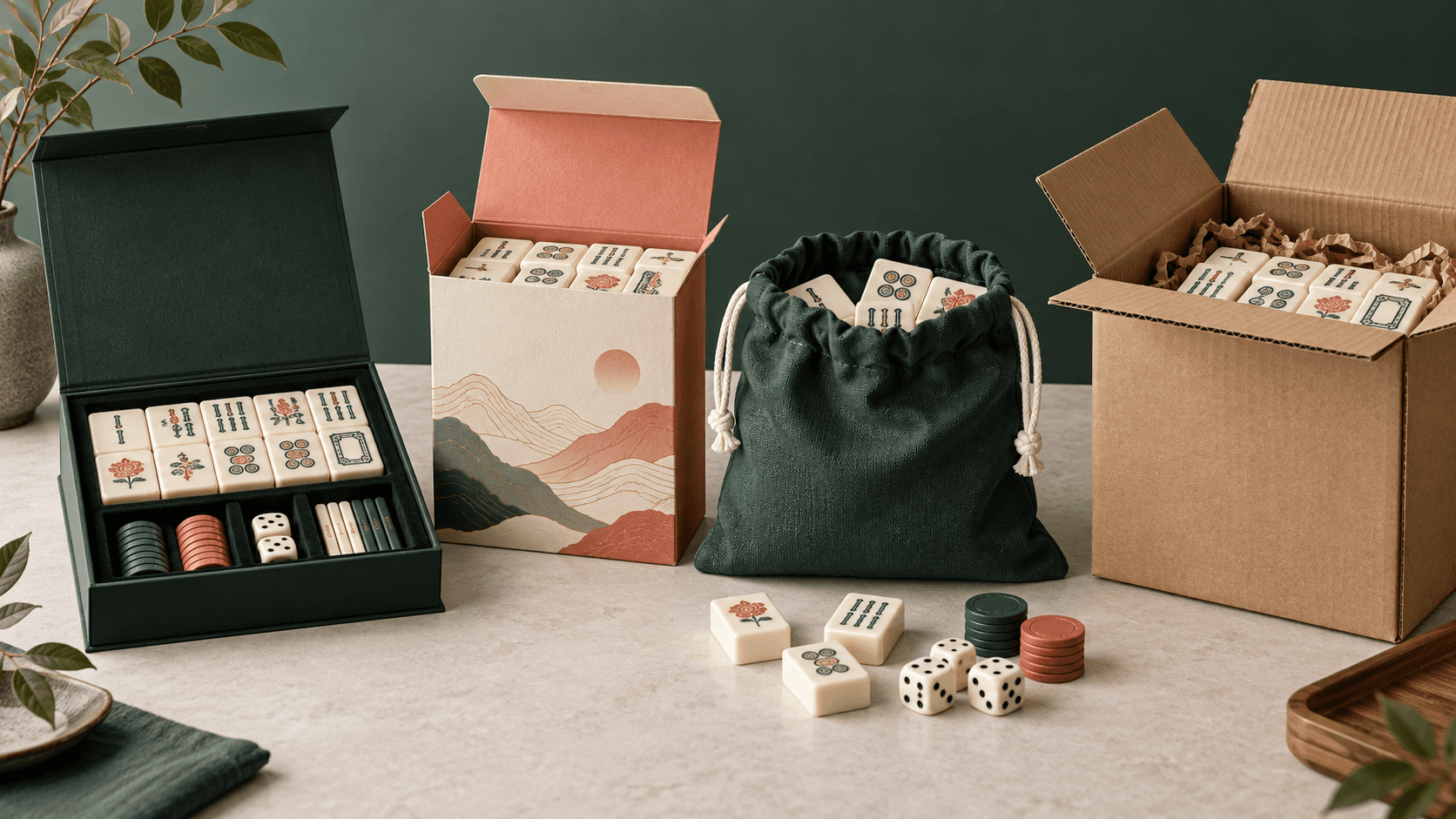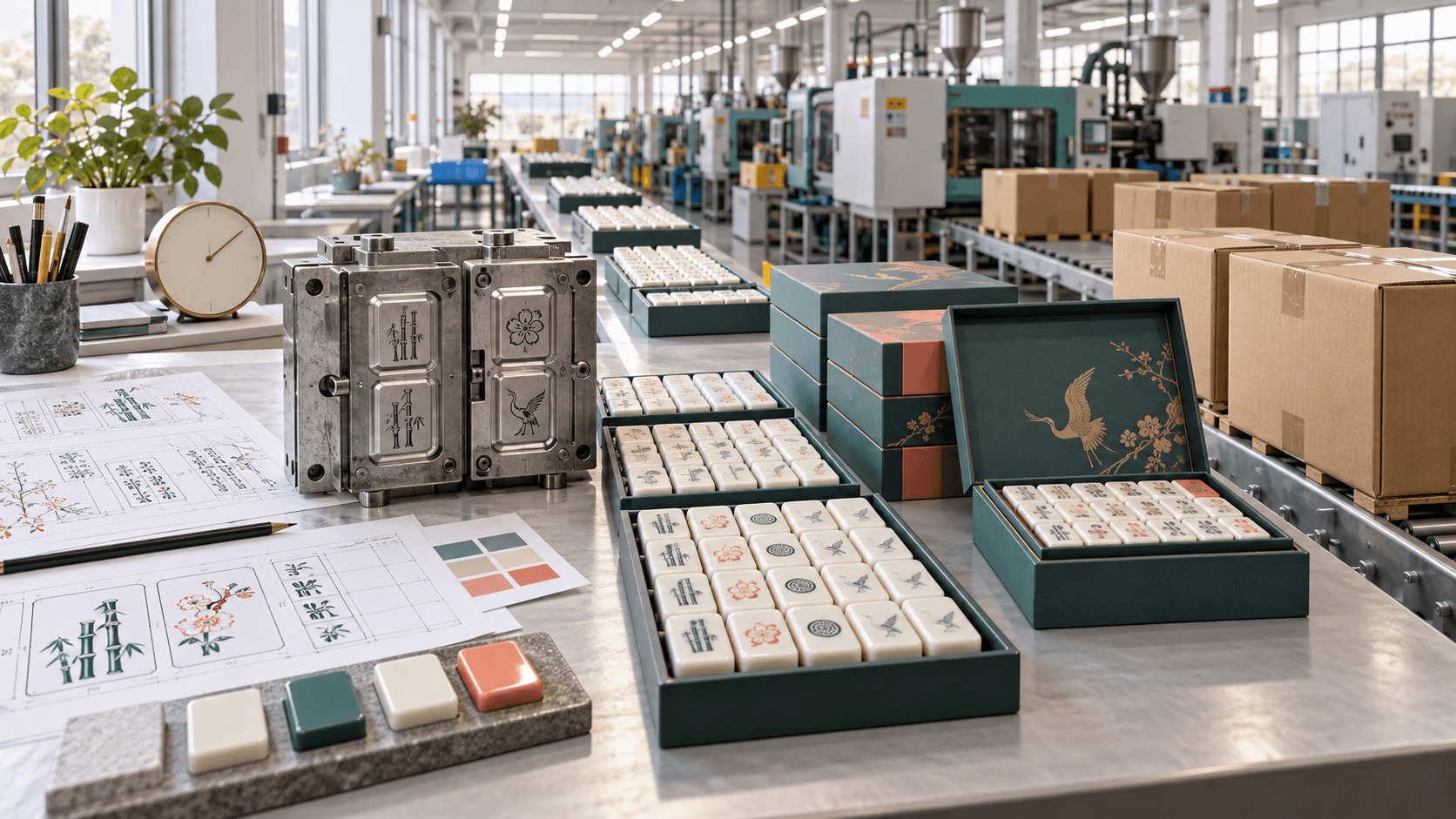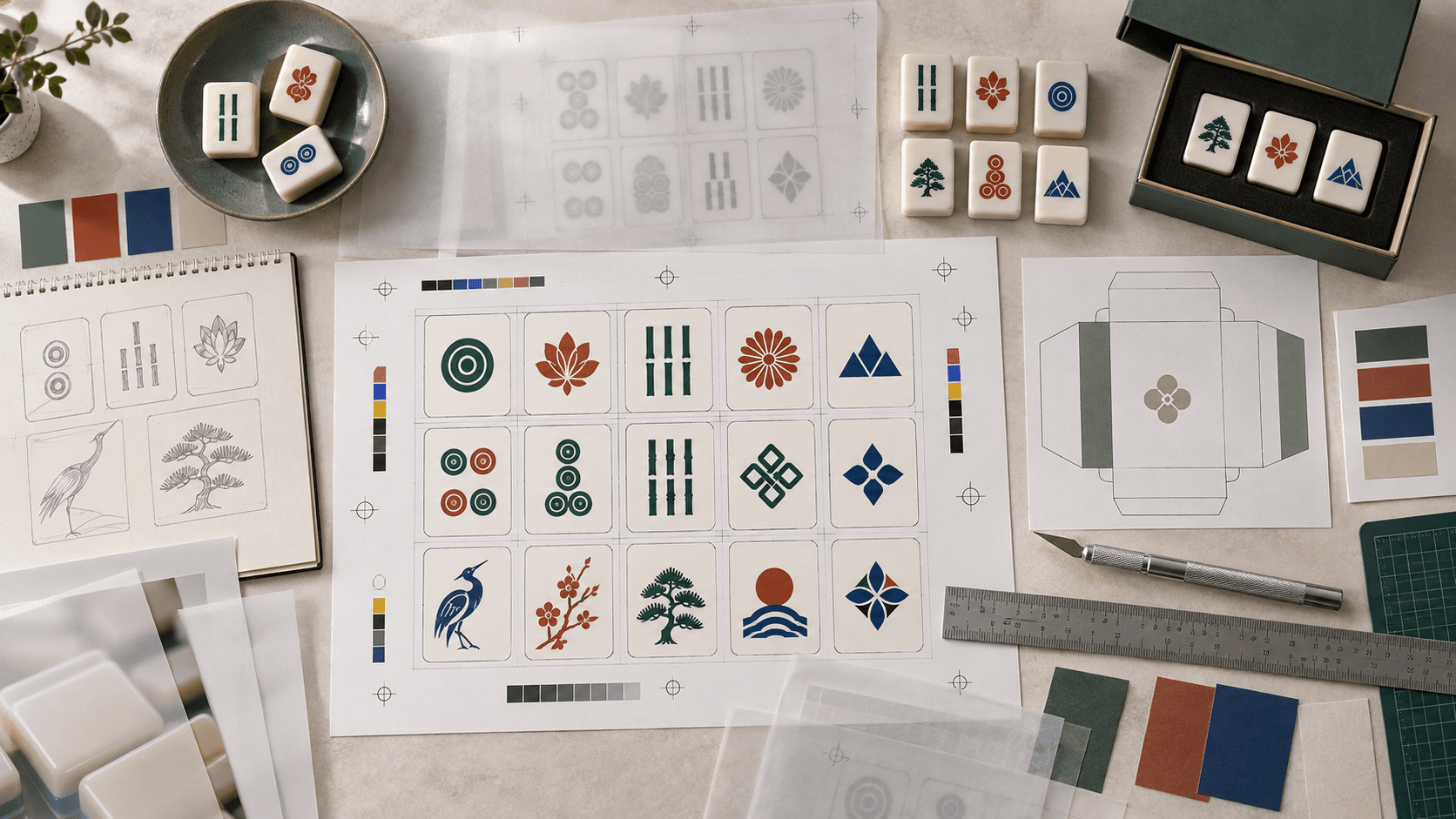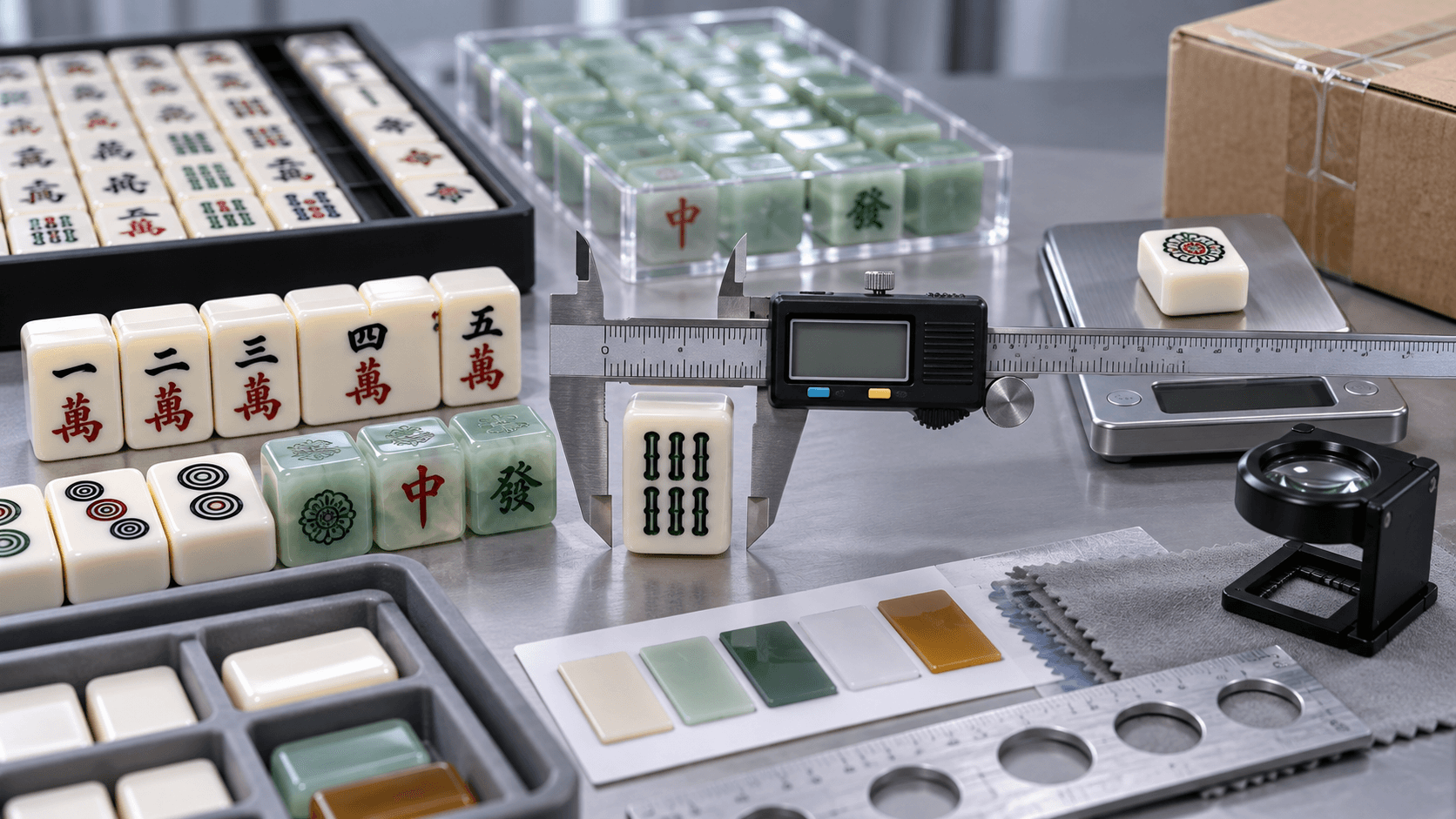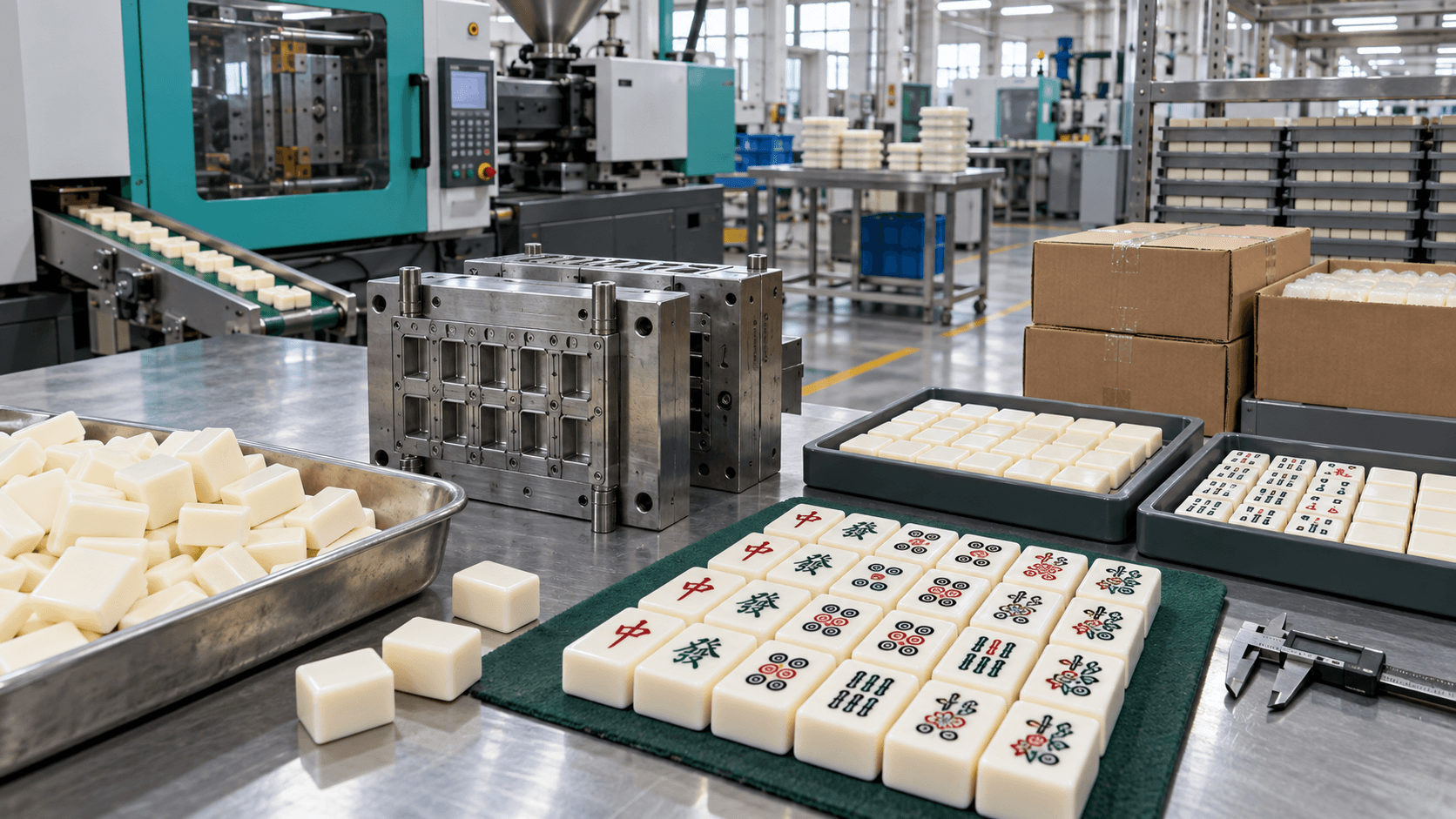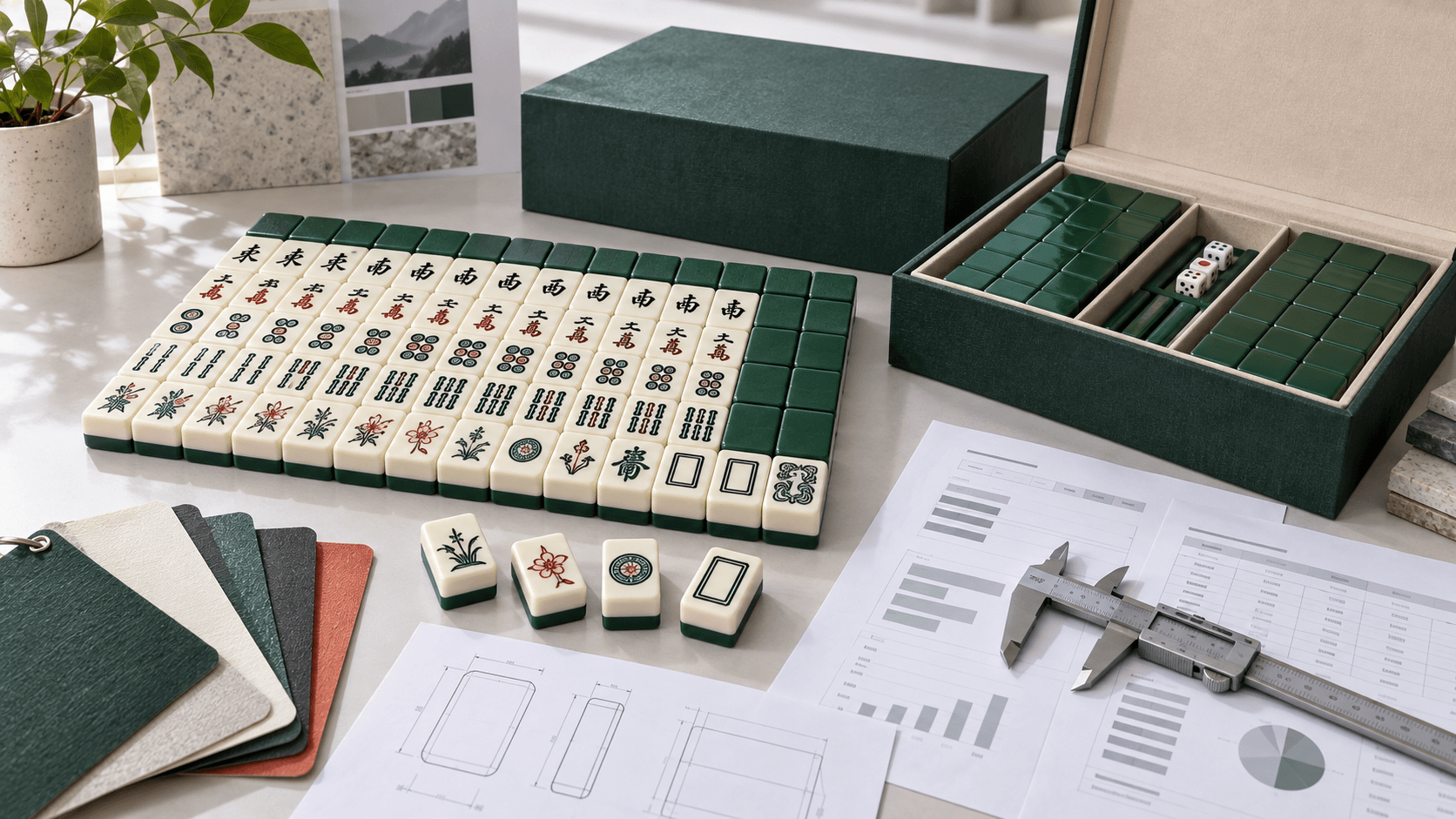
Private label mahjong sets work best when the buyer treats the project as a small product system, not a logo added to a generic box. Tiles, racks, pushers, dice, a case, rule material, labels, and retail packaging all affect how the customer experiences the brand. Before requesting a price, define the market, the set format, the visual direction, the selling channel, and what must be unique. That brief gives the factory something useful to develop.
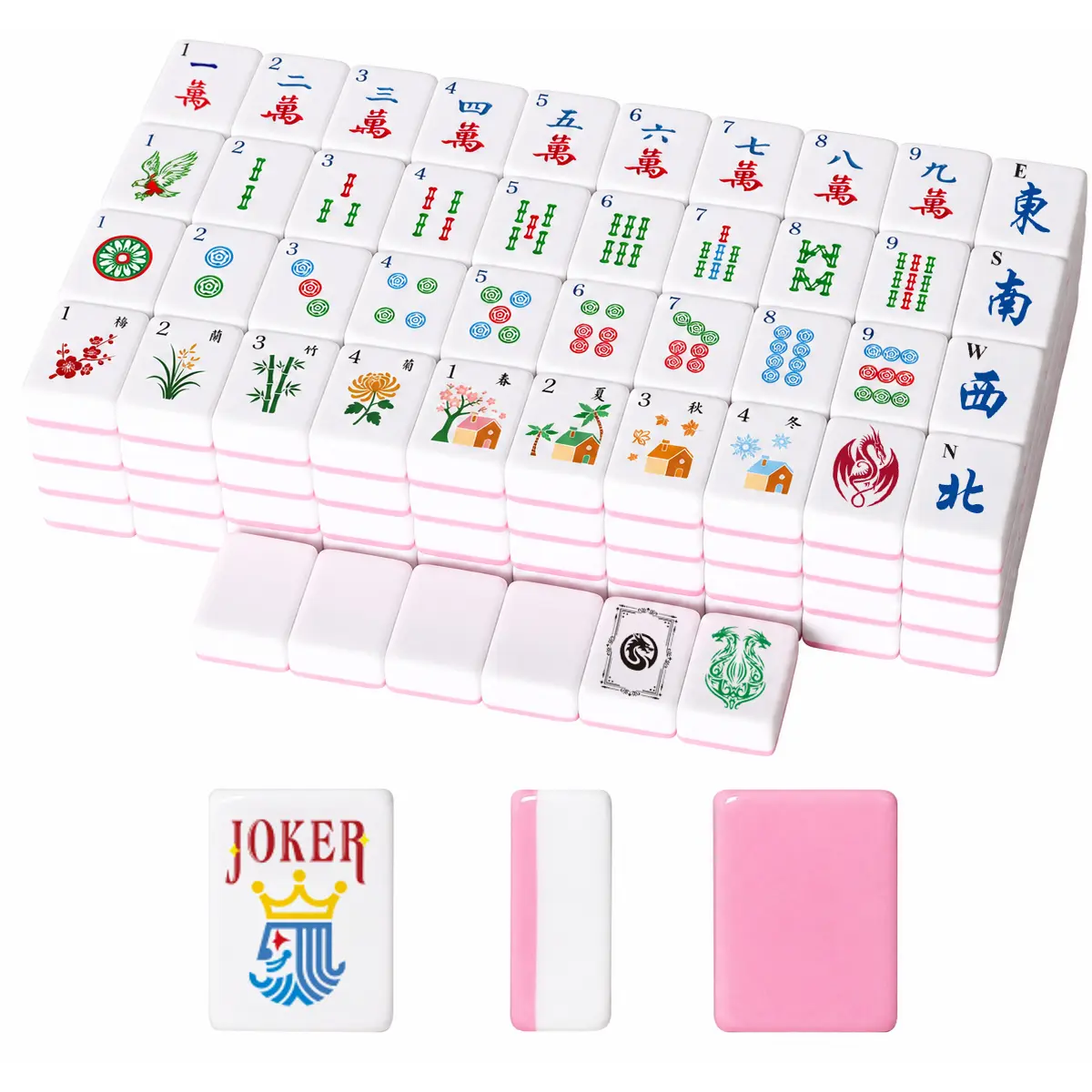
Private label can mean three different projects
The phrase covers a wide range of work. Buyers should identify which level they actually need.
- Branding an existing product: start with an established tile and accessory format, then add a logo, labels, inserts, or branded packaging.
- Creating a coordinated collection: select tiles, racks, pushers, a mat, case, and packaging that share a color and design language.
- Developing an exclusive product: change artwork, dimensions, structure, molds, materials, or finishing to create a more defensible design.
These levels have different development work, tooling risk, order requirements, and schedules. A practical first launch does not need to use every possible custom option.
Retail launch decisions to make before contacting a factory
| Decision | Questions for the brand | Factory output |
|---|---|---|
| Customer | Beginner, regular player, gift buyer, club, or collector? | Suitable format and accessory mix |
| Market | American, Chinese, regional, or custom rules? | Tile count, faces, text, and printed material |
| Positioning | Entry, mid-market, gift, or premium? | Material, finish, case, and packaging direction |
| Channel | Boutique, marketplace, DTC, wholesale, or event? | Retail labels, carton plan, and fulfillment-friendly packing |
| Launch plan | Pilot, seasonal drop, permanent line, or multi-SKU range? | Sample path, quantity plan, and repeat-order basis |
A seven-stage development path
1. Write a one-page product brief
A useful brief is specific without pretending every detail is settled. State the target buyer, sales market, set type, desired components, quantity range, retail price position, visual references, packaging preference, and launch date. Mark each item as required, preferred, or open to factory advice.
2. Choose what deserves customization
Customization should strengthen the brand or solve a customer problem. Tile artwork is highly visible, but a well-designed case or clear beginner insert may create more practical value. Match the custom work to the reason a customer would choose your set.
Common options include:
- Tile face and back artwork
- Colors, transparent effects, decorative inclusions, and surface finish
- Logo placement on tiles, racks, pushers, cases, or mats
- Custom molds or structural changes
- Gift boxes, carry cases, inserts, labels, and outer cartons
- Rulebooks, product cards, thank-you cards, and barcode labels
3. Build an artwork control sheet
A full set contains many visual elements. Use one control sheet to list every tile face, duplicate, joker, blank, flower, logo position, accessory, and printed item. Give files clear version names. Someone on the buyer side must own spelling, number, symbol, and rules review.
4. Confirm the sample plan
Ask what the sample is intended to validate. A mockup may answer layout questions. A material or color chip can narrow the visual direction. A functional set checks handling, legibility, component fit, and packaging. A pre-production sample should be tied to the final approved files.
Keep a written comment log. “Make the pink warmer” is hard to control; a marked image, reference sample, and agreed color direction are easier for both teams.
5. Freeze the product specification
Before production, gather the approved artwork, materials, dimensions, colors, finish, accessory quantities, packaging construction, labels, and carton marks in one final record. Note which physical sample is the approval reference. If a decision remains open, it is not ready for mass production.
6. Inspect the collection as a set
Individual parts may pass inspection and still look wrong together. Check tile-to-rack fit, color coordination, component count, case fit, printed copy, barcode placement, and how the customer unpacks the product. For private label mahjong sets, presentation consistency is part of product quality.
7. Plan the second order before shipping the first
Record final component codes, files, approved color references, packaging specifications, and any approved production changes. A brand should be able to reorder without rebuilding the product from memory. Ask how the supplier controls repeat-order consistency and how long special materials or packaging remain available.
MOQ, cost, and schedule: use ranges carefully
There is no honest universal MOQ or lead time for private label work. Existing structures with simple branding usually require less development than custom molds, special effects, or complex gift packaging. Cost can include product samples, artwork preparation, printing plates, molds, color matching, packaging prototypes, inspection, and freight.
Ask the supplier to separate:
- One-time development or tooling charges
- Sample charges and courier cost
- Unit price at clearly stated quantities
- Packaging and accessory costs
- Inspection or testing requested by the buyer
- Shipping terms and destination assumptions
This makes redesign easier. If the first-order budget is tight, you can see whether to simplify the box, reduce the number of custom accessories, or start from an established tile structure without losing the main brand idea.
Common launch mistakes
Designing the box before fixing the contents
Tile dimensions, rack length, case layout, rulebook size, and accessory count affect the package. Freeze the product architecture before finishing dielines and inserts.
Approving screens instead of physical references
Displays vary. Physical color, transparency, texture, engraving depth, and print finish need a sample-based decision where those details matter.
Using a customer-facing retail deadline as the factory deadline
Leave time for sample transit, feedback, production, inspection, freight, customs, receiving, photography, and fulfillment setup. A shipment date is not a shelf date.
Launching too many SKUs
Every extra color or packaging variant creates more files, approval points, inventory, and quality combinations. A focused first collection often teaches more than a broad launch.
What ABC Mahjong can support
ABC Mahjong describes its service as a coordinated path from requirement review and quotation through artwork, sampling, approval, production, inspection, packing, and delivery. The current custom Mahjong service covers tiles, colors, artwork, logos, molds, finishes, packaging, labels, manuals, and matching accessories. Buyers can also review the available products before deciding which elements need new development.
Project terms are confirmed from the real brief. That includes MOQ, sample cost, tooling, schedule, and shipping. Keeping those figures project-specific is more useful than publishing a number that fits one product but not another.
FAQ
Can a new brand begin with an existing Mahjong structure?
Yes. Starting from an established format and concentrating on artwork, colors, packaging, and selected accessories can reduce development complexity while still creating a recognizable brand presentation.
Do private label projects require custom molds?
Not always. A mold is generally considered when dimensions, shape, or structure must change. Printing, engraving, color, labels, and packaging may be customized without a new product mold.
Who should approve tile artwork?
The brand should assign one accountable approver who understands the intended rules and market. The factory can review production feasibility, but product and language accuracy remain a shared responsibility.
Can packaging and accessories use the same visual system?
Yes. Coordinating color references, logos, patterns, and finish choices across tiles, racks, mats, cases, inserts, and boxes creates a stronger retail collection.
What should I send for a quotation?
Send the set type, target market, quantity, custom requirements, components, packaging needs, destination, schedule, artwork status, and reference images. Note which decisions are fixed and which need recommendations.
How should I compare two private label quotations?
Confirm that both include the same components, artwork work, tooling, samples, packaging, inspection, trade terms, and freight assumptions. Compare risk and scope, not only unit price.
Turn the idea into a production brief
Good private label mahjong sets feel coherent because each decision serves the same customer and brand position. Begin with the product architecture, spend time on the sample and specification, and keep a clean approval record for repeat production.