
If you are evaluating a Mahjong Racks & Pushers manufacturer, you are probably not just buying a small game accessory. You are choosing a part that affects how the tiles sit, how smoothly the wall is managed, and how the set feels in the hand. That matters to retailers, clubs, custom game brands, and product teams because a rack that flexes, scratches, or tips easily can make an otherwise good set feel cheap.
The visible rack style in this category is usually straightforward: a long, low-profile holder with segmented tile slots, a transparent or colored body, and a reinforced end piece. In the sample shown, the body appears to be transparent blue-tinted plastic or acrylic, with a shiny gold-colored metal end plate fixed by four visible fasteners. That kind of mixed-material construction is common when a buyer wants both visual appeal and a more rigid edge where the rack takes repeated contact. It is a small detail, but in tabletop products, small details are often what customers remember.
What a good rack and pusher actually needs to do
At a basic level, the rack holds tiles in a neat row and helps the player manage their hand during play. The pusher element helps move tiles forward cleanly, or supports the front edge of the rack depending on the design. In practice, the part has to do several jobs at once: it must keep the tiles aligned, resist bending, sit flat on a table, and survive repeated handling without the corners whitening or the finish clouding over.
That sounds simple, but anyone who has handled mass-produced tabletop accessories knows the failure points tend to be boring ones. A rack may rock slightly on a smooth table. A slot may be too loose for thinner tiles. A decorative insert may scratch during packing. A metal end cap may look good but leave a sharp edge if it is not formed carefully. Buyers often discover these issues only after sampling, which is why the supplier choice matters as much as the design itself.
Common materials and why they are used
Plastic or acrylic bodies
Many rack bodies are made from injection-molded plastic or cast acrylic-style materials, depending on the design and target price point. Clear or translucent colored bodies are popular because they look clean, let the product stand out on retail shelves, and can give the set a more premium feel without adding much weight. The blue-tinted transparent look seen in the example is typical of a product designed to be both functional and visually distinct.
For buyers, the practical question is not only appearance. You want to know whether the body will hold shape over time, whether the edges can be finished cleanly, and whether the color will look consistent from batch to batch. Minor color drift may be acceptable in some consumer goods, but in a matched set of accessories it can read as poor quality.
Metal reinforcement
Some racks use a metal end plate or end reinforcement, like the gold-toned piece visible in the sample image. This can improve stiffness and give the product a more finished feel. It may also help protect the end of the rack from repeated impact. The downside is that metal parts need careful forming and fastening. If the interface between metal and plastic is not well controlled, a supplier can end up with looseness, noise, or cosmetic gaps that show up immediately in the hand.
Printed or decorative tile faces
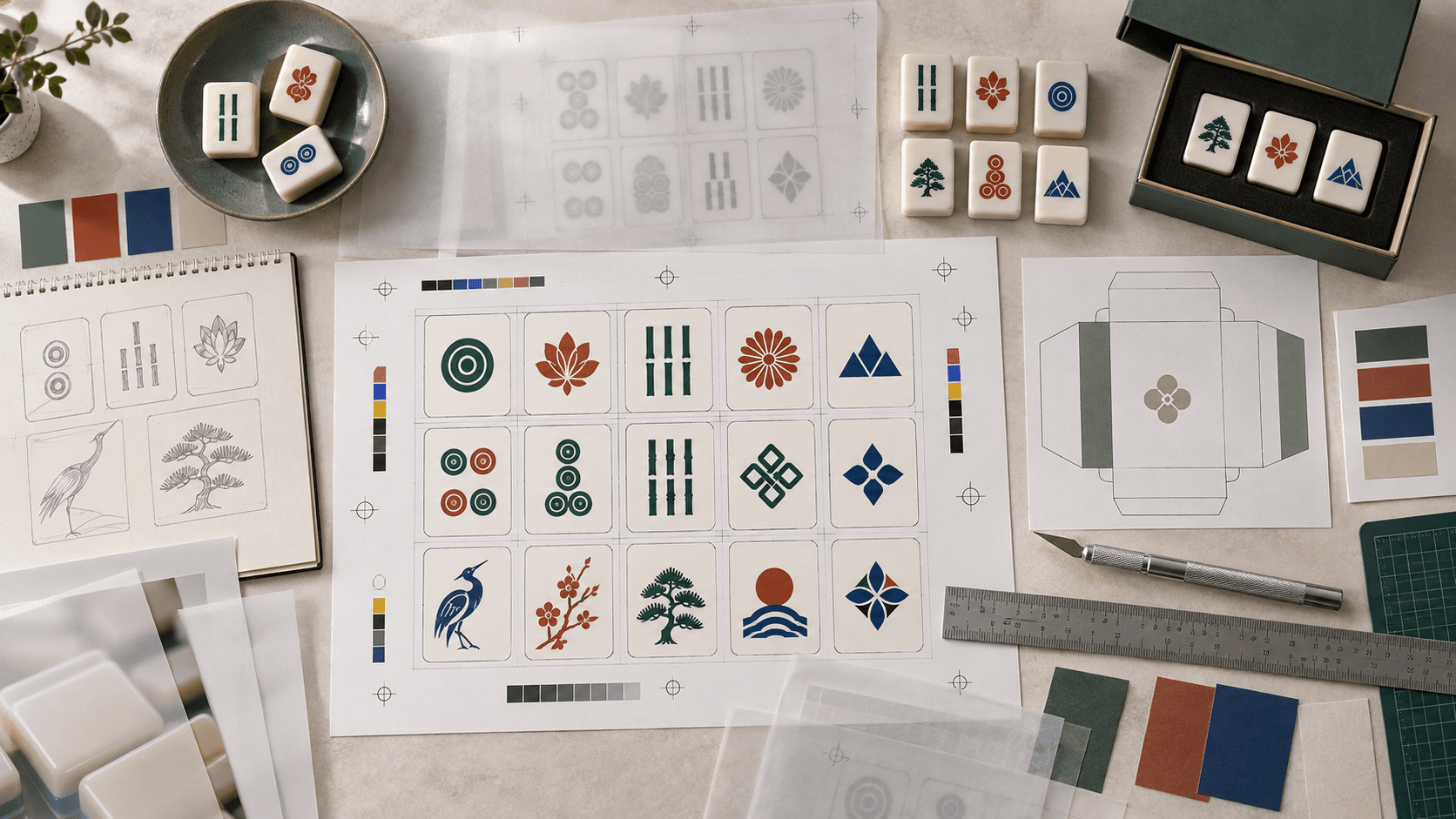
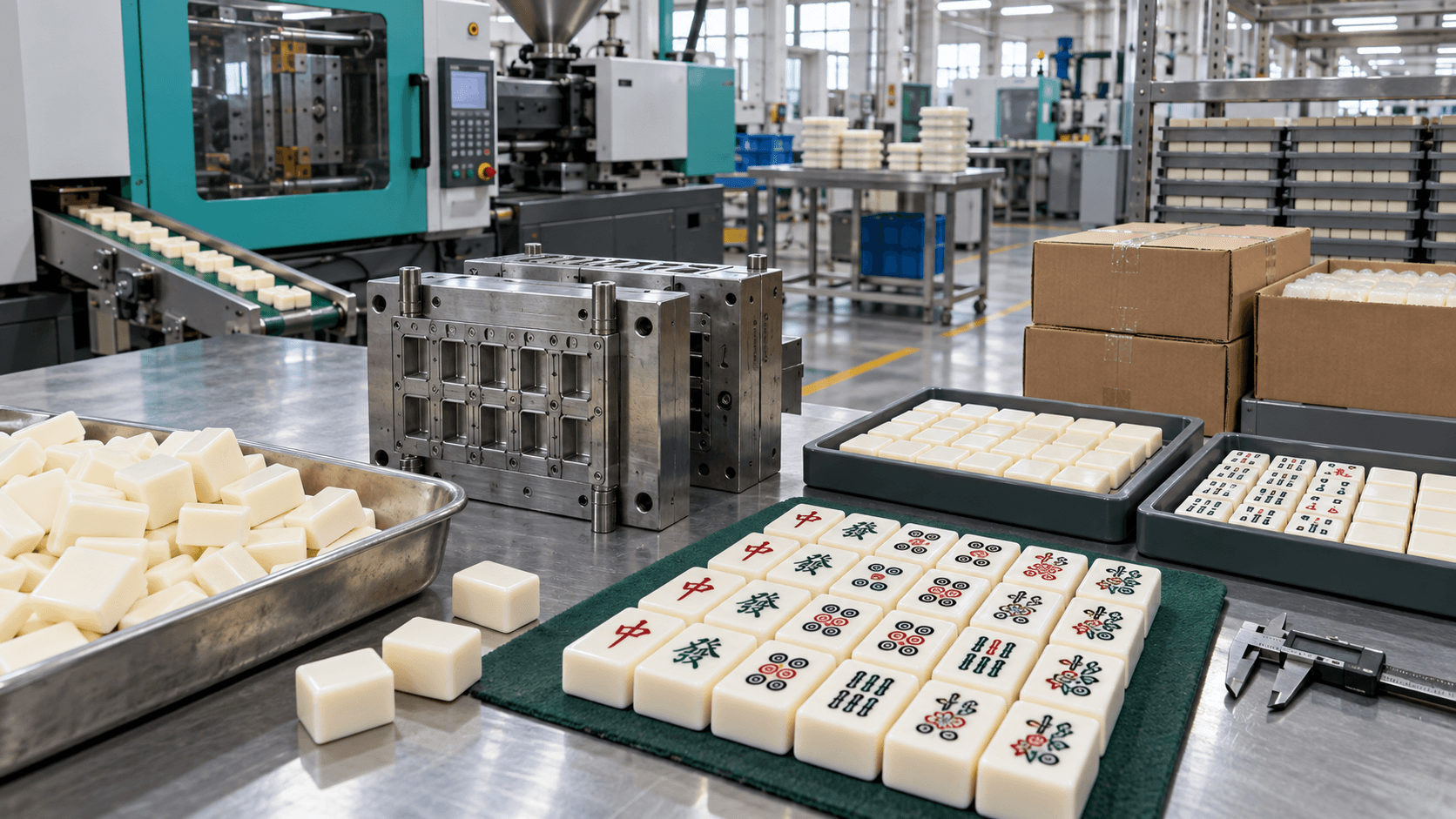
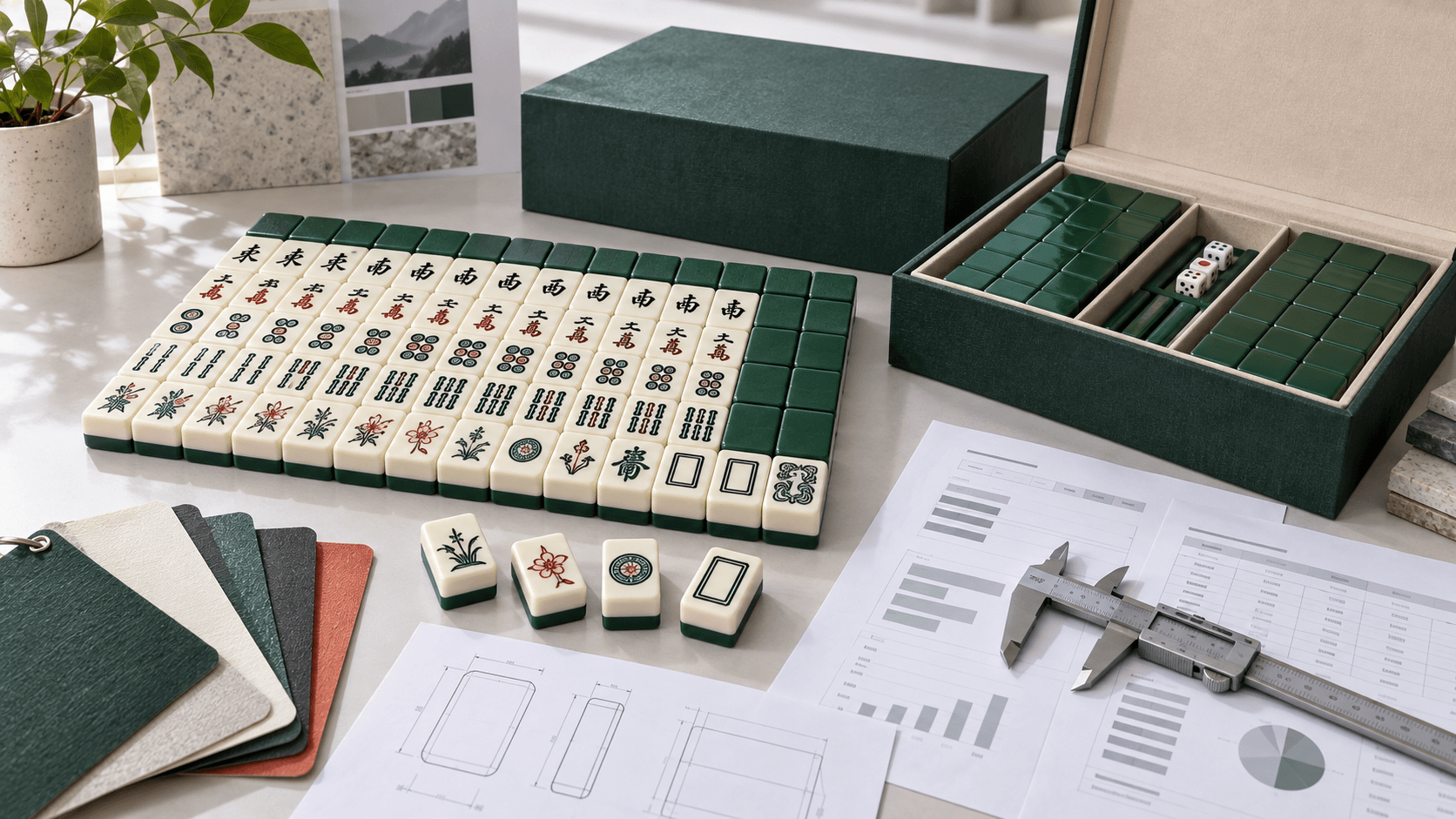
In some products, the tiles themselves carry printed symbols, colors, or game-specific markings. That is not just decoration; the print durability and alignment can determine whether the set remains readable after use. Buyers should ask how the decoration is applied, what surface preparation is used, and how the printing stands up to rubbing and storage. A tile set that looks crisp out of the box but wears quickly will create headaches for retailers and end users alike.
How manufacturers usually build these parts
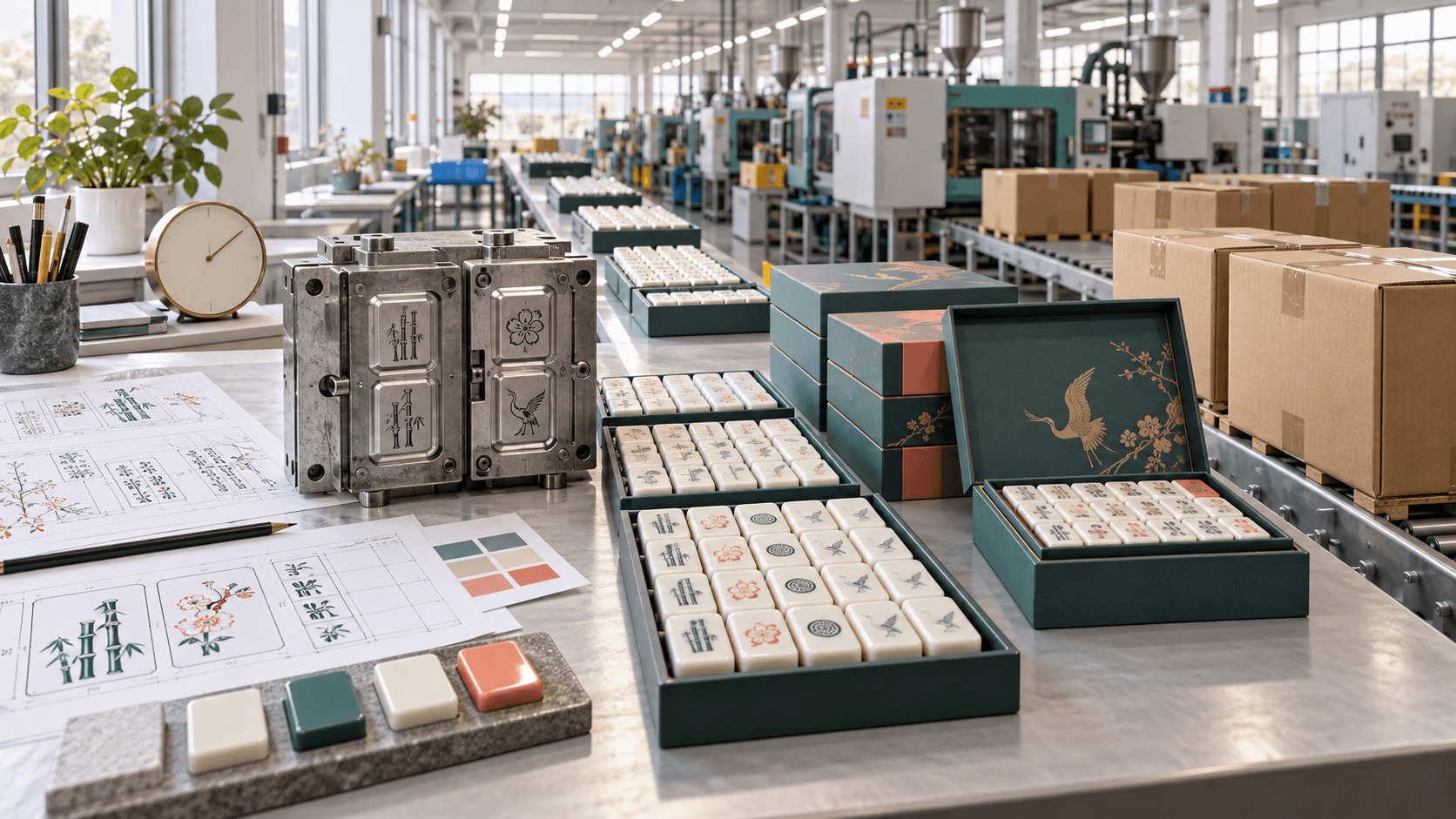
Most suppliers will combine several processes. The rack body may be injection molded or formed from a rigid plastic sheet, then trimmed and assembled with a metal or plastic end component. Fasteners, rivets, or screws can be used where extra retention is needed. In the image, four visible fasteners secure the metal end plate, which suggests a design intended to resist pull-off forces rather than relying on adhesive alone.
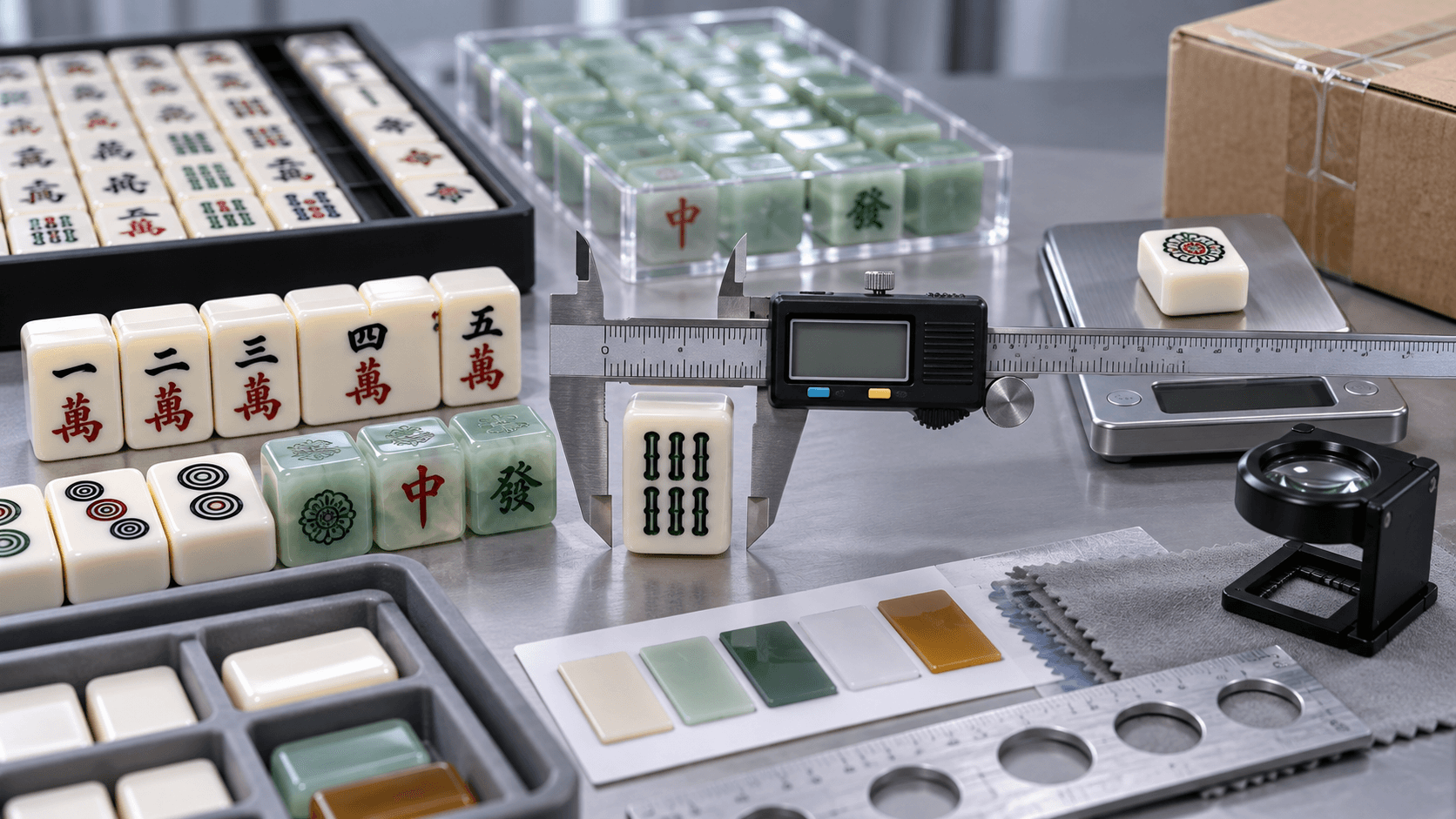
That approach is sensible, but the real value for a buyer lies in how well the factory controls the assembly. Tolerances do not need to be extreme for a game accessory, yet they do need to be consistent. If the tile slots vary too much, the same rack may fit one tile style perfectly and another poorly. And because mahjong variants differ by region, buyers should not assume a one-size-fits-all solution. The supplier should be able to confirm compatibility based on the actual tile dimensions used in your target market.
What sourcing managers should ask before ordering
Start with the basics, then move into the details that tend to be skipped in early conversations.
Ask what material is used for the rack body and whether the finish is clear, tinted, frosted, or opaque. Ask how the end plate is attached and whether the fastening method is suitable for repeated handling. Ask how the tile slots are dimensioned, because even a small change in slot width can alter the way the hand feels on the table. And ask whether the design can be adapted for different tile sizes, since regional mahjong sets are not uniform.
If the supplier offers custom work, clarify what is actually custom. Color only? Logo printing? Mold changes? Packaging? Many buyers discover too late that a factory can change the artwork but not the geometry without a new tool or a different production route. It is better to know that before the first sample arrives.
Quality checks that matter in real use
For this category, visual inspection alone is not enough, though it is still worth doing. A clean rack can hide a weak joint. A glossy part can still have a sharp edge. Better checks are practical and fairly direct: place tiles in the slots and see whether they sit upright without binding, put the rack on a flat surface and check for wobble, and handle the end plates to see whether they flex or creak under normal pressure.
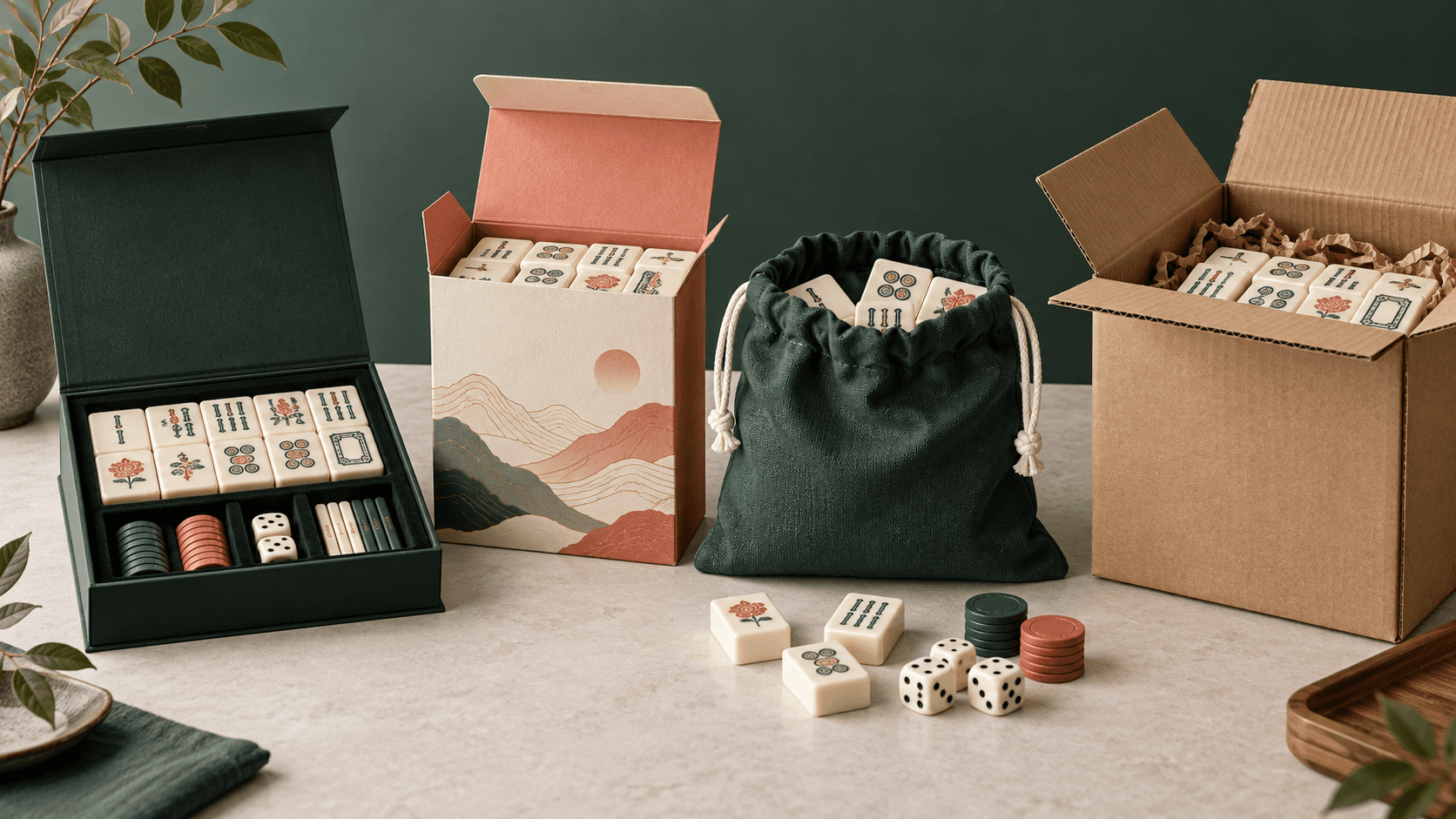
Packaging also deserves attention. Racks with polished or transparent surfaces can scratch in transit, especially if they are packed too tightly or allowed to rub against hard inserts. A buyer should ask how the factory separates parts in the carton, because retail-grade appearance can be lost long before the product reaches the shelf.
Common mistakes when buying from a manufacturer
One common mistake is treating all racks as interchangeable. They are not. A product that works for one tile thickness may feel sloppy with another. Another mistake is choosing a supplier based only on appearance. Good-looking samples can conceal weak fastening, uneven slot spacing, or brittle plastic. A third is under-specifying packaging. If the part is sold as a gift item or premium accessory, packaging is part of the product, not an afterthought.
There is also a tendency to ignore regional play habits. Some markets expect a certain hand feel, a certain sound when tiles are moved, or a familiar rack profile. Those preferences are not always written into a spec sheet, but they matter to end users. A cautious buyer will sample with actual players, not only with internal procurement staff.
When custom development makes sense
Custom development is worth considering if you are building a branded mahjong set, launching a club product, or supplying promotional game kits. A manufacturer can often adjust color, logo placement, end-piece styling, or packaging graphics without changing the core structure. In some cases, a supplier may also revise the rack geometry to better fit a target tile format.
That said, custom does not automatically mean better. Every change affects cost, consistency, and lead time, even if nobody wants to say it out loud on the first call. The smart approach is to separate cosmetic customization from structural customization and decide which one your market actually needs.
FAQ for buyers
Are racks and pushers always sold together?
Not always. Some products integrate the functions, while others treat the pusher as part of the rack design. Buyers should confirm what is included in the unit price and what is packaged as an accessory.
Can one design work for every mahjong set?
Usually not. Tile thickness and set style vary by region and product line, so compatibility should be checked against the actual tile dimensions you plan to use.
What makes a premium rack feel different?
Usually it is a combination of material clarity, edge finishing, stable geometry, and a reinforcement detail that keeps the product from feeling flimsy in the hand.
Choosing the right supplier
The best Mahjong Racks & Pushers manufacturer is not simply the one with the prettiest sample. It is the one that can hold dimensions, explain material choices clearly, produce consistent fastening, and adapt the design without losing the functional details that make the part pleasant to use. For a product that looks small on paper, the sourcing decision has an outsized effect on customer satisfaction.
If you are preparing an RFQ, start with your target tile size, finish preference, packaging format, and any artwork requirements. Then request samples under realistic handling conditions. A few minutes spent checking fit and surface quality now is better than dealing with returns later. For a tabletop game accessory, that is usually where the real savings are found.