
A mahjong accessories manufacturer should be evaluated by the way components work together, not by the number of items in a catalog. Racks, pushers, mats, dice, cases, and inserts become one customer experience when they meet the tiles on a real table.
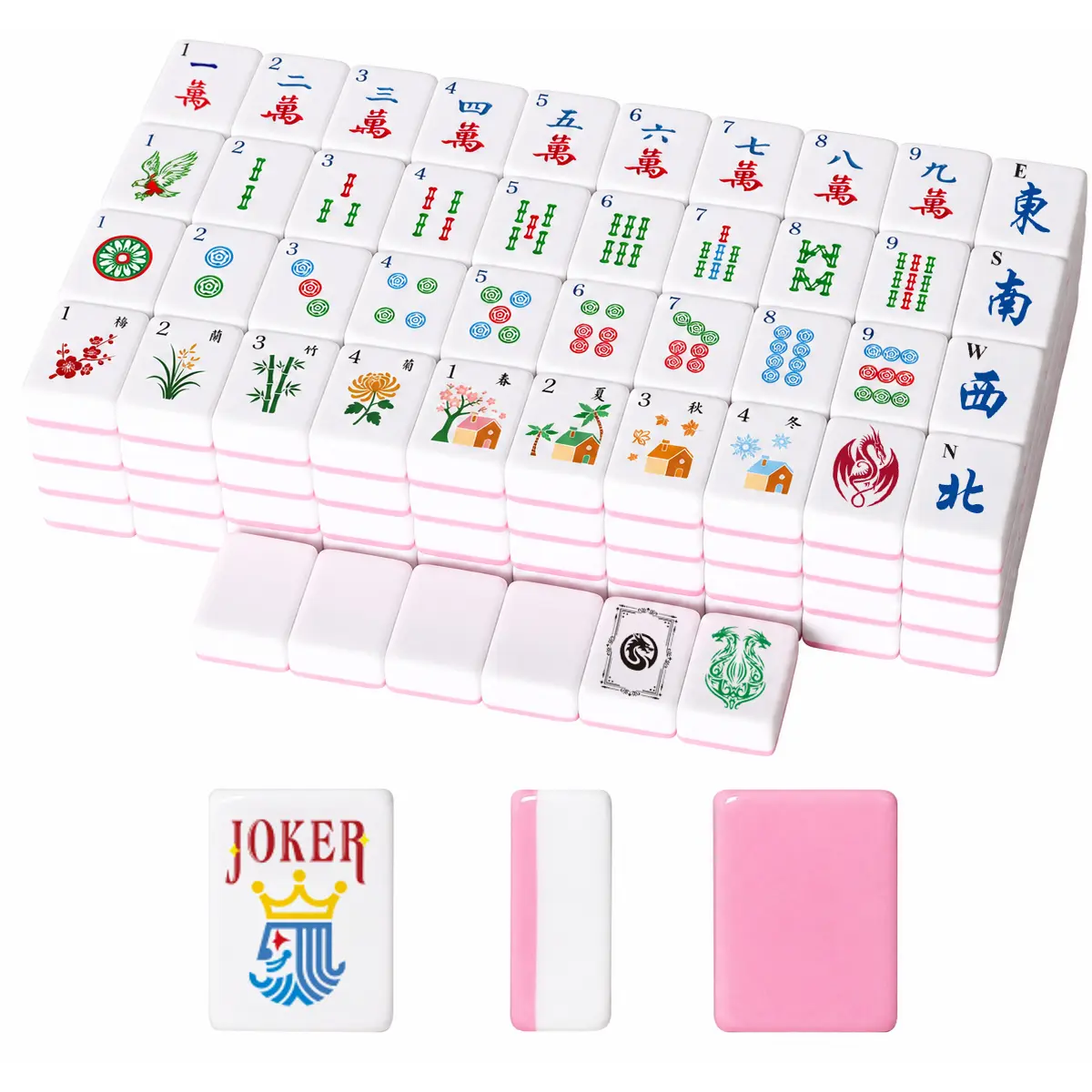
The first test takes five minutes
Place the proposed tiles in the rack. Slide the pusher through a short wall. Move the rack across the mat. Return every component to the case and close it. That quick sequence exposes more useful information than reviewing six isolated product photographs.
Write down every contact point. Does the rack channel pinch the tile? Does the pusher catch a corner? Does the case compress the top row? Does the mat curl under the rack? Those interfaces define the brief.
Map the system before choosing finishes
Begin with the market format and tile geometry. Then add the number of players, table size, storage method, and packaging route. An accessory can look attractive on its own while making the complete set harder to use, ship, or replace.
Use an interface map with one owner for each decision. ISO 286-1 provides general terminology and principles for linear-size tolerances and fits. Its official overview is a useful reminder that nominal size and fit are not the same thing, although Mahjong components need their own agreed measurements and practical tests.
| Interface | Question to test | Evidence to keep |
|---|---|---|
| Tile to rack | Do several tiles stand, space, and release consistently? | Measured rack channel and fit video |
| Wall to pusher | Can the wall move without catching or tipping? | Full-wall handling test |
| Rack to mat | Does the base slide, mark, or snag the surface? | Surface test under normal load |
| Set to insert | Can every component be removed and returned easily? | Approved pack-out photos |
| Insert to case | Does the case close without pressure or loose movement? | Closed-case check with complete contents |
Rack fit is about a group of tiles
Do not approve a rack with one hand-picked tile. Use a representative group from the proposed construction and finish. Check spacing, viewing angle, removal, and whether the last position becomes tight. A small variation repeated across many pieces can change the feel of the whole row.
If the rack includes a built-in pusher, test both functions together. Record the intended tile orientation and the number of pieces the rack is expected to hold. A sample that “seems close” is not a released interface.
Pushers need a movement test
A pusher is a moving tool. Length alone does not prove it will work. Build a wall at the intended height, move it across the actual mat or tabletop, turn a corner, and repeat the motion. Watch for flex, sharp transitions, surface scratches, and collisions with rack ends.
Invite someone who did not design the product to try it. Unfamiliar hands often reveal balance or grip problems that a development team has learned to compensate for.
Mats change the sound and friction
Specify usable area, thickness direction, edge finish, print zone, backing behavior, roll or fold method, and recovery after storage. A mat must support tile handling without fighting the rack or showing severe waves at the start of play.
Test print legibility with tiles covering part of the design. If a border or table guide is functional, mark its critical dimensions. If it is decorative, leave room for normal production variation rather than inventing unnecessary tight limits.
Cases are working packages
A storage case carries weight, opens repeatedly, and holds a very specific arrangement. Check handle attachment, closure alignment, corner protection, internal clearance, and how loose accessories are restrained. Lift the packed sample, place it flat and upright, then reopen it.
Look for tile rub, crushed manuals, wandering dice, and pressure marks on the top layer. The correct internal fit should protect the contents without making repacking a puzzle.
Use a mahjong accessories manufacturer scorecard
Score the supplier on completed interfaces and evidence, not on assurances. The best answer may be a small construction change, a new insert, or a different combination of standard components rather than an entirely custom accessory range.
| Review area | Useful supplier response | Warning sign |
|---|---|---|
| Compatibility | Requests tile dimensions and proposes a complete-set test | Confirms fit from a photograph |
| Sampling | Labels sample purpose, material, revision, and open questions | Sends mixed components with no version record |
| Customization | Separates stock geometry from color, logo, and packaging changes | Treats every change as equivalent |
| Inspection | Defines count, finish, function, fit, and pack-out checks | Checks appearance only |
| Reorders | Keeps component IDs, approved files, and substitution controls | Cannot identify the prior component source |
Decide what should be custom
Custom geometry can solve a real interface problem or create a distinctive product, but it may also add tooling, trial, approval, and reorder work. Separate functional changes from visual changes. A new rack channel is an engineering decision; a new color or printed mark may use the established body.
For a first collection, a proven physical format with coordinated colors, original artwork, and a new pack may be a sensible route. For a product whose core promise depends on a novel interaction, a custom mold may be justified. The brief should explain why.
Approve a complete-set sample
Individual color swatches and component samples still have value, but the final approval should include the actual tile count and every accessory. Run a short play setup, pack and unpack the product, carry the case, and compare the result with the listing promise.
Number the sample and photograph the arrangement. Keep observations separate from approvals. “Rack feels slightly tight” is an observation; “increase inside width and resubmit” is a change request; “approved for production” is a release decision.
Inspect function as well as appearance
Incoming or pre-shipment checks can cover component identity, count, dimensions, surface condition, color range, logo placement, movement, fit, and pack-out. Use the actual approved mating parts or a controlled fixture for fit-critical checks.
Define what happens if one accessory fails while the rest of the set passes. Sorting, rework, replacement, or shipment delay may have different commercial effects. Agree on the route before the inspection day.
Protect compatibility on reorders
Give every component a stable ID. Archive the drawing or measured sample, color reference, material note, logo file, pack-out photo, and supplier revision. Require notice before a component, tool, finish, or subcontractor changes in a way that could affect fit or appearance.
Keep a few approved mating parts for future checks when practical. A reorder rack should be tested against the controlled tile, not only against a newly produced piece that may have drifted in the same direction.
Build the inquiry around interfaces
- Regional format, tile count, dimensions, finish, and sample status
- Required racks, pushers, mats, dice, cases, inserts, and packaging
- Functional interfaces and customer handling expectations
- Stock versus custom geometry, colors, logo, and artwork
- Quantity by SKU, destination, packing route, and desired launch date
- Sample stages, inspection evidence, and reorder requirements
ABC Mahjong presents Mahjong product categories that include tiles, racks, pushers, mats, dice, cases, and related items. The custom service can coordinate colors, artwork, packaging, and accessory combinations for B2B projects.
FAQ
Should accessories be ordered from the same supplier as the tiles?
One coordinated source can simplify compatibility, but it is not automatically better. Compare technical control, evidence, total cost, and responsibility for the complete set.
How do buyers test rack compatibility?
Use several production-equivalent tiles, fill the working length, view the faces, move pieces, and remove them. Record the rack and tile revisions together.
Can a stock pusher be customized?
Often color, decoration, or packaging can change without new geometry. Confirm which elements are stock and whether the proposed process affects strength or finish.
What should a mat sample prove?
It should show usable size, print, edge treatment, surface behavior, backing, storage recovery, and interaction with the tiles and racks.
Why test a fully packed case?
The complete load reveals pressure, movement, handle behavior, closure alignment, and whether every component can be stored and removed as intended.
Do custom accessories require separate tooling?
New geometry may require its own tool or production setup. Ask for the proposed process, one-time charges, ownership, maintenance, and reuse terms.
How many accessory samples are needed?
The number depends on the questions being answered. Keep appearance, dimensional, functional, and packed-set approvals distinct when one sample cannot prove them all.
Can one rack fit multiple tile sizes?
Possibly, but each proposed combination needs a real fit test. Broad compatibility should not be claimed from nominal measurements alone.
What belongs in an accessory inspection?
Identity, count, dimensions, finish, color, decoration, function, mating-part fit, and pack-out should be considered according to the product risk.
Where can buyers request coordinated samples?
Send the tile format, component list, target quantity, customization, destination, and interface questions through the project inquiry form.
Source the experience, not a loose collection
ABC Mahjong supports brands, distributors, retailers, clubs, and other B2B buyers with complete sets and coordinated accessories. Read about the company and share the interface brief through the contact page. The right mahjong accessories manufacturer should be able to show how the set works before asking a buyer to approve it.