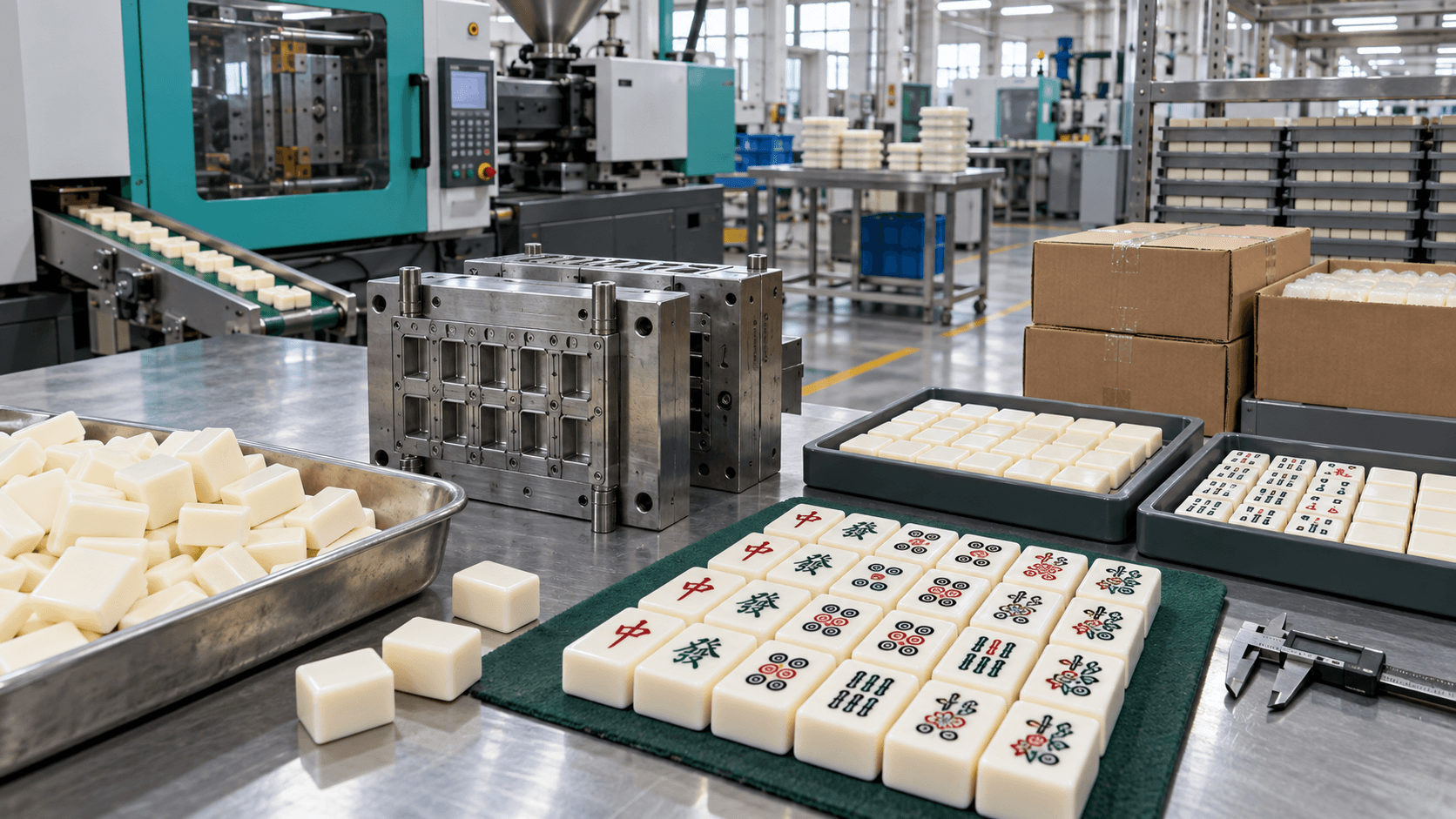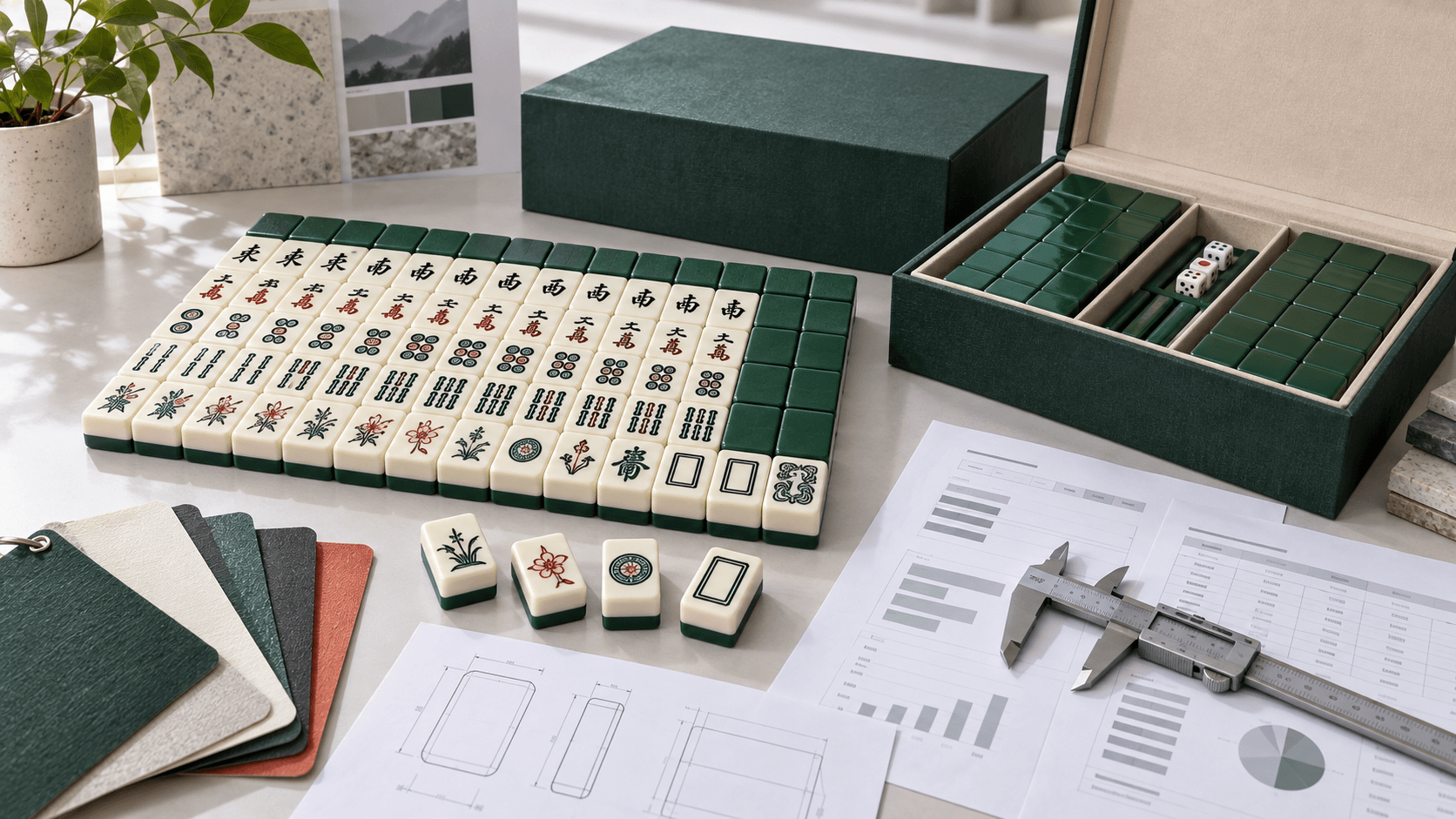

How to source mahjong sets from China is a question about control as much as geography. A good buying process turns an idea into a documented specification, lets the right factory answer the same brief, and keeps samples, packing, inspection, and delivery tied to one approved version.
Define the commercial job before contacting a factory
Start with the customer and channel. A gift retailer, a Mahjong club, an online brand, and a hotel buyer may all want sets, but they measure value differently. Write the intended game format, customer region, retail position, launch quantity, reorder expectation, and the date inventory must be available. This prevents a supplier from quoting a visually similar product that cannot serve the same use.
Separate what is fixed from what is open. Tile count, dimensions, face language, logo ownership, color references, packaging style, and accessory list belong in the fixed-or-open register. A buyer who has not decided whether a set is decorative or playable should resolve that before comparing unit prices.
Build a supplier-ready brief
Use how to source mahjong sets from China as a control question
Every supplier conversation should answer who owns the specification, which evidence supports the quote, and what happens when the approved sample changes. Treat the phrase as a process checkpoint rather than a shortcut to a low price.
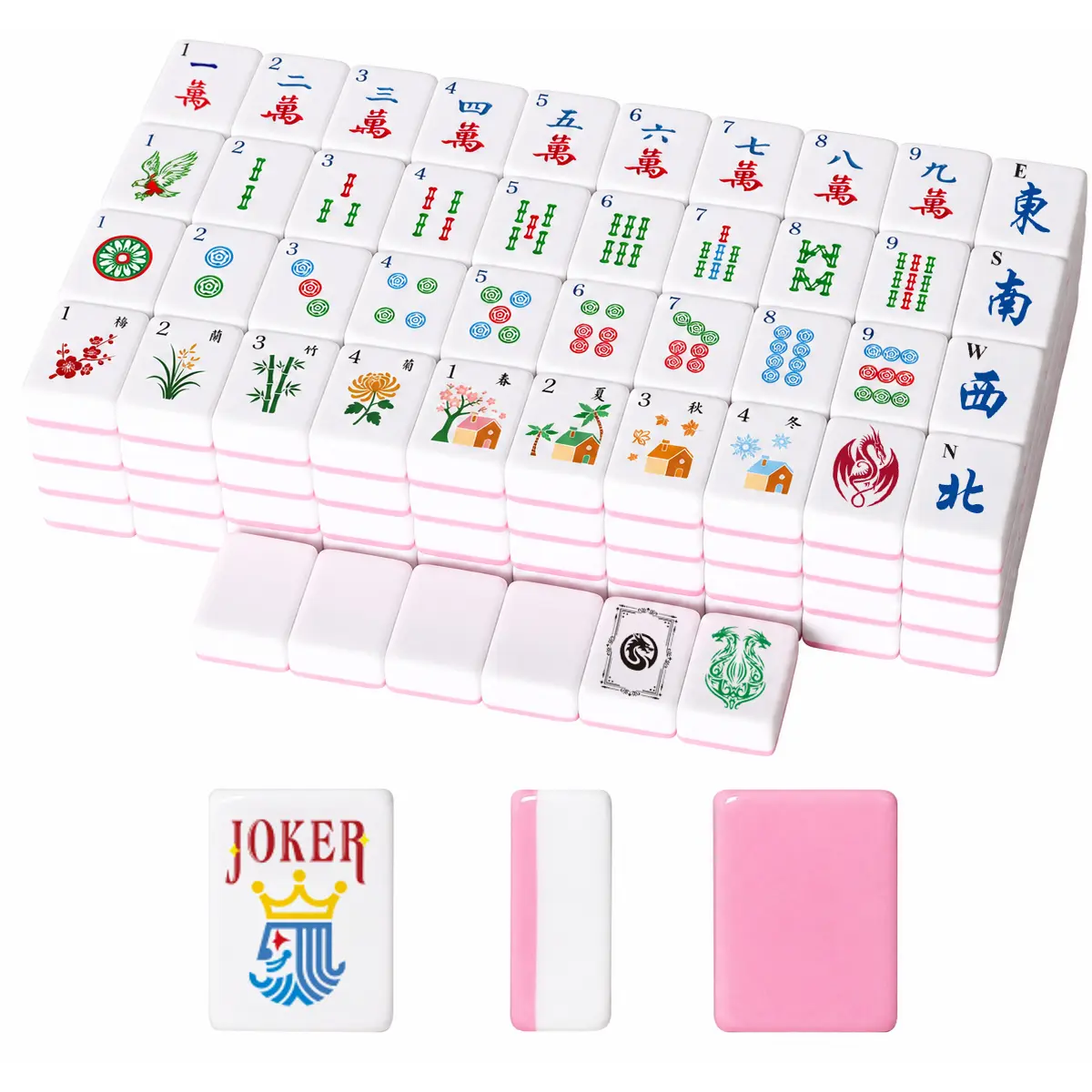
A short brief is more useful than a long mood board. Include a bill of materials, one reference image per component, a face schedule, artwork status, target quantity by SKU, destination, and requested trade term. Note whether you need a stock format, private label decoration, or new development. State which files are production-ready and which still need design support.
| Brief block | Buyer supplies | Factory confirms |
|---|---|---|
| Game format | Market, tile count, language and intended rules | Feasible configuration and packing method |
| Visual system | Logo, artwork files, color references and usage rights | Decoration process, file limits and proof route |
| Physical build | Size preference, finish, accessories and storage needs | Materials, tooling, tolerances and sample stages |
| Commercial scope | Quantity, destination, timing and target cost logic | MOQ, capacity, lead-time assumptions and quote validity |
| Quality release | Defect definitions, approval authority and inspection needs | Inspection point, records and corrective-action process |
Screen the factory behind the listing
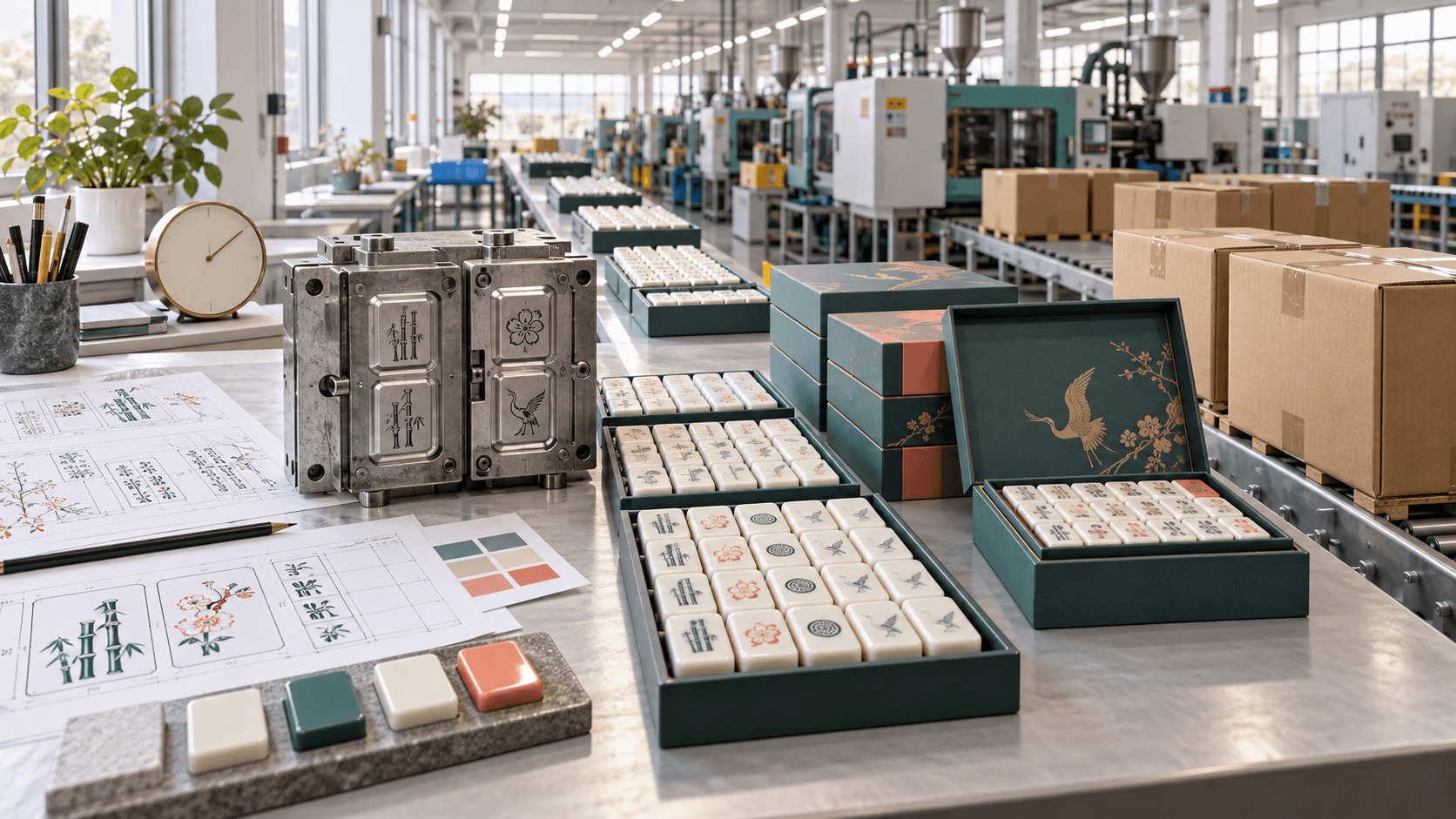
A catalog page does not prove who makes the item. Ask whether the contact owns the production line, subcontracts decoration, or coordinates several outside workshops. Request a current photo or video of the relevant process, a sample history for similar materials, and the name of the person who controls technical changes.
Look for answers that can be evidenced. “We can do any design” is weaker than a marked-up proof showing line limits and a named sampling step. “Fast delivery” is weaker than a stage plan that identifies artwork release, material arrival, production, inspection, and freight handoff.
Use a fair first-round comparison
Send the same scope to each candidate and give the same response deadline. Compare the completeness of the reply, not only the lowest number. A supplier that asks about tile count, packaging fit, rights, and inspection may be revealing useful project discipline.
Score evidence separately from preference. A polished presentation is not proof of manufacturing control, while a plain quote can still contain the clearest assumptions. Keep a source folder for quotations, certificates, sample photos, and all released files.
| Supplier signal | Good evidence | Follow-up question |
|---|---|---|
| Technical ownership | Dimensioned sample notes and process contact | Who approves a change to size or decoration? |
| Sample discipline | Revision label, review sheet and retained reference | What happens after a sample is rejected? |
| Quality control | Count sheet, defect classes and inspection photos | Which checks occur before packing? |
| Commercial clarity | Separate tooling, samples, production, packing and freight | Which assumptions expire when quantity changes? |
| Communication | One owner and a written change log | Where is the current production version stored? |
Understand China sourcing logistics
Factory completion is not the same as stock arrival. Ask for the named place and trade term, the export-document responsibility, carton count, packed dimensions, and the point at which risk transfers. The International Chamber of Commerce explains that Incoterms rules allocate important transport responsibilities, costs, and risks; they do not replace a route-specific freight plan.
Request two dates: the estimated factory-ready date and the date inventory should be usable at the destination. Add time for receiving, customs, local delivery, photography, and retailer allocation. If a launch depends on an event, set a recovery date and identify which optional features could be removed without damaging the core offer.
Check materials and workmanship at sample stage
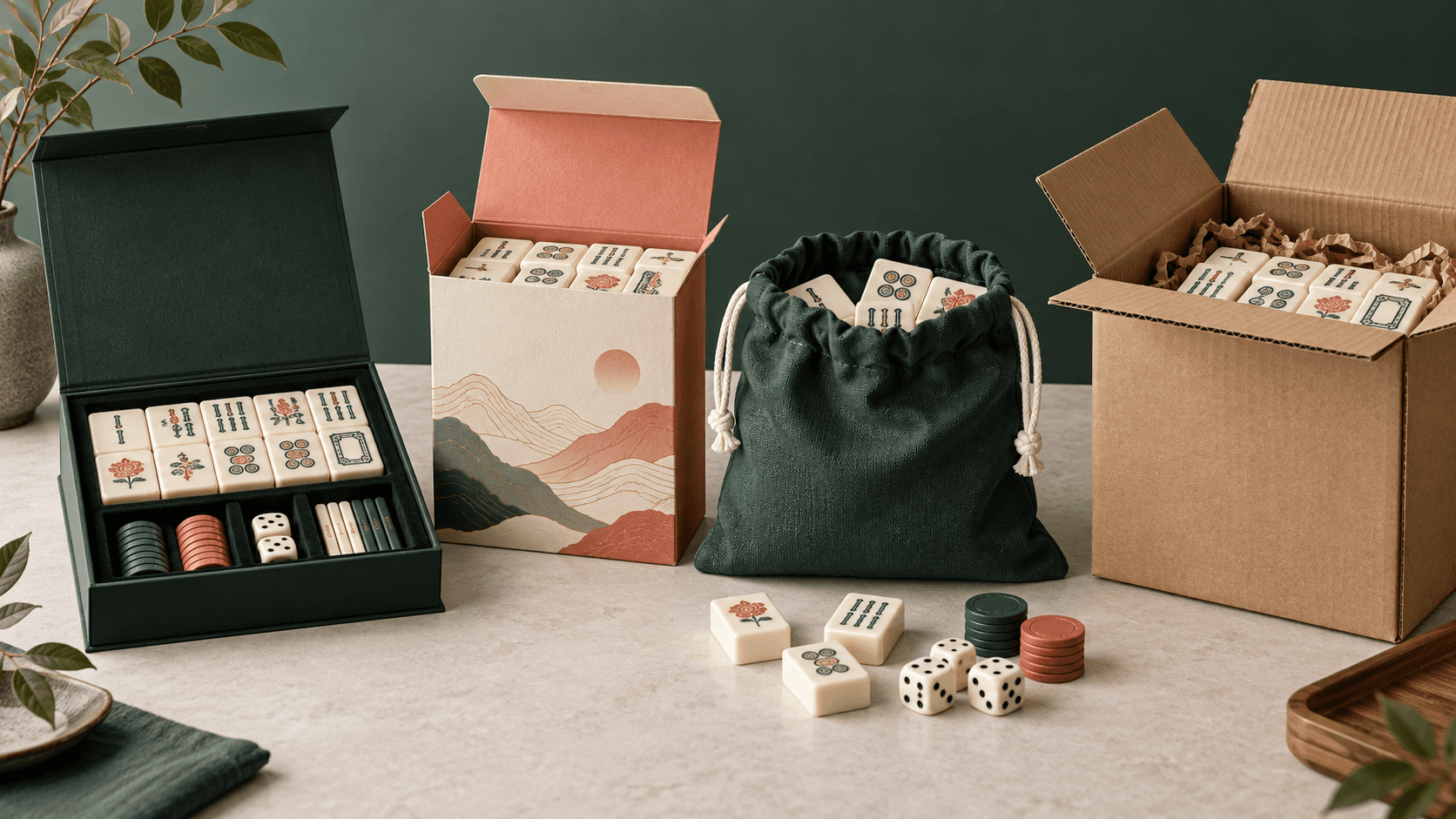
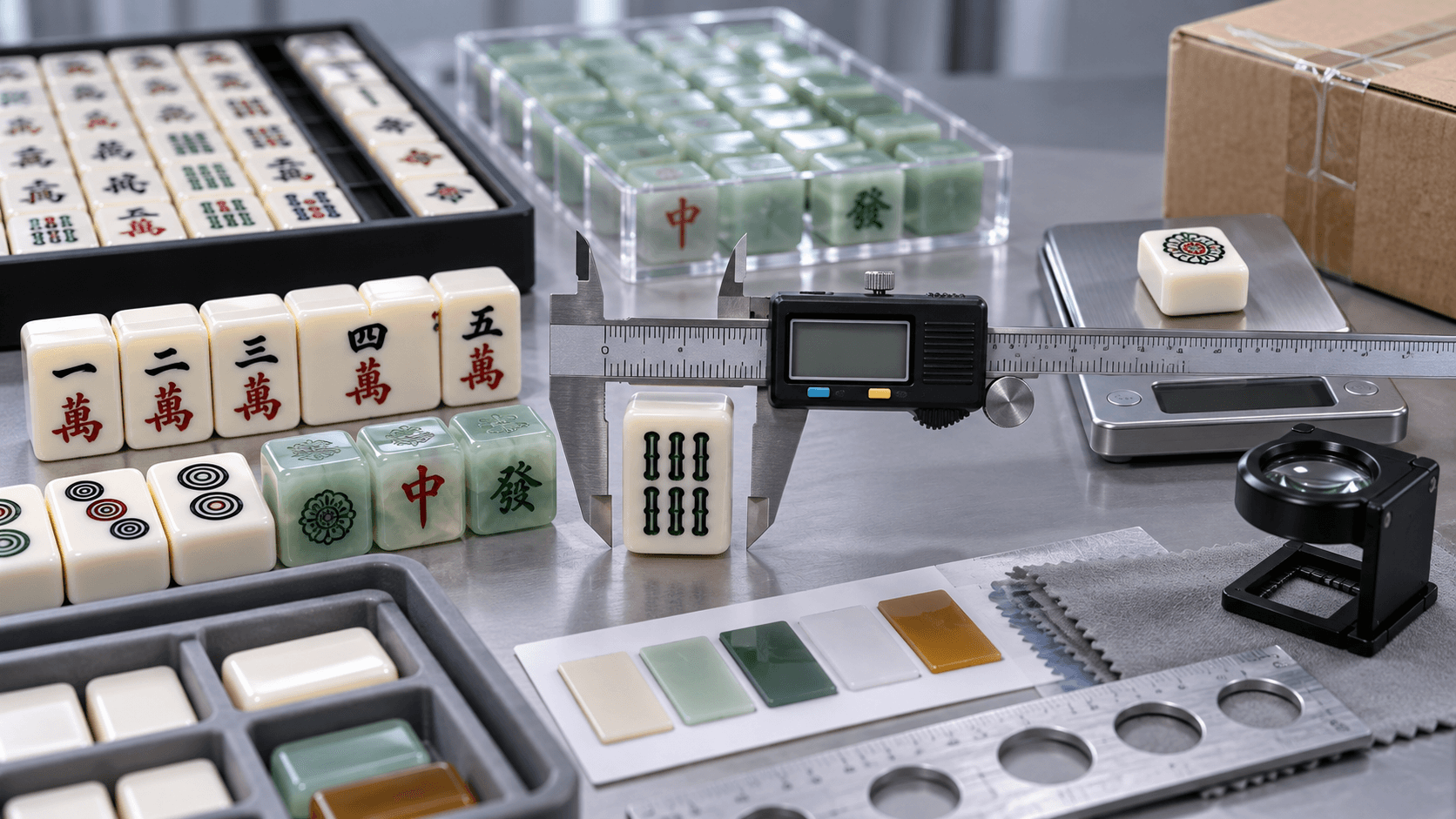
For acrylic or other molded tiles, review clarity, color consistency, edge treatment, surface feel, and the relation between face art and base material. For accessories, check fit rather than accepting a standalone sample. A rack should hold the selected tile dimensions; a case should close without pressure; an insert should retain every component.
Use several pieces for visual checks. One showcase tile can hide variation. Photograph a group under consistent light and label the face IDs. If a sample uses a substitute material or a different finish, mark it directional and keep the remaining approval points open.
Protect artwork and brand assets
Send only files you are authorized to use. Record who owns the logo, characters, illustrations, fonts, and photographs, and who can approve placement. For licensed artwork, keep the license or written authorization with the production brief. Do not assume that a factory quotation grants permission to reproduce a mark.
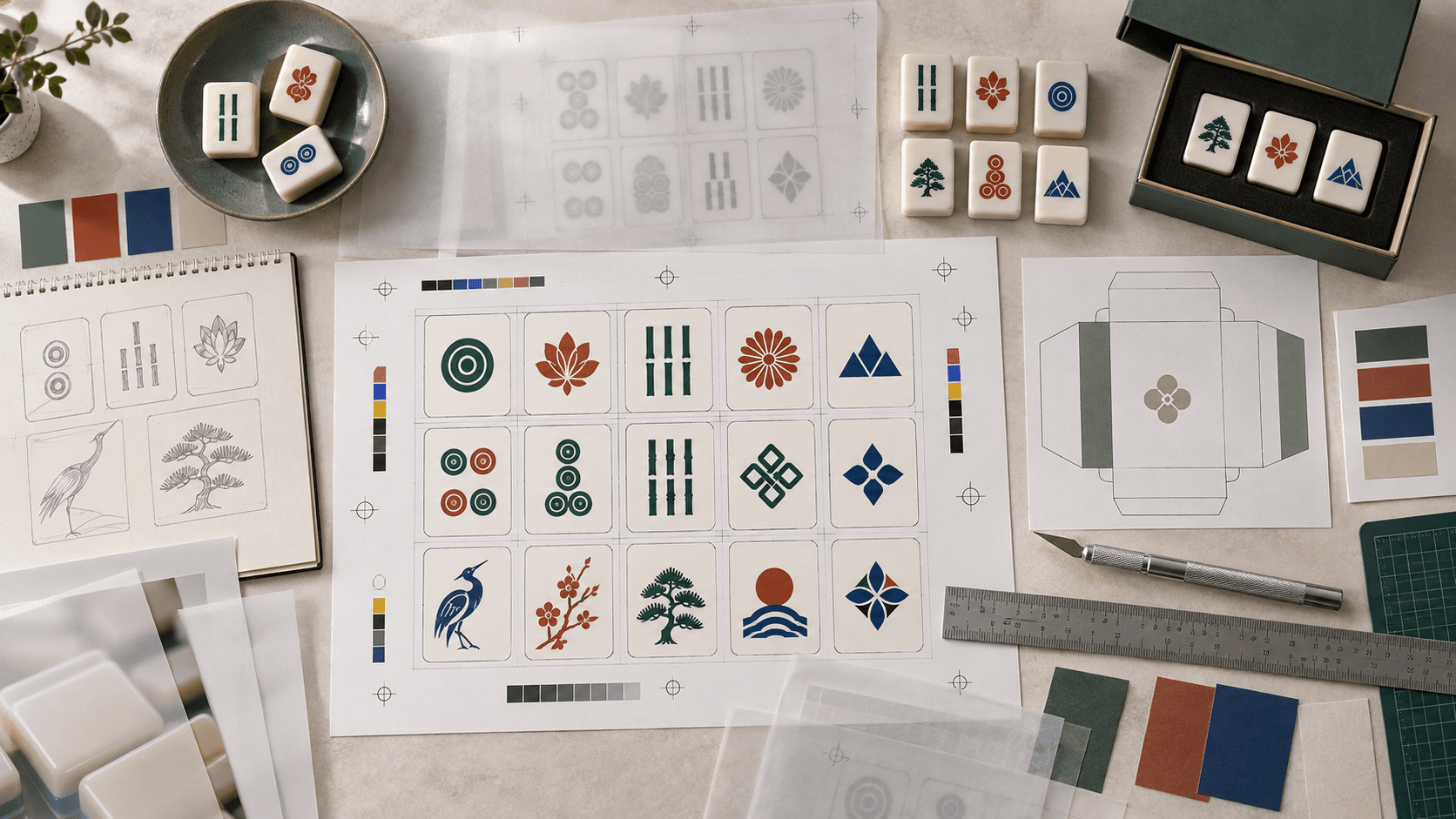
Use an artwork index with one row per unique face. Include filename, orientation, color reference, process, quantity, and status. That index becomes the bridge between a creative team and a production team when several versions are being reviewed.
Set quality gates before the order
Agree on four gates: specification release, decorated sample, production inspection, and packed shipment. Each gate should have an owner, a required record, and a stop condition. A missing tile count or wrong back direction is not a cosmetic note; it is a release issue.
For a formal sampling plan, define the lot, inspection level, defect classes, and acceptance rule with a qualified quality professional. AQL terminology is useful only after the product specification says what constitutes a critical, major, or minor defect.
Decide between stock, customization, and development
A stock format can shorten early work when the buyer needs a proven configuration. Private label decoration adds brand value without changing every component. New development may be justified when the market, dimensions, or packaging requirement cannot be met by an existing format.
Document the choice as a scope decision. It affects tooling, sample count, timing, MOQ, and the evidence needed before production. ABC Mahjong presents product categories and custom options for B2B projects; review the product range and custom Mahjong service before finalizing the request.
Make the first order a learning order
Agree on what the first batch should teach. You may be testing a retail price, a new colorway, a mailer, a translated insert, or the demand for a complete versus compact set. Track missing-component claims, transit damage, customer questions, and reorder timing. Those observations are more useful than a vague statement that the launch went well.
Keep a replacement allowance and a retained reference set. Archive the approved bill of materials, artwork package, packed photographs, carton data, and supplier batch information so a reorder does not start from memory.
What to include in your RFQ
- Buyer company, sales channel, destination and intended users
- Game format, exact component count and spare policy
- Tile dimensions, material direction, finish and color references
- Artwork files, face schedule, logo rights and proof expectations
- Accessories, case, insert, label, barcode and carton requirements
- Sample stages, approval contacts, inspection method and records
- Quantity by SKU, reorder plan, target in-use date and trade term
FAQ
Is buying direct from China always cheaper?
Not necessarily. Landed cost includes development, samples, packaging, inspection, freight, duties, rework, and the cost of unresolved decisions. Compare the same scope.
How many suppliers should receive the first RFQ?
Use enough candidates to see meaningful differences in evidence and assumptions, then narrow the list after technical replies and samples.
Should a buyer use a sourcing agent?
An agent can add local coordination, but clarify who owns the specification, files, inspection evidence, and commercial communication. A direct manufacturer may be simpler for technical customization.
What should a factory sample prove?
It should prove the characteristics the stage is intended to test: construction, artwork process, color direction, fit, packing, or a combination stated on the review sheet.
How can a buyer verify a claimed factory?
Ask for process-specific evidence, a live or recent production view where practical, named contacts, and samples that match the proposed material and decoration.
When should packaging be frozen?
Freeze structure and fit after the product and accessory dimensions are stable. Artwork concepts can run earlier, but final dielines should follow physical confirmation.
What does a reliable quote contain?
It separates included work, excluded work, tooling, samples, production quantity, packaging, inspection, freight assumptions, validity, and payment milestones.
Can a buyer combine several SKUs in one order?
Yes, but ask how shared materials, colorways, artwork, packing, and inspection affect MOQ and schedule. A combined order is not automatically one production setup.
How should a buyer handle a late design change?
Log the change, identify affected files and components, request the cost and timing effect, and approve a new version before work continues.
What information should accompany a contact request?
Send audience, format, quantity, artwork status, destination, target date, and the questions you need the supplier to answer. Clear inputs create a faster first reply.
Turn research into a controlled conversation
ABC Mahjong works with brands, retailers, distributors, and other B2B buyers on product selection, custom artwork, samples, packaging, accessories, and production coordination. Read about ABC Mahjong, then use the contact page to share the brief. The team can help you apply how to source mahjong sets from China as a documented project process rather than a one-line supplier search.