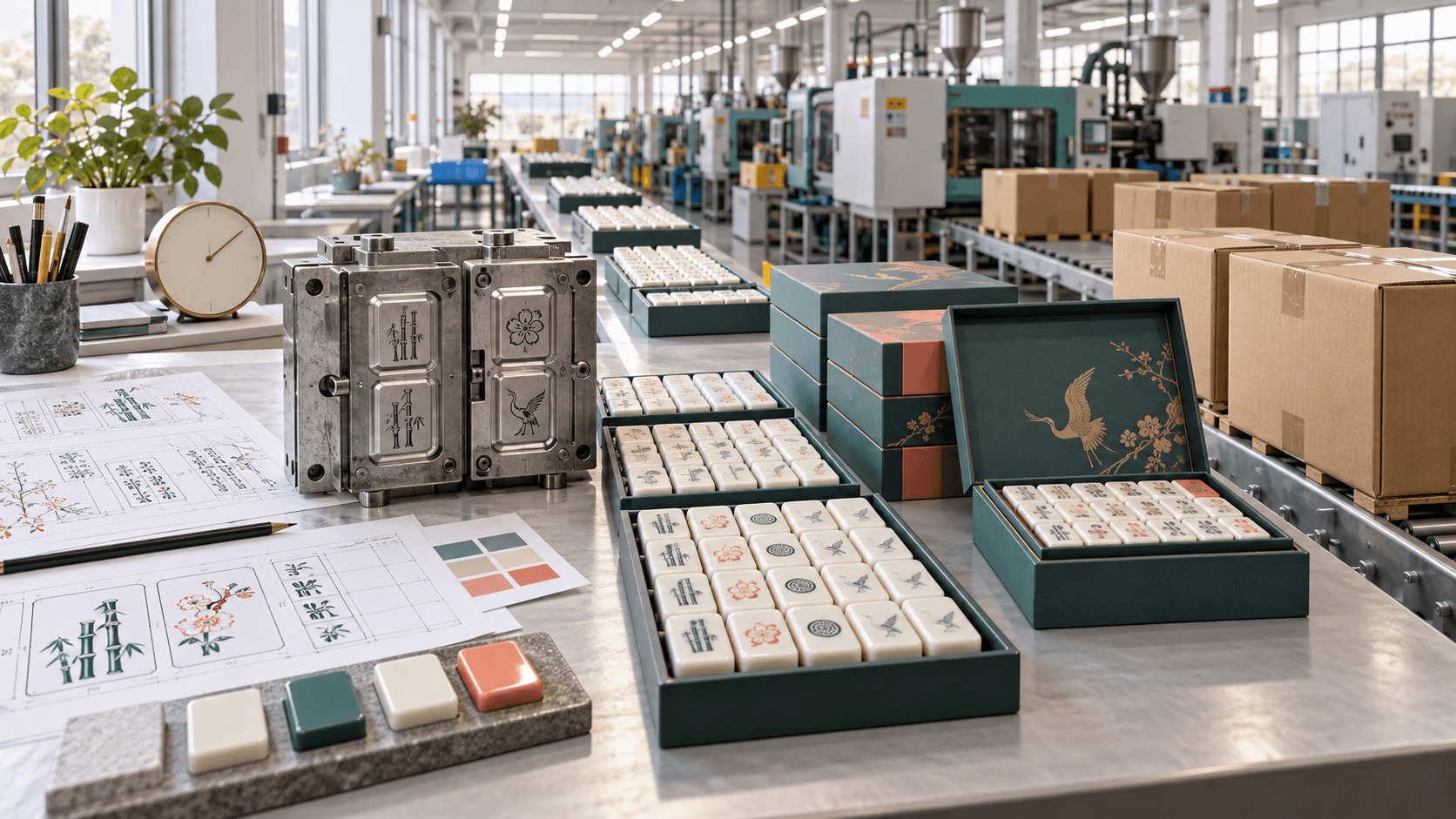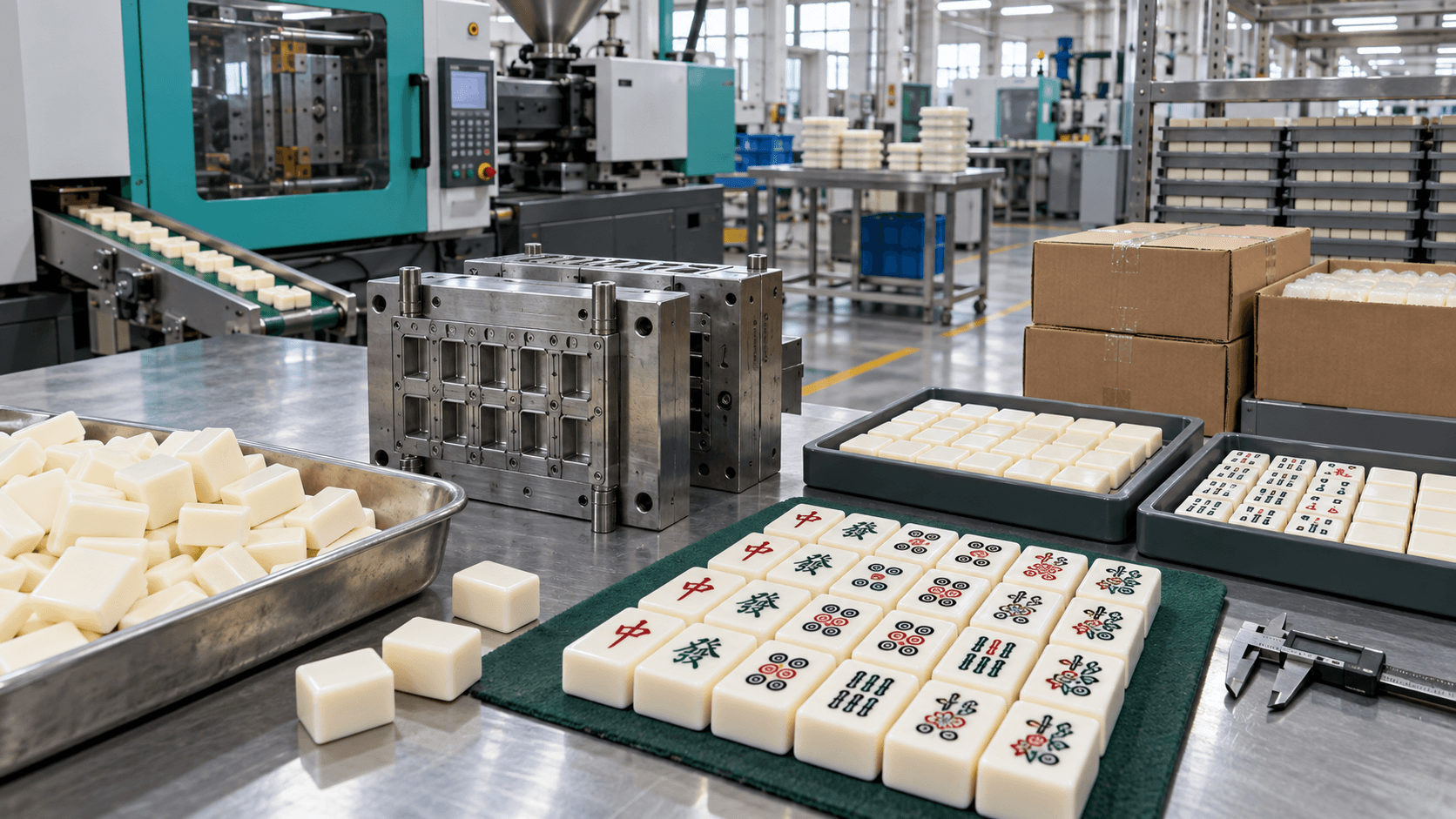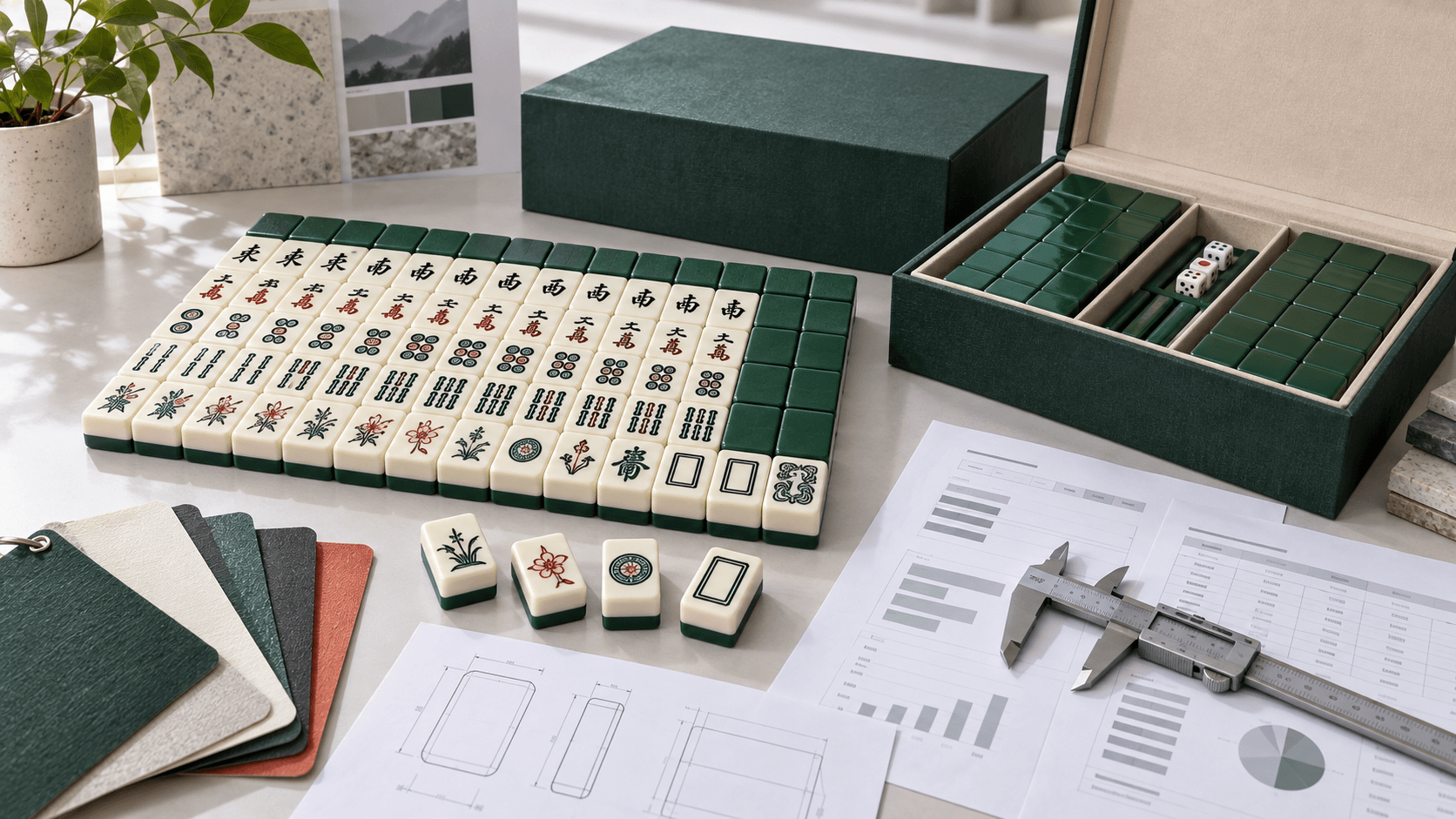
A reliable mahjong manufacturer should be able to explain how a product moves from a rough brief to an approved sample, a controlled production run, and export-ready packing. Buyers should look beyond a polished catalog. Ask who checks artwork, how colors are approved, what happens when a tile or accessory fails inspection, and which details must be frozen before production. Those answers reveal far more than a generic claim about “premium quality.”
Start with the buying model, not the catalog
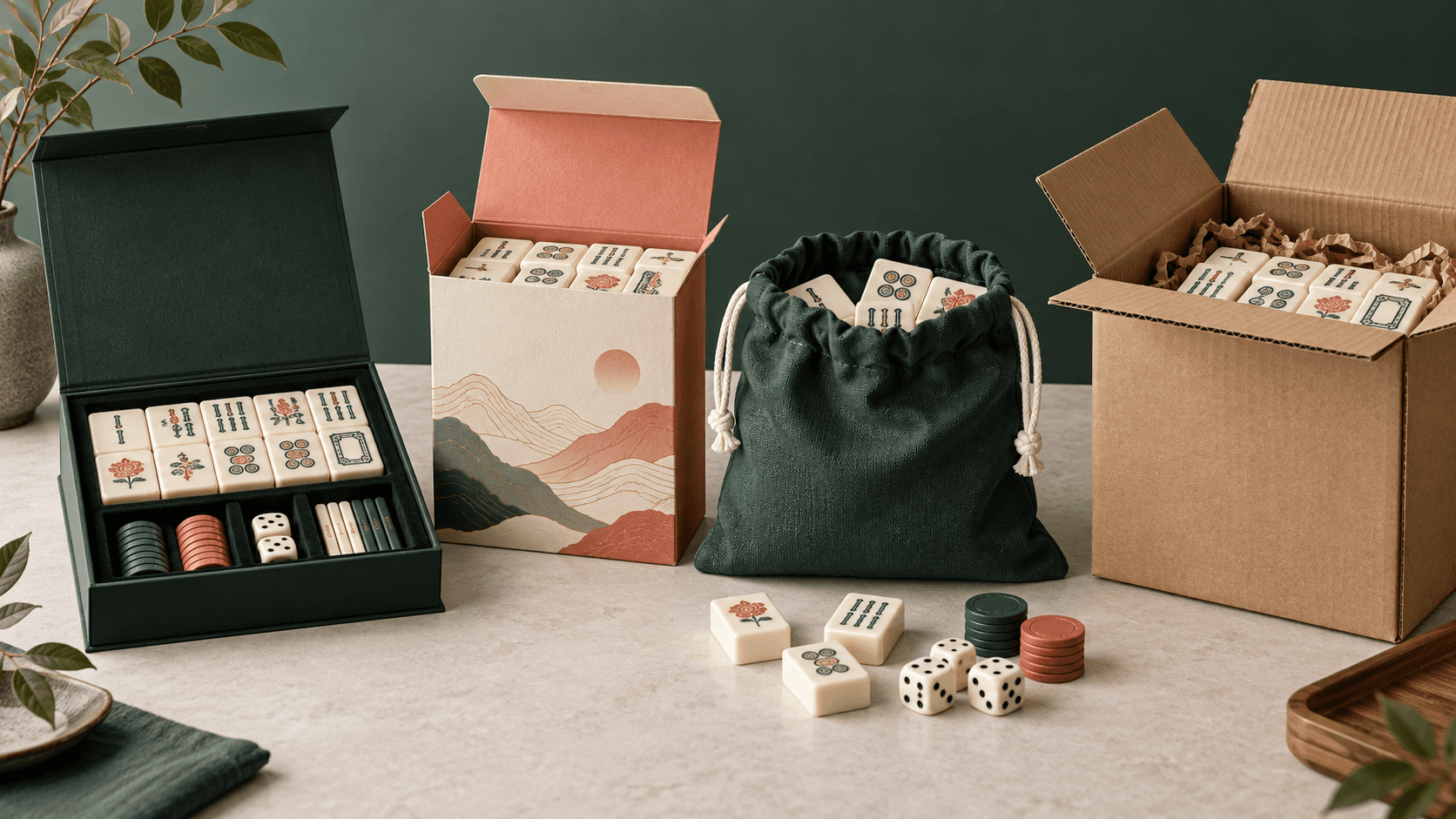
Two buyers can request the same tile set and need completely different factory support. A wholesaler may value stable replenishment and practical packaging. A new lifestyle brand may need help turning a visual concept into a coordinated set with tiles, racks, pushers, a case, and printed inserts. A corporate gift buyer may care most about presentation and a fixed event date.
State the buying model at the beginning of the conversation. Include the sales market, expected channel, approximate quantity, desired level of customization, packaging format, and target delivery window. A competent supplier will use that information to narrow the product direction instead of sending every item in the catalog.
A fast supplier-screening table
| Buyer check | What to verify | Useful evidence |
|---|---|---|
| Product scope | Tiles, racks, pushers, mats, dice, cases, rulebooks, and packaging | Current product samples and project photos |
| Development | Artwork review, color direction, tooling, and sampling | Marked drawings, sample comments, approval records |
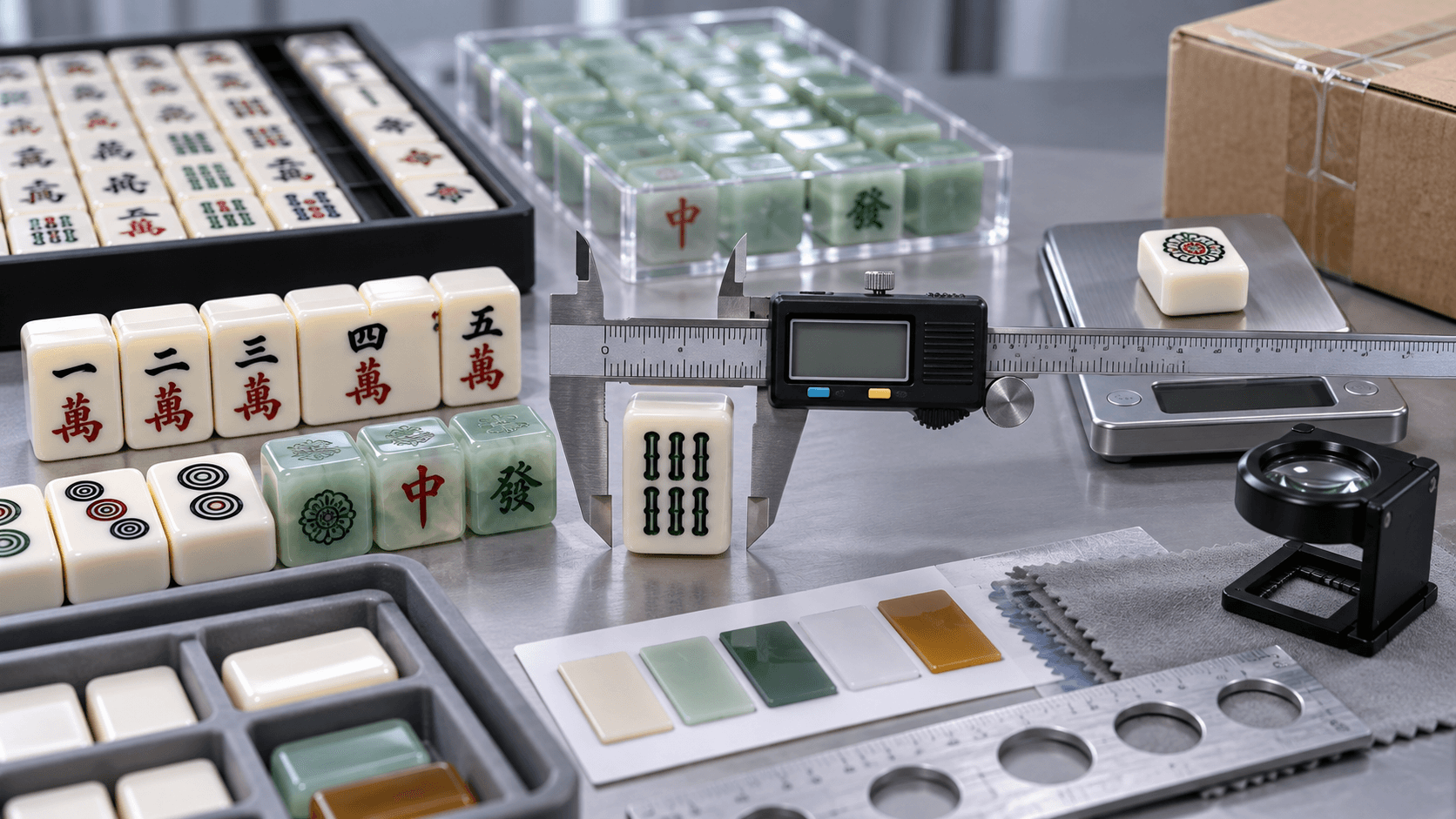
| Quality | Dimensions, print or engraving, color, completeness, and packing | Inspection checklist and approved sample |
| Commercial terms | MOQ, sample cost, tooling, lead time, and payment milestones | Itemized quotation with assumptions |
| Delivery | Inner packing, export cartons, labels, documents, and shipping handoff | Packing plan and carton marks |
12 questions worth asking before a sample order
1. Which parts do you make, and which parts come from partners?
There is nothing unusual about a supply chain involving specialist partners. The important point is visibility. Ask who controls the critical processes and who owns final inspection. A one-stop project still needs one accountable team.
2. Can you support both OEM and ODM work?
OEM normally begins with a buyer-defined specification or artwork. ODM involves more development input from the factory. Ask what the supplier expects from you in each case and which design decisions remain your responsibility.
3. What files are needed for artwork review?
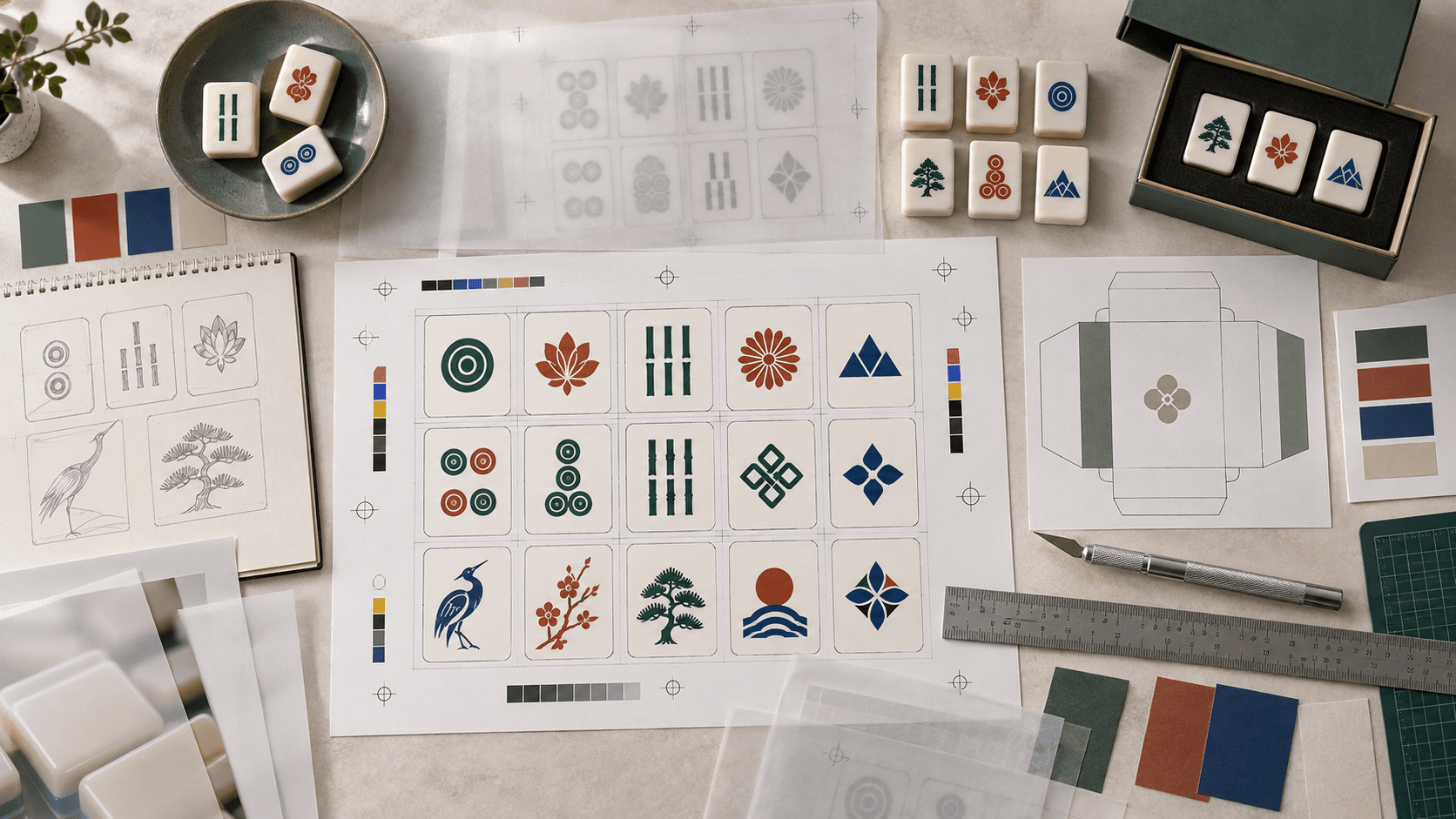
Logos, tile faces, packaging graphics, color references, and written copy should arrive in usable formats. Confirm file type, resolution, color references, bleed, safe areas, and the party responsible for proofreading. A tiny spelling error repeated across a full production run is expensive.
4. How is intellectual property handled?
Clarify ownership of supplied artwork, newly created artwork, molds, and production files. If confidentiality matters, discuss it before sharing the complete design package. Do not wait until the quotation is nearly approved.
5. What determines the MOQ?
MOQ is rarely a single factory-wide number. It may change with tile construction, custom colors, printing method, mold requirements, packaging, or the number of SKUs. Ask for the reason behind each threshold. That makes it easier to redesign a first order without damaging the concept.
6. What does the sample actually prove?
A visual sample may confirm color and artwork but not prove final packaging strength or mass-production consistency. Request a written list of what the sample represents. Where necessary, distinguish concept samples, functional samples, and pre-production samples.
7. Which details are locked at sample approval?
The approved reference should capture dimensions, color, surface finish, artwork position, accessory count, packaging structure, inserts, and labeling. Photograph the sample and keep the final files under version control.
8. How do you control completeness?
Mahjong products contain many parts. Missing tiles, duplicate faces, incorrect jokers, absent dice, or mismatched rack quantities can turn an attractive set into a return. Ask how components are counted and how finished sets are checked before sealing.
9. Which quality points are inspected during production?
Final inspection alone may catch a problem too late. The supplier should be able to describe checks around incoming material, artwork output, machining or molding, surface finishing, assembly, set completeness, and packing. The exact plan should fit the project rather than copy a generic form.
10. How is color variation handled?
Screen images are not physical standards. Ask how color is communicated, what reference is approved, and how acceptable variation is judged. This matters when tiles, racks, cases, and printed boxes must look like one collection.
11. What is included in the lead time?
Separate artwork review, sample production, sample transit, approval, material preparation, mass production, inspection, and freight. “Four weeks” is not useful if the starting point is unclear. Build room for buyer feedback and shipping, especially around a retail launch date.
12. What happens when something does not match?
Agree on how discrepancies are documented, who reviews them, and what corrective options are available. A serious mahjong manufacturer will discuss exception handling before an order, not only after a complaint.
Evidence beats adjectives
Words such as professional, reliable, and high quality are easy to write. Evidence is more useful. Look for product-specific inspection records, sample revision notes, clear packaging diagrams, recent production photos, and a quotation that states assumptions. If the supplier claims long manufacturing experience, ask how that experience changes the project: fewer artwork errors, better component matching, clearer sampling, or more practical packing advice.
ABC Mahjong presents Shenzhen Wenwei Technology as a one-stop acrylic Mahjong and accessories supplier with more than 20 years of manufacturing experience. Buyers can review the current product range, study the custom Mahjong workflow, and read the company overview. Project-specific figures such as MOQ, sampling cost, tooling, capacity, and delivery schedule are confirmed after the actual brief is reviewed.
Prepare a brief that produces a useful quotation
- Target market and sales channel
- Set format and required tile count
- Approximate order quantity and number of SKUs
- Tile material, size, color, artwork, and finish
- Required racks, pushers, dice, mats, cases, or printed items
- Retail packaging and export carton expectations
- Reference images, logo files, and available artwork
- Destination and desired delivery window
This short brief prevents a false price comparison. Two quotes can look different simply because one includes custom packaging, sample work, or accessories that the other excludes.
FAQ
How do I verify a Mahjong factory?
Review the legal company information, product evidence, live or recorded factory material, sample process, inspection documents, and the consistency of answers across sales and technical contacts. A sample order is useful, but it should be paired with a written specification.
Should I choose the lowest-priced supplier?
Not automatically. Compare the same product definition, artwork scope, packaging, inspection level, freight handoff, and after-sales responsibility. A low quote with missing assumptions is not yet a comparable quote.
Can I request a sample before mass production?
Sampling can normally be discussed after the product direction is clear. The sample type, charge, timing, and what it validates depend on the customization scope.
Does a custom project always need a new mold?
No. Logo, artwork, color, and packaging changes may use an existing product structure. A new mold becomes relevant when the shape, dimensions, or structure must change.
What should a final specification include?
Include dimensions, materials, artwork versions, color references, surface finish, component count, accessory list, packaging, labels, carton marks, inspection points, and approved samples.
When should logistics be discussed?
Discuss it during quotation. Product dimensions, packaging structure, carton quantity, destination, and delivery terms affect both landed cost and launch timing.
Move from supplier search to project review
The best choice is not simply the factory with the longest catalog. It is the team that can turn your brief into a controlled, repeatable product and communicate tradeoffs before they become delays. When comparing a mahjong manufacturer, make the sample, specification, and inspection plan the center of the decision.