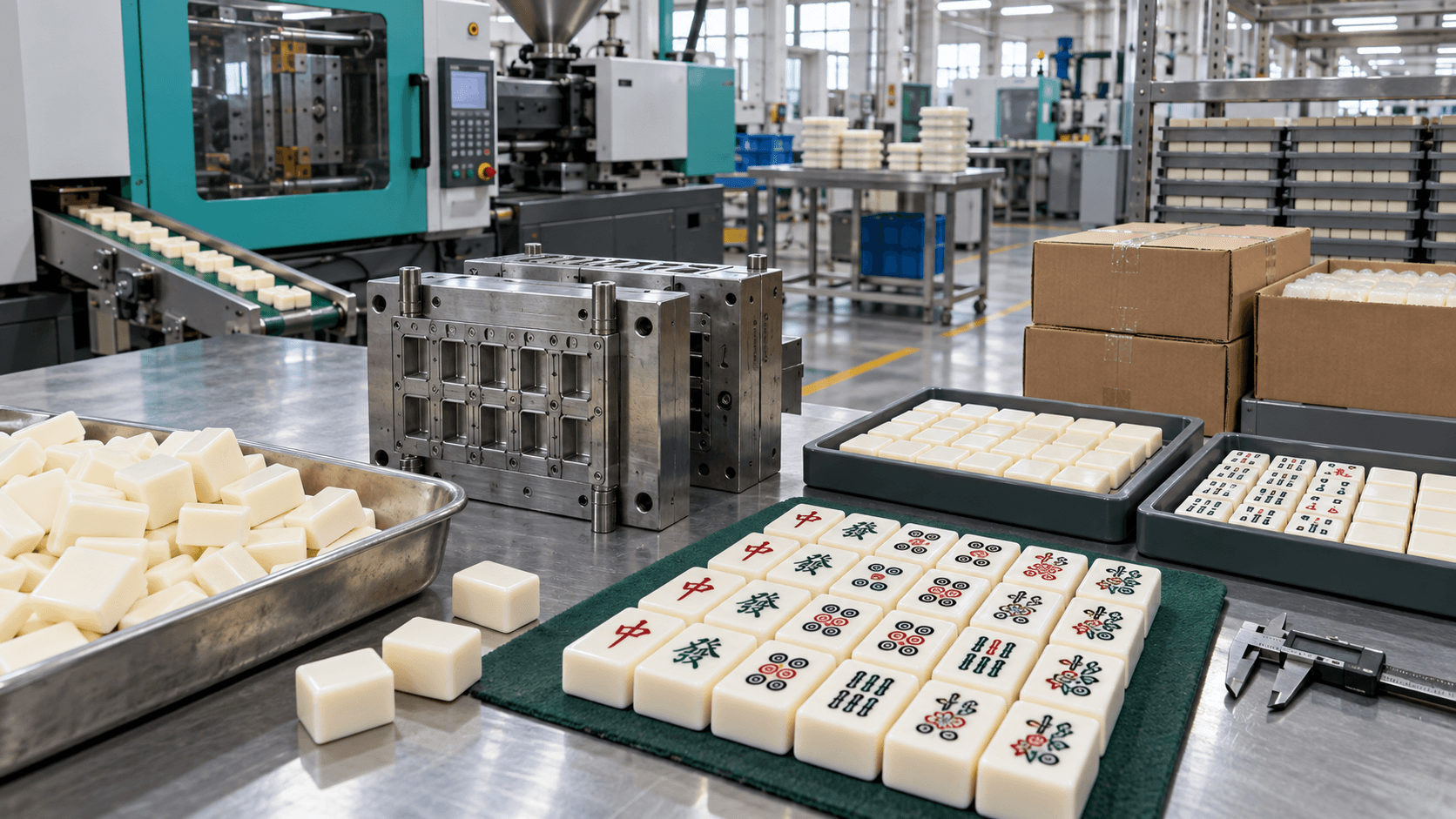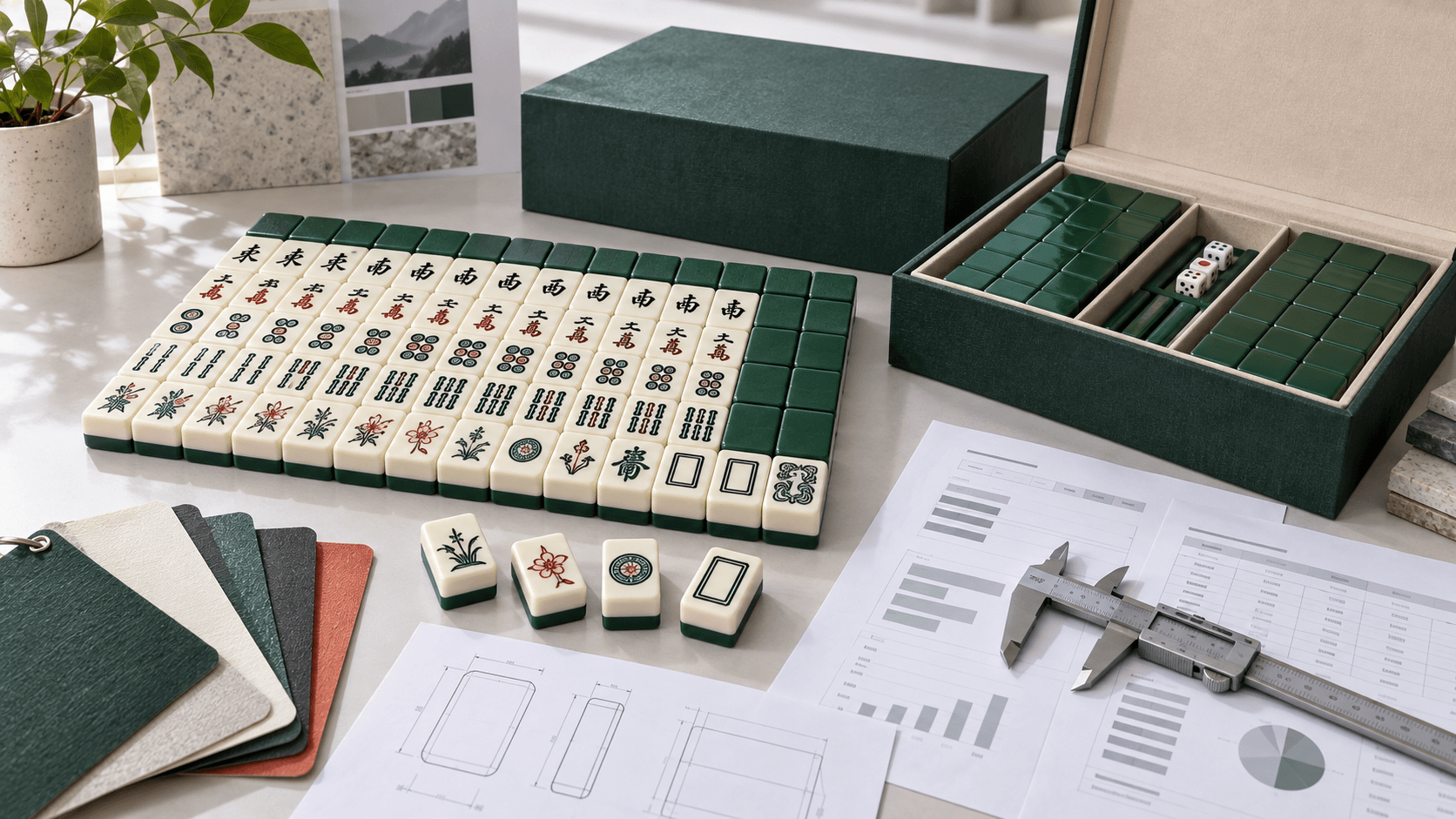

Custom mahjong tiles do not begin on the production floor. They begin in a folder that another person can understand without guessing. A good handoff identifies every face, every repeat, the back design, color references, dimensions, finishing notes, and the exact files approved for sampling. The aim is not to make the folder look impressive. It is to remove decisions that would otherwise be made late, under pressure, by someone who may not know the brand.
The folder called FINAL is usually not final
A familiar scene plays out in product development. The buyer sends a ZIP file containing logos, screenshots, an old PDF, three versions of the same flower tile, and a note that says, "Please use the latest one." The factory opens the files and immediately has questions. Which flower is current? Does the red on the screen match an approved physical sample? Are the joker labels editable? Should the back artwork rotate with the tile or remain upright?
None of these questions is difficult. Together, however, they can stall a sample or introduce silent assumptions. A production handoff should behave like a small controlled system: one index, one current version of each asset, and one place where open questions are recorded.
Start with a face schedule, not a mood board
A mood board is useful for direction. It cannot tell a production team how many copies of each face belong in the set. Build a face schedule before polishing decorative details. It should assign a unique line to every suit, wind, dragon, flower, joker, blank, spare, or promotional tile used in the product.
| Schedule field | What to record | Why it matters |
|---|---|---|
| Face ID | A short, unique code such as BAM-01 or JOKER-A | Prevents filename and spoken-name confusion |
| Quantity | Number of that face in one finished set | Supports counting and packing checks |
| Artwork file | Exact filename and revision | Connects the schedule to the correct asset |
| Process | Print, engraving, color fill, layer, or other approved method | Makes process differences visible |
| Color reference | Named swatch, physical reference, or agreed target | Reduces reliance on screen appearance |
| Approval status | Open, revised, approved for sample, or approved for production | Separates a working file from a released file |
For an American-style product, the schedule may also record Arabic numerals, English labels, jokers, and blanks. For another regional format, the count and faces will differ. The schedule is a product document, not a generic rules list. The buyer remains responsible for approving the exact configuration intended for the target market.
A workable brief for custom mahjong tiles
The artwork only makes sense in relation to the physical tile. Put the key product decisions on the first page of the brief: tile width, height and thickness; corner and edge direction; material or construction; face and back colors; surface finish; artwork process; set count; and the accessories that must fit.
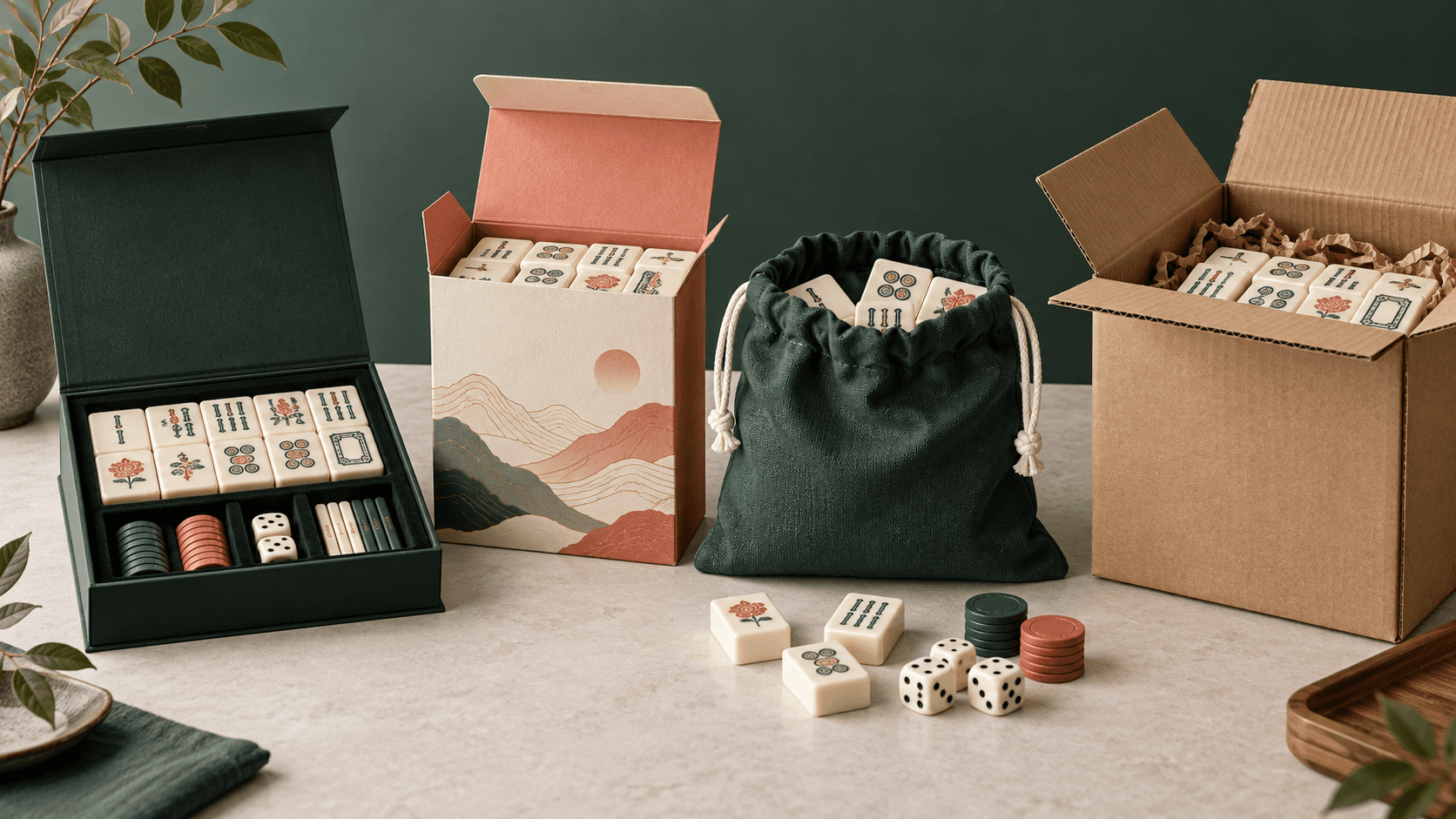
That last point is easy to miss. A small change in thickness or width can affect racks, pushers, case inserts, storage trays, and the footprint of the set on a mat. ABC Mahjong supports coordinated tiles, racks, pushers, storage solutions, packaging, and related accessories, so the brief should show which parts belong to the same collection rather than treating each item as a separate purchase.
Prepare art for the real production method
Ask the factory which file format and construction it needs before finishing hundreds of faces. Vector source files are often useful because paths and editable elements can be checked and adjusted without relying on a low-resolution screenshot. Keep editable type where the supplier needs to proof words, and provide outlined or packaged fonts according to the agreed workflow.
Color requires a separate conversation. Adobe's current Illustrator guidance distinguishes CMYK for print from RGB for screens and notes that some bright RGB colors do not have direct printable equivalents. That is a useful reminder, but a file color mode alone does not approve a physical result. Material color, ink, engraving fill, transparency, polish, lighting, and the output process all affect what a buyer sees. Use the Adobe guidance on printable color as a file-preparation reference, then approve the actual sample made with the proposed process.
Do not build fine lines or tiny labels at billboard scale and assume they will remain clear on a tile. Review the art at actual size. Print a paper mockup. Place it at normal playing distance. Ask someone who was not involved in the design to identify the face quickly. Legibility is part of the product, especially when numerals or English labels are included for a particular audience.
Use layers that explain intent
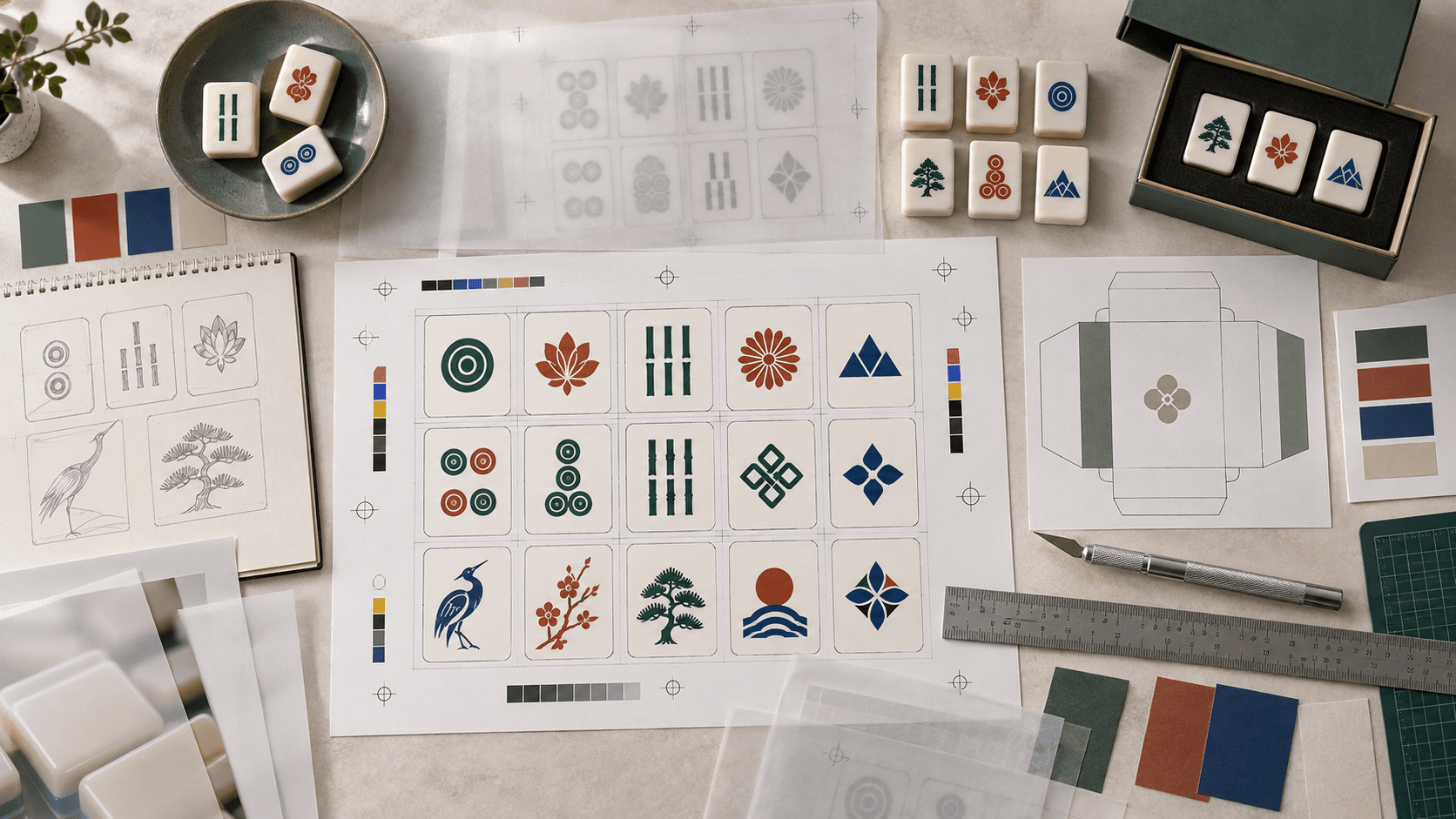
A clean layer structure saves questions. Separate face symbols, numerals, text, spot colors, cut or engraving paths, and non-printing notes. Remove hidden experiments and unused swatches before release. If the same visual appears in several colorways, state whether the colors are independent files, named swatches, or controlled substitutions.
Include a flattened PDF proof beside the editable source. The PDF shows the intended appearance; the source file supports production preparation. Neither should be treated as the only truth. The face schedule connects them and records quantities.
The back design needs its own rules
Buyers naturally spend most of their time on the faces. The back may carry more of the brand identity in photographs and at the table. Decide whether it is a solid color, printed pattern, transparent layer, glitter treatment, logo, or another visual effect. Mark the correct orientation and safe area. If the design is directional, show which edge is considered the top.
Ask how the chosen effect behaves at the edges and corners. A pattern that looks balanced on a flat rectangle can feel crowded once edge finishing, rounding, polish, or a layered construction is considered. Review several pieces together, not just one hero tile, because repetition exposes alignment and color variation.
One small proofing ritual catches many expensive errors
- Export a contact sheet showing every unique face, its ID, and its repeat count.
- Compare the contact sheet line by line with the master schedule.
- Check spelling, numerals, suits, winds, dragons, flowers, jokers, and special tiles.
- Mark any licensed logo, character, pattern, or third-party artwork that requires documented permission.
- Record the approver's name, date, and released revision.
- Repeat the comparison using photographs of the physical sample before production approval.
This is deliberately unglamorous. It also gives the buyer and factory the same reference when a question appears weeks later.
Control revisions with boring filenames
Creative filenames are memorable until several people exchange files across email, messaging apps, and shared drives. A plain convention works better: project, component, face ID, revision, and date. For example, BRAND_TILE_BAM01_R03_20260903.ai tells the team more than green-bamboo-final2.ai.
Never replace an approved file silently. Add a revision, describe the change, and update the schedule. If only one face changes, release a complete updated package or make the limited change unmistakable. The factory should not have to assemble the current set from fragments of three different messages.
What belongs in the final handoff package
- A one-page product specification with dimensions, construction, finish, and set count
- The face schedule with quantities, filenames, processes, and approval status
- Editable source artwork organized by component
- A flattened visual proof and a contact sheet
- Named color references plus photographs or notes for physical targets
- Back design, orientation, safe area, and repeat instructions
- Logo-use rules and written confirmation of rights where third-party assets appear
- A revision log listing what changed and who approved it
- Packaging, label, manual, and accessory art when they are part of the same collection
Brands using third-party marks should address permission before sampling. The World Intellectual Property Organization explains that trademarks distinguish the goods or services of one business from another and discusses trademark management in its Making a Mark guide for small and medium-sized enterprises. A factory can place supplied artwork, but it cannot decide whether the buyer owns the necessary rights.
Run the sample review like a comparison, not a reaction
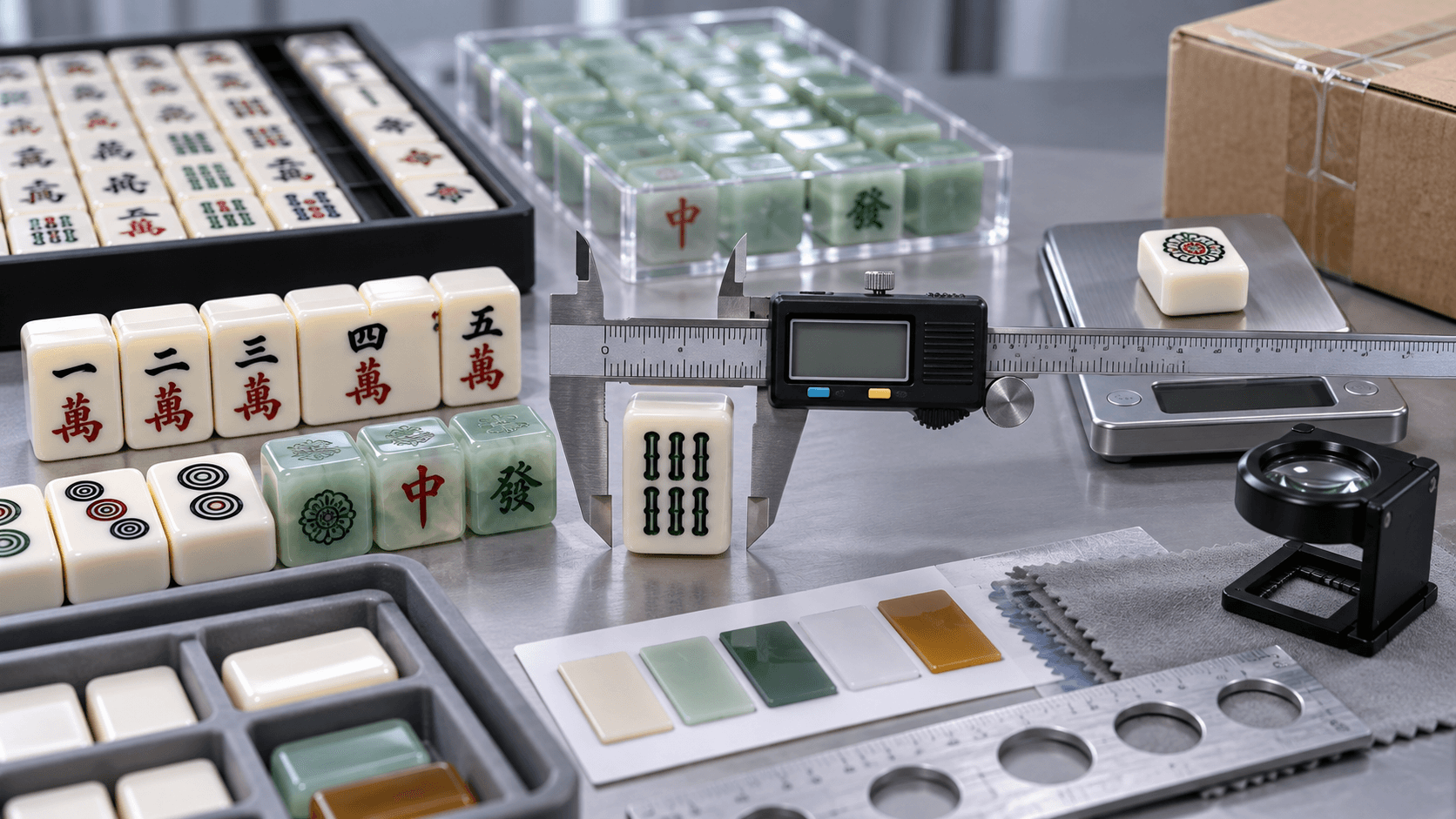
Before the sample arrives, turn the brief into a review sheet. List the tile dimensions, face list, artwork position, colors, finish, edges, back orientation, and fit with racks or inserts. Photograph the sample under consistent light. Mark observations against the approved requirement rather than writing "looks a bit off."
Separate defects from preferences. A missing line, wrong repeat count, or incorrect spelling is a nonconformance. A request to make a symbol larger after seeing the sample is a design change. Both can be addressed, but they affect responsibility, timing, and revision control differently.
FAQ
Can a buyer send PNG or JPEG files?
They can be useful as visual references, but suitability depends on resolution, scale, transparency, color, and the manufacturing process. Ask which editable or vector source format is required for production preparation.
Should text be outlined?
Outlined text can prevent missing-font substitutions. Keep an editable master as well, especially when spelling or language must be proofed. Agree on the file package before release.
Is a digital rendering enough for color approval?
No. A rendering communicates direction. Approve a physical sample made with the proposed material, color, finish, and artwork process when color matters to the product.
Who confirms the number of each tile face?
The buyer should approve the final face schedule for the intended game format and market. The factory then uses that approved schedule for production and completeness checks.
Can one artwork set be used on several tile sizes?
Not automatically. Line weight, text size, margins, proportions, and engraving or printing limits may need adjustment. Review each physical format at actual size.
When should packaging artwork begin?
Concept work can begin early, but final inserts and box dimensions should follow the confirmed tile, accessory, and storage configuration. Otherwise, a small product change can force a packaging revision.
What should a buyer send for an initial review?
Send the target market, game format, approximate quantity, desired dimensions, visual references, logo, packaging direction, destination, and any existing artwork. Open questions can remain open if they are clearly labeled.
Turn the folder into a production conversation
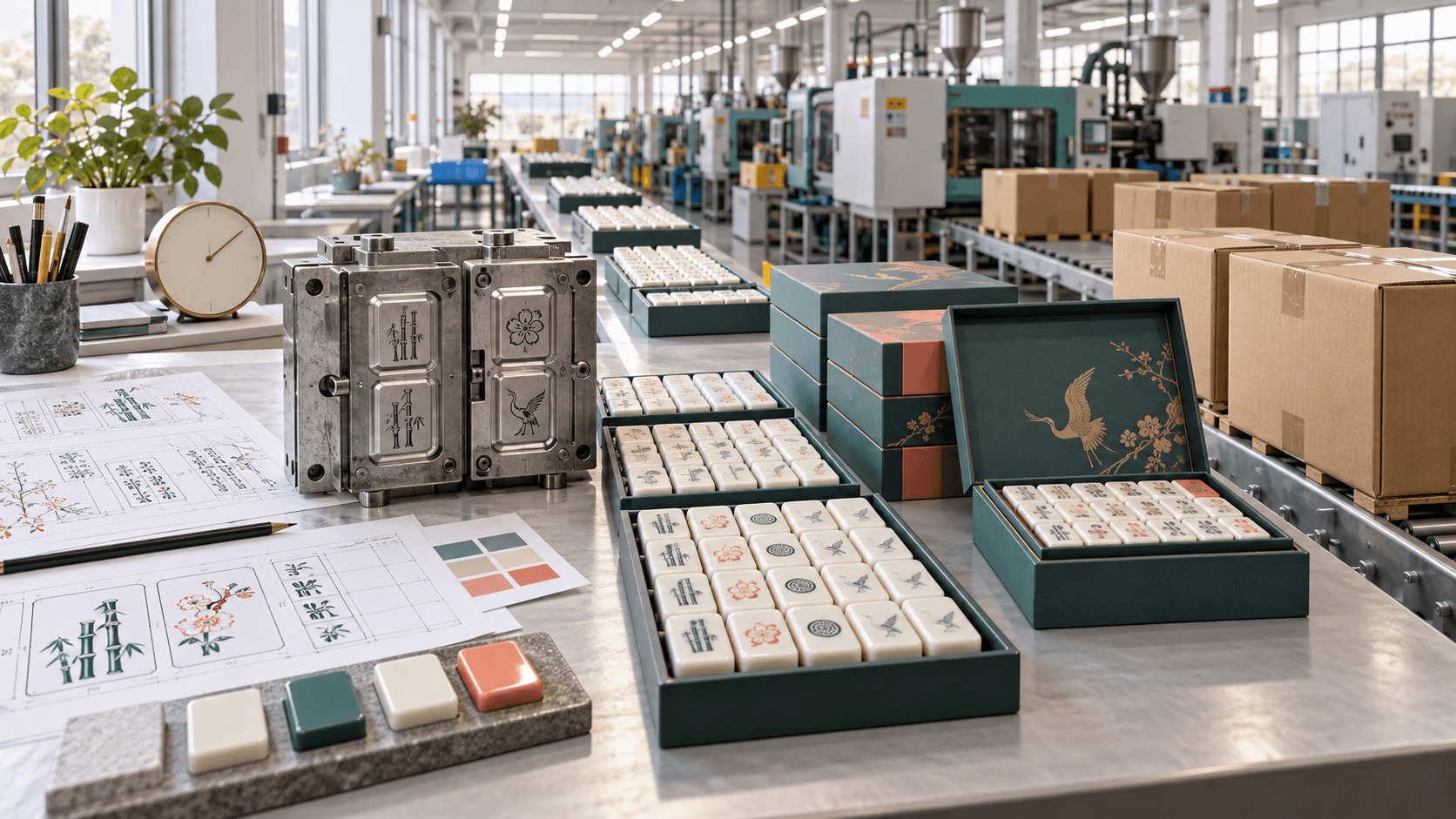
ABC Mahjong supports product concept review, sample development, custom artwork, colors, molds, packaging, and coordinated accessories. Review the company's custom Mahjong options, browse the current product range, and read about the manufacturing and project process. When the schedule and files are ready, send the brief through the contact page and ask the team to review your custom mahjong tiles before a quotation or sample plan is confirmed.